
绿色化转型

Search documents
中联重科20230331
2026-04-01 09:59
Summary of Zhonglian Heavy Industry Conference Call Company Overview - **Company**: Zhonglian Heavy Industry - **Year**: 2025 - **Revenue**: 52.1 billion CNY (up 14.58% YoY) - **Net Profit**: 4.858 billion CNY (up 38% YoY) - **Gross Margin**: 28.04% - **Net Margin**: 9.32% (up 1.58 percentage points YoY) - **Operating Cash Flow**: 54.874 billion CNY (up 128% YoY) [2][3][9] Key Industry Insights Revenue Growth and Profitability - **Overseas Revenue**: 30.5 billion CNY (up 31% YoY), accounting for 58.56% of total revenue [2][3] - **Domestic Market Recovery**: Engineering cranes in China grew over 40%, with concrete mixer truck sales doubling [2][3] - **Emerging Business Growth**: Earth-moving machinery revenue grew 45%, reaching a scale of 10 billion CNY, with 75% from overseas [2][3][4] Strategic Focus - **Diversification and Globalization**: Continued emphasis on diversification, globalization, and digital transformation [3][9] - **Intelligent and Green Transition**: Ongoing efforts in smart and green technology development [3][9] Product and Market Performance - **Earth-moving Machinery**: Significant growth in Africa and the Middle East, with a doubling of revenue in mining machinery [3][5] - **High-altitude Work Machinery**: Continued growth in overseas markets, with a focus on electric and automated products [4][5][6] - **Agricultural Machinery**: Ranked among the top five domestic brands, with over 20% growth in overseas sales [4][5] Future Outlook 2026 Projections - **Balanced Growth**: Expectation of a more balanced growth rhythm in overseas markets, particularly in agricultural and mining machinery [8][9] - **Regional Focus**: Increased investment in Europe, Australia, and Latin America, with expectations of superior performance in these regions [8][9] Cost Management and Profitability - **Cost Control**: Ability to manage rising costs through strategic procurement and production optimization [10][11] - **Future Profitability**: Anticipated stable and improving profitability driven by digital transformation and product mix optimization [9][10] Cash Flow and Capital Expenditure - **Cash Flow Management**: Focus on ensuring timely profit recovery and optimizing inventory turnover [11] - **Capital Expenditure**: Limited large-scale capital investments, focusing on routine updates and new product lines [11] Geopolitical Impact - **Middle East Conflicts**: Short-term impacts on logistics and supply chains, with adjustments made to shipping routes [17][18] - **Long-term Opportunities**: Potential increase in demand for electric products due to fuel shortages in conflict areas [17][18] Mining Machinery Strategy - **Sales Goals**: Aim to establish mining machinery as a 10 billion CNY product segment, achieving top-tier status globally [19][21] - **Product Development**: Focus on comprehensive solutions for mining operations, including electric and automated equipment [20][21] High-altitude Work Machinery - **Product Range**: Extensive product offerings with a focus on electric and automated systems [22][23] - **Local Manufacturing**: Establishment of a factory in Hungary to mitigate trade barriers and enhance local production capabilities [22][23] Engineering and Concrete Machinery - **Domestic Market Trends**: Anticipated growth in engineering cranes and concrete machinery driven by government infrastructure projects and equipment upgrades [24]
潍柴动力接待24家机构调研,包括淡水泉、中信证券、中金公司、长江证券等
Jin Rong Jie· 2026-03-31 02:58
Group 1: Company Strategy and Transformation - The company will accelerate its strategic transformation focusing on four key areas: green, global, digital, and ecological [3][4] - The green transformation will involve providing integrated solutions for new energy and accelerating the industrialization of alternative fuel internal combustion engines such as methanol and hydrogen [3][4] - The global transformation aims to deepen overseas market development and localization to ensure healthy growth and enhance global brand reputation [3][4] Group 2: Data Center Power Business - The company’s data center power products are progressing well, covering all scenarios in the power market and providing diverse energy solutions [4] - In 2025, the company sold nearly 11,000 M-series engines, with 1,401 units for data centers, representing a year-on-year growth of 259% [4] - In 2026, the company plans to significantly develop its power energy sector, focusing on product planning and capacity construction to meet growing customer demand [4] Group 3: Overseas Market Expansion - The company will enhance its global strategy by strengthening product preparation and channel development for data center products, expanding high-end customers in Europe and the U.S., and improving overseas service and aftermarket support [4][10] Group 4: Financial Performance and Outlook - Kion Group's revenue for 2025 is projected to decline slightly to €11.3 billion, with adjusted EBIT of €790 million, but new orders are increasing [2][6] - The efficiency improvement plan is expected to save approximately €150 million annually, with positive impacts anticipated in 2026 [2][6] - Revenue for 2026 is expected to grow by 1% to 9%, reaching between €11.4 billion and €12.3 billion, with adjusted EBIT projected to increase by 8% to 32% [6] Group 5: Research and Development Focus - Future R&D investments will focus on upgrading to National VI standards, developing high-end engineering machinery engines, and advancing new generation gas engines and alternative fuel technologies [7] - The company will also enhance its data center gas power products to larger displacement and higher power outputs [7]

潍柴动力(000338) - 2026年3月27日投资者关系活动记录表
2026-03-31 01:00
Group 1: Company Strategic Transformation - The company will accelerate its transformation in four key areas: green, globalization, digital intelligence, and ecological strategies [2][3] - Green transformation focuses on providing integrated solutions for new energy and accelerating the industrialization of alternative fuels like methanol and hydrogen [2] - Globalization efforts include deepening overseas market development and enhancing local operations to ensure safe and healthy growth [2][3] Group 2: Data Center Power Business - The company plans to develop its data center power products, which currently cover all market demands, providing diverse energy solutions [3] - In 2025, the company expects to sell approximately 11,000 M-series engines, with 1,401 units for data centers, marking a 259% year-on-year increase [3] Group 3: Overseas Market Expansion Strategy - The company aims to strengthen its global strategy by preparing data center products and expanding channels, particularly targeting high-end clients in Europe and the U.S. [3] - Plans include accelerating localization projects and enhancing overseas service and market promotion efforts [3] Group 4: Future Performance Outlook - Kion Group's revenue is projected to decline slightly by 1.8% to €11.3 billion in 2025, with adjusted EBIT expected to drop by 14% [4] - However, new orders are showing growth, and cost-saving measures are expected to yield significant benefits in 2026 [4] Group 5: R&D Investment Focus - Future R&D investments will align with the green transformation, focusing on optimizing engine product lines and developing new technologies for alternative fuels [4] - The company will also enhance its data center products and continue investing in new energy technologies [4] Group 6: Heavy Truck Export Trends - During the 14th Five-Year Plan, China's heavy truck exports are expected to rise from 60,000 to 340,000 units, indicating a solid growth trajectory [4] - The company aims to transition from traditional exports to localized operations and services, enhancing its competitive edge in the global market [4] Group 7: Company Growth Points for 2026 - The heavy truck industry is expected to reach a scale of around 1.2 million units in 2026, with the company focusing on optimizing product and business structures [5] - The company anticipates significant growth from Kion Group's orders and the promotion of data center products [5] Group 8: Dividend Policy - In 2025, the company's cash dividend (including buybacks) is projected to account for 65% of the annual net profit attributable to shareholders [5] - The company plans to maintain a proactive and stable dividend policy, aiming to increase the cash dividend payout ratio when conditions allow [5]
中远海运港口(01199.HK)“攻守兼备”:多因素共振下的首选港口标的
Ge Long Hui· 2026-03-23 01:02
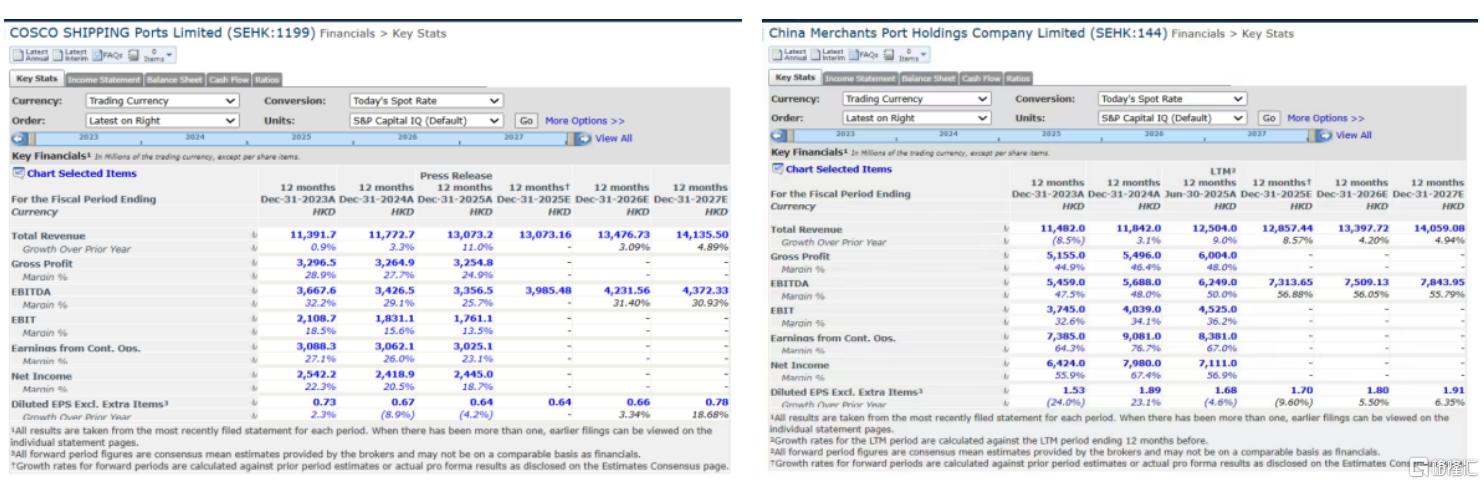
Core Viewpoint - The global capital markets are experiencing increased volatility in 2026, with Hong Kong stocks in a critical phase of consolidation. Institutional investors are showing a dual demand for risk aversion and bottom-fishing, leading to a preference for stable and resilient assets. Positive signals such as the return of Middle Eastern capital, increased demand for family office investments, and the promotion of the HALO strategy by foreign investment banks are creating a strong resonance in the market, directing "smart money" towards high-barrier, high-certainty quality assets [1]. Group 1: Market Dynamics - The HALO strategy (Heavy Assets, Low Obsolescence) promoted by foreign investment banks focuses on investing in stable cash flow, high-barrier physical assets that are less likely to be disrupted by technology, aligning well with the natural investment attributes of the port sector [1]. - The demand for high-quality assets with stable cash flows and growth potential is significantly increasing due to the return of Middle Eastern capital and the continuous inflow of southern funds [12]. Group 2: Company Comparison - Comparing the two leading companies in the Hong Kong port sector, COSCO SHIPPING Ports and China Merchants Port, both exhibit low debt, high cash flow, and stable growth, but differ in value positioning. China Merchants Port is seen as a traditional defensive value stock, while COSCO SHIPPING Ports possesses a unique "offensive and defensive" characteristic, making it more scarce and advantageous in the current volatile market [2][3]. - COSCO SHIPPING Ports has a lower price-to-book (PB) ratio of 0.44 compared to China Merchants Port's 0.65, with projected return on equity (ROE) growth rates indicating a more favorable long-term growth outlook for COSCO SHIPPING Ports [2]. Group 3: Financial Performance - COSCO SHIPPING Ports reported a revenue increase of 11.0% to $1.669 billion in 2025, with a significant rise in operating cash flow by 50.0% to $612 million, reflecting strong profitability and resilience against market cycles [8][7]. - The company's capital expenditure decreased by approximately 39.0% to $386 million, while total throughput increased by 6.2% to 15.3 million TEUs, showcasing an effective operational model that reduces cash flow pressure while ensuring growth flexibility [7]. Group 4: Strategic Advantages - COSCO SHIPPING Ports employs a unique operational model focused on "controlling major assets and selectively participating" to leverage higher financial leverage compared to competitors, allowing for efficient expansion and capital efficiency [4]. - The company has established a global network of 40 ports and over 380 berths, positioning itself advantageously in key trade routes, with ongoing projects in Europe and South America expected to enhance profitability in the long term [9][10]. Group 5: Future Growth Potential - The new smart port at Peru's Chancay is set to open in November 2024, which, while not immediately profitable, positions the company strategically in core trade routes, with expected profitability improvements as utilization rates increase [10]. - The digital and green transformation initiatives undertaken by COSCO SHIPPING Ports are expected to enhance operational efficiency and asset longevity, aligning with global investment preferences and further solidifying its competitive edge [11].

中远海控2025年实现归母净利近309亿元 高质量发展应对市场变局
Xin Hua Cai Jing· 2026-03-20 01:30
Core Viewpoint - China COSCO Shipping Holdings Co., Ltd. (referred to as "the company") reported a steady growth in performance for the fiscal year 2025, achieving a net profit of 30.868 billion yuan despite challenges in the global trade environment and fluctuations in container shipping rates [2] Financial Performance - The company achieved an operating revenue of 219.504 billion yuan and an EBITDA of 45.013 billion yuan, with a net profit of 35.228 billion yuan for the year [2] - In Q4, the company maintained profitability with a net profit of 3.799 billion yuan, despite a weak market environment [2] - The company's asset-liability ratio decreased to 41.42%, down 1.28 percentage points from the previous year, with cash and cash equivalents reaching 150.882 billion yuan [3] Business Operations - The container shipping business completed a cargo volume of 27.4345 million TEUs, a year-on-year increase of 5.76%, generating revenue of 210.731 billion yuan with a gross margin of 19.44% [2] - The terminal business handled a total throughput of 153 million TEUs, up 6.22% year-on-year, with revenue of 12.041 billion yuan and a gross margin of 25.91% [2] - The company operates a fleet of 590 vessels with a capacity of approximately 3.6 million TEUs, maintaining a 75% share of self-owned and chartered capacity [3] Strategic Initiatives - The company is enhancing its global digital supply chain platform, launching 12 customized industry solutions, and achieving a non-maritime supply chain revenue of 44.888 billion yuan, a 9.64% increase year-on-year [4] - The company is accelerating its digital and green transformation, with a 90% automation rate in overseas dry container repositioning and over 800,000 blockchain electronic bills of lading issued [4] - The company is committed to green shipping initiatives, ordering 42 methanol dual-fuel vessels and 12 LNG dual-fuel vessels, while also retrofitting existing vessels for methanol dual-fuel capabilities [4] Future Outlook - For 2026, the company anticipates increased complexity and uncertainty in the container shipping market, focusing on global, scalable, and integrated development while enhancing its core competitiveness in sustainable development [5]
2026年中国铝塑膜行业政策、规模现状简析:全产业链布局加速,行业安全、绿色、高质量发展[图]
Chan Ye Xin Xi Wang· 2026-02-18 23:28
Core Viewpoint - The aluminum-plastic film is a key material for packaging soft-pack lithium battery cells, with a stable supply-demand balance in the industry, driven by a gradual recovery in demand from the power battery sector and accelerated domestic substitution processes. The market size for aluminum-plastic film in China is projected to reach 6.3 billion yuan by 2025, with significant growth in both the power battery and 3C/storage sectors compared to 2024 [1][10]. Aluminum-Plastic Film Industry Overview - Aluminum-plastic film is essential for sealing soft-pack lithium battery cells, protecting internal materials. It consists of multiple layers, including an outer barrier layer, a barrier layer, and a heat-seal layer, each serving specific protective functions [2][4]. - The film is categorized based on production processes into dry and thermal aluminum-plastic films, with varying advantages and applications [3]. Product Characteristics - Battery-grade aluminum-plastic film has stringent performance requirements, including high barrier properties against moisture and oxygen, excellent deep-drawing performance, puncture resistance, and chemical stability to ensure battery safety and longevity [4][5]. Industry Policy Background - China's battery and aluminum-plastic film industries are under strong national regulation, with policies focusing on export control, lifecycle management, and support for key materials. Recent regulations aim to enhance compliance and promote domestic production of critical materials [6][7]. Industry Chain - The aluminum-plastic film industry chain consists of upstream raw material suppliers, midstream production companies, and downstream soft-pack lithium battery manufacturers, serving various end-use sectors including consumer electronics, electric vehicles, and energy storage [8]. Industry Development Status - From 2017 to 2025, the aluminum-plastic film market in China is expected to grow steadily, driven by demand from 3C consumer electronics and the energy storage sector, alongside improvements in domestic production capacity. The market is projected to reach a size of 6.3 billion yuan by 2025, with a notable increase in both production and demand [9][10][11]. Competitive Landscape - The aluminum-plastic film industry in China is still developing, with key players concentrated in the Pearl River Delta and Yangtze River Delta regions. Major companies include New Lian New Materials, Zijiang Enterprises, Mingguan New Materials, and others, with varying production capacities and market positions [13][14][15]. Industry Development Trends - The aluminum-plastic film is evolving towards high barrier, corrosion resistance, and ultra-thin high-strength specifications to meet the stringent packaging requirements of advanced battery technologies. The industry is also focusing on green transformation and lifecycle management to enhance sustainability and competitiveness [16].



2026年中国防锈剂行业产业链图谱、市场规模及发展趋势分析:需求驱动产业升级,环保高性能防锈剂引领行业结构优化[图]
Chan Ye Xin Xi Wang· 2026-02-15 00:27
Core Insights - The Chinese rust inhibitor industry is transitioning from traditional manufacturing to high-quality development, focusing on meeting the precise needs of the manufacturing sector, with a steady market growth and accelerated product structure upgrades [1][7] Industry Overview - Rust inhibitors are chemicals that prevent metal oxidation and corrosion by forming protective layers on metal surfaces, applicable in various scenarios such as metal processing, storage, transportation, and equipment maintenance [2] - The main types of rust inhibitors include water-soluble, oil-soluble, emulsified, vapor-phase, and wax film types [2] Industry Chain - The upstream of the rust inhibitor industry includes raw materials such as mineral oil, synthetic oil, and various chemical agents, while the midstream involves the production and manufacturing of rust inhibitors [4] - The downstream applications are primarily in automotive manufacturing, machinery, aerospace, energy, and military sectors [4] Market Size - The market size of the Chinese rust inhibitor industry is projected to reach approximately 27.121 billion yuan in 2024, with a year-on-year growth of 7.10% [1][8] - There is a rapid increase in demand for high-performance, environmentally friendly rust products, particularly in the automotive, shipbuilding, and high-end equipment sectors [1][8] Key Companies - The competitive landscape of the rust inhibitor industry is evolving from fragmented competition to a "layered competition" model based on core technology and deep downstream applications [8] - Notable companies include Shenyang Rust Inhibitor Packaging Materials Co., which specializes in vapor-phase rust prevention technology, and Weishiai Environmental New Materials Co., known for its green rust inhibitors and long-lasting anti-corrosion coatings [8][9] Industry Development Trends 1. **Accelerated Green Transformation**: The market is shifting towards environmentally friendly rust inhibitors due to stricter global environmental regulations and increasing consumer health awareness [10] 2. **Technological Upgrades**: Rust inhibitor technology is advancing towards high performance and smart integration, with trends towards multifunctional products and smart rust prevention systems [11] 3. **Market Segmentation**: The industry is expanding into more specialized fields, driven by the upgrading of downstream industries and the emergence of new markets, focusing on tailored solutions for specific applications [12]

氟化工企业加速扩产 向高端化、精细化、绿色化转型
Zheng Quan Ri Bao Wang· 2026-02-12 04:30
Industry Overview - The fluorochemical industry is experiencing a significant increase in demand driven by emerging sectors such as new energy, high-end electronics, semiconductors, and energy storage [1][2] - Domestic fluorochemical companies are accelerating capacity expansion and industrial upgrades, with plans to implement these expansions by 2026 [1] Company Developments - Zhejiang Zhongxin Fluorine Materials Co., Ltd. has received approval for a 186 million yuan private placement to fund projects including the production of 2,000 tons of BPEF, 500 tons of BPF, and 1,000 tons of 9-fluorenone, along with working capital [1] - Haohua Chemical Technology Group Co., Ltd. plans to invest 3.347 billion yuan in projects including a 26,000 tons/year high-performance organic fluorine materials project and a 4,000 tons/year fluorine fine chemicals project, with the latter expected to be completed by November this year [1] Market Trends - The expansion of fluorochemical companies is characterized by a focus on environmentally friendly refrigerants, high fluoropolymer materials, and fine chemicals, aligning with global low-carbon trends [2] - The industry is moving towards integration of upstream and downstream operations to enhance self-sufficiency in the supply chain [2] Policy Alignment - The industry's growth aligns with national policy directives aimed at promoting innovation in fine chemicals and improving the quality of bulk products through smart, green, and safe transformations [3] - Regulatory measures are being implemented to accelerate the green transition in the industry, including quota management for hydrofluorocarbon production [3] Future Outlook - Experts indicate that the domestic fluorochemical industry is at a critical juncture, transitioning from scale expansion to quality enhancement [3] - Despite challenges such as raw material price fluctuations and intense competition among leading companies, there are multiple development opportunities driven by supportive policies and continuous demand growth [3]

上海实施先进制造业转型升级三年行动方案
Ke Ji Ri Bao· 2026-02-12 02:01
Core Viewpoint - The "Three-Year Action Plan for Supporting the Transformation and Upgrading of Advanced Manufacturing in Shanghai (2026-2028)" aims to accelerate the establishment of a modern industrial system centered on advanced manufacturing, promoting green and intelligent transformation across various enterprises in Shanghai [1][2]. Group 1: Action Plan Overview - The action plan includes four major actions and 17 measures to enhance the development of advanced manufacturing [1]. - By 2028, Shanghai aims to add 100 manufacturing enterprises with an annual output value exceeding 1 billion yuan and increase the number of large-scale industrial enterprises in the supply chain by 500 [1]. Group 2: Industry Development Paths - The plan outlines three development paths: - For traditional advantageous industries, it emphasizes "optimization and enhancement" [1]. - For leading industries, it promotes "strategic guidance" [1]. - For key and emerging industries, it focuses on "expansion and development" [1]. Group 3: Innovation and Resource Support - The action plan supports enterprises in high-level R&D and high-value product transformation, addressing industry pain points and overcoming key core technologies [2]. - It encourages full-process upgrades, AI integration in manufacturing, and carbon footprint management to achieve quality and efficiency improvements [2]. Group 4: Financial Incentives - The plan provides substantial financial support for R&D, including: - A one-time subsidy of 10 million yuan for enterprises with annual R&D expenditures of 100 million yuan or more [2]. - A one-time subsidy of 5 million yuan for those spending between 50 million and 100 million yuan [2]. - A one-time subsidy of 2 million yuan for R&D expenditures between 1 million and 5 million yuan [2]. Group 5: Additional Financial Support Measures - The plan includes subsidies for fixed asset investment loans related to technology upgrades, with a maximum of 20 million yuan [3]. - Companies upgrading energy-saving processes and equipment can receive rewards based on coal consumption, up to 10 million yuan [3]. - A one-time reward of 200,000 yuan is available for enterprises recognized as national green factories [3].
上海市实施先进制造业转型升级三年行动方案
Ke Ji Ri Bao· 2026-02-12 00:55
Core Viewpoint - The "Three-Year Action Plan for Supporting the Transformation and Upgrading of Advanced Manufacturing Industry in Shanghai (2026-2028)" aims to accelerate the establishment of a modern industrial system centered on advanced manufacturing, promoting green and digital transformation across enterprises of all sizes [1][2]. Group 1: Action Plan Overview - The action plan includes four major actions and 17 measures to enhance the development of advanced manufacturing in Shanghai [1]. - By 2028, Shanghai aims to add 100 manufacturing enterprises with an annual output value exceeding 1 billion yuan and increase the number of industrial enterprises above designated size by 500 [1]. Group 2: Development Paths - The plan outlines three development paths: - For traditional advantageous industries, it emphasizes "optimization and enhancement" [1]. - For leading industries, it promotes "strategic guidance" [1]. - For key and emerging industries, it focuses on "expansion and development" [1]. Group 3: Innovation and Support Measures - The action plan supports enterprises in high-level R&D and high-value product transformation, addressing industry pain points and overcoming key core technologies [2]. - Financial support includes one-time subsidies for R&D investments, with amounts varying based on the level of investment [2]. Group 4: Financial Incentives - Companies investing in technology transformation projects can receive interest subsidies on loans or equipment financing leases, with a maximum subsidy of 20 million yuan [3]. - Additional rewards are available for energy-saving upgrades and for companies recognized as national green factories [3].