锂等关键矿产

Search documents
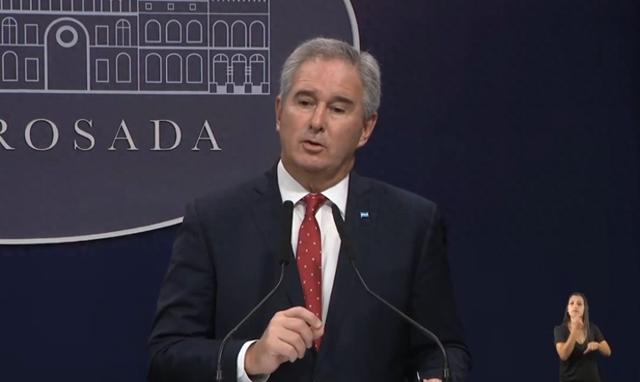
阿根廷外长:与美关键矿产协议并未排除中国投资
Xin Lang Cai Jing· 2026-02-08 02:02
Group 1 - Argentina's Foreign Minister Pablo Kirno stated that the recent key mineral agreement with the United States does not exclude Chinese investment in Argentina's mineral sector [1][3] - The agreement aims to enhance predictability and encourage further investment from U.S. companies, which are already major investors in Argentina [1][3] - The U.S. is attempting to challenge China's dominance in the critical mineral supply chain by forming a "critical mineral trade group" and establishing price floor mechanisms for related commodities [1][3] Group 2 - The mutual trade and investment agreement with the U.S. requires approval from the Argentine Congress, although some provisions may take effect through presidential decree [3] - The U.S. has signed 11 new bilateral cooperation frameworks and memorandums with various countries, including Argentina, to solidify its position in global critical mineral diplomacy [3][4] - China is Argentina's second-largest trading partner, having invested billions in the country's energy, lithium resources, and infrastructure sectors [3][4]

深企投产业研究院:我国战略性金属和关键矿产发展白皮书
Sou Hu Cai Jing· 2025-07-25 13:16
Core Insights - The development of strategic metals and critical minerals in China is increasingly influenced by global geopolitical competition, with major economies pushing for localization and "de-China" strategies in critical mineral supply chains [6][7][8] - The concentration of critical mineral reserves and production is significant, with the top three countries (CR3) holding over 80% of reserves for more than ten mineral types, such as rare earths (approximately 80%) and gallium (94%) [20][21] - China's critical minerals can be categorized into four types based on supply risk and global dominance: those with global supply advantages, those with low supply risks, those that are highly scarce but manageable, and those with high supply risks [33][34][38] Group 1: Global Competition and Supply Chain - The security of critical mineral supply chains has become a frontline in global geopolitical economic competition, with countries seeking to reduce strategic dependencies and enhance supply chain autonomy [6][7] - The rise of resource nationalism is reshaping the global strategic mineral landscape, as resource-rich countries leverage their bargaining power to renegotiate contracts and increase fees [7][8] - Despite intense geopolitical competition, market forces remain the dominant driver of global mineral investment and mergers, suggesting that collaboration and interdependence will continue to play a significant role [8] Group 2: China's Strategic Minerals - China's strategic minerals can be divided into four categories: those with global supply advantages (e.g., rare earths, graphite), those with low supply risks (e.g., molybdenum, lithium), those that are highly scarce but manageable (e.g., nickel, cobalt), and those with high supply risks (e.g., niobium, platinum group metals) [33][34][38] - The country has implemented export controls on key minerals such as gallium, germanium, and graphite to prevent technology loss and counter external pressures, although a complete export ban could disrupt supply chains [2][48] - China's dominance in the production and processing of critical minerals, particularly in the context of clean energy and electric vehicles, positions it strategically in the global market [14][38] Group 3: Market Dynamics and Future Outlook - The demand for critical minerals is expected to surge, with projections indicating that by 2040, the demand for lithium could increase by over 40 times, and demand for other key minerals like graphite and nickel could grow by 20-25 times [14][15] - The interconnectedness of global critical mineral supply chains means that any disruption could lead to significant economic consequences, potentially reversing decades of globalization [8][19] - China's strategic approach to critical minerals, including potential export controls, aims to safeguard its economic security while navigating the complexities of international competition [48][49]