
阶跃Step系列

Search documents
国产AI下一站 生态高墙下,芯片与模型“双向奔赴”
2 1 Shi Ji Jing Ji Bao Dao· 2026-02-04 23:37
Core Insights - The Chinese AI industry is entering a new phase of commercial validation and large-scale application, with companies like Zhiyuan Huazhang, MiniMax, and others recently listing on the Hong Kong Stock Exchange and the Sci-Tech Innovation Board [1] - Despite advancements, domestic chip manufacturers face significant challenges due to reliance on NVIDIA's ecosystem, which limits their competitiveness in the market [1][3] - The focus is shifting from achieving absolute computing power to enhancing system efficiency and application relevance, with an emphasis on "domestic adaptation" to improve computational efficiency [1][6] Industry Challenges - The AI application landscape in China has shown remarkable vitality, with models like Qianwen and Zhiyuan GLM performing competitively on benchmarks, yet 99% of AI applications still rely on NVIDIA's infrastructure [3][4] - The entrenched NVIDIA ecosystem, developed over nearly two decades, presents high migration costs for AI companies, complicating the transition to domestic solutions [4] - Domestic chips often struggle with performance and integration issues, leading to a cycle of low adoption and slow ecosystem improvement, which in turn keeps production costs high [4][5] Opportunities for Collaboration - The shift in AI development towards continuous and decentralized inference presents an opportunity for domestic chip manufacturers to differentiate themselves [6] - Collaboration between model and chip developers is essential to address ecological challenges, moving beyond simple hardware deployment to full-stack optimization [6][7] - Initiatives like the "Model-Chip Ecological Innovation Alliance" aim to bridge the technical barriers between chips, models, and platforms, focusing on cost reduction and scalable AI applications [7]


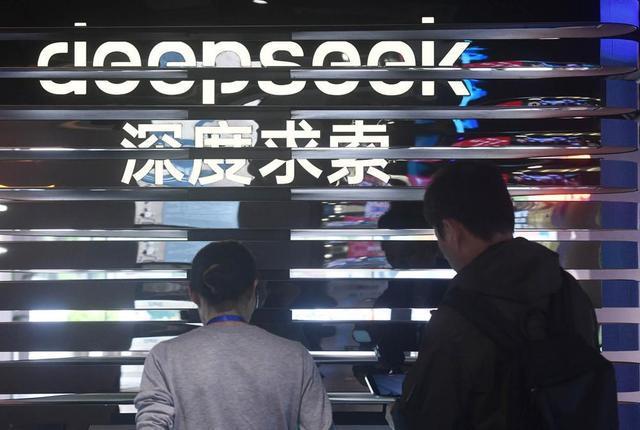
国产AI下一站:生态高墙下 芯片与模型“双向奔赴”
2 1 Shi Ji Jing Ji Bao Dao· 2026-02-04 12:28
Core Insights - The Chinese AI industry is entering a new phase of commercial validation and large-scale application, with companies like Zhiyuan Huazhang, MiniMax, and others listing on the Hong Kong Stock Exchange and STAR Market [1] - Despite advancements, domestic chip manufacturers face significant challenges due to reliance on NVIDIA's ecosystem, which limits their competitiveness and market penetration [2][3] - The focus is shifting from training to inference in AI, necessitating deeper collaboration between models and chips to enhance efficiency and application in various industries [5][6] Group 1: Industry Developments - The rapid growth of AI applications in China has been notable, with models like Qianwen, Zhiyuan GLM, and Step series performing competitively in benchmark tests [2] - The dependency on NVIDIA's ecosystem is highlighted, with only a fraction of models on platforms like Hugging Face being supported by top domestic GPUs [2] - The evolution of AI model architectures requires chips to be flexible and forward-looking to avoid obsolescence [3] Group 2: Challenges for Domestic Chips - Domestic chips often struggle with performance claims that do not meet customer needs for seamless model operation and cost-effective development [3][4] - The ecosystem's limitations create a negative feedback loop, where low usage leads to slow feedback and iteration, further hindering ecosystem improvement [3] Group 3: Collaborative Solutions - The emergence of a dual adaptation approach is seen as a potential solution, with AI chip manufacturers aligning closely with domestic model companies to enhance compatibility and efficiency [6][7] - Initiatives like the "Model-Chip Ecological Innovation Alliance" aim to bridge the technological gaps between chips and models, promoting joint optimization [6][7] - Major companies like Alibaba and Tencent are adopting strategies that integrate models, cloud platforms, and chips to achieve systemic advantages in efficiency and cost [8]