国产AI生态

Search documents
光合组织发起联合攻关,推动国产万卡与大模型深度协同
Jing Ji Guan Cha Wang· 2026-02-10 05:13
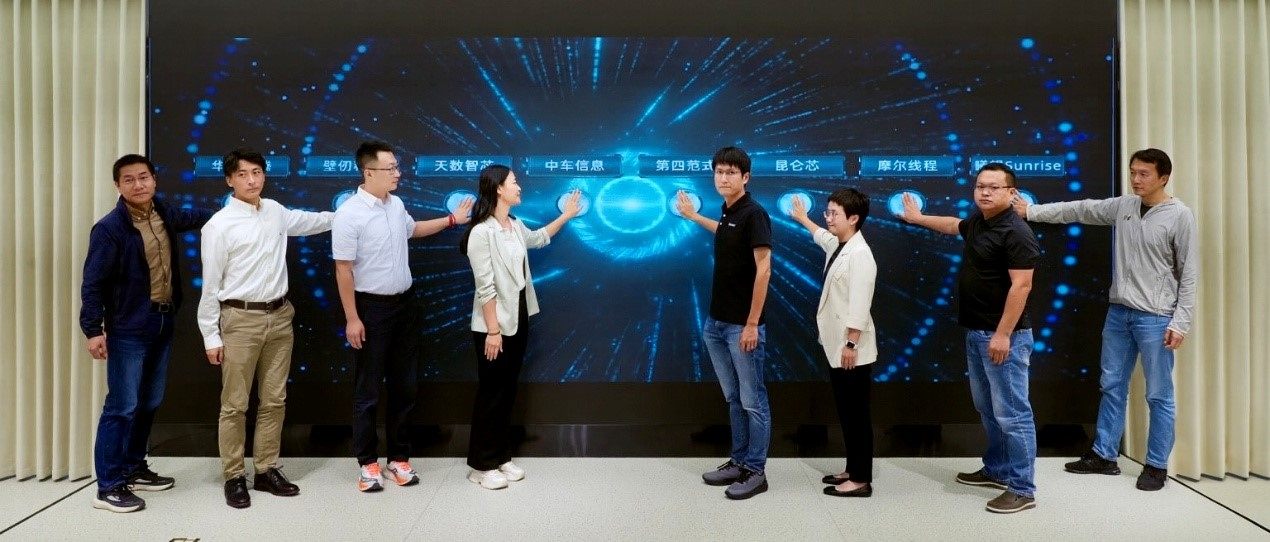
Core Viewpoint - The event "Domestic Ten Thousand Card Computing Power Empowering Large Model Development Seminar and Joint Attack Launch Ceremony" was held in Zhengzhou, focusing on the collaboration between computing power and large models to advance China's AI ecosystem [1] Group 1: Event Overview - The seminar gathered over a hundred key partners, including leading large model manufacturers and computing infrastructure providers, to discuss the synergy between "ten thousand card computing power" and "trillion model" [1] - The meeting emphasized that systematic breakthroughs are crucial for the development of the domestic AI ecosystem [1] Group 2: Key Initiatives - A "Joint Attack Special Plan for Domestic Large Computing Power and Large Models" was officially launched at the event [1] - The first batch of special enterprises was awarded certificates, indicating the initiation of collaborative efforts in the industry [1] Group 3: Strategic Focus - The conference highlighted the importance of integrating policy guidance, computing power, large models, model optimization, and application scenarios to achieve deep software and hardware integration [1] - The goal is to address the bottlenecks in the development of domestic computing power and provide strong support for the independent development of AI technology in China [1]
华商基金刘力:2026年关注国产AI、创新药、商业航天三大领域
Xin Lang Cai Jing· 2026-02-10 04:14
Core Insights - The article emphasizes three key investment directions for 2026: the domestic AI ecosystem, innovative pharmaceuticals, and the commercial aerospace sector, which are expected to lead market trends [1][6]. Group 1: Domestic AI Ecosystem - The domestic AI ecosystem is anticipated to experience a comprehensive explosion this year, driven by rapid advancements in large model technology and increased application penetration [4][9]. - The AI industry in China is expected to replicate the growth trajectory seen overseas, positively impacting related sectors [9]. - The AI industry chain includes downstream areas focused on large models and cloud computing, while upstream sectors encompass AI chips, storage, semiconductor manufacturing, and related materials [9]. Group 2: Innovative Pharmaceuticals - The innovative pharmaceutical sector has shown signs of explosive growth over the past 2-3 years, despite experiencing a pullback due to valuation pressures in the latter half of last year [5][9]. - Companies with overseas capabilities and strong pipeline execution are seen as having favorable positioning for investment during current market adjustments [5]. Group 3: Commercial Aerospace Sector - The commercial aerospace sector, particularly in areas like rocket recovery and low-orbit satellites, is expected to accelerate commercialization over the next 5 to 10 years, presenting clear growth paths [5][9]. - This sector is characterized by both thematic and growth attributes, making it a focal point for investment [5].


国产AI下一站 生态高墙下,芯片与模型“双向奔赴”
2 1 Shi Ji Jing Ji Bao Dao· 2026-02-04 23:37
Core Insights - The Chinese AI industry is entering a new phase of commercial validation and large-scale application, with companies like Zhiyuan Huazhang, MiniMax, and others recently listing on the Hong Kong Stock Exchange and the Sci-Tech Innovation Board [1] - Despite advancements, domestic chip manufacturers face significant challenges due to reliance on NVIDIA's ecosystem, which limits their competitiveness in the market [1][3] - The focus is shifting from achieving absolute computing power to enhancing system efficiency and application relevance, with an emphasis on "domestic adaptation" to improve computational efficiency [1][6] Industry Challenges - The AI application landscape in China has shown remarkable vitality, with models like Qianwen and Zhiyuan GLM performing competitively on benchmarks, yet 99% of AI applications still rely on NVIDIA's infrastructure [3][4] - The entrenched NVIDIA ecosystem, developed over nearly two decades, presents high migration costs for AI companies, complicating the transition to domestic solutions [4] - Domestic chips often struggle with performance and integration issues, leading to a cycle of low adoption and slow ecosystem improvement, which in turn keeps production costs high [4][5] Opportunities for Collaboration - The shift in AI development towards continuous and decentralized inference presents an opportunity for domestic chip manufacturers to differentiate themselves [6] - Collaboration between model and chip developers is essential to address ecological challenges, moving beyond simple hardware deployment to full-stack optimization [6][7] - Initiatives like the "Model-Chip Ecological Innovation Alliance" aim to bridge the technical barriers between chips, models, and platforms, focusing on cost reduction and scalable AI applications [7]

十七年闭关 阿里“通云哥”雏形初现
2 1 Shi Ji Jing Ji Bao Dao· 2026-01-30 14:18
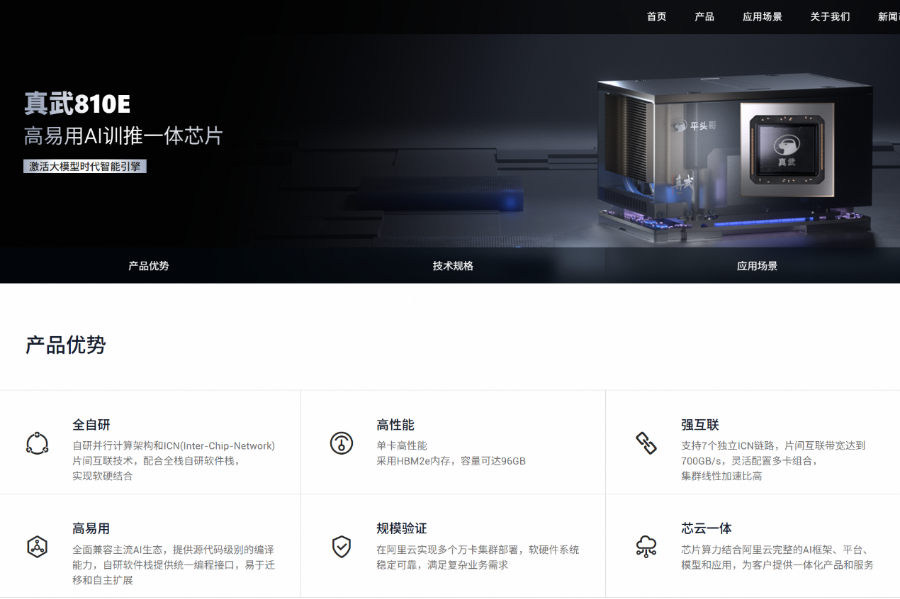
Core Insights - Alibaba's "Tongyun Ge" represents a full-stack architecture combining AI models, cloud services, and self-developed chips, marking a significant strategic shift in its AI ambitions [1][12][15] - The introduction of the "Zhenwu 810E" chip signifies a critical step in Alibaba's AI ecosystem, aiming to provide integrated solutions for AI training and inference [2][5][12] Group 1: Strategic Development - The "Tongyun Ge" strategy has been in development for 17 years, starting with the establishment of Alibaba Cloud in 2009, followed by the creation of the chip company Pingtouge in 2018, and the initiation of large model research in 2019 [2][15] - The mission of "Tongyun Ge" is to enable every individual and enterprise to participate in the AI era, reflecting a broad vision for democratizing AI access [2][12] Group 2: Technological Advancements - The "Zhenwu 810E" chip features a self-developed parallel computing architecture and inter-chip communication technology, with a memory capacity of 96G HBM2e and an inter-chip bandwidth of 700 GB/s, suitable for AI training and inference [5][8] - The chip has reportedly surpassed the performance of Nvidia's A800 and is comparable to the H20, indicating a strong competitive position in the domestic GPU market [8][9] Group 3: Market Position and Challenges - Alibaba's self-developed chips aim to reduce dependency on international giants like Nvidia, while also enhancing performance and efficiency in AI applications [9][12] - Despite the advancements, Alibaba faces challenges in hardware capabilities, including a generational gap in chip manufacturing processes and the need for extensive software ecosystem compatibility [10][11] Group 4: Industry Context - The AI competition is evolving into a comprehensive ecosystem battle, with major players like Google and Amazon also pursuing integrated solutions, highlighting the importance of cohesive hardware and software development [14][15] - The Chinese market is witnessing a strategic shift towards self-sufficiency in computing power, driven by policy support and the demand for domestic AI chip development [11][12]

金元证券每日晨报-20251224
Jinyuan Securities· 2025-12-24 05:30
Core Insights - The report highlights a significant growth in the U.S. GDP for Q3, with an annualized quarter-on-quarter increase of 4.3%, surpassing market expectations of 3.3% [9] - The consumer confidence index in the U.S. has declined for the fifth consecutive month, dropping from 92.9 to 89.1, indicating growing pessimism about the labor market and business environment [10] - The report notes a strong performance in the semiconductor sector, contributing to mixed results in European markets, with the DAX index rising by 0.23% [11] International Market Overview - U.S. stock indices recorded gains, with the Dow Jones increasing by 0.16% to 48,442.41 points, and the S&P 500 rising by 0.46% to 6,909.79 points [11] - The Hang Seng Index in Hong Kong fell by 0.11% to 25,774.14 points, while the Nikkei 225 in Japan saw a slight increase of 0.02% to 50,412.87 points [11] - The Nasdaq China Golden Dragon Index decreased by 0.58%, reflecting a downward trend in Chinese concept stocks [13] Domestic News - The offshore RMB has strengthened, surpassing the 7.02 mark against the USD for the first time since October 2024, driven by a weakening dollar index and year-end settlement demands [12] - President Xi Jinping emphasized the need for state-owned enterprises to focus on core responsibilities and enhance technological capabilities [12] - China's electric vehicle charging infrastructure reached 19.32 million units by the end of November, marking a 52% year-on-year increase [12] Key Company Developments - Novo Nordisk received FDA approval for Wegovy, the first oral medication for weight management, marking a significant advancement in the obesity treatment market [13] - JD.com reported a theft at its warehouse in France, with over 50,000 electronic devices stolen, valued at approximately €37 million [13] - ByteDance plans to increase its capital expenditure to 160 billion RMB in 2026, focusing on AI infrastructure development [13] Research Recommendations - The report discusses the potential of domestic AI ecosystems, particularly through the launch of the MUSA open-source architecture by Moore Threads, which aims to compete with NVIDIA's CUDA [14] - The performance of the computer industry is under scrutiny, with a recent decline in the industry index, but long-term prospects remain positive due to ongoing support for the AI industry [14]
当开放架构遇上“产业大集”:国产AI生态进入“群体跃迁”时刻
Tai Mei Ti A P P· 2025-12-22 10:54
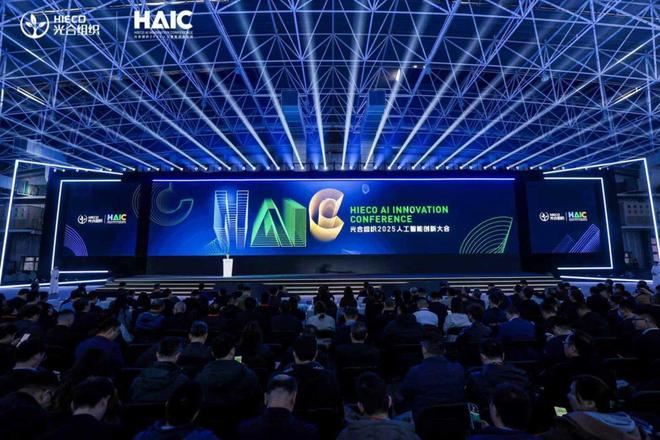
Core Viewpoint - The competitive rules of China's AI industry are being rewritten, shifting the focus from hardware performance to ecological collaboration efficiency as a new measure of competitiveness in the AI computing industry [1][4]. Group 1: Industry Trends - The HAIC2025 event showcased over 2,500 upstream and downstream enterprises, indicating a trend towards breaking down "technology walls" and "ecological walls" to achieve a "group leap" in the AI computing industry [1][3]. - The concept of "open architecture" is becoming essential for overcoming industry bottlenecks, as it promotes shared key technologies and lowers the barriers for research and application [4][6]. Group 2: Open Architecture and Collaboration - The AI computing open architecture aims to transform the industry from "physical stacking" to "chemical fusion," addressing issues such as high-end computing power shortages and high innovation thresholds [6][10]. - The launch of the scaleX super cluster, capable of deploying 10,240 AI accelerator cards and exceeding 5 EFlops in total computing power, demonstrates the technical feasibility and advantages of the open architecture [4][6]. Group 3: Partner Practices and Innovations - Companies like Qingdao Thunder Technology and Unisplendour have successfully utilized the open architecture to lower R&D costs and enhance product compatibility, leading to innovations in various industry scenarios [7][8]. - The collaborative model of "multi-vendor cooperation and shared foundation support" has proven effective in driving the domestic AI ecosystem into a "group leap" phase, with significant advancements in sectors like gaming and healthcare [7][9]. Group 4: Future Outlook - The establishment of the "AI Computing Open Architecture Joint Laboratory" aims to invest 1 billion yuan over three years, involving over 150 member units and 1,000 R&D personnel to enhance domestic AI capabilities [12]. - The ongoing reinforcement of the open architecture's "linking" role is expected to lead to a higher quality "group leap" in the domestic AI ecosystem, providing solid support for the implementation of the "Artificial Intelligence +" strategy [12].
商汤日日新Seko系列模型与寒武纪成功适配,国产算力&多模态AI实现关键跨越
Ge Long Hui· 2025-12-15 06:05
Group 1 - SenseTime officially launched Seko 2.0, the industry's first multi-episode generative agent, showcasing significant advantages in consistency for multi-episode video generation [1] - The Seko series models, including SekoIDX and SekoTalk, are built on SenseTime's proprietary technology, which has been adapted to support domestic AI chips from Cambricon, marking a key leap from language to multi-modal capabilities [1] - The LightX2V framework is designed with a highly compatible domestic adaptation plugin model, currently supporting multiple domestic chips, including Cambricon, enhancing the performance of the Seko series models [1] Group 2 - In October, SenseTime and Cambricon established a strategic partnership to optimize software and hardware jointly, facilitating a collaborative innovation between domestic large models and computing power [2] - The partnership aims to continuously optimize core model capabilities, enhance computing efficiency, and reduce resource consumption, allowing more enterprises to access high-performance multi-modal capabilities at lower costs [2] - The collaboration will also focus on improving large-scale parallel processing capabilities and developing a more flexible resource management mechanism to ensure stable model operation across diverse environments [2] Group 3 - The deep collaboration between SenseTime and Cambricon is expected to significantly enhance model efficiency, resource utilization, and cross-hardware compatibility, lowering the barriers to using multi-modal AI [3] - The partnership aims to foster a thriving domestic AI application ecosystem, creating more efficient and user-friendly product systems while providing developers with open and friendly tools [3]

信创模盒ModelHub XC | 上线两个月模型适配破千 铸就国产AI算力与应用融合新基座
智通财经网· 2025-11-27 03:22
Core Insights - Paradigm Intelligence announced that its "ModelHub XC" has achieved over 1,000 certified models in just two months, four months ahead of schedule, marking significant progress in the domestic AI ecosystem [1][12] - The platform supports a diverse range of models, from general large language models to specialized vertical models and cutting-edge innovations, providing a solid foundation for the coordinated development of domestic AI hardware and software [1][12] Group 1: Platform Development - The "ModelHub XC" platform was officially launched on September 22, 2025, aiming to address the compatibility issues between deployed models and underlying chip architectures [2] - Key milestones include the successful adaptation of complex vertical models on domestic chips, achieving commercial-grade performance standards [4] - The platform has demonstrated strong ecological expansion capabilities by completing the adaptation of 108 models in a single batch, covering various task types [11] Group 2: Technical Innovations - The platform has achieved significant breakthroughs in adapting advanced models, such as the DeepSeek-OCR, which utilizes visual modality to compress text information, addressing efficiency challenges in large language models [6] - The MiniMax-M2 model, a leading open-source agent model, has been adapted for domestic chips, showcasing its global competitiveness with 230 billion parameters [8][9] Group 3: Future Outlook - The platform aims to accelerate towards a "ten thousand model" ecosystem within a year, continuously expanding model scale and chip support [13] - The focus will be on maintaining a rapid update pace to build a more complete and efficient domestic AI infrastructure [13]
「从追赶者到引领者,路有多远?」 我们和CANN一线开发者聊了聊
机器之心· 2025-09-28 04:50
Core Viewpoint - The article discusses the transformation of the AI industry, emphasizing that the competition has shifted from hardware capabilities to a battle for software, developers, and ecosystem building, with Huawei's Ascend and its heterogeneous computing architecture CANN at the forefront of this change [1][4]. Summary by Sections CANN Open Source Announcement - Huawei's rotating chairman Xu Zhijun announced that the CANN hardware enabling will be fully open-sourced by December 30, 2025 [2]. Significance of CANN Open Source - The open-sourcing of CANN represents a profound self-revolution in the domestic AI infrastructure, aiming to break the closed model traditionally dominated by hardware manufacturers and embrace a more open and community-driven future [4][19]. - The success of the ecosystem relies on attracting academic innovation and creating a stable, universal, and efficient foundational tool for developers [5][18]. Developer Perspectives on CANN - Developers describe CANN's evolution as a challenging journey, with early versions requiring low-level programming skills, which hindered productivity [10][11]. - The introduction of the Ascend C programming language marked a significant improvement, aligning more closely with mainstream programming practices [15]. Challenges Faced by Developers - Early developers faced high technical barriers and a lack of stable architecture, leading to a difficult development environment [11][13]. - Systemic issues persisted, such as the inability to reproduce model accuracy across different frameworks due to a lack of transparency in the underlying systems [17]. The Role of Open Source - Open sourcing CANN is seen as a means to break down technical barriers and empower developers by providing transparency and control over the platform [21][23]. - The open-source model aims to foster a vibrant community where developers can contribute and innovate, moving away from reliance on a few official experts [29]. Ecosystem Empowerment - Open source provides unprecedented opportunities for deep integration between academia and industry, allowing researchers to address real-world problems and convert solutions into academic contributions [26]. - The shift from users to contributors is expected to cultivate a new generation of developers who can engage in high-quality projects [28]. Future Outlook for CANN - The current focus is on matching CUDA's capabilities while fostering original innovations within the CANN ecosystem [44]. - Huawei has committed to investing significant resources, including 1,500 petaflops of computing power and 30,000 development boards annually, to support the open-source community [45].

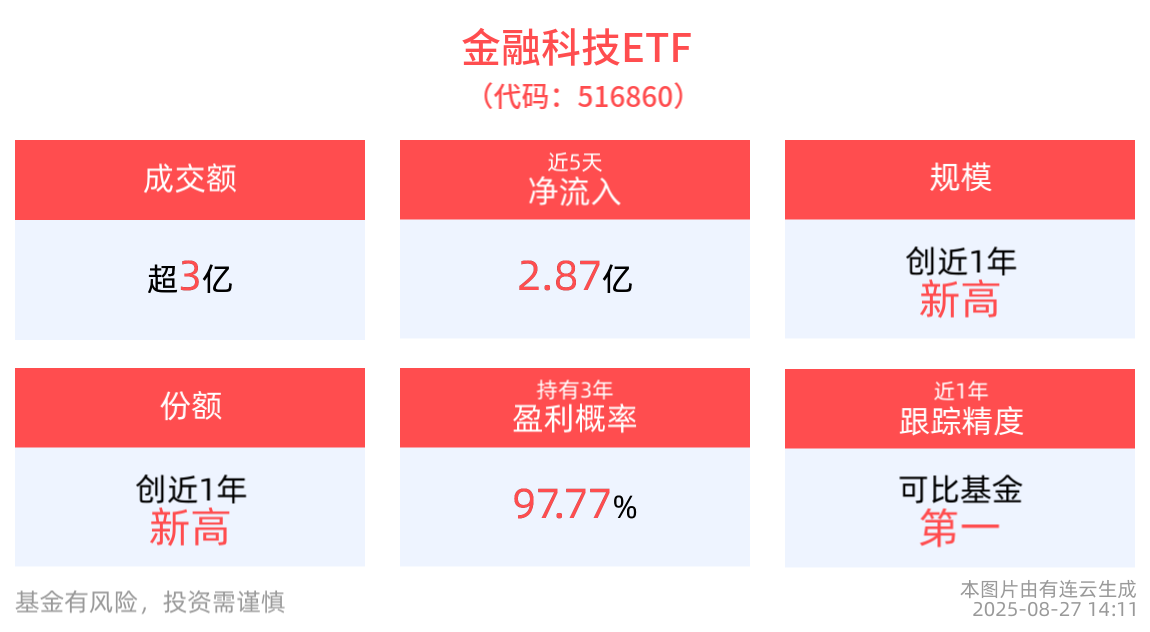
国产AI生态有望加速繁荣,金融科技ETF(516860)近1年净值上涨181.20%,最新规模、份额再创新高
Xin Lang Cai Jing· 2025-08-27 06:33
Group 1: Market Performance - As of August 27, 2025, the China Securities Financial Technology Theme Index (930986) increased by 0.40%, with notable gains in constituent stocks such as Lingzhi Software (688588) up 13.36% and Wealth Trend (688318) up 11.49% [3] - The Financial Technology ETF (516860) rose by 0.58%, with a latest price of 1.74 yuan, and has accumulated a 4.67% increase over the past week [3] - The Financial Technology ETF's trading volume was active, with a turnover rate of 17.42% and a transaction value of 369 million yuan [3] Group 2: Policy and Industry Outlook - The State Council recently released the "Artificial Intelligence+" action plan, aiming for over 70% application penetration of new intelligent terminals and agents by 2027, and over 90% by 2030, focusing on six key areas for AI integration [4] - The policy emphasizes the collaborative development of models, data, and computing power, and plans to establish several national AI application pilot bases [4] - Open-source securities believe that the domestic AI ecosystem is expected to accelerate its prosperity under the resonance of policy and technology [4] Group 3: Financial Technology ETF Metrics - The latest scale of the Financial Technology ETF reached 2.118 billion yuan, marking a one-year high, with the latest share count at 1.226 billion shares [4] - The ETF saw a net inflow of 19.05 million yuan, with a total of 287 million yuan net inflow over the past five trading days [4] - The leveraged funds continue to invest, with a net purchase amount of 1.8509 million yuan this month and a latest financing balance of 119 million yuan [4] Group 4: Performance and Returns - As of August 26, 2025, the Financial Technology ETF's net value increased by 181.20% over the past year, ranking 3rd out of 2977 index equity funds [5] - The ETF has recorded a maximum monthly return of 55.92% since inception, with an average monthly return of 10.10% and a historical three-year profit probability of 97.77% [5] - The Sharpe ratio for the ETF over the past year is 2.01, indicating strong risk-adjusted returns [5] Group 5: Risk and Fee Structure - The Financial Technology ETF has a management fee rate of 0.50% and a custody fee rate of 0.10%, which are among the lowest in comparable funds [6] - The tracking error for the ETF over the past year is 0.044%, demonstrating the highest tracking precision among comparable funds [6] - The index closely tracks the performance of companies involved in financial technology, with the top ten weighted stocks accounting for 51.26% of the index [6]