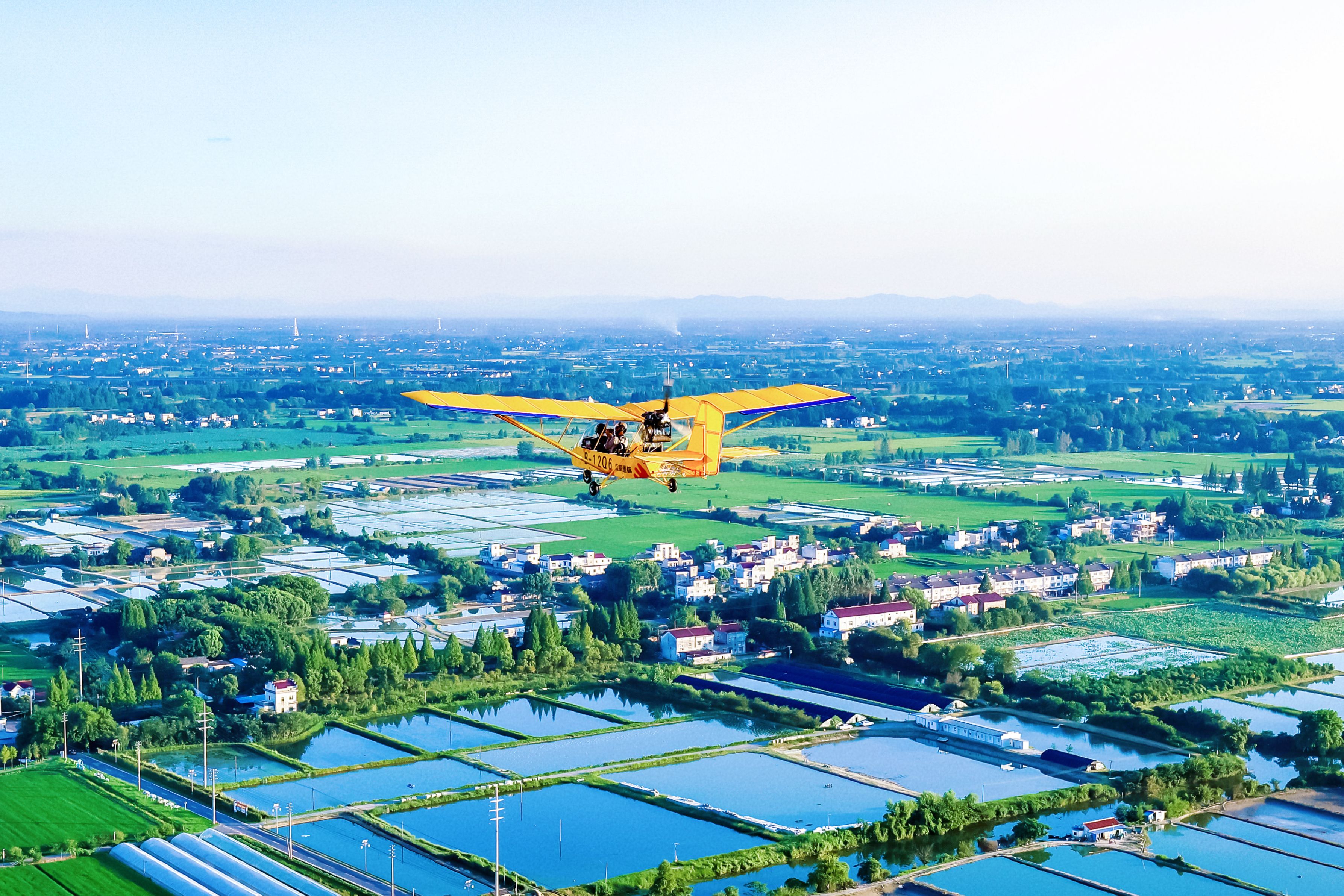
阿若拉

Search documents
长沙低空集团正式亮相!欲造“低空之城”
Xin Lang Cai Jing· 2026-01-12 12:28
Core Viewpoint - The establishment of Changsha Low Altitude Economic Development Group marks a significant step in the development of low-altitude economy in Hunan, positioning it as a key player in this emerging industry [1][10]. Group 1: Company Formation and Structure - Changsha Low Altitude Group was formed by four state-owned enterprises in Changsha with a registered capital of 200 million yuan, where Changsha Jiao Investment Group holds 85% of the shares [3][12]. - The group aims to integrate the professional advantages of its shareholders, focusing on low-altitude infrastructure construction, operational services, and industry cultivation [4][13]. Group 2: Strategic Importance of Low Altitude Economy - The low-altitude economy is recognized as a strategic emerging industry, essential for fostering new productive forces and driving economic transformation [3][12]. - Hunan has been designated as the first province in China for comprehensive low-altitude airspace management reform, achieving 12 pioneering reform results [3][12]. Group 3: Market Potential and Growth Projections - By 2035, the market size for aerospace and low-altitude economy in China is expected to exceed 10 trillion yuan and 3.5 trillion yuan, respectively, indicating a vast development potential in the low-altitude economy [6][15]. - The low-altitude industry in Changsha is projected to surpass 10 billion yuan by 2024, accounting for two-thirds of the province's total [6][15]. Group 4: Infrastructure and Ecosystem Development - Changsha is developing a comprehensive low-altitude ecosystem, including the establishment of a low-altitude flight service platform and a network of take-off and landing points [4][18]. - The city has signed strategic cooperation agreements with leading enterprises and financial institutions to enhance technology, scene construction, and data sharing [9][18]. Group 5: Future Goals and Applications - The city aims to create a "Low Altitude City" that covers the entire low-altitude field, leveraging its strengths in engineering machinery, artificial intelligence, and navigation technology [7][16]. - By 2030, the low-altitude economy in Changsha is expected to exceed 100 billion yuan, with applications in tourism, logistics, emergency rescue, and urban governance [7][16].

新型工业化持续走深走实
Jing Ji Ri Bao· 2026-01-06 22:18
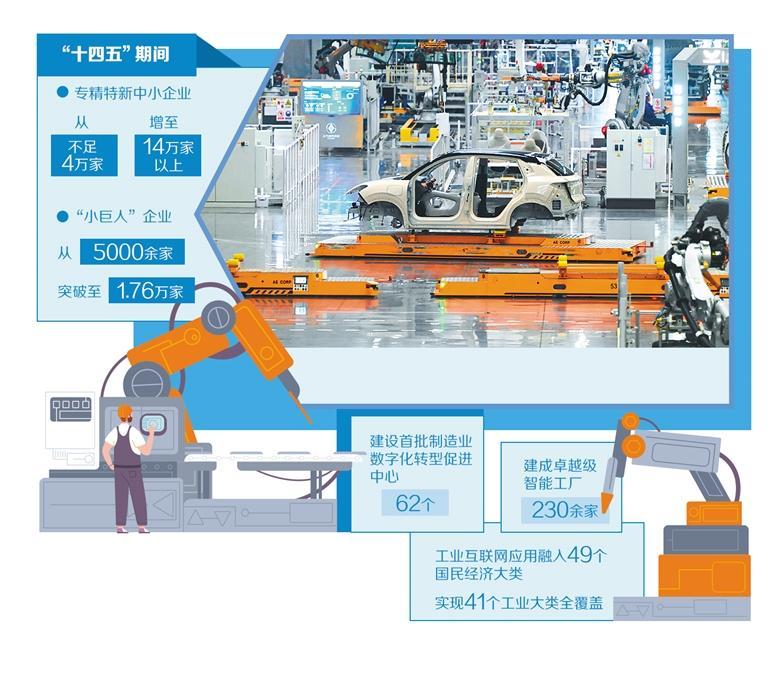
Group 1: Modern Industrial System Development - The core idea emphasizes the importance of modern industrial systems as the foundation of a modernized economy, with a focus on consolidating and strengthening the real economy [2] - The Ministry of Industry and Information Technology (MIIT) has been advancing new industrialization since the 14th Five-Year Plan, enhancing the overall strength, quality, efficiency, innovation, competitiveness, and risk resistance of the industry [2] - Various regions are accelerating technological innovation and promoting industrial agglomeration and digital transformation, leading to significant progress in building a modern industrial system centered on advanced manufacturing [2][3] Group 2: Innovation and Achievements - China's industrial technology innovation capabilities are steadily improving, with notable achievements in key areas such as stage equipment, photography lenses, high-speed trains, and advanced manufacturing equipment [3] - The first domestically produced light sport aircraft, "Arolora," has received civil aviation certification and has seen sales orders exceed 100 units, with total sales approaching 400 units and over 200,000 flight hours [4] - The number of specialized and innovative small and medium-sized enterprises has increased from less than 40,000 to over 140,000 during the 14th Five-Year Plan, indicating a significant enhancement in the competitiveness of Chinese enterprises [4] Group 3: Industrial Clusters and High-Quality Development - Industrial clusters are crucial for promoting high-quality development and transformation of manufacturing enterprises, with a focus on creating specialized parks and industrial chain ecosystems [5] - The Hunan Medical Device Industrial Park has rapidly developed its medical device industry from scratch in just four years, showcasing the effectiveness of industrial cluster development [5] - The park has improved project approval processes, reducing approval time by 72% and streamlining operations to establish a precise and professional industrial service system [5] Group 4: Digital Transformation in Traditional Industries - Traditional industries such as steel and machinery are accelerating their digital transformation, leveraging artificial intelligence to unlock new potential [7][8] - Shandong Haihua Group has implemented AI-driven strategies to enhance equipment maintenance and inspection, achieving over 95% accuracy in fault identification and a 50% increase in inspection efficiency [7] - The MIIT is promoting digital transformation in manufacturing, establishing 62 digital transformation promotion centers and over 230 exemplary smart factories [10] Group 5: Challenges and Solutions in Digital Transformation - Companies face challenges in recognizing the importance of digital transformation, which is essential for initiating the process [9] - The need for targeted policies to reduce transformation costs and showcase successful case studies is emphasized to motivate enterprises [9] - The MIIT is committed to advancing the digital transformation of the manufacturing sector, focusing on high-level openness and steady development of industrial upgrades [10]

技术大爆炸后,应用场景落地成为低空经济规模化的爆发点
3 6 Ke· 2025-05-14 12:06
Core Insights - The Chinese government has increasingly prioritized the development of the low-altitude economy since 2021, with policies aimed at fostering its growth, leading to a market size exceeding 580 billion yuan in 2024, reflecting double-digit growth [1] - The Civil Aviation Administration of China predicts that the low-altitude economy market will reach 1.5 trillion yuan by 2025 and potentially grow to 3.5 trillion yuan by 2035 [2] Industry Overview - The low-altitude economy is gaining traction in various sectors such as logistics, agricultural spraying, tourism, and emergency rescue, driven by policy support, technological advancements, and market demand [3] - Despite the growth, significant gaps remain in the low-altitude sector, particularly in tourism, where only 0.1% of A-level scenic spots have adopted low-altitude sightseeing [3] - The limited number of general aviation airports, with only 449 registered by the end of 2023, poses challenges for the operation and range of low-altitude aircraft [3] Company Insights - Bee Low Altitude, founded 13 months ago, focuses on providing comprehensive service solutions in the low-altitude sector, initially targeting tourism and sightseeing applications [10] - The company has secured exclusive operating rights in over 110 top-tier scenic spots across 23 provinces, generating over 8 million yuan in revenue in the first quarter of 2024 [10] - Bee Low Altitude operates as a platform connecting upstream manufacturers of low-altitude products with downstream application scenarios, emphasizing the importance of data from each flight for the industry [10][14] Business Model - The company aims to create a "scene-consumption-supply" business loop, expanding into four core application areas beyond tourism [10] - Bee Low Altitude provides various aircraft types, including manned and unmanned options, and focuses on enhancing operational efficiency in sectors like power and water inspection, logistics, and emergency rescue [11][14] - The revenue model primarily relies on platform commissions, with plans to share flight data with aircraft manufacturers [14]