降噪耳机

Search documents
扛起英雄的旗帜
Xin Lang Cai Jing· 2026-01-22 00:44
Core Viewpoint - The article highlights the legacy and ongoing spirit of the "Dadu River Company" of the 74th Group Army, emphasizing the importance of historical remembrance and modern military training innovations as they continue to honor their heroic past while adapting to contemporary warfare challenges [2][7]. Group 1: Historical Significance - The "Dadu River Company" was honored for its bravery during the Long March, specifically on May 25, 1935, when 17 soldiers crossed a perilous river to pave the way for the Red Army's northward advance [2]. - The company has been awarded multiple honors, including three collective first-class merits and numerous other accolades, reflecting its commitment to maintaining a strong military tradition [4]. Group 2: Modern Training and Innovation - The company has embraced modern technology in training, including the development of a shooting simulation system and various drone technologies, showcasing a shift from traditional methods to innovative practices [5][6]. - Soldiers are now trained using advanced equipment such as drones and VR technology, which enhances their operational capabilities and reflects the evolving nature of military engagements [6]. Group 3: Personal Development and Team Spirit - Young soldiers, like Private Wei Duanyang, have found motivation and success through the company's rich history, leading to personal achievements in both theoretical knowledge and physical training [4]. - The mentorship culture within the company fosters a competitive spirit, as exemplified by Sergeant Chen Yinglin's transformation from average to top performer through dedication and inspiration from experienced soldiers [5]. Group 4: Legacy and Future Aspirations - The visit of veteran Xie Shipeng serves as a reminder of the enduring "Dadu River Spirit," which emphasizes loyalty, courage, and the importance of passing down these values to future generations [7]. - The company continues to strive for excellence, aiming to uphold its legacy while navigating the complexities of modern warfare, ensuring that the spirit of the past remains relevant in today's military context [7].


股民也有自己的“免费鸡蛋”,爆肝整理A股薅羊毛大全
凤凰网财经· 2025-12-02 12:59
Core Viewpoint - The article discusses the recent trend in the A-share market where companies are offering perks to shareholders, reminiscent of the practices of the Japanese "stock god" Kiyotaka, who lived off benefits from numerous companies [1][2]. Group 1: Shareholder Benefits - Companies like Emei Mountain A and Qianwei Central Kitchen are providing incentives such as free skiing and hot spring access for shareholders holding a minimum number of shares [1]. - The article highlights a variety of perks available to shareholders, including food packages, travel discounts, and health products, suggesting that shareholders can benefit significantly from these offers [4][5]. Group 2: Investment Strategy - The article encourages shareholders to take advantage of these benefits without making large investments in low-quality stocks, emphasizing a cautious approach to "sheep shearing" [2][5]. - It suggests that while these perks can enhance personal enjoyment and savings, the primary goal should remain focused on profitable investments rather than merely collecting freebies [5].

记者探访:海南离岛免税“升级”政策实施首日的免税消费热
Sou Hu Cai Jing· 2025-11-01 13:50
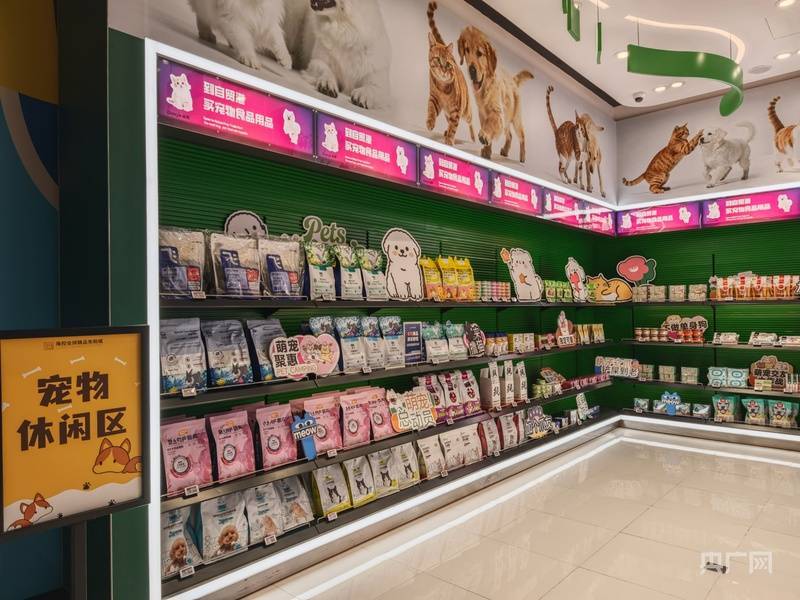
Core Viewpoint - The new Hainan duty-free policy, effective from November 1, 2025, expands the range of duty-free products to 47 categories and introduces new requirements for local residents, enhancing consumer shopping experiences and meeting diverse demands [1][12]. Group 1: Policy Changes - The policy adjustment includes one addition and three optimizations: the addition of six categories of domestic products for duty-free sales, an expanded user base for the policy, and allowing local residents to purchase duty-free items once a year without limits on the number of purchases [1][12]. - The new policy aims to broaden the benefits of the duty-free shopping system, catering to the diverse shopping needs of consumers [1]. Group 2: Consumer Experience - The introduction of new product categories, such as digital electronics and household appliances, has attracted significant interest from younger consumers, enhancing the shopping experience [3][4]. - The "immediate purchase and pick-up" option simplifies the shopping process for local residents, making duty-free shopping as convenient as shopping at a local supermarket [3][4]. Group 3: Retail Adjustments - Duty-free stores have created specialized areas, such as the "Good Goods Market," to showcase new categories like pet supplies, musical instruments, and household appliances, facilitating one-stop shopping for customers [4][8]. - Retailers are actively training staff on the new policy to ensure they are well-informed and can provide effective customer service [6][8]. Group 4: Regulatory Measures - The Hainan Customs has implemented measures to ensure the smooth execution of the new policy, focusing on key operational aspects and providing guidance to businesses on compliance with the new regulations [8][12]. - The customs authority has developed regulatory plans to accommodate new shopping scenarios for local residents and departing travelers, optimizing the customs clearance process [8][12].
海南离岛免税政策“升级”首日:离境旅客享惠 国货首次上架
Zhong Guo Xin Wen Wang· 2025-11-01 11:40
Core Points - The new duty-free policy in Hainan has been implemented, allowing departing travelers to enjoy a wider range of duty-free products, including domestic brands for the first time [1][2] - The policy expansion includes categories such as pet supplies, portable musical instruments, mini drones, and small appliances, catering to diverse consumer needs [2] - Local residents can now purchase duty-free items without limit as long as they have a record of leaving the island within a calendar year, enhancing shopping opportunities [3] Group 1 - The new policy allows for the sale of domestic products in duty-free stores, including clothing, footwear, and local coffee, with significant tax savings for consumers [2] - The introduction of electronic products and trendy items, such as noise-canceling headphones and instant cameras, is particularly appealing to younger consumers [2] - Duty-free stores are increasing promotional activities, such as consumption exchange and shopping vouchers, to boost sales during the traditional peak season [3]
长沙首家市内免税店开业人气旺
Sou Hu Cai Jing· 2025-09-27 05:18
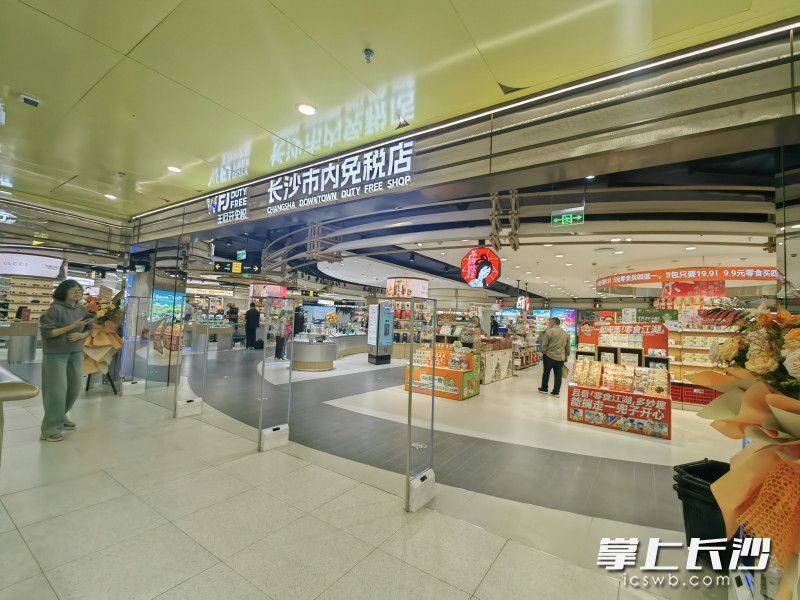
Core Viewpoint - The opening of Changsha's first city duty-free store marks a significant development in the local retail landscape, integrating duty-free, taxable, and cross-border shopping to enhance consumer choices [1][7]. Group 1: Store Opening and Features - The first city duty-free store in Changsha opened on September 26 at Wangfujing Department Store in Wuyi Square, making it the first of its kind in Hunan and among the first in the country [1][3]. - The store features a design that incorporates local cultural elements and the spacious feel of an airport terminal, attracting many consumers [6]. Group 2: Consumer Experience and Promotions - The store has received positive feedback from consumers, with promotions such as "newcomer gifts," check-in gifts, and interactive lottery draws to reward customer support [6][4]. - The interactive experience area, offering tastings of cocktails, English tea, and freshly brewed coffee, has become a focal point for visitors [6]. Group 3: Business Model and Offerings - The store operates under a model that combines "duty-free + taxable + cross-border" shopping, catering to both outbound travelers and local consumers [7]. - The duty-free area serves consumers with valid outbound flight tickets and travel documents, offering products from over 50 international brands at prices 10% to 30% lower than market rates [7]. - The taxable area targets all consumers, featuring a "cultural trend gathering place" and an "integrated platform for domestic and foreign trade," showcasing local specialties and international products [8]. - The cross-border product display area allows nationwide consumers to shop online and receive products directly at home, enhancing accessibility to global goods [8]. Group 4: Strategic Importance - The opening of the duty-free store is a step towards building a high-level open consumption system in Changsha, promoting integrated development of domestic and foreign trade, and contributing to the city's goal of becoming an international consumption center [8].

京东3C数码服务网络再升级 宿迁十店同庆打造“一站式”焕新体验
Jiang Nan Shi Bao· 2025-09-02 10:40
Group 1 - The core event is the launch of a new wave of offline consumption for JD's 3C digital products in Suqian, Jiangsu, featuring ten stores celebrating together and offering a comprehensive digital experience for consumers [1][2] - Consumers can enjoy various promotions, including gifts like sports water bottles and umbrellas, and have the chance to win a "1g gold" prize by becoming store members [1][2] - The stores provide a wide range of 3C digital products catering to different consumer needs, from gaming laptops to smart office devices, enhancing the shopping experience with hands-on interaction [2][3] Group 2 - JD's 3C digital stores emphasize an immersive shopping experience, allowing consumers to see and experience products firsthand, including the latest brand launches available both online and offline [3] - The integration of JD's O2O capabilities enables a "second delivery" service, meeting the urgent demand for quick purchases of essential items like power banks and data cables [3] - Additional community-focused activities include a free printing service and an AI phone experience event, aimed at engaging local residents and enhancing their digital lifestyle [4][6] Group 3 - The promotional activities are designed to attract consumers, with incentives for membership registration and participation in various tasks to earn rewards [5] - The stores are committed to expanding their service network in Suqian, ensuring consumers have access to quality products, professional consultations, and reliable after-sales support [6]


政策红利深度释放激活文旅市场潜力 “China Travel”持续升温解锁多样中国
Yang Shi Wang· 2025-07-16 03:46
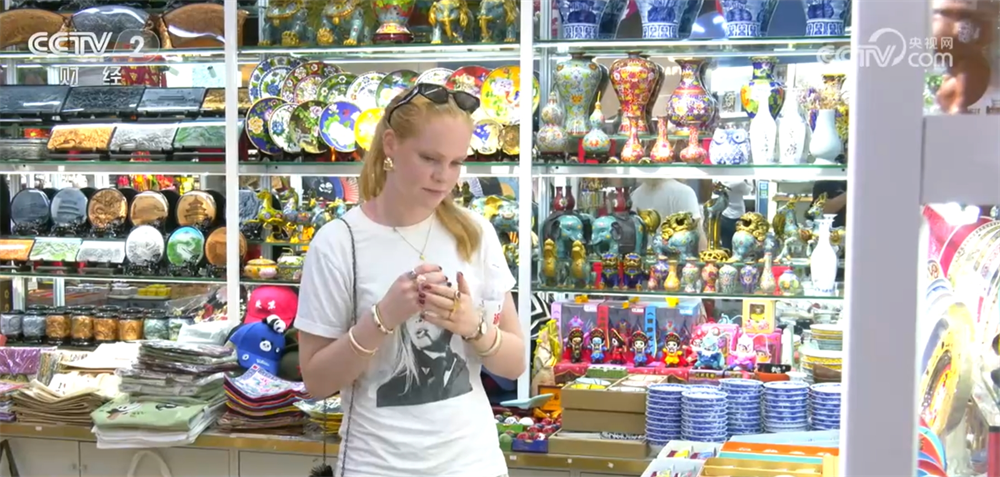
Core Insights - The article highlights the significant increase in foreign tourist arrivals in China, driven by visa-free policies and tax refund initiatives, leading to a shift from traditional sightseeing to immersive cultural experiences [1][15]. Group 1: Tourist Trends - Foreign tourists are increasingly engaging in diverse experiences in China, moving beyond mere sightseeing to exploring local culture and traditions [9][17]. - The number of foreign tourists visiting Beijing's Xiushui Street has doubled compared to the same period last year, with sales expected to rise by over 80% [5]. - In Shenzhen's Huaqiangbei, the number of foreign visitors has increased by 50% year-on-year, with daily averages rising from 7,000 to 8,000 in June [7]. Group 2: Cultural Engagement - Tourists are showing a keen interest in cultural products, with a notable demand for traditional Chinese items such as tea cups and chopsticks [3][5]. - Cultural experience products have seen a 300% increase in bookings, with traditional crafts and performances gaining popularity among foreign visitors [15]. - Tourists are seeking deeper cultural understanding, as evidenced by their interest in local lifestyles and historical contexts during guided tours [13][17]. Group 3: Policy Impact - The expansion of visa-free policies and the enhancement of travel convenience have contributed to a substantial rise in foreign tourist numbers, with Beijing and Shanghai seeing increases of 36.5% and 38.5% respectively [17]. - The article emphasizes that these policy changes are making China an increasingly attractive destination for international travelers, showcasing a more vibrant and authentic image of the country [17].
“人气流量”激活“消费增量” 暑期文旅市场“热”力全开
Yang Shi Wang· 2025-07-15 17:25
Group 1: Domestic Cultural and Tourism Market - The domestic cultural and tourism market is experiencing significant growth during the summer, becoming a key driver of consumption [1] - The "Su Super" football league has attracted large crowds, with single match attendance exceeding 60,000 since May [1][3] - Jiangsu's tourism sector has seen an 80% increase in visitor numbers and revenue in July, with hotel occupancy rates reaching nearly 100% [3] Group 2: Night Economy and Consumption Trends - The night economy is thriving, with commercial districts creating diverse consumption scenarios combining food, shopping, and football [5] - A barbecue restaurant in Jiangsu reported a doubling of customer traffic, with products selling out much earlier than before [7] Group 3: Economic Impact of Events - The "Su Super" season is projected to generate over 300 million yuan in economic benefits, with each city in Jiangsu expected to gain over 20 million yuan [7] - The integration of cultural events with tourism is enhancing the overall consumer experience, promoting a more immersive and interactive environment [7] Group 4: Film and Cultural Integration - The animated film "Ne Zha" achieved a box office of 15.9 billion yuan globally, boosting related merchandise sales to several hundred billion yuan [9] - The concept of "ticket root economy" is emerging, where a movie ticket can unlock discounts across various tourism and dining experiences [9] Group 5: Non-Heritage Cultural Tourism - There has been a 40% increase in participation in non-heritage activities during the Spring Festival, with over 490 million people engaging in such events [13] - The popularity of immersive tourism projects featuring traditional crafts and performances is on the rise [11][13] Group 6: Foreign Tourist Trends - The number of foreign tourists visiting China has significantly increased, with a 100% rise in visitors to Beijing's shopping areas compared to the previous year [16] - In Shenzhen, foreign visitors to the electronics market grew by 50% in the first half of the year [18] Group 7: Cultural Experience Demand - Foreign tourists are increasingly seeking deeper cultural experiences, moving beyond traditional sightseeing to engage with local lifestyles [20][23] - The demand for immersive cultural experiences, such as non-heritage workshops and local performances, has surged, with some bookings increasing by 300% [22]

一觉醒来,我们成“工业克苏鲁”了
3 6 Ke· 2025-05-29 02:38
Core Viewpoint - The article draws a parallel between the concept of "Cthulhu" in literature and China's manufacturing industry, suggesting that China's manufacturing capabilities are vast, complex, and often misunderstood, akin to the ancient gods in Lovecraft's mythos [3][6]. Group 1: Manufacturing Cost Dynamics - The article highlights that the low prices of Chinese manufactured goods, such as a disposable lighter costing around 0.47 yuan each, are not due to low manufacturing costs but rather due to innovative business models that focus on advertising revenue rather than product sales [6][8]. - It argues that foreign manufacturing is expensive not because of production costs but due to high brand premiums and inefficiencies in non-manufacturing processes [6][7]. - The example of GoPro illustrates how Chinese manufacturers have successfully reduced costs by utilizing reverse engineering and modular manufacturing, allowing them to create similar products at significantly lower prices [8][9]. Group 2: Reverse Innovation and Supply Chain - Chinese manufacturers have adopted "reverse innovation" strategies, allowing them to bypass patent barriers by developing alternative technologies that achieve similar functionalities without infringing on existing patents [8][9]. - The modular manufacturing approach in China enables rapid assembly of products using standardized components, which contrasts with the custom manufacturing processes often used by Western brands [11][12]. - The article emphasizes the strength of China's supply chain, particularly in Shenzhen, where a dense network of suppliers and manufacturers facilitates quick and cost-effective production [13][16]. Group 3: R&D Efficiency - The article discusses how China's engineering workforce, which numbers around 4 million, allows for high efficiency in research and development, enabling rapid product iterations and market responsiveness [19][20]. - It contrasts the slow and costly R&D processes in Western companies, where high salaries and small teams hinder innovation speed, with China's ability to quickly develop and test new products [18][19]. - The success of companies like DJI in the drone market exemplifies how rapid iteration and a full-chain engineering approach can lead to significant market share and competitive pricing [20][22]. Group 4: Market Impact and Consumer Perception - The rise of Chinese manufacturing has disrupted the market for high-end products, making previously luxury items accessible to a broader consumer base [23][26]. - The article likens the current competition between Chinese manufacturers and Western luxury brands to the historical conflict between artisanal guilds and emerging factories, highlighting the shift in consumer perception regarding product value and pricing [25][26]. - It concludes that the success of Chinese manufacturing reveals inefficiencies in traditional high-end production processes, prompting consumers to reassess what constitutes true value in products [26][27].


被逼成「噪敏人」的年轻人,买出一个千亿产业
36氪· 2025-05-15 12:59
Core Viewpoint - The article discusses the growing phenomenon of "noise sensitivity" among urban dwellers, particularly young people, highlighting the impact of noise pollution on mental health and the increasing demand for noise-reducing products and living environments [28]. Group 1: Noise Sensitivity and Its Effects - "Noise sensitivity" is characterized by an individual's heightened sensitivity to noise, leading to sleep disturbances and emotional distress [5][6]. - Prolonged exposure to noise can result in severe mental health issues, such as depression, as illustrated by the experiences of individuals like Lin Ran and Jie Yi [7][10]. - The prevalence of noise complaints is significant, with 35% of housing quality complaints in 2024 related to poor sound insulation, indicating a widespread issue in urban living [28]. Group 2: Coping Mechanisms and Market Response - Young individuals are increasingly investing in noise-canceling products, with the noise-canceling earplug market projected to reach 3.215 billion yuan by 2024, growing at a rate of 7.03% in 2025 [15]. - The demand for quieter living spaces has led to a rise in the "silent economy," with individuals seeking older buildings known for better sound insulation [15][24]. - The article notes that the new residential project standards set to be implemented in May 2025 will impose stricter sound insulation requirements, potentially reshaping the housing market [24][26]. Group 3: Housing Market Dynamics - The article highlights the disparity in housing options, where lower-income groups are often forced into noisy environments due to affordability, leading to a cycle of "noise poverty" [24]. - The anticipated changes in building regulations may increase construction costs, which could be passed on to consumers, affecting housing affordability [26]. - The experiences of individuals like Lin Ran, who opted for rural living to escape noise, reflect a shift in housing preferences towards quieter environments, despite the challenges of accessibility and commuting [22][24].