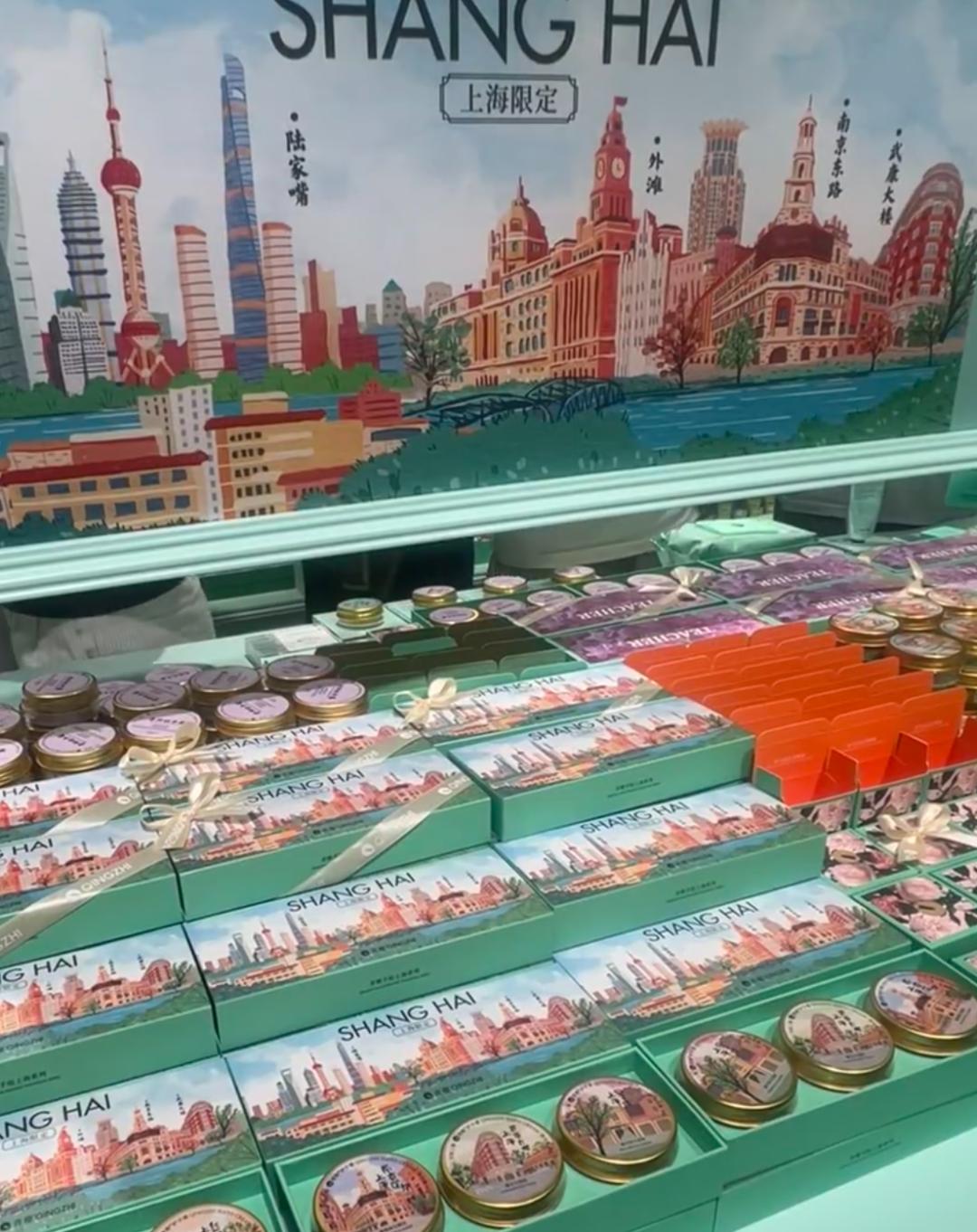
青稚护手霜

Search documents
景区护手霜,为什么销售额翻番?
FBeauty未来迹· 2025-12-25 09:37
Core Insights - The article discusses the rising trend of cultural creative hand creams in tourist areas, highlighting their appeal as both practical gifts and social media props for young consumers [4][5]. Group 1: Market Dynamics - Cultural creative hand creams have become popular as souvenirs in tourist spots, with various themed packaging catering to different consumer preferences [5]. - The success of these products is attributed to their ability to meet emotional and practical needs, creating a closed loop of "scene adaptation + experience empowerment + value resonance" [5]. Group 2: Consumer Insights - The demand for hand creams has evolved from basic moisturizing to a multi-scenario product that carries emotional value, with key dimensions being "effectiveness anchor + scene adaptation + demographic segmentation" [10]. - Scent is the primary factor influencing purchase decisions, with 60% of consumer reviews mentioning it, compared to only 17% for moisturizing properties [12]. Group 3: Target Demographics - The primary consumer demographic is women aged 21-35, who exhibit distinct preferences that influence product positioning [13]. - Younger consumers (21-25 years) prefer affordable, well-packaged products, while working professionals (26-35 years) prioritize non-greasy textures and subtle fragrances [14]. Group 4: Brand Strategies - Brands like Qingzhi and Huke have successfully navigated the market by addressing core consumer needs: Qingzhi focuses on the tourism gift market, while Huke emphasizes effective ingredients and user experience [17][19]. - Qingzhi's sales reached 2.27 million yuan with a volume of 32,900 units in October 2025, achieving significant growth through a "offline experience + online repurchase" model [6][18]. - Huke's online sales reached 5.49 million yuan with 72,000 units sold in the same period, driven by targeted ingredient benefits and enhanced user experience [19]. Group 5: Market Evolution - The hand cream market is transitioning from a focus on basic moisturizing to a more nuanced approach that combines effectiveness with emotional resonance, creating new opportunities for brands [21].

景点里的护手霜店:毛利70%,到底哪些“冤大头”在买单?
创业邦· 2025-11-09 10:09
Core Viewpoint - The article discusses the rise of a standardized hand cream brand named "Qingzhi," which has successfully penetrated various tourist markets across China by appealing to young consumers' gift-giving anxieties, despite its lack of local authenticity [11][31][60]. Group 1: Brand Strategy and Market Positioning - "Qingzhi" has adopted a standardized product and marketing approach, allowing it to replicate its store design and product offerings across multiple cities, creating a perception of local specialty [11][12][60]. - The brand's marketing strategy leverages the notion of "must-buy" local products, which resonates with young consumers looking for unique gifts, despite the products being identical across locations [30][59]. - The pricing strategy positions the hand creams at around 50-128 yuan, appealing to consumers' desire for affordable yet thoughtful gifts [51][53]. Group 2: Consumer Behavior and Market Trends - Young consumers experience "gift anxiety," leading them to seek out products that appear unique and locally sourced, which "Qingzhi" capitalizes on through its branding [31][32]. - The traditional uniqueness of local specialties is diminishing due to the prevalence of e-commerce, making it challenging for consumers to find truly unique gifts [32][33]. - The blurring lines between souvenirs and practical gifts have made hand creams an attractive option, as they are perceived as useful and suitable for a wide audience [38][39]. Group 3: Profitability and Business Model - The production cost of hand creams is relatively low, with estimates around 5-8 yuan per unit, allowing for high profit margins when sold at retail prices [43][53]. - The business model benefits from high foot traffic in tourist areas, enabling "Qingzhi" to maintain a high pricing strategy while keeping operational costs low through standardized store designs [48][54]. - The franchise model allows for rapid expansion with minimal initial investment from franchisees, further enhancing profitability [73][75]. Group 4: Competitive Landscape and Challenges - The success of "Qingzhi" has led to a surge of competitors entering the market, many of whom replicate its branding and product offerings, leading to market saturation [66][70]. - As competition increases, the novelty of "Qingzhi's" offerings may diminish, potentially impacting consumer interest and sales [75][76]. - The brand's reliance on a standardized model may pose risks as consumer preferences shift towards more personalized and unique experiences in tourism [76].

景点里的护手霜店:毛利70%,到底哪些「冤大头」在买单?
36氪· 2025-11-06 00:12
Core Viewpoint - The article discusses the rise of a standardized hand cream brand named "Qingzhi," which has become a ubiquitous presence in tourist areas across China, appealing to young consumers' gift-giving anxieties while operating on a high-profit margin model [4][9][32]. Group 1: Brand Overview - "Qingzhi" operates a chain of hand cream stores that present themselves as local must-buy items in various cities, despite being a standardized product without local ingredients or craftsmanship [7][8]. - The brand has successfully expanded across numerous tourist attractions, creating a perception of local authenticity while maintaining a uniform product offering [6][8][9]. Group 2: Consumer Behavior - Young consumers experience "gift anxiety," leading them to seek out unique local products, which "Qingzhi" capitalizes on by marketing its hand creams as local specialties [26][31]. - The brand's packaging and marketing strategies resonate with young consumers, who often feel pressured to find meaningful gifts for friends and family [10][14][26]. Group 3: Profitability and Business Model - The hand cream category is characterized by low production costs and high retail prices, allowing "Qingzhi" to achieve significant profit margins, with gross profit rates exceeding 50% [32][41]. - The brand's operational model is designed for rapid expansion, with standardized store layouts and minimal inventory requirements, further enhancing profitability [41][42]. Group 4: Market Challenges - The success of "Qingzhi" has led to increased competition, with many imitators entering the market, resulting in a saturation of similar stores in tourist areas [48][58]. - As the novelty of "local must-buy" products diminishes, consumer interest may wane, posing a risk to the brand's continued success [58][59].

景点里的护手霜店:毛利70%,到底哪些“冤大头”在买单?
3 6 Ke· 2025-10-24 03:25
Core Viewpoint - The article discusses the rise of a hand cream brand named "Qingzhi," which has standardized its products and marketing strategies across various tourist locations in China, appealing to young consumers' desire for local souvenirs while raising questions about authenticity and differentiation [3][4][14]. Group 1: Brand and Market Strategy - "Qingzhi" has established a presence in numerous tourist spots, using a uniform store design and product offering, which creates a perception of local authenticity despite being a standardized product [3][4][28]. - The brand's marketing strategy includes labeling its products as "must-buy" items specific to each city, which resonates with young consumers looking for unique gifts [4][14]. - The hand cream's pricing strategy is designed to be affordable, with a typical price around 50 RMB, making it an attractive option for young consumers seeking "light gifts" [17][24]. Group 2: Consumer Behavior and Trends - Young consumers experience "gift anxiety," leading them to seek out products that appear unique and locally sourced, despite the reality of standardization [14][16]. - The article highlights a trend where traditional souvenirs are losing their uniqueness due to the prevalence of similar products available online, making "Qingzhi" an appealing alternative [14][16]. - The emotional aspect of gift-giving is emphasized, as consumers prefer practical gifts that convey thoughtfulness without being overly extravagant [16][17]. Group 3: Profitability and Business Model - The hand cream category is characterized by low production costs and high profit margins, with "Qingzhi" reportedly achieving a gross profit margin exceeding 50% [18][24]. - The brand's operational model allows for rapid expansion with minimal investment, as it requires low initial costs for franchisees and standardized store setups [25][26]. - The article notes that the brand's success has led to increased competition, with many imitators entering the market, which could dilute the perceived uniqueness of "Qingzhi" [31][37]. Group 4: Challenges and Future Outlook - The proliferation of similar "must-buy" hand cream stores in tourist areas may lead to consumer fatigue and a decline in the novelty of the product [37]. - As the market becomes saturated with similar offerings, "Qingzhi" faces the challenge of maintaining consumer interest and differentiating itself from competitors [30][37]. - The brand's reliance on a standardized model may limit its ability to innovate and adapt to changing consumer preferences for more unique and personalized products [27][30].