
青贮贷

Search documents
宁夏固原建成626个农村普惠金融综合服务点
Xin Lang Cai Jing· 2026-02-27 14:18
Core Viewpoint - The Ningxia Hui Autonomous Region is advancing its inclusive finance reform in Guyuan City, aiming to enhance financial services for small and micro enterprises and rural areas through various initiatives and products [1][3]. Group 1: Financial Initiatives - The People's Bank of China Ningxia Branch has established a dual dispatch mechanism with 57 financial officers and 11 special commissioners to promote financial services in rural areas [1][3]. - A total of 626 comprehensive rural inclusive finance service points and 57 standardized service points have been set up, achieving full coverage of basic financial services in rural areas [1][3]. Group 2: Loan Statistics - By the end of 2025, inclusive finance loans in key areas of Guyuan City reached 35.28 billion yuan, a year-on-year increase of 8.0%, accounting for 48.1% of total loans in the city [3]. - Loans to farmers amounted to 33.7 billion yuan, also reflecting an 8.0% year-on-year growth, with 44,000 small and micro loan accounts, marking a 15.3% increase [3]. Group 3: Product Development - Innovative financial products such as "Qingzhu Loan," "Niu Jin Loan," "Starch Loan," and "Village Collection Loan" have been developed to meet diverse credit needs and improve credit efficiency and sustainability [3]. - The inclusive finance reform aims to create financial products that are understandable, usable, and sustainable, focusing on key industries like beef cattle, cool-season vegetables, potatoes, and traditional Chinese medicine [3].

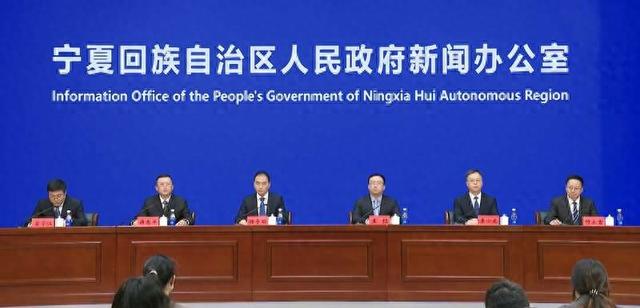
宁夏固原普惠金融改革试点成效显著 金融活水精准滴灌乡村振兴
Zhong Guo Xin Wen Wang· 2026-02-27 09:00
Core Viewpoint - The People's Bank of China emphasizes the importance of inclusive finance reform in Guoyuan City, which has been selected as a pilot city for promoting rural revitalization and the development of characteristic industries since September 2025 [1] Group 1: Financial Reform Achievements - Guoyuan City has made significant progress in reforming its financial mechanisms, services, and product innovations, focusing on rural revitalization and characteristic industry development [1] - The city has established a multi-party linkage mechanism with a dedicated team and a comprehensive list to promote financial services [2] - By the end of 2025, loans in key inclusive finance areas reached 35.28 billion yuan, an increase of 8% year-on-year [2] Group 2: Financial Services and Products - Guoyuan has set up a microfinance service demonstration branch and deployed 57 village financial officers and 11 special representatives, achieving 100% coverage of basic financial services in rural areas [2] - Innovative credit products such as "Niu Jin Loan," "Qing Zhi Loan," "Starch Loan," and "Village Collective Loan" have been introduced to address challenges like lack of collateral and information asymmetry [2] - The financing amount for accounts receivable reached 1.098 billion yuan, providing credit support of 160 million yuan to 795 rural collective economic organizations [2] Group 3: Financial Ecosystem Optimization - The local financial ecosystem has been continuously optimized, with 132,000 credit users evaluated and 18,800 untrustworthy farmers released from restrictions, allowing 9,243 households to regain access to credit [2] - The non-performing loan rate remains stable at 1.50%, indicating a healthy financial environment [2] Group 4: Future Plans - The next steps include further deepening inclusive finance reforms, enhancing service systems, innovating suitable products, and strengthening risk management to ensure financial resources align more precisely with characteristic industries and inclusive groups [2]
中粮信托书写“十四五”高质量发展答卷
Jing Ji Guan Cha Wang· 2025-12-29 04:19
Core Viewpoint - The "14th Five-Year Plan" period is crucial for the financial industry in China to deepen supply-side structural reforms, return to its roots, and serve the real economy, with the trust industry playing a significant role in supporting the real economy while undergoing transformation pressures [1] Group 1: Business Transformation - The company adheres to the principle of "returning to the source" and has shifted its business model from traditional paths to asset management, asset services, and public welfare, focusing on three main tasks: serving the real economy, preventing financial risks, and deepening financial reforms [2] - By the end of 2025, the company's trust management asset scale is expected to reach 600 billion yuan, with over 120 billion yuan in asset management aligned with transformation directions and 2,400 family service trusts established [2] Group 2: Integration with the Real Economy - The company leverages its unique industry background from COFCO Group to integrate trust services with real industry needs, exemplified by projects like "Sweet Loan" and "Silage Loan" that support agricultural financing [3] - The company has served the real economy with a cumulative scale of nearly 100 billion yuan over five years, enhancing asset liquidity through innovative financial tools and supply chain finance [3] Group 3: Risk Management - The company prioritizes risk management as a lifeline, embedding risk control throughout the business process and evolving its risk management system to be comprehensive and intelligent [4] - The company has maintained a AAA credit rating for three consecutive years, reflecting its strong reputation and effective risk management practices [4] Group 4: Future Competitiveness - The company views technology and talent as dual drivers for long-term development, focusing on digital transformation and creating a robust talent development system [5] - By 2025, the company's digital framework is expected to support the management of assets worth trillions, with a young and professional team driving the transformation [5] Group 5: Social Responsibility - The company actively engages in social contributions through charitable trusts, with a cumulative scale of 170 million yuan during the "14th Five-Year Plan" period, supporting rural revitalization and education [6] - The company emphasizes its commitment to "finance for the people," providing family trusts to protect wealth and promote spiritual inheritance [6]
从西柏坡到信托一线:红色精神激励信托业写好转型“赶考”新答卷
Jin Rong Shi Bao· 2025-12-03 01:36
Core Viewpoint - The visit of the employees from Zhongguo Trust to the Xibaipo Memorial Hall aims to draw inspiration from the "Xibaipo Spirit" to enhance their commitment to serving the real economy and to explore innovative financial solutions [2][3]. Group 1: Purpose of the Visit - The purpose of the visit is to understand the "strategic wisdom during critical periods," draw "spiritual strength during challenging phases," and find "practical methods to break through bottlenecks" [2]. - The employees are deeply moved by the historical significance and the resilience demonstrated by the Communist Party during key historical moments [2]. Group 2: Key Historical Lessons - The Xibaipo Memorial Hall highlights three major actions taken by the Communist Party: implementing land reforms, directing the "Three Major Campaigns," and proposing the "Two Musts," which are central to the Xibaipo Spirit [2]. - The "Two Musts" serve as a timeless reminder of the importance of commitment and mission [2]. Group 3: Application of the Xibaipo Spirit - The Xibaipo Spirit provides valuable guidance for financial professionals in making correct decisions at critical junctures and in uniting efforts in the face of difficulties [3]. - The transformation of the Xibaipo Spirit into productivity is helping financial professionals find new ways to serve the real economy [4]. Group 4: Strategic Focus on Agricultural Finance - The focus on enhancing the supply guarantee for important agricultural products and improving grain purchasing and storage management aligns with the national economic development plan [2]. - The shift from merely executing projects to considering scalable business models reflects the internalization of the revolutionary spirit [4]. Group 5: Industry Challenges and Innovations - The trust industry is facing market fluctuations, intensified competition, and business restructuring, necessitating decisive actions and a return to fundamental business principles [5]. - Recent innovations include addressing financing challenges in the sugar logistics sector and extending financial services to desert governance and organic farming [5]. Group 6: Future Directions for the Trust Industry - The trust industry must adhere to a path of financial development with Chinese characteristics, emphasizing the political and people-oriented nature of financial work [6]. - There is a call for a focus on core business areas that reflect the principle of putting people first, while also prioritizing risk management as a perpetual theme [6].

金融机构应加力支持 肉牛奶牛行业高质量发展
Jin Rong Shi Bao· 2025-07-17 03:25
Core Insights - The meat and dairy cattle industry is crucial for food supply and the livelihoods of many farmers, but it faces significant challenges that require financial support for recovery and high-quality development [1][2]. Group 1: Industry Challenges - The meat cattle industry has seen a significant decline in beef prices, dropping to 42 yuan per kilogram in mid-2023, causing substantial economic pressure on farmers [2]. - The dairy industry is experiencing a downturn, with liquid milk sales declining by 7.5% year-on-year in early 2025, and offline sales dropping by 9.7% [3]. Group 2: Financial Support Strategies - Financial institutions are encouraged to enhance research efforts to understand the needs of farmers and provide targeted support, especially in light of the financial difficulties faced by many [2][3]. - There is a call for product innovation in financial offerings, such as introducing specialized loans for cattle purchases and operational support for dairy farmers during off-peak sales periods [4]. Group 3: Credit and Investment - Financial institutions should increase credit availability for cattle farmers, establishing a whitelist for those with good operational potential to avoid abrupt loan withdrawals [5]. - Support for leading enterprises in the industry is essential, as they can drive product development and enhance market value [6].