
非银行支付服务

Search documents
央行发布支付机构评级新规,哪些行为会被评为“E类”?
Xin Lang Cai Jing· 2026-01-07 01:09
Core Viewpoint - The People's Bank of China has released a revised "Non-Bank Payment Institutions Classification Rating Management Measures" to enhance the regulation of non-bank payment institutions and implement differentiated regulatory measures, effective from February 1 of this year [1][3]. Group 1: Rating Structure - The classification rating consists of seven modules: corporate governance (10 points), business norms (25 points), reserve fund management (10 points), user rights protection (10 points), system security (15 points), anti-money laundering measures (15 points), and operational stability (15 points) [1][3]. - The total score for the rating is 100 points, with business norms having the highest weight of 25 points, followed by system security, anti-money laundering measures, and operational stability, each worth 15 points [3][8]. - The rating results are categorized into five classes (A, B, C, D, E) with a total of 11 levels, where A class institutions are required to rectify issues within a specified time without special regulatory measures, while lower-rated institutions face increasingly stringent regulations [1][3][4]. Group 2: Regulatory Measures - Institutions rated as D class must rectify issues and undergo semi-annual discussions with key stakeholders until the issues are resolved, along with additional regulatory measures such as reporting risk situations to clearing institutions [4][11]. - Institutions can be directly rated as E class if they fail to submit self-assessment reports, are found guilty of crimes, exceed approved business types, or have significant violations as defined by regulations [4][5]. Group 3: Rating Frequency and Disclosure - The classification rating will be conducted annually, with the evaluation period covering the previous year, to enhance regulatory effectiveness and assess the operational level and risk of payment institutions [7][10]. - The rating results are primarily for internal regulatory use by the People's Bank of China and its branches, with restrictions on public disclosure and use for marketing purposes [6][7]. Group 4: Industry Impact - The new classification rating system signifies a shift towards a more precise and differentiated regulatory approach in the non-bank payment industry, promoting compliance and operational efficiency among institutions [11][12]. - Higher-rated institutions may benefit from enhanced market opportunities, while lower-rated institutions will face increased compliance costs and operational pressures, potentially leading to a more competitive market environment [12].
支付机构分类评级新规出炉 行业监管进入“精准分类、差异施策”新阶段
2 1 Shi Ji Jing Ji Bao Dao· 2026-01-05 23:14
Core Viewpoint - The People's Bank of China has released a revised management method for the classification and rating of non-bank payment institutions, effective from February 1, 2026, marking a new phase in the regulatory framework for the industry [1][5]. Group 1: Regulatory Framework - The classification rating will occur annually, evaluating the previous year's performance, and will categorize payment institutions into five classes (A, B, C, D, E) with a total of 11 levels [1][5]. - The new regulation aims to implement a systematic scoring system to accurately classify payment institutions, aligning with the direction of "classified supervision" in the regulatory framework [1][5]. Group 2: Rating Criteria - The classification rating includes seven modules: corporate governance, business norms, reserve fund management, user rights protection, system security, anti-money laundering measures, and operational stability, with a total score out of 100 [3][11]. - Each module has specific weightings: corporate governance (10 points), business norms (25 points), reserve fund management (10 points), user rights protection (10 points), system security (15 points), anti-money laundering measures (15 points), and operational stability (15 points) [3][11]. Group 3: Regulatory Implementation - The People's Bank of China will utilize the classification rating results to inform regulatory plans, allocate resources, and determine the frequency and scope of inspections [3][11]. - Institutions rated as A will be required to rectify issues within a specified timeframe without additional regulatory measures, while B-rated institutions will undergo regulatory discussions and annual meetings with key stakeholders until issues are resolved [4][12]. Group 4: Impact on the Industry - The new classification rating system is seen as a critical step in enhancing the regulatory framework, promoting proactive compliance among institutions, and improving risk management capabilities across the industry [4][12]. - High-rated institutions are expected to benefit from greater flexibility in development opportunities, fostering a competitive environment that encourages compliance and innovation [6][14]. Group 5: Future Outlook - The regulation is anticipated to facilitate a collaborative development of compliance and innovation within the payment industry, allowing for the exploration of digital service upgrades while ensuring safety and adaptability [7][15].

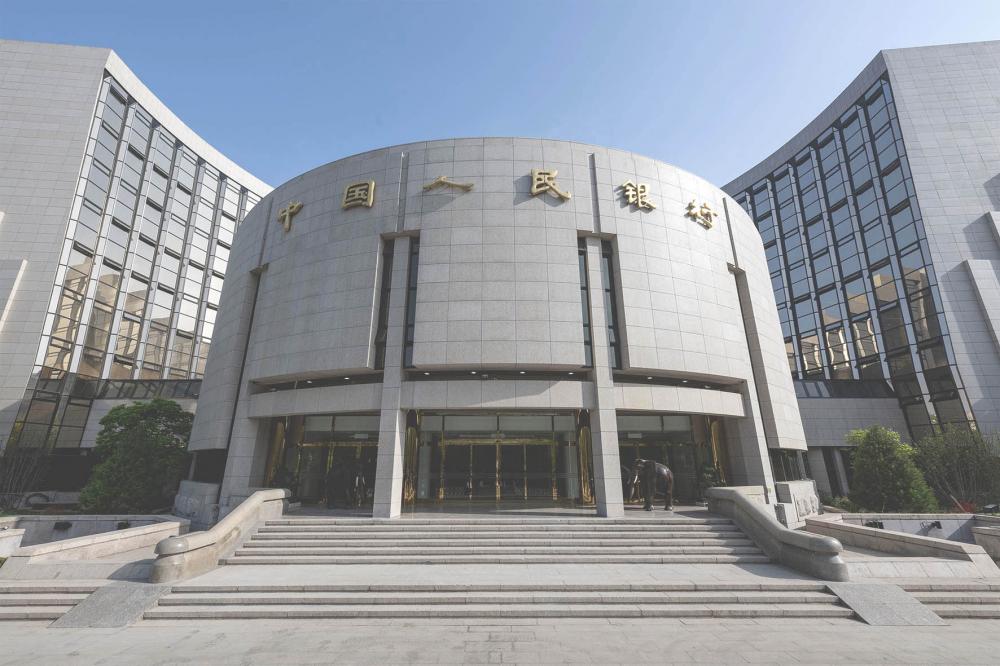
人民银行印发《非银行支付机构分类评级管理办法》
Bei Jing Shang Bao· 2025-12-31 14:55
Core Viewpoint - The People's Bank of China has issued a notice regarding the implementation of the revised "Non-Bank Payment Institutions Classification Rating Management Measures," which will take effect on February 1, 2026, focusing on the classification and evaluation of payment institutions [1] Group 1: Classification Rating Framework - The classification rating will assess payment institutions based on governance, business norms, reserve fund management, user rights protection, system security, anti-money laundering measures, and operational stability [1] - Each category will include several rating factors, composed of both quantitative and qualitative indicators [1] Group 2: Rating Scoring System - The total score for the classification rating is 100 points, distributed across various modules: governance (10 points), business norms (25 points), reserve fund management (10 points), user rights protection (10 points), system security (15 points), anti-money laundering measures (15 points), and operational stability (15 points) [1] - The classification results will be divided into five categories with eleven levels: A (AAA, AA, A), B (BBB, BB, B), C (CCC, CC, C), D, and E [1]
完善差异化监管措施,央行印发《非银行支付机构分类评级管理办法》
Sou Hu Cai Jing· 2025-12-31 10:18
Core Viewpoint - The People's Bank of China has issued the "Non-Bank Payment Institutions Classification Rating Management Measures" to enhance the regulation of non-bank payment institutions and promote their sustainable development [1] Group 1: Classification Rating Overview - The classification rating process evaluates the operational management and risk status of payment institutions based on daily regulatory insights and other relevant information [1] - The classification rating results serve as the foundation for implementing differentiated regulatory measures [1] Group 2: Rating Indicators and Methods - The classification rating includes seven modules: corporate governance, business norms, reserve fund management, user rights protection, system security, anti-money laundering measures, and operational stability [1] - Each module has specific scoring criteria, with a total score of 100 points distributed as follows: corporate governance (10 points), business norms (25 points), reserve fund management (10 points), user rights protection (10 points), system security (15 points), anti-money laundering measures (15 points), and operational stability (15 points) [1] Group 3: Scoring and Adjustment Factors - The scoring for each rating element is determined by the People's Bank of China and its branches based on the actual conditions of the payment institutions, aligning with established rating points and scoring principles [2] - The final rating score is derived from the sum of scores across all rating modules [3] - Rating adjustment factors include both positive and negative adjustments [4] Group 4: Final Rating Determination - The final rating result is established by combining the rating score with adjustment factors, which will inform regulatory planning and resource allocation [5] - The classification rating results will be used to analyze risks within payment institutions and determine regulatory focus, including the frequency and scope of both off-site and on-site inspections [5]
新版非银行支付机构分类评级管理办法征求意见
Zhong Guo Zheng Quan Bao· 2025-07-18 20:59
Core Viewpoint - The People's Bank of China (PBOC) has revised the "Non-Bank Payment Institutions Classification Rating Management Measures" to enhance the regulation of non-bank payment institutions and improve differentiated regulatory measures [1][2] Group 1: Regulatory Framework - The revised draft aims to comprehensively evaluate the operational level and risk status of payment institutions, facilitating compliance and enhancing the scientific, precise, and effective nature of regulatory work [1] - The classification rating process is defined as an evaluation conducted by the PBOC and its branches based on daily regulatory information and other relevant data [1] Group 2: Rating Indicators and Methods - The draft specifies the rating indicators, methods, and scoring criteria, with classifications conducted annually, and the PBOC will clarify scoring standards before each rating [1][2] - It outlines five categories and eleven rating results, along with corresponding scoring ranges and standards for special circumstances [2] Group 3: Implementation and Information Sharing - The classification rating applies to payment institutions that have been established for over one year as of the end of the previous natural year [2] - The PBOC and its branches are required to continuously collect various information necessary for classification ratings, including non-site regulatory information, inspection reports, and internal and external audit reports [2] - An information-sharing mechanism is to be established between the PBOC, clearing institutions, and the China Payment and Clearing Association to enhance compliance and risk management [2]