
马年新禧贺岁系列产品

Search documents
人文经济激活消费新动能|从街头风景到千亿级市场,“新中式”服装扮靓“新消费”
Xin Hua She· 2026-01-15 12:48
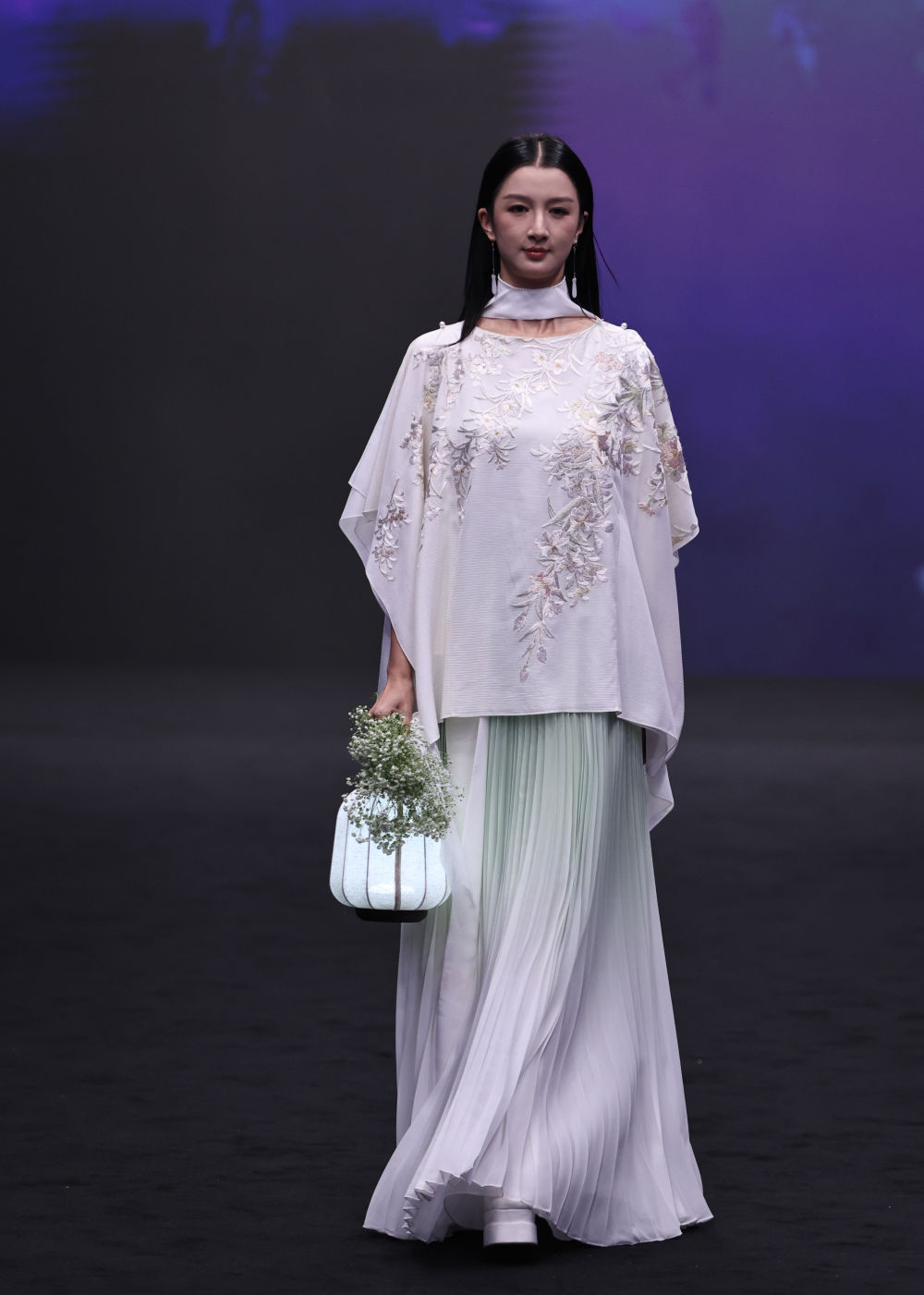
Core Insights - The rise of "New Chinese" fashion reflects a growing consumer interest in traditional aesthetics, leading to a significant market opportunity estimated to exceed 220 billion yuan in 2024 and surpass 250 billion yuan in 2025 [2][4] Group 1: Market Trends - "New Chinese" fashion is becoming a mainstream trend, with consumers increasingly favoring products that reflect traditional Chinese aesthetics and craftsmanship [8] - The market for "New Chinese" apparel is projected to grow rapidly, with a forecasted scale of over 220 billion yuan in 2024 and expected to exceed 250 billion yuan by 2025 [2][7] Group 2: Industry Transformation - The integration of traditional cultural symbols into clothing is driving a new industrial transformation, with a focus on deep cultural exploration and contemporary reinterpretation [4][10] - Companies are innovating by combining traditional elements with modern design, as seen in collaborations between textile firms and academic experts [4][5] Group 3: Technological Advancements - New technologies in fabric production are enhancing the wearing experience, such as the development of silk jacquard production lines that maintain traditional patterns while improving practicality [5] - Smart manufacturing and digital technologies are being utilized to ensure flexible production and meet personalized demands [5][6] Group 4: Sales Channels - Online sales, particularly through live streaming, have become a crucial channel for "New Chinese" fashion, reaching consumers in over 30 countries [6] - Physical stores are evolving into cultural experience spaces, blending traditional clothing with immersive consumer experiences [6] Group 5: Future Potential - The Chinese government is promoting the development of culturally rich and fashionable products, indicating strong growth potential for "New Chinese" fashion [7][10] - The focus is shifting towards scene-based and customized high-quality products, which is expected to enhance both market scale and quality [10]

人文经济激活消费新动能|从街头风景到千亿级市场,“新中式”服装扮靓“新消费”-新华网
Xin Hua Wang· 2026-01-15 12:43
Core Insights - The rise of "New Chinese" fashion reflects a growing consumer interest in traditional aesthetics, leading to a significant market opportunity valued at over 220 billion yuan in 2024, projected to exceed 250 billion yuan by 2025 [2][9][10] Group 1: Market Trends - "New Chinese" fashion is becoming a mainstream trend, with consumers increasingly favoring products that reflect traditional Chinese aesthetics and craftsmanship [10] - The market for "New Chinese" apparel is expected to grow rapidly, with a projected scale of over 220 billion yuan in 2024 and anticipated to surpass 250 billion yuan by 2025 [2][9] - The popularity of "New Chinese" fashion is evident in social media trends and consumer behavior, with a broad demographic embracing these styles [2][10] Group 2: Industry Transformation - The integration of traditional cultural symbols into clothing is driving a transformation in the fashion industry, moving away from superficial designs to deeper cultural interpretations [3][4] - Innovations in fabric technology are enhancing the wearing experience, with companies developing lighter and more manageable materials while preserving traditional designs [5] - The shift towards smart manufacturing and digital technologies is enabling more personalized and efficient production processes [5][6] Group 3: Sales Channels - Online sales, particularly through live streaming, have become a crucial channel for distributing "New Chinese" fashion, reaching consumers globally [6] - Physical retail spaces are evolving into cultural experience centers, offering immersive environments that blend traditional clothing with cultural displays [6] Group 4: Future Potential - The potential for "New Chinese" fashion remains significant, with government support aimed at enhancing the supply structure and promoting cultural and fashionable products [9][10] - The industry is encouraged to focus on innovation in cultural depth, technological integration, and market connectivity to differentiate itself in a competitive landscape [10]

从街头风景到千亿级市场,“新中式”服装扮靓“新消费”
Xin Hua Wang· 2026-01-15 03:35
Group 1 - The core viewpoint of the article highlights the rising popularity of "New Chinese" fashion, which integrates traditional Chinese aesthetics into modern clothing, creating a significant consumption trend valued at over 220 billion yuan in 2024, expected to exceed 250 billion yuan by 2025 [2][8][10] - The "New Chinese" clothing market is characterized by a blend of traditional cultural symbols and modern design, leading to a transformation in the fashion industry [3][10] - The integration of traditional elements with contemporary design is becoming mainstream, as brands focus on deep cultural exploration and modern reinterpretation [5][10] Group 2 - Sales channels for "New Chinese" fashion are evolving, with online platforms like live streaming becoming crucial for reaching global markets, while offline stores are transforming into cultural experience spaces [6][10] - The industry is undergoing a comprehensive innovation across the supply chain, resulting in offerings that align with modern aesthetics and consumer desires for individuality and cultural identity [7][10] - The growth of "New Chinese" fashion is supported by government initiatives aimed at enhancing the supply-demand match in consumer goods, with a focus on creating ten consumption hotspots by 2027, including national trend clothing [8][9] Group 3 - The rise of "New Chinese" fashion reflects a deep cultural confidence among Chinese consumers, who prefer products that embody traditional craftsmanship and aesthetics [10][12] - Industry leaders emphasize the need for innovation in cultural depth, technological integration, and market connectivity to differentiate products in a competitive landscape [10][12] - The future growth of "New Chinese" fashion is expected to shift towards scene-based and customized high-quality products, driven by policy support and evolving consumer demands [12]
人文经济激活消费新动能丨从街头风景到千亿级市场,“新中式”服装扮靓“新消费”
Xin Hua Wang· 2026-01-15 02:35
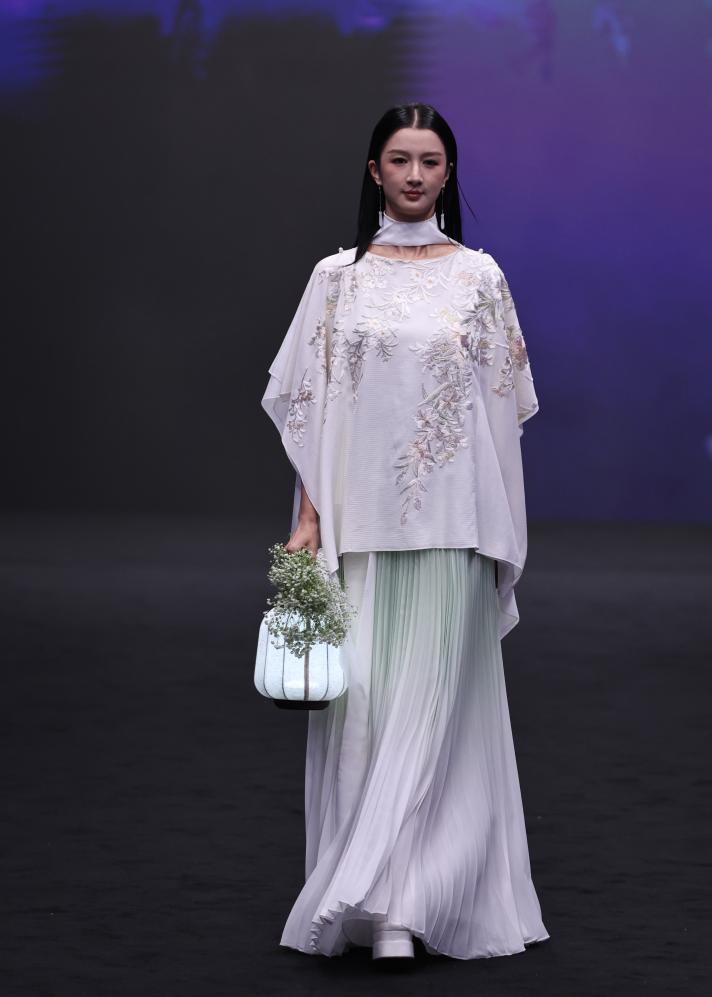
Group 1 - The core viewpoint of the article highlights the rising popularity of "New Chinese" fashion, which integrates traditional Chinese aesthetics into modern clothing, creating a significant consumption trend worth over 220 billion yuan in the market [2][4][11] - The market for "New Chinese" fashion is projected to exceed 220 billion yuan in 2024 and is expected to surpass 250 billion yuan by 2025, indicating strong growth potential [2][9] - The integration of traditional cultural symbols into clothing products signifies a new industrial transformation, with a focus on deep cultural exploration and contemporary reinterpretation becoming mainstream [4][5] Group 2 - On the design front, there is a shift from superficial incorporation of traditional elements to a deeper exploration of cultural essence, with brands like Weaving Company innovating by reinterpreting traditional patterns for modern contexts [5][11] - Technological advancements in manufacturing, such as the development of silk jacquard production lines and smart manufacturing processes, are enhancing product quality and meeting modern consumer demands [5][6] - Sales channels are evolving, with live streaming becoming a significant sales avenue and physical stores transforming into cultural experience spaces, enhancing consumer engagement [6][7] Group 3 - The "New Chinese" fashion trend is part of a broader cultural revival, reflecting a deep awakening of cultural confidence among Chinese consumers, particularly the younger generation [11][12] - The Ministry of Industry and Information Technology has identified "national trend" clothing as a key area for growth, aiming for a significant improvement in the supply structure of consumer goods by 2027 [9][10] - Industry experts emphasize the need for innovation in cultural depth, technological integration, and market connectivity to differentiate products and enhance long-term value [12]