
骥骥

Search documents
马年春晚里的广东高光
21世纪经济报道· 2026-02-18 04:41
Group 1 - The Spring Festival Gala featured significant elements from Guangdong, including a performance of Cantonese opera and a micro-musical showcasing young skilled workers, highlighting the region's cultural contributions [1][2] - The gala also presented the "New Era Good Youth" Hu Dongping from Guangdong, who developed a robot for kneeling workers, reflecting the province's strong educational ecosystem in technology and innovation [1] - The Spring Festival mascots, produced in Dongguan, involved over 400 workers and showcased the region's manufacturing capabilities, with a daily output of 6,000 units [2][4] Group 2 - The integration of traditional craftsmanship and modern innovation in Guangdong is exemplified by the Spring Festival Gala, representing the coexistence of tradition and modernity in the Greater Bay Area [2]

南财V快评:马年春晚里的广东高光
Xin Lang Cai Jing· 2026-02-17 16:31
Group 1 - The Spring Festival Gala featured significant elements from Guangdong, including a performance of Cantonese opera by performers 曾小敏 and 黄文意, highlighting the cultural representation of the region [1] - A special segment showcased thirty winners from the World Skills Competition, with seven young skilled craftsmen from Guangdong, emphasizing the "craftsman spirit" of the new era [1] - The young innovator 胡东平, a "post-10s" tech entrepreneur from Guangdong, developed the "Kneeling Easy" robot for workers, reflecting the province's strong educational ecosystem in science and technology [1] Group 2 - The Spring Festival Gala mascots, "骐骐," "骥骥," "驰驰," and "骋骋," were produced in Dongguan, with over 400 workers producing an average of 6,000 mascots daily, showcasing Guangdong's manufacturing capabilities [2] - The integration of traditional craftsmanship and modern innovation in Guangdong's representation at the gala exemplifies the coexistence of tradition and modernity in the Greater Bay Area [2]
“世界超市”腊月年味浓 义乌商家接单参展忙丨新春走基层
证券时报· 2026-02-06 00:13
Core Viewpoint - The article highlights the vibrant economic activities in Yiwu, particularly in the context of the upcoming Spring Festival, showcasing the city's role as a major hub for small commodity trade and its significant contributions to China's foreign trade growth [3][4][6]. Group 1: Economic Performance - In 2025, Yiwu's total foreign trade import and export value reached 836.5 billion yuan, marking a year-on-year increase of 25.1%, with exports alone amounting to 730.7 billion yuan, up by 24.1% [3]. - Yiwu is a leading supplier of festive products, with statistics indicating that 80% of global festive goods originate from the city, reflecting a rising index for festive products, particularly those related to the Spring Festival [3]. Group 2: Business Adaptation and Growth - Local merchants, such as Wang Nan, reported a conservative estimate of over 20% sales growth in 2025, despite previous concerns over U.S. tariffs [4]. - During the Spring Festival, while Yiwu International Trade City will be closed, merchants like Wang Nan will continue operations through online orders, ensuring rapid delivery within two hours [5]. - Yiwu businesses are actively participating in international trade exhibitions, with plans for over 1,500 foreign trade enterprises to engage in overseas events throughout the year, aiming to secure orders and expand market reach [5]. Group 3: Cultural Significance - Yiwu is designated as a sub-venue for the CCTV Spring Festival Gala, symbolizing its cultural importance and economic vitality, with decorations and themed products prominently displayed throughout the city [3][6].
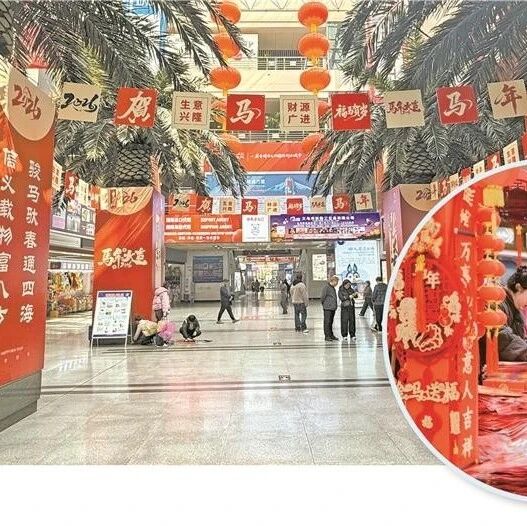
2026年春晚四地分会场官宣:哈尔滨、义乌、合肥、宜宾
Xin Lang Cai Jing· 2025-12-28 10:10
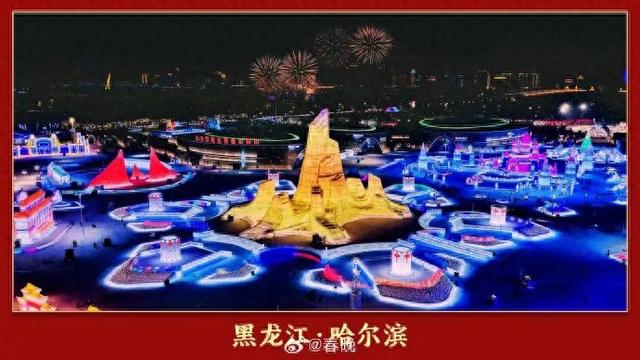
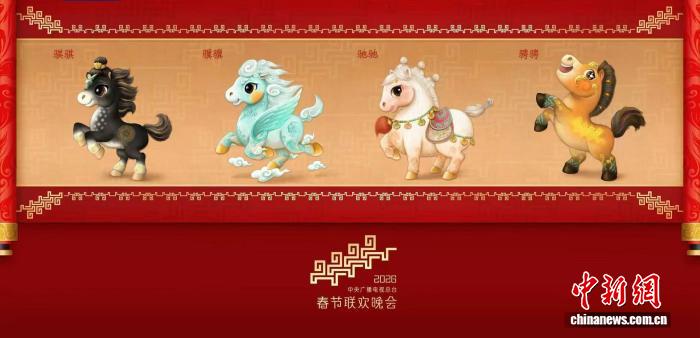
Group 1 - The 2026 Spring Festival Gala will have four sub-venues located in Harbin, Heilongjiang; Yiwu, Zhejiang; Hefei, Anhui; and Yibin, Sichuan [1] - The gala's mascot features four horses named "Qiqi," "Jiji," "Chichi," and "Chengcheng," embodying the theme "Qiji Chicheng, Unstoppable Momentum" [6][16] - The design of the mascots draws inspiration from classic horse images throughout Chinese history, incorporating traditional patterns that symbolize success and renewal [6] Group 2 - "Qiqi" is inspired by the Zhou Dynasty's horse figurine, characterized by a dignified and elegant appearance [8] - "Jiji" takes design cues from the Han Dynasty's celestial horse, showcasing a dynamic and uplifting spirit [10] - "Chichi" is based on the Tang Dynasty's Three-Flower Horse, representing confidence and grace [12] - "Chengcheng" is modeled after the Przewalski's horse, symbolizing the harmony between humans and nature [14]
总台马年春晚吉祥物发布
Ren Min Ri Bao· 2025-12-18 22:30
Group 1 - The central theme of the 2026 Spring Festival Gala is "Qiji Chicheng, Unstoppable Momentum," represented by four mascots: "Qiqi," "Jijie," "Chichi," and "Chengcheng," which are lively and spirited [1] - The design of the mascots draws inspiration from classic horse images throughout different periods in Chinese history, incorporating traditional patterns such as cloud motifs, showcasing a sense of historical beauty and modern vitality [1] - Each mascot has a unique design inspiration: "Qiqi" is inspired by the Western Zhou Dynasty's horse, "Jijie" is based on the Han Dynasty's Tianma, "Chichi" references the Tang Dynasty's Sanhua horse, and "Chengcheng" is modeled after the Przewalski's horse, the only existing wild horse species [1]
骐骥驰骋 2026年马年春晚吉祥物发布
Zhong Guo Xin Wen Wang· 2025-12-18 09:13
Core Viewpoint - The Central Radio and Television Station has unveiled the mascots for the 2026 Spring Festival Gala, featuring four lively and spirited horses named "Qiqi," "Jiji," "Chichi," and "Chengcheng" [1][2]. Design Inspiration - "Qiqi" is inspired by the Western Zhou Dynasty's "Qiju Zun," characterized by a blue-black color representing the essence of the word "Qiqi," and embodies a vigorous and ambitious spirit [2]. - "Jiji" draws inspiration from the Han Dynasty's Tianma, with its design referencing the national treasure bronze galloping horse, showcasing a soaring and dynamic appearance [2]. - "Chichi" is based on the Tang Dynasty's Sanhua horse, known for its distinctive three-part mane, representing the highest standards of horses in Tang artifacts and literature, exuding confidence and grace [2]. - "Chengcheng" is modeled after the Przewalski's horse, recognized as a living fossil with a 60 million-year evolutionary history, symbolizing the harmony between humans and nature [2].
马年春晚吉祥物,公布!
中国基金报· 2025-12-18 04:46
Core Viewpoint - The article announces the release of the mascots for the 2026 Spring Festival Gala, featuring four horses named "骐骐", "骥骥", "驰驰", and "骋骋", symbolizing vitality and hope for the upcoming Year of the Horse [2]. Group 1: Mascot Design Inspirations - "骐骐" is inspired by the Western Zhou period's horse figurine, characterized by a dignified and elegant appearance with a color scheme reflecting the original meaning of "骐" as a dark horse [4]. - "骥骥" draws inspiration from the Han Dynasty's heavenly horse, with its design referencing the national treasure bronze galloping horse, showcasing an upward and dynamic spirit [6]. - "驰驰" is based on the Tang Dynasty's three-flower horse, representing the highest standards of horses from that era, exuding confidence and poise [8]. - "骋骋" is modeled after the Przewalski's horse, recognized as a living fossil with a long evolutionary history, symbolizing the harmony between humans and nature [10]. Group 2: Cultural Significance - The four mascots embody the theme "骐骥驰骋势不可挡," reflecting a sense of unstoppable momentum and vitality, resonating with the spirit of the New Year [2]. - The design incorporates traditional Chinese patterns, such as cloud and mountain motifs, emphasizing a rich historical and cultural heritage [2]. - The mascots are intended to bring joy and energy to global Chinese communities as they welcome the New Year [12].
马年春晚吉祥物,公布!
Zhong Guo Ji Jin Bao· 2025-12-18 04:45
Core Viewpoint - The Central Radio and Television Station has unveiled the mascots for the 2026 Spring Festival Gala, featuring four lively horses that embody the theme "Qiji Chicheng, Shihubuodang" [1][2] Group 1: Mascot Design and Inspiration - The mascots "Qiqi," "Jiji," "Chichi," and "Chengcheng" are designed to reflect classic horse imagery from different periods in Chinese history, incorporating traditional patterns like flowing clouds and mountain clouds [1] - "Qiqi" is inspired by the Western Zhou Dynasty's horse figurine, characterized by a dignified and elegant appearance, symbolizing ambition and vitality [1] - "Jiji" draws inspiration from the Han Dynasty's celestial horse, showcasing a dynamic pose that represents upward momentum and vitality [1] - "Chichi" is based on the Tang Dynasty's Three-Flower Horse, reflecting confidence and grace, with design elements from historical artifacts [1] - "Chengcheng" is modeled after the Przewalski's horse, recognized as a living fossil with a long evolutionary history, symbolizing the harmony between humans and nature [2] Group 2: Cultural Significance - The mascots are intended to convey joy, vitality, and hope as they welcome the Year of the Horse, resonating with global Chinese communities [2]