高收益债ETF

Search documents
软件崩盘的“蝴蝶效应”:BDC→私募信贷→金融板块?
Hua Er Jie Jian Wen· 2026-02-06 10:28
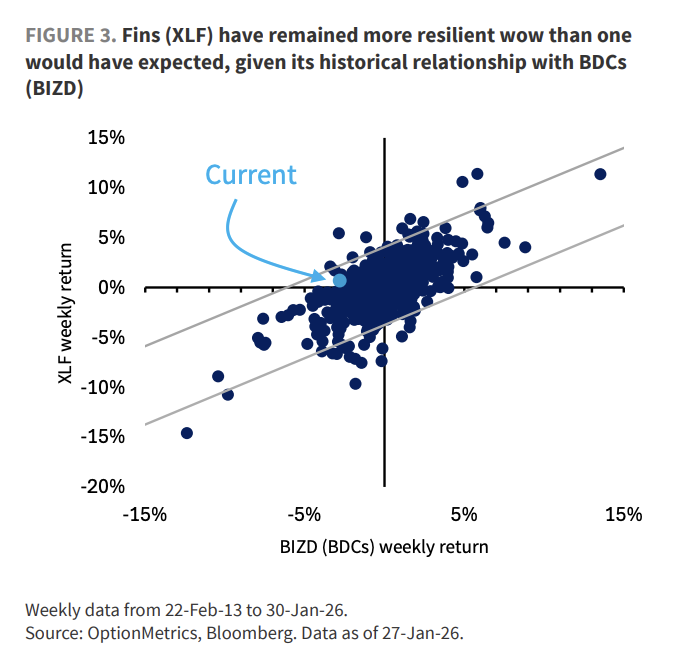
Group 1 - The core viewpoint of the report is that the significant decline in the software industry is transmitting risks to the private credit market through Business Development Companies (BDCs) [1][2] - BDCs have a high concentration of risk exposure in the software sector, accounting for approximately 20% of their portfolios, making them vulnerable to the recent downturn in software stock prices [2] - The software sector has experienced a cumulative decline of about 21% year-to-date, leading to a notable deterioration in the quality of underlying assets [1][2] Group 2 - Financial ETFs and high-yield bond ETFs show a persistent and significant statistical correlation with private credit returns, indicating that the financial sector has not fully priced in the potential risks from the software sector's decline [2] - Despite the weakening BDC index, financial ETFs remain relatively strong, suggesting a possible lag in market adjustments to the emerging risks [2] Group 3 - The report highlights a structural divergence in market volatility pricing, with commodity asset volatility at historically high levels, while fixed income and financial sector volatility remains at historically low levels [4] - The implied volatility for commodities like U.S. crude oil, silver, and gold ETFs is at the 99%-100% historical percentile, reflecting strong market pricing of geopolitical risks and currency devaluation expectations [4] Group 4 - Current market sentiment indicators show extreme polarization, with bearish sentiment concentrated in small-cap and technology sectors, while assets like gold and natural gas exhibit strong bullish expectations [5] - The skewness in options pricing indicates that the cost of downside protection for the Nasdaq 100 and materials sector is significantly high, while oil and gas options are priced more moderately [6] Group 5 - The report identifies high-quality hedging tools for different asset classes, suggesting that high-yield bonds and financial sector put options offer optimal risk-reward ratios for hedging against global equity market risks [7] - For large-cap tech stock downside risks, high-yield bonds and investment-grade corporate bonds provide effective protection, while for commodities, high-yield bonds and energy sector ETFs are recommended [7] Group 6 - The commodity sector is under significant pressure, with its volatility and term structure Z-scores notably above long-term averages, indicating that market pressures are far beyond normal levels [8] - Cross-asset correlations are currently at a high level of 73%, suggesting that the diversification effect of asset allocation is diminishing, while internal correlations within the U.S. stock market remain at a historical low of 2% [8]


贝莱德发行权重上限3%的标普500调整产品——海外创新产品周报20250421
申万宏源金工· 2025-04-22 03:39
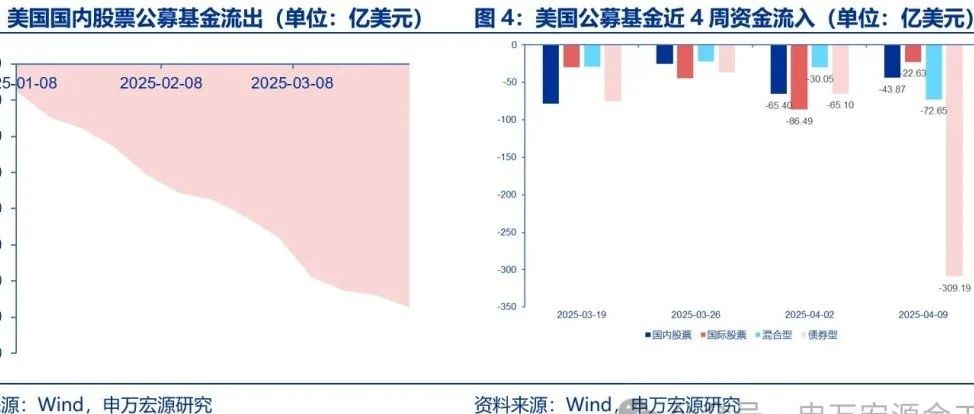
Group 1: Core Insights - The article discusses the recent innovations in the U.S. ETF market, highlighting the launch of new products aimed at addressing market concentration risks and enhancing returns through various strategies [1][2]. - BlackRock has introduced a new S&P 500 strategy product with a weight cap of 3% per stock, redistributing excess weight to other stocks, which aims to mitigate drawdown risks in a concentrated market environment [2]. - The overall ETF market saw a net inflow of approximately $4 billion last week, with notable inflows into gold ETFs, while stock products experienced outflows [3][6]. Group 2: ETF Product Launches - Unlimited launched a global macro hedge fund strategy ETF with a management fee of 1%, targeting higher volatility for increased returns [1]. - F/m introduced a high-yield bond ETF that invests in the top 100 high-yield bonds, employing a more stable and secure investment method compared to traditional sampling [1]. - Avantis released an actively managed investment-grade bond ETF aimed at enhancing returns through selective bond investments [1]. Group 3: ETF Fund Flows - Vanguard's S&P 500 ETF (VOO) saw a significant inflow of $25.63 billion, while SPDR S&P 500 ETF Trust (SPY) experienced a notable outflow of $87.45 billion [7]. - Gold ETFs, particularly the SPDR Gold Trust (GLD), recorded inflows of $20.62 billion, indicating strong investor interest in gold amid market volatility [7][9]. - The article notes that the S&P 500 ETF funds have shown considerable volatility, with significant outflows from Russell 2000 ETFs and corporate bond ETFs, while short-term bond products have seen clear inflows [9]. Group 4: Currency-Related ETFs Performance - Currency-related ETFs, particularly those linked to the Japanese yen and euro, have performed well, with year-to-date gains exceeding 10% for several products [10]. - The Invesco CurrencyShares Japanese Yen Trust (FXY) and Invesco CurrencyShares Euro Trust (FXE) have shown respective gains of 10.54% and 10.30% this year [10].