金融ETF

Search documents
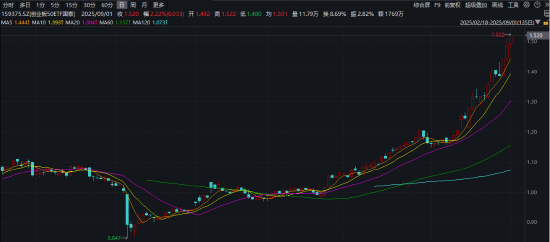
金融ETF(159931)开盘跌1.47%,重仓股中国平安跌0.02%,招商银行跌0.28%
Xin Lang Cai Jing· 2026-03-26 01:32
Group 1 - Financial ETF (159931) opened down 1.47% at 1.813 yuan on March 26 [1][2] - Major holdings of Financial ETF include China Ping An, which opened down 0.02%, and other banks such as China Merchants Bank down 0.28%, Industrial Bank down 0.05%, and others showing similar declines [1][2] - The performance benchmark for Financial ETF is the CSI Financial and Real Estate Index, managed by Huatai-PineBridge Fund Management Co., Ltd., with a fund manager named Yan Yang [1][2] Group 2 - Since its establishment on August 23, 2013, Financial ETF has achieved a return of 86.78%, while the return over the past month is -4.06% [1][2]




软件崩盘的“蝴蝶效应”:BDC→私募信贷→金融板块?
Hua Er Jie Jian Wen· 2026-02-06 10:28
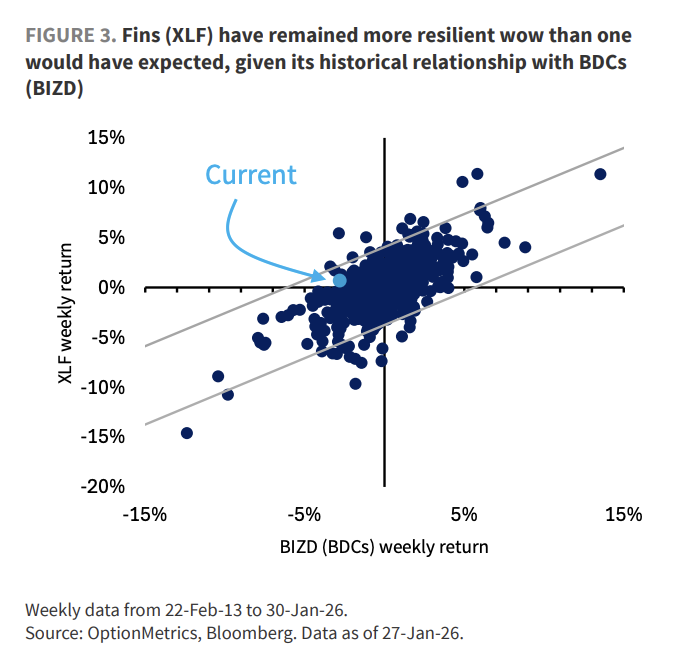
Group 1 - The core viewpoint of the report is that the significant decline in the software industry is transmitting risks to the private credit market through Business Development Companies (BDCs) [1][2] - BDCs have a high concentration of risk exposure in the software sector, accounting for approximately 20% of their portfolios, making them vulnerable to the recent downturn in software stock prices [2] - The software sector has experienced a cumulative decline of about 21% year-to-date, leading to a notable deterioration in the quality of underlying assets [1][2] Group 2 - Financial ETFs and high-yield bond ETFs show a persistent and significant statistical correlation with private credit returns, indicating that the financial sector has not fully priced in the potential risks from the software sector's decline [2] - Despite the weakening BDC index, financial ETFs remain relatively strong, suggesting a possible lag in market adjustments to the emerging risks [2] Group 3 - The report highlights a structural divergence in market volatility pricing, with commodity asset volatility at historically high levels, while fixed income and financial sector volatility remains at historically low levels [4] - The implied volatility for commodities like U.S. crude oil, silver, and gold ETFs is at the 99%-100% historical percentile, reflecting strong market pricing of geopolitical risks and currency devaluation expectations [4] Group 4 - Current market sentiment indicators show extreme polarization, with bearish sentiment concentrated in small-cap and technology sectors, while assets like gold and natural gas exhibit strong bullish expectations [5] - The skewness in options pricing indicates that the cost of downside protection for the Nasdaq 100 and materials sector is significantly high, while oil and gas options are priced more moderately [6] Group 5 - The report identifies high-quality hedging tools for different asset classes, suggesting that high-yield bonds and financial sector put options offer optimal risk-reward ratios for hedging against global equity market risks [7] - For large-cap tech stock downside risks, high-yield bonds and investment-grade corporate bonds provide effective protection, while for commodities, high-yield bonds and energy sector ETFs are recommended [7] Group 6 - The commodity sector is under significant pressure, with its volatility and term structure Z-scores notably above long-term averages, indicating that market pressures are far beyond normal levels [8] - Cross-asset correlations are currently at a high level of 73%, suggesting that the diversification effect of asset allocation is diminishing, while internal correlations within the U.S. stock market remain at a historical low of 2% [8]


近万亿资金流出宽基ETF,降温进度条已至60%
Sou Hu Cai Jing· 2026-02-03 23:50
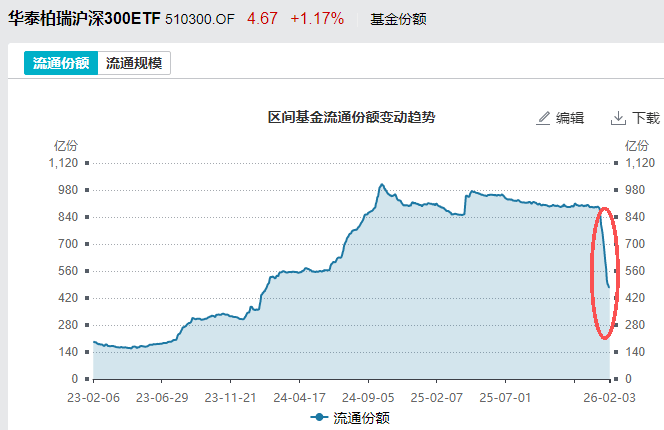
Core Viewpoint - The article discusses a significant decline in the shares of major broad-based ETFs, attributed to a mysterious institution holding large portions of these ETFs, leading to a substantial outflow of funds from the market [3][8]. ETF Share Decline - Several leading broad-based ETFs have experienced a drastic reduction in shares, with many seeing their latest shares cut in half compared to the previous year-end totals [3]. - The mysterious institution holds significant shares in 22 ETFs, with the total shares at year-end being 14,964 billion, and an estimated outflow of approximately 9,426 billion this year, representing about 63% of the institution's holdings [8][9]. Specific ETF Data - The following ETFs have shown notable declines in shares: - HuShen 300 ETF (华泰柏瑞): Last shares 475 million, down from 888 million [4]. - HuShen 300 ETF (易方达): Last shares 325 million, down from 1,115 million [4]. - Shanghai 50 ETF: Last shares 252 million, down from 567 million [4]. - ChiNext ETF (创业板): Last shares 191 million, down from 315 million [4]. - The estimated outflow amounts for specific ETFs include: - HuShen 300 ETF (华泰柏瑞): 1,965 million [9]. - HuShen 300 ETF (易方达): 1,538 million [9]. - Shanghai 50 ETF: 991 million [9]. Market Trends - Since January 14, there has been a rapid outflow from major broad-based ETFs, with a cumulative net outflow of approximately 9,426 billion, nearing the 10 trillion mark [8][6]. - The pace of outflows has slowed recently, with some ETFs experiencing small inflows in the last few trading days [6][11]. Institutional Behavior - The mysterious institution appears to have ceased significant selling in the HuShen 300 ETFs while continuing to exert pressure on the mid-cap stocks represented by the ChiNext and other mid-cap ETFs [14][11]. - The market is currently characterized by a strong performance in large-cap and small-cap stocks, while mid-cap stocks are under pressure [14]. Investor Sentiment - There is a prevailing sense of helplessness in the market, as traditional analysis methods are failing to predict movements due to the influence of the mysterious institution [17]. - The article suggests that the current market dynamics are heavily influenced by the actions of this institution, which is perceived as controlling the market's direction [20][19].
ETF日报:市场有望在政策、流动性、基本面三重共振下迎来跨年行情
Xin Lang Cai Jing· 2025-12-19 10:53
Market Overview - The A-share market showed a high-level fluctuation with the Shanghai Composite Index rising by 0.36%, the Shenzhen Component Index increasing by 0.66%, and the ChiNext Index up by 0.49% [1][13] - The total trading volume in the Shanghai and Shenzhen markets reached 1.73 trillion yuan, an increase of 704 billion yuan compared to the previous trading day, with over 4,400 stocks rising [1][13] - The Hong Kong market also saw gains, with the Hang Seng Index up by 0.75% and the Hang Seng Technology Index rising by 1.12% [1][13] Sector Performance - Main capital inflows were observed in sectors such as general equipment, automotive, and retail, while there were outflows from semiconductor, aerospace, and electronics sectors [2][14] - The consumer sector experienced a surge, particularly in retail and duty-free shops, while sectors like Hainan Free Trade Zone, nuclear fusion, rare earth permanent magnets, cross-strait integration, and intelligent driving concepts were active [2][14] Economic Data and Policy Impact - The U.S. inflation data for November showed a significant drop, with the overall CPI year-on-year falling to 2.74%, below the expected 3.06%, which has raised questions about data accuracy due to the government shutdown affecting previous data [3][15] - The Bank of Japan raised its target interest rate by 25 basis points to 0.75%, marking a 30-year high, which aligns with market expectations for ongoing monetary policy normalization [3][15] Innovation Drug Sector - The innovation drug sector is rebounding due to several catalysts, including a recovery in valuation after months of correction and upcoming key clinical data disclosures at the ASCO annual meeting in May 2026 [4][17] - The sector is entering a commercialization phase, with policy support extending from process optimization to full-chain empowerment, enhancing competitiveness [4][17] Hong Kong Technology Sector - The Hong Kong technology market has faced short-term pressure but is expected to rebound, with potential for capital inflows post-Christmas [6][18] - The market anticipates a recovery in January, although the extent of the rebound may be limited [6][18] Commodity Sector - The commodity sector, particularly non-ferrous metals, is performing well due to multiple factors, including a slowdown in U.S. CPI data, which has raised expectations for liquidity easing and supported metal prices [8][20] - The easing of rare earth export controls and a balanced supply-demand situation in industrial metals are also contributing to the sector's strength [8][20] Investment Opportunities - Investors are encouraged to consider ETFs focused on innovation drugs, Hong Kong technology, and commodities, as these sectors show potential for growth and recovery [4][21][22]

ETF日报:证券和金融板块具备战略性配置价值,关注证券ETF和金融ETF
Xin Lang Cai Jing· 2025-12-17 12:10
Market Performance - The A-share market showed strength in the afternoon, with the Shanghai Composite Index rising by 1.19% to 3870.28 points, the Shenzhen Component Index up by 2.40%, and the ChiNext Index increasing by 3.39% [1][12] - The total trading volume for the day reached 1.83 trillion yuan, compared to 1.75 trillion yuan the previous day [1][12] - High-volatility sectors such as telecommunications, AI in the ChiNext, and non-ferrous metals performed well, while sectors like aquaculture, coal, and dividend stocks lagged [1][12] ETF Trading - The trading volume of the top five CSI A500 ETFs reached 452.91 billion yuan, significantly higher than the 80.8 billion yuan for the top four CSI 300 ETFs [1][12] - The total trading volume for all CSI A500 ETFs was 525.75 billion yuan, three times that of the CSI 300 ETFs, which totaled 169.5 billion yuan [1][12] Future Outlook - The market is expected to experience fluctuations as it prepares for a potential spring rally, supported by global liquidity easing and positive domestic macro policy statements [1][12] - Investors are encouraged to consider broad-based products like the CSI A500 ETF (159338) and adopt a "technology + dividend" allocation strategy [1][12] Securities Industry Developments - The securities industry is undergoing significant restructuring, with several brokerages completing mergers, including Guolian + Minsheng and Guotai Junan + Haitong [4][15] - Regulatory support for the industry includes expanding capital space and leverage limits for securities firms, shifting from price competition to value competition [4][15] - The overall valuation of the securities sector remains low, with institutional funds under-allocated, presenting strategic investment opportunities [4][15] Non-Ferrous Metals Sector - The non-ferrous metals sector, particularly lithium and tungsten, has shown strong performance, with the mining ETF rising by 3.28% and the non-ferrous 60 ETF by 3.27% [5][16] - Recent regulatory actions in Yichun, a major lithium production area, could tighten supply and support domestic lithium carbonate prices [5][16] - Tungsten prices have surged to 420,000 yuan per ton, a 193.71% increase since the beginning of the year, driven by supply constraints and rising demand [6][17] Bond Market Insights - The bond market saw a slight rebound, with the 10-year government bond ETF rising by 0.11% and the 30-year futures up by 0.63% [8][19] - The performance of long-term bonds has been under pressure, with a nearly 4% decline since November, indicating a challenging environment for the bond market [8][19]
金融ETF:12月5日融资净买入48.49万元,连续3日累计净买入392.77万元
Sou Hu Cai Jing· 2025-12-08 02:34
Core Viewpoint - The financial ETF (510230) has shown a positive trend in net financing purchases, indicating increased investor interest and confidence in the fund's performance [1] Group 1: Financing Activities - On December 5, 2025, the financial ETF recorded a financing purchase of 2.6864 million yuan and a financing repayment of 2.2015 million yuan, resulting in a net financing purchase of 484.9 thousand yuan [1] - Over the past three trading days, the cumulative net financing purchase has reached 3.9277 million yuan, with 12 out of the last 20 trading days showing net financing purchases [1] - The financing balance on December 5, 2025, stood at 15.6797 million yuan, reflecting a 3.19% increase from the previous day [2][3] Group 2: Daily Financing Data - The daily financing net purchases for the last five trading days are as follows: - December 5: 484.9 thousand yuan - December 4: 2.7797 million yuan - December 3: 663.1 thousand yuan - December 2: -1.0169 million yuan - December 1: -573.6 thousand yuan [2] - The financing balance has fluctuated, with the highest recorded on December 4 at 15.1948 million yuan and the lowest on December 1 at 12.7689 million yuan [3]
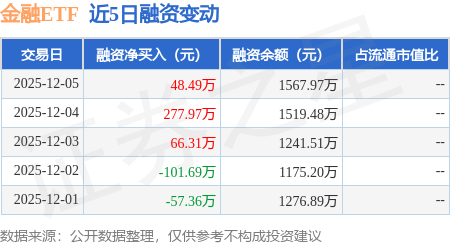
11月20日大盘简评
Mei Ri Jing Ji Xin Wen· 2025-11-20 09:39
Market Overview - The market experienced fluctuations with a total trading volume of 1.71 trillion yuan, a decrease of 177 billion yuan from the previous trading day. The Shanghai Composite Index fell by 0.4%, the Shenzhen Component Index by 0.76%, and the ChiNext Index by 1.12% [1] Sector Performance - The computing power sector was active in trading, while sectors such as banking and building materials saw gains. Conversely, coal and electricity sectors faced pressure [1] Computing Power Insights - Despite the active trading in the computing power sector, many stocks opened high but closed lower. The main catalyst was NVIDIA's quarterly report, which showed revenue of $57 billion, a year-over-year increase of 62% and a quarter-over-quarter increase of 22%. The data center revenue was $51.2 billion, exceeding market expectations [2] Mergers and Acquisitions in Securities Industry - The securities industry continues to see mergers, with China International Capital Corporation planning to absorb Dongxing Securities and Xinda Securities through A-share issuance. If successful, the combined assets of the three firms will reach 1,009.583 billion yuan, with revenues of 27.39 billion yuan and net profits of 9.52 billion yuan [3] Future Outlook - The overall market sentiment remains optimistic for the upcoming year, driven by factors such as capital market reforms and policies aimed at stabilizing growth. Investors are encouraged to maintain confidence in the market [1]


ETF量化配置策略更新(251031)
Yin He Zheng Quan· 2025-11-07 13:50
Group 1: Macro Timing Strategy - The macro timing strategy has an annualized return of 7.67% as of October 31, 2025, with a Sharpe ratio of 1.45 and a Calmar ratio of 1.67, indicating a maximum drawdown of -4.60% [2][4][5] - The latest portfolio allocation includes 7.01% in CSI 300 ETF, 7.99% in CSI 500 ETF, 55.94% in government bond ETF, 11.63% in soybean meal ETF, 5.02% in non-ferrous ETF, 7.40% in gold ETF, and 5.00% in currency ETF, with no allocation to S&P 500 ETF and corporate bond ETF [7][8] Group 2: Momentum Strategy - The momentum strategy has an annualized return of 18.25% since January 2020, with a Sharpe ratio of 0.88 and a Calmar ratio of 0.64, experiencing a maximum drawdown of -28.72% [9][10] - The latest portfolio allocation includes 27.01% in Huatai-PB CSI Telecom Theme ETF, 24.92% in Fuguo CSI Tourism Theme ETF, 21.52% in Xinhua CSI Cloud Computing 50 ETF, 16.38% in Huatai-PB CSI Smart Car ETF, and 8.17% in Huaxia CSI Artificial Intelligence ETF [13][14] Group 3: Sector Rotation Strategy - The sector rotation strategy has an annualized return of 10.00% since 2020, with an excess return of 7.27% relative to CSI 300, and a maximum drawdown of -42.98% [15] - The latest portfolio includes home appliance ETF, green power ETF, steel ETF, new energy vehicle ETF, financial ETF, and agricultural ETF, while excluding non-ferrous metals ETF and transportation ETF [18][19] Group 4: Copula-Based Second-Order Stochastic Dominance Strategy - The Copula-based second-order stochastic dominance strategy has an annualized return of 14.41% since January 2020, with a Sharpe ratio of 0.68 and a maximum drawdown of -42.62% [20][24] - The latest portfolio allocation includes 5.00% in Huaxia CSI Petrochemical Industry ETF, 85.00% in Fuguo CSI 800 Bank ETF, 5.00% in Fuguo CSI All-Index Securities Company ETF, and 5.00% in Bosera CSI Oil and Gas Resources ETF [23][25] Group 5: Quantile Random Forest Technology ETF Allocation Strategy - The quantile random forest technology ETF allocation strategy has an annualized return of 13.54% since 2020, with a Sharpe ratio of 0.76 and a maximum drawdown of -29.89% [26] - The latest portfolio allocation consists of 95.63% in technology ETFs, including 4.78% in Jiahua National Communication ETF, 4.78% in Tianhong CSI Photovoltaic Industry ETF, 4.78% in Huabao CSI Military Industry ETF, 76.51% in Ping An CSI Consumer Electronics Theme ETF, and 4.78% in Fuguo CSI Technology 50 Strategy ETF [29][30]
ETF及指数产品网格策略周报(2025/9/23)
华宝财富魔方· 2025-09-23 12:57
Core Viewpoint - The article discusses the ETF grid strategy, focusing on new economic sectors and financial sectors, highlighting investment opportunities in China's evolving economy and the financial market's recovery [3][4][6]. Group 1: New Economic ETF - The New Economic ETF (159822.SZ) aligns with the government's 2025 work report, emphasizing the development of new productive forces and the integration of technology and industry innovation [3]. - This ETF indirectly tracks the S&P China New Economy Index through full holdings in the ICBC South China S&P China New Economy Industry ETF (3167.HK), focusing on leading companies in artificial intelligence, internet, biotechnology, and innovative pharmaceuticals [3]. - The ETF aims to capture new growth drivers in China's economy while diversifying regional risks [3]. Group 2: Financial ETF - The Financial ETF (510230.SH) tracks the Shanghai Stock Exchange 180 Financial Index, with significant allocations in banking (62%), securities (20%), and insurance (18%) sectors [4][6]. - As of June 30, 2025, the banking sector's dividend yield reached 5.86%, surpassing the market average and the ten-year government bond yield, making it an attractive option for long-term funds [4]. - The securities sector saw a substantial increase in brokerage revenue, with a 50.69% year-on-year growth in H1 2025, indicating a recovery in sector performance [4][6]. - The insurance sector is expected to benefit from supportive policies, alleviating pressure on liabilities, while the stock investment balance of life insurance companies reached nearly 2.9 trillion yuan, a 50% year-on-year increase, suggesting a shift towards equity asset allocation [6].

ETF日报:创业板指估值处于近五年50%左右的分位数,相较沪深300、中证500等指数偏低,可关注创业板50ETF
Xin Lang Ji Jin· 2025-09-01 12:56
Market Overview - The A-share market experienced fluctuations but closed higher, with the Shanghai Composite Index at 3875.53 points, up 0.46%, and the Shenzhen Component Index at 12828.95 points, up 1.05% [1] - The trading volume was significant, with the Shanghai market recording 1208.3 billion yuan and the Shenzhen market 1541.6 billion yuan [1] Economic Indicators - The S&P Global reported that China's manufacturing PMI for August was 50.5, up from 49.5, indicating a return to expansion [1] - New orders contributed significantly to the PMI increase, with their growth rate reaching a three-month high [1] - High-tech manufacturing and equipment manufacturing PMIs were 51.9% and 50.5%, respectively, showing relative strength [1] Sector Performance - The technology and healthcare sectors continued to perform well, while non-bank financials and banking sectors saw some pullback [1] - The ChiNext and STAR Market indices outperformed the main board, with the ChiNext Index up 24.13% and the STAR 50 Index up 28.00% in August [1] Future Outlook - Sectors such as innovative pharmaceuticals, domestic computing power, and robotics are expected to drive growth, with the ChiNext covering high-growth areas effectively [2] - The ChiNext Index is currently valued at around 50% of its five-year historical average, making it attractive compared to indices like CSI 300 and CSI 500 [2] Hong Kong Market Insights - The Hang Seng Index opened significantly higher, closing at 25617.42 points, up 2.15%, with major stocks like Alibaba and WuXi Biologics seeing substantial gains [4] - The Hang Seng Technology Index is currently trading at a P/E ratio of 21.23, below the historical 20% percentile, indicating reasonable valuations [4] - Alibaba's recent earnings report exceeded market expectations, with cloud services revenue growing by 26% year-on-year, reinforcing the growth narrative driven by AI [4] Gold Market Dynamics - Gold prices have risen for five consecutive days, with London gold at $3478.93 per ounce, up nearly 1%, and COMEX gold reaching a historical high of $3557.1 [5][6] - The gold market is supported by expectations of an impending Fed rate cut, a weak dollar, and increased central bank purchases, with over 5.3 million ounces bought this year [6] - Geopolitical risks and strong demand for physical gold in countries like China and India are also contributing to a positive outlook for gold [6] Financial Sector Analysis - The insurance sector is under pressure from low interest rates, prompting insurers to increase allocations to high-dividend stocks for stable cash flow [7] - The securities sector is expected to see continued profit growth, with a 52.9% year-on-year increase in net profit for 44 listed brokerages in the first half of 2025 [7] - The overall financial sector is viewed as having upward momentum, with recommendations to focus on securities and financial ETFs [8]