
高时空分辨率电子显微镜

Search documents
打造创新引领现代化建设的标杆(科技视点)
Ren Min Ri Bao· 2025-12-28 22:17
Core Viewpoint - The Central Economic Work Conference emphasizes the construction of international technology innovation centers in Beijing (Jing-Jin-Ji), Shanghai (Yangtze River Delta), and the Guangdong-Hong Kong-Macao Greater Bay Area to accelerate the formation of China's primary source of original innovation and support the strategic guidance for building a technology power [1]. Group 1: Beijing (Jing-Jin-Ji) International Technology Innovation Center - The expansion of the Beijing International Technology Innovation Center to the Jing-Jin-Ji region is expected to enhance original innovation capabilities and support the construction of a technology power [2][3]. - Beijing has ranked first globally in research cities for nine consecutive years, with a significant increase in unicorn companies and R&D investment intensity maintained at around 6% [2]. - The collaboration among Beijing, Tianjin, and Hebei is fostering a complete innovation chain, with technology contract transaction amounts from Beijing to Tianjin and Hebei rising from over 7 billion in 2013 to over 84 billion in 2024 [5]. Group 2: Shanghai (Yangtze River Delta) International Technology Innovation Center - The expansion of the Shanghai International Technology Innovation Center to the Yangtze River Delta signifies a new phase of deep integration in regional technological innovation [6][7]. - The region has seen over 80 joint projects supported since 2022, with total investments exceeding 1.7 billion, and R&D investment intensity reaching 3.33% [7]. - The Yangtze River Delta is home to one-third of the country's high-tech enterprises, R&D expenditure, and invention patent authorizations, indicating a robust innovation ecosystem [8]. Group 3: Guangdong-Hong Kong-Macao Greater Bay Area International Technology Innovation Center - The Greater Bay Area is leveraging its complementary advantages to build an open regional collaborative innovation community, aiming to become a global technology innovation hub [9][10]. - The area has established 10 major national scientific and technological infrastructures and is home to over 70,000 national high-tech enterprises [12]. - Guangdong is focusing on emerging fields and aims to create a world-class high-tech industrial cluster through comprehensive cooperation from technology R&D to enterprise incubation [12].
深圳福田激活大湾区科创链条 深港协作成果跨越山海
Xin Lang Cai Jing· 2025-12-21 05:19
Core Viewpoint - The article highlights the successful collaboration between Shenzhen and Hong Kong in activating the innovation chain in the Greater Bay Area, exemplified by the development and commercialization of a high-resolution electron microscope by a team from City University of Hong Kong, which is set to enter the European market in November 2025 [1][3]. Group 1: Innovation and Collaboration - The innovation model of "R&D in Hong Kong, transformation in Futian, and market globally" has been established to facilitate the transition of scientific achievements from laboratories to the global market [1][3]. - The collaboration addresses the common challenge of transforming academic research into practical applications, leveraging the strengths of both Hong Kong's research capabilities and Shenzhen's industrial completeness [3]. Group 2: Support and Resources - Futian District has provided substantial support, including research funding and policy frameworks, which are rare resources for Hong Kong universities, enabling the establishment of a research institute in Shenzhen [3][5]. - The "one institute, two zones" model has effectively linked basic research in Hong Kong with industrialization in Shenzhen, fostering a collaborative innovation environment [3]. Group 3: Achievements and Future Prospects - The first high-resolution electron microscope with independent intellectual property rights was developed in Futian in 2022, showcasing significant technological advancements [3]. - The successful cross-border transfer of scientific instruments has set a precedent for the free flow of research outcomes between Shenzhen and Hong Kong [5]. - The "Futian model" has proven effective in overcoming barriers to technology transfer and is expected to facilitate further expansion into emerging markets such as the Middle East and North Africa [7]. - The establishment of a complete innovation ecosystem in Futian is seen as a replicable model for the integration of innovation in the Greater Bay Area, with expectations for more collaborative technological achievements to emerge [7].

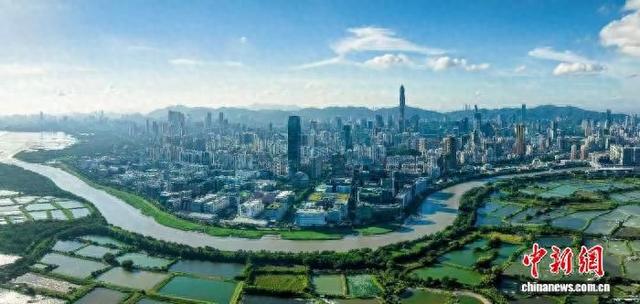
粤港澳科技“合聚变”激发创新力量
Ren Min Ri Bao· 2025-12-02 20:31
Core Viewpoint - The Guangdong-Hong Kong-Macao Greater Bay Area aims to establish a globally influential international technology innovation center, leveraging the strengths of each region to foster collaborative innovation [1] Group 1: Innovation Corridors - The Greater Bay Area features two main technology innovation corridors: Guangzhou-Shenzhen-Hong Kong and Guangzhou-Zhuhai-Macao, which are interconnected by significant scientific research facilities [1] - Key projects like the China Spallation Neutron Source and advanced laser technologies are being developed, enhancing the region's research capabilities [1] Group 2: Collaborative Breakthroughs - The collaboration between Hong Kong's basic research and Shenzhen's supply chain has led to significant advancements, including the development of China's first high-resolution electron microscope [2] - Over 600 million yuan has been allocated for cross-border scientific research funding, enhancing talent attraction through tax incentives and streamlined processes for researchers [2] Group 3: Integration and Development - The integration of resources and platforms across the three regions has led to the establishment of over 30 innovation platforms, facilitating research and development [3] - The China Spallation Neutron Source has opened its facilities to global scientists, significantly improving research efficiency for teams from Hong Kong and Macao [3] Group 4: Achievements and Outcomes - The Hong Kong-Shenzhen-Guangzhou innovation cluster has been ranked first globally in the 2025 Global Innovation Index, marking a significant achievement for the Greater Bay Area [5] - The region has seen over 200 high-end research projects initiated in the Hong Kong-Shenzhen Innovation Cooperation Zone, with more than 440 technology companies and 15,000 researchers involved [4]
从实验室走向生产线(潮涌大湾区)——粤港澳大湾区的创新故事
Ren Min Ri Bao· 2025-06-14 21:42
Core Viewpoint - The Guangdong-Hong Kong-Macao Greater Bay Area is emerging as a significant platform for collaborative innovation, with key areas like Hengqin, Qianhai, Nansha, and He Tao serving as experimental fields and accelerators for development [1] Group 1: Hengqin - The "Precision Puncture Navigation System" developed by Zhenjiankang (Guangdong Hengqin) Medical Technology Co., Ltd. demonstrates a high level of accuracy in medical procedures, achieving a precision of "millimeter" level and being utilized in over 70 top-tier hospitals across China [2][3] - The company has completed over 4,000 puncture surgeries, showcasing its successful integration into the healthcare system [2] - Zhenjiankang's new "Navigation and Ablation System" has been approved for market release, marking a significant advancement in combining diagnosis and treatment [3] Group 2: Qianhai - Simou Technology has developed a "Multi-modal Five-axis Industrial Intelligent Detection Machine" that can complete 360-degree inspections of products in just 2 seconds, significantly improving efficiency compared to manual quality checks [5] - The company has sold over 1,000 units and inspected at least 2 billion products, highlighting its impact on the manufacturing sector [5][6] - Simou Technology has achieved a valuation exceeding $1 billion within 18 months of its establishment, indicating rapid growth and success in the industry [6] Group 3: Nansha - The Hong Kong University of Science and Technology (Guangzhou) has developed a titanium alloy additive-subtractive manufacturing machine that can process products up to 2 meters long, applicable in aerospace and automotive industries [7][8] - The integration of additive and subtractive manufacturing processes allows for improved precision and reduced material waste, particularly in complex industrial components [8][9] - The company has received over 700,000 yuan in orders and won 120,000 yuan in innovation competitions, demonstrating its commercial viability [9] Group 4: He Tao - The Hong Kong City University has successfully developed a high temporal resolution electron microscope through collaboration in the He Tao Innovation and Technology Park, combining Hong Kong's research capabilities with Shenzhen's manufacturing strengths [10][11] - The innovative "temporary import-export" model for research equipment has streamlined the process of moving prototypes between Hong Kong and Shenzhen, significantly reducing wait times for commercialization [12] - The team plans to establish a large-scale production line for their electron microscopes within three years, indicating strong future growth potential [12]