
液晶显示用光学膜

Search documents
打造创新引领现代化建设的标杆
Bei Jing Ri Bao Ke Hu Duan· 2025-12-29 05:05
Core Insights - The Chinese government is expanding its international technology innovation centers in Beijing, Shanghai, and the Guangdong-Hong Kong-Macao Greater Bay Area to enhance original innovation capabilities and support the construction of a technology-driven modern economy [4][6][10]. Group 1: Beijing-Tianjin-Hebei Innovation Center - The expansion of the Beijing International Technology Innovation Center to the Beijing-Tianjin-Hebei region aims to create a major source of original innovation and strengthen the strategic support for building a technology powerhouse [6][8]. - Beijing has been ranked first globally in research cities for nine consecutive years, with a significant increase in unicorn companies and R&D investment intensity maintained at around 6% [6][8]. - The collaboration among Beijing, Tianjin, and Hebei has led to a substantial increase in technology contract transaction amounts, rising from over 7 billion yuan in 2013 to over 84 billion yuan in 2024 [7]. Group 2: Yangtze River Delta Innovation Center - The Yangtze River Delta region is experiencing accelerated technology innovation collaboration, with a focus on integrating Shanghai's international advantages with the industrial strengths of Jiangsu, Zhejiang, and Anhui [10][11]. - The region has seen a total investment of over 1.7 billion yuan in joint projects since 2022, with a regional R&D investment intensity of 3.33% [10][12]. - The expansion of the Shanghai International Technology Innovation Center to the Yangtze River Delta signifies a shift from focusing solely on Shanghai to fostering integrated innovation across the entire region [10][11]. Group 3: Guangdong-Hong Kong-Macao Greater Bay Area Innovation Center - The Greater Bay Area is leveraging its complementary advantages to build an open regional collaborative innovation community, aiming to enhance cross-border cooperation and achieve a "cumulative effect" [13][14]. - The area has established significant technological infrastructure, including 10 major national scientific facilities, and is home to over 70,000 national high-tech enterprises [16][17]. - Guangdong is focusing on emerging fields and aims to create a world-class high-tech industrial cluster through comprehensive cooperation from technology R&D to enterprise incubation [17].

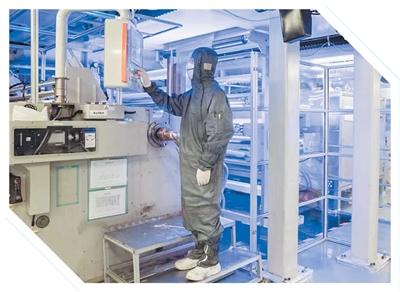
打造创新引领现代化建设的标杆(科技视点)
Ren Min Ri Bao· 2025-12-28 22:17
Core Viewpoint - The Central Economic Work Conference emphasizes the construction of international technology innovation centers in Beijing (Jing-Jin-Ji), Shanghai (Yangtze River Delta), and the Guangdong-Hong Kong-Macao Greater Bay Area to accelerate the formation of China's primary source of original innovation and support the strategic guidance for building a technology power [1]. Group 1: Beijing (Jing-Jin-Ji) International Technology Innovation Center - The expansion of the Beijing International Technology Innovation Center to the Jing-Jin-Ji region is expected to enhance original innovation capabilities and support the construction of a technology power [2][3]. - Beijing has ranked first globally in research cities for nine consecutive years, with a significant increase in unicorn companies and R&D investment intensity maintained at around 6% [2]. - The collaboration among Beijing, Tianjin, and Hebei is fostering a complete innovation chain, with technology contract transaction amounts from Beijing to Tianjin and Hebei rising from over 7 billion in 2013 to over 84 billion in 2024 [5]. Group 2: Shanghai (Yangtze River Delta) International Technology Innovation Center - The expansion of the Shanghai International Technology Innovation Center to the Yangtze River Delta signifies a new phase of deep integration in regional technological innovation [6][7]. - The region has seen over 80 joint projects supported since 2022, with total investments exceeding 1.7 billion, and R&D investment intensity reaching 3.33% [7]. - The Yangtze River Delta is home to one-third of the country's high-tech enterprises, R&D expenditure, and invention patent authorizations, indicating a robust innovation ecosystem [8]. Group 3: Guangdong-Hong Kong-Macao Greater Bay Area International Technology Innovation Center - The Greater Bay Area is leveraging its complementary advantages to build an open regional collaborative innovation community, aiming to become a global technology innovation hub [9][10]. - The area has established 10 major national scientific and technological infrastructures and is home to over 70,000 national high-tech enterprises [12]. - Guangdong is focusing on emerging fields and aims to create a world-class high-tech industrial cluster through comprehensive cooperation from technology R&D to enterprise incubation [12].
道明光学(002632) - 002632道明光学投资者关系管理信息20250429
2025-04-29 09:16
Group 1: Company Strategy and R&D Focus - The company emphasizes technological innovation and product upgrades, establishing the Daoming (Hangzhou) Research Institute to focus on optical key components and new functional film materials [2][3] - The research institute aims to provide customized optical solutions based on client needs and enhance existing optical products [3] - The company plans to leverage its advanced coating and film preparation technologies to develop special performance films and new display materials [3] Group 2: Market Position and Competition - The company has rapidly increased its market share in the license plate film sector, becoming a major supplier in China, with significant growth potential due to the rise of electric vehicles [4] - The transition from ink to hot stamping technology is expected to boost sales of license plate films and related thermal transfer films [4] - The company maintains strong competitive advantages through its production capacity, brand strength, and technological innovation [4] Group 3: Financial Performance - In 2024, the company achieved total revenue of CNY 1.44 billion, a year-on-year increase of 8.96% [5][9] - The net profit attributable to shareholders was CNY 169 million, up 8.44% year-on-year, while the net profit excluding non-recurring items was CNY 137 million, a 2.94% increase [5][9] Group 4: Future Growth Opportunities - The company anticipates accelerated domestic substitution of reflective materials, particularly in the automotive safety sector, driven by the growth of electric vehicles [8] - The company is positioned to expand its market share in regions such as the Middle East, South America, and Europe, leveraging its strong brand reputation [8] - The introduction of graphene heat dissipation films into flagship smartphone models is expected to drive future growth [8] Group 5: Talent and Management Development - The company prioritizes the development of its management team and talent cultivation, actively recruiting to enhance professional capabilities and technical skills [9] Group 6: Industry Outlook - The overall industry performance is stable, with the company maintaining a competitive edge compared to peers [9] - The company is exploring market expansion plans in emerging industries, particularly in the automotive sector, to meet increasing demand for reflective materials [9]
