
高精度地基授时系统

Search documents
古都涌“新”潮
Ren Min Ri Bao· 2025-12-17 22:11
Core Insights - Xi'an is emerging as a significant hub for technological innovation, with 320 photonics companies generating a total output value of 35 billion yuan, showcasing the city's robust scientific capabilities and innovative ecosystem [1] - The city is actively implementing strategies to enhance its status as a national scientific center and innovation hub, focusing on key technological breakthroughs and the transformation of scientific achievements into industrial applications [1] Group 1: Technological Advancements - Xi'an is home to advanced scientific facilities, including the National Center for Molecular Medicine and the Advanced Attosecond Laser Facility, which are pivotal in enhancing the city's innovation capabilities during the 14th Five-Year Plan [3] - The city has achieved significant milestones in various fields, such as 3D bioprinting and bionic tissue engineering, with local universities and research institutes contributing to breakthroughs in core technologies [3][8] Group 2: Industry Development - The aviation industry in Xi'an has seen substantial growth, with the successful first flight of the "Jiu Tian" drone, marking a new breakthrough in large drone technology and contributing to an overall aviation cluster worth over 150 billion yuan [4] - Xi'an High-tech Zone is a key area for technological innovation, incorporating eight new sectors, including photonics and intelligent connected vehicles, into national development initiatives [5] Group 3: Policy and Ecosystem Support - The local government has introduced a series of supportive policies aimed at enhancing research platforms, improving the quality of technology enterprises, and optimizing the innovation ecosystem, thereby boosting overall innovation efficiency [6] - Xi'an is fostering a comprehensive innovation ecosystem that integrates basic research, technological breakthroughs, industrialization of achievements, and talent aggregation, enhancing the city's overall technological innovation capabilities [6] Group 4: Regional Collaboration - The city is promoting a collaborative innovation framework with surrounding areas, leveraging Xi'an's technological advantages for research and the industrial resources of nearby cities for rapid growth and development [9] - The strategic focus on regional collaboration aligns with national directives to build regional technology innovation centers and enhance new economic drivers, positioning Xi'an as a key player in China's modernization efforts [9]
美方通过手机 网攻中国国家授时中心丨画说热点
Xin Lang Cai Jing· 2025-10-22 04:25
Core Viewpoint - The article reports on a significant cyber attack by the U.S. National Security Agency (NSA) against China's National Time Service Center, highlighting the threat to the integrity of "Beijing Time" and the potential severe consequences of such attacks [1][4]. Group 1: Cyber Attack Details - The NSA has been conducting a systematic and progressive cyber attack against the National Time Service Center, which is crucial for maintaining "Beijing Time" [8]. - The attack began on March 25, 2022, utilizing vulnerabilities in a foreign brand's mobile messaging service to gain control over the mobile devices of several staff members at the center [10]. - From April 18, 2023, the NSA repeatedly used stolen login credentials to infiltrate the center's computer systems, probing into its network infrastructure [12]. - Between August 2023 and June 2024, the NSA plans to deploy a new cyber warfare platform, utilizing 42 specialized attack tools to target multiple internal networks of the National Time Service Center [14]. Group 2: Implications of the Attack - A successful cyber attack could disrupt the stable operation of "Beijing Time," leading to severe consequences such as communication failures, financial system chaos, power supply interruptions, transportation paralysis, and potential failures in aerospace launches [6]. - The National Time Service Center has developed a world-leading autonomous time measurement system and a high-precision ground timing system, making it a critical infrastructure for various sectors [2][3]. Group 3: Countermeasures and Broader Context - The Chinese national security agencies have gathered evidence of the NSA's cyber activities and are taking measures to counteract these attacks, including guiding the National Time Service Center in conducting inspections and enhancing security protocols [24]. - The article also discusses the broader context of U.S. cyber dominance and its implications for global cybersecurity, emphasizing that the U.S. has been involved in numerous cyber operations against various regions, including China, Southeast Asia, Europe, and South America [26][30].

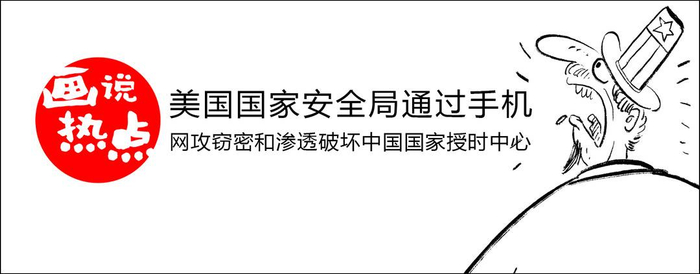
“北京时间”遭美国网攻更多细节曝光
Xin Lang Cai Jing· 2025-10-19 20:17
Core Viewpoint - The Chinese Academy of Sciences National Time Service Center has become a target for U.S. cyberattacks, which aim to steal sensitive data and compromise its operations [2][3][6]. Group 1: Cyberattack Details - The U.S. has conducted long-term, high-intensity infiltration attacks on the National Time Service Center, utilizing advanced espionage tools [2][3]. - Starting in 2022, the U.S. exploited vulnerabilities in foreign mobile phone services to gain control over the phones of multiple staff members, allowing for the theft of sensitive information [2][3]. - From August 2023 to June 2024, the U.S. deployed a new network warfare platform, using 42 specialized cyberattack tools to target various internal systems of the National Time Service Center [3][6]. Group 2: Importance of the National Time Service Center - The National Time Service Center, originally established in 1966, is responsible for generating and broadcasting the national standard time, which is crucial for the functioning of various sectors including finance, telecommunications, and scientific research [4][5]. - The precision of national standard time is vital; even a millisecond discrepancy can lead to significant operational failures, such as widespread power outages or substantial financial losses in stock trading [4][5]. Group 3: International Standing and Developments - China's share in the international standard time calculation has increased from 5.66% in 2021 to 19.51%, positioning it as the second highest globally [5]. - The National Time Service Center is currently developing a high-precision ground-based timing system to enhance the security, reliability, and accuracy of its timing services [5]. Group 4: Nature of Cyber Threats - The cyberattacks are characterized as Advanced Persistent Threats (APT), which are systematic and strategic actions aimed at monitoring and potentially disrupting critical infrastructure in other countries [6][7]. - The U.S. employs various techniques, including the use of "jump servers" located in different regions, to obscure the source of attacks and enhance the effectiveness of their cyber operations [6][7].
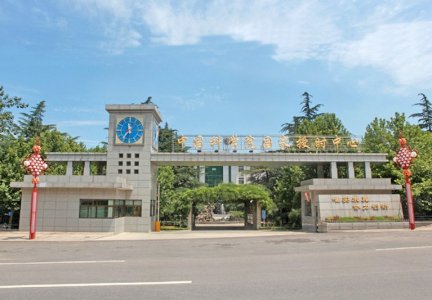
【西安】多举措推进科技创新和产业创新融合
Shan Xi Ri Bao· 2025-09-14 00:11
Core Viewpoint - Xi'an is making significant progress in integrating technological innovation with industrial development, as highlighted in the recent press conference by the Xi'an Municipal Government [1][2] Group 1: High-Quality Technological Supply - Xi'an is accelerating the construction of major technological infrastructure, including the world's first 10-picosecond-level fiber-optic time transfer system over a distance of 1,000 kilometers [1] - The city has successfully developed key technologies, including the largest mirror milling equipment in the world and the first domestic three-phase integrated 220 kV power transformer [1] Group 2: Deep Integration of Technological and Industrial Innovation - Xi'an has created a comprehensive map of innovation resources across education, technology, talent, and industry, and has implemented plans to enhance industrial chains in sectors like aerospace, semiconductors, and new materials [1] - The city has 893 gazelle enterprises, 1,254 specialized and innovative enterprises, and 2,661 high-tech enterprises above designated size [1] - The establishment of the first national technology manager academy has resulted in 4,645 technology managers in the city [1] Group 3: Optimizing Innovation and Entrepreneurship Ecosystem - Xi'an has launched a three-year action plan to enhance technological financial capabilities, promoting precise matching between technology, industry, and finance [2] - The city has evaluated 27,200 patent applications, increasing the average authorization rate from 48% to 65%, with an invention patent ownership rate of 85.26 per 10,000 people [2] - The "shared campus recruitment" initiative has attracted 116 urgently needed talents, with a total of 1,944 high-level talents nurtured [2] Group 4: Regional Collaborative Innovation Development - Xi'an is collaborating with nearby cities to plan over 30 innovation cooperation projects by 2025 and has released 27 results transformation demands with cities like Xining and Urumqi [2] - The city is organizing cross-regional technology tackling and results transformation projects in sectors such as semiconductors, energy, modern coal chemical industry, and modern agriculture [2] Group 5: Future Plans - The city aims to continue strengthening the construction of the Xi'an Regional Science and Technology Innovation Center and deepen the integration of education, technology, and talent systems [2]