鸵鸟皮

Search documents
(走进中国乡村)“95后”返乡创客乐当“鸵鸟主理人”
Zhong Guo Xin Wen Wang· 2026-01-12 10:47
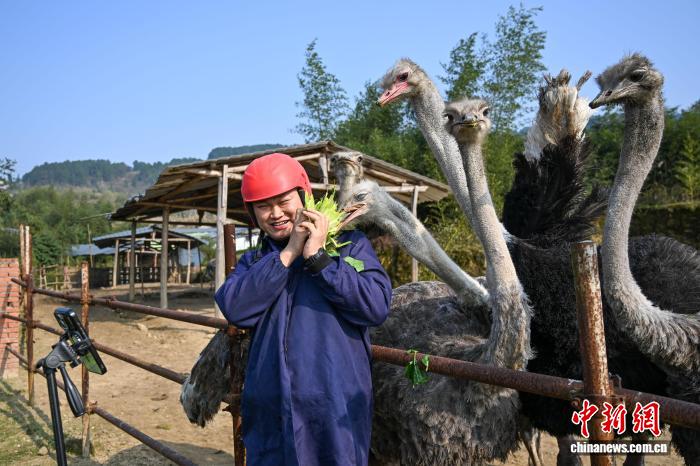
Core Viewpoint - The article highlights the entrepreneurial journey of a young individual, Fan Zhiheng, who has returned to his hometown to engage in ostrich farming, leveraging modern technology and marketing strategies to create a sustainable business model in the "ostrich economy" [1][3]. Group 1: Industry Overview - Ostrich farming is gaining traction globally, with significant cultivation in provinces such as Yunnan, Shandong, Hebei, Qinghai, and Guangdong in China [3]. - The ostrich provides multiple economic benefits, including meat, eggs, feathers for export, and leather for high-end products [1]. Group 2: Entrepreneurial Journey - After graduating, Fan Zhiheng initially worked in real estate but decided to return to his hometown to promote local agriculture and prevent youth outmigration [3]. - He faced challenges in the early stages of ostrich farming, including high mortality rates among young ostriches, which prompted him to study and refine his farming techniques [5]. - By 2021, after overcoming initial setbacks, he successfully raised his first batch of ostriches, marking a turning point in his entrepreneurial venture [5]. Group 3: Marketing and Sales Strategy - Fan utilized internet live streaming to market ostrich products, significantly increasing customer engagement and sales, with a peak of selling 13 ostriches in one day [3][5]. - He initially struggled with direct sales but adapted his approach by leveraging social media and online platforms to reach a broader audience [5]. Group 4: Community Impact - Fan Zhiheng's efforts have inspired local villagers and returning university students to engage in ostrich farming, leading to a rise in the number of young agricultural entrepreneurs in his town from one to seven [7]. - He has also developed a model that provides ostrich chicks, farming techniques, and sales channels to support local entrepreneurship [6].

95后鸵鸟主理人:养鸵鸟不是“把头埋进沙子”
Xin Lang Cai Jing· 2025-12-21 20:41
Core Viewpoint - The article highlights the innovative approach of a young entrepreneur, Fan Zhiheng, who has successfully established an ostrich farming business in Chongqing, China, utilizing a model that combines breeding, cooperative farming, and online sales to revitalize rural entrepreneurship and engage local farmers [1][2][9]. Group 1: Business Model and Operations - Fan Zhiheng's ostrich farming model includes unified breeding, cooperative farming, and guaranteed sales, attracting over 80 farmers from four provinces to participate [1]. - The ostrich farming process involves raising the birds from chicks to market-ready adults in about 10 months, with a profit of approximately 1,000 yuan per bird [2]. - The business has expanded to include two ostrich farming bases, with one in Guangzhou focusing on breeding and the other in Chongqing for independent operations [6]. Group 2: Market Potential and Product Value - The global ostrich farming industry is significant, with an estimated 15 million ostriches worldwide, predominantly in South Africa [3]. - Ostrich meat is high in protein and low in fat, appealing to high-end meat consumers, while other products like ostrich skin and eggs have various market applications [4]. - The demand for ostrich products is growing, with a focus on both domestic sales and international exports [4][10]. Group 3: Challenges and Learning - Initial challenges included high mortality rates among the first batch of ostrich chicks due to inadequate knowledge and preparation [5][6]. - Fan learned through hands-on experience and research, developing local farming techniques that improved survival rates and overall productivity [6]. - The business model evolved to include a fee-based system for farmers to ensure commitment and proper care of the ostriches [7]. Group 4: Technology and Marketing - The use of internet platforms for marketing and sales has been crucial, with Fan leveraging social media and live streaming to reach customers and educate potential farmers [9][10]. - The business has established nearly 100 stable sales channels, including restaurants and online retail, with 70% of products sold online [10]. - Fan's approach emphasizes community engagement and education, aiming to uplift local farmers and create a sustainable business ecosystem [9].
关税重创美标志性产业 “鸵鸟皮危机”威胁“美国制造”牛仔靴
Yang Shi Xin Wen Ke Hu Duan· 2025-08-02 07:26
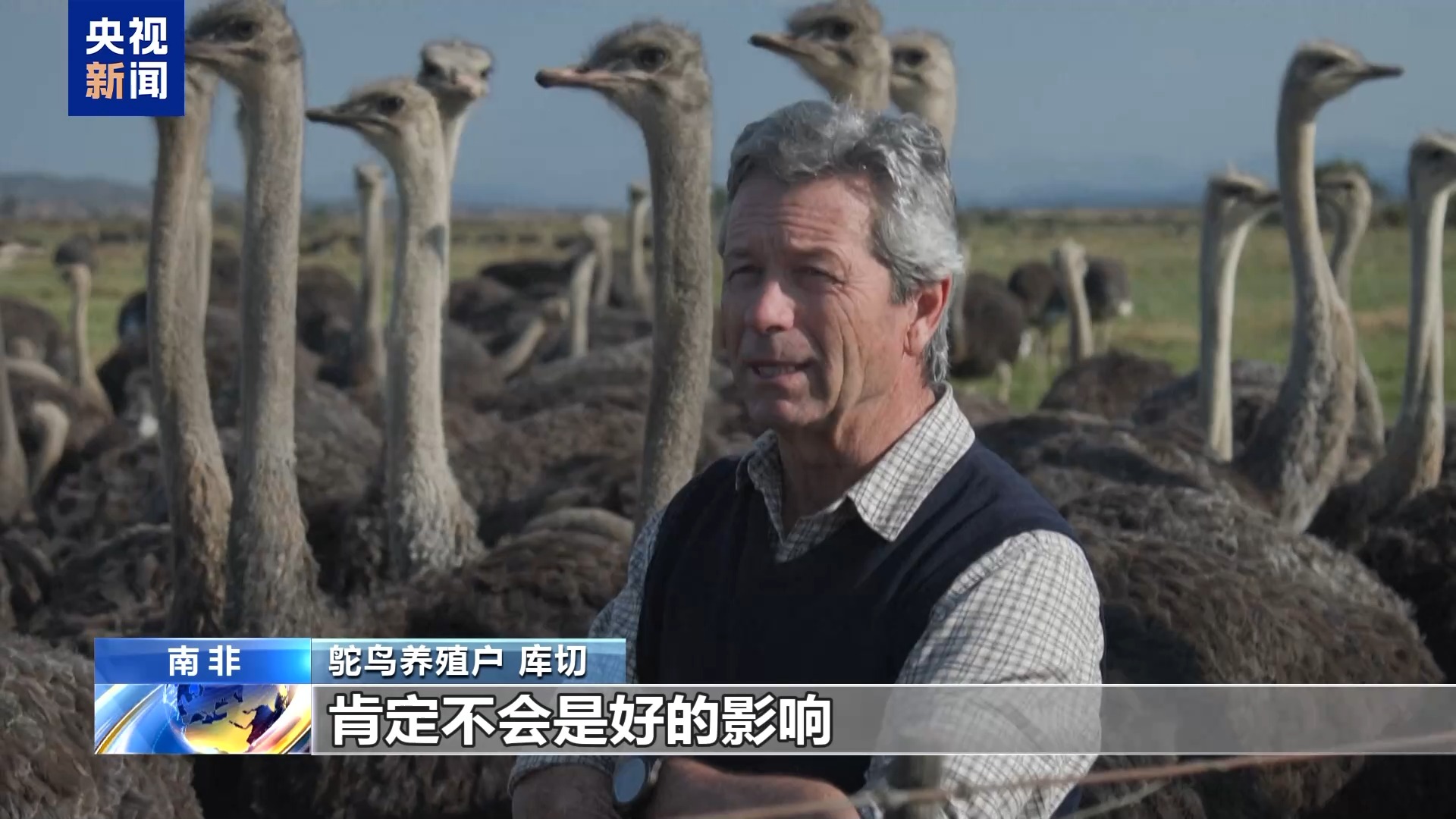
Core Viewpoint - The U.S. will impose a 30% tariff on imports from South Africa starting August 1, due to the failure to reach a new trade agreement, significantly impacting the ostrich industry and related sectors in the U.S. [1] Group 1: Impact on Ostrich Farmers - South Africa supplies approximately 70% of the world's ostrich products, with a significant portion coming from the town of Oudtshoorn, where nearly 200 farmers contribute to over half of global ostrich product supply [1] - Farmers in Oudtshoorn are anxiously awaiting the effects of the new tariff policy, uncertain about the severity of the impact [3] Group 2: Impact on Cowboy Boot Manufacturers - The tariff is viewed as a "crisis" for U.S. cowboy boot manufacturers, as ostrich leather is a key material, and many manufacturers rely entirely on South African supplies [5] - High tariffs may lead to a contraction in the related industry, as rising raw material costs are difficult to pass on to consumers, potentially decreasing consumer willingness to purchase already expensive boots [5] - Manufacturers emphasize that the U.S. cannot match the quality and scale of South African ostrich farming, making it challenging to bring production back to the U.S. under current tariff conditions [7] - There is a recognition that while there is a desire to produce domestically, the U.S. lacks the capacity to raise ostriches that meet quality standards, and there is insufficient domestic demand for the meat [8]