
黑枸杞原浆

Search documents
新疆持续推进塔克拉玛干沙漠边缘阻击战调查
Jing Ji Ri Bao· 2026-01-06 07:38
Core Viewpoint - China is making significant progress in combating desertification, achieving a zero growth target for land degradation during the 14th Five-Year Plan period, and is the largest contributor to global greening efforts [1] Group 1: Achievements in Desertification Control - Xinjiang has implemented a green ecological barrier around the Taklamakan Desert, marking it as the world's longest desert green barrier [2] - The Taklamakan Desert edge battle has achieved a milestone with the completion of a 3,046 km green barrier, effectively encircling the desert [2] - By 2025, Xinjiang aims to complete 13.76 million acres of the "Three-North" project, with 9.38 million acres of expansion along the desert edge [3] Group 2: Sustainable Development Strategies - The focus is on sustainable development through a dual approach of increasing income and greening, with ongoing efforts to expand the green protective belt [3][4] - The strategy includes defining key battlefields around the desert edge, targeting areas vulnerable to wind and sand hazards [3] - Local governments are encouraged to adopt tailored approaches for sand control, integrating ecological and economic benefits [10][12] Group 3: Economic Integration and Industry Development - The development of a sand industry is crucial for sustainable desertification control, with initiatives to enhance the economic value of desert resources [14][18] - The integration of ecological construction with industry development is evident in regions like Aksu, where local economies are benefiting from the cultivation of fruit trees and eco-tourism [16] - The promotion of unique desert industries, such as black goji berry production, is contributing to local economic growth and ecological sustainability [14][16]

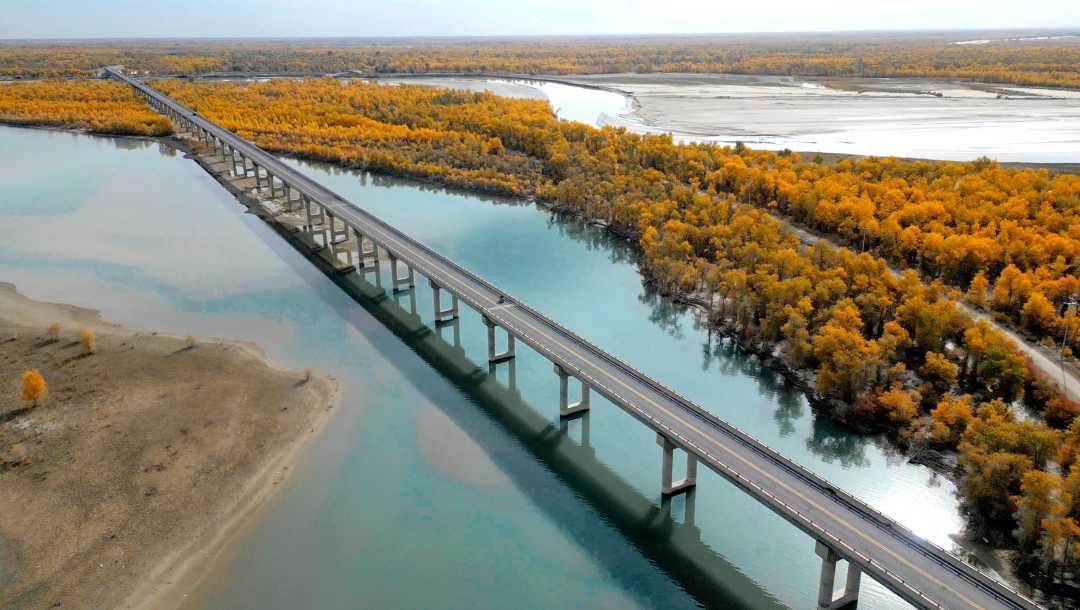
沙漠“绿围脖”越织越厚——新疆持续推进塔克拉玛干沙漠边缘阻击战调查
Jing Ji Ri Bao· 2026-01-04 22:14
Core Viewpoint - China is making significant progress in combating desertification, achieving a zero growth target for land degradation during the 14th Five-Year Plan period, and is the largest contributor to global greening efforts [1] Group 1: Achievements in Desertification Control - Xinjiang has implemented a green ecological barrier around the Taklamakan Desert, marking it as the world's longest desert green protection belt, with a total length of 3,046 kilometers [2] - The Taklamakan Desert edge battle has achieved a milestone with the completion of the green barrier, which is expected to expand further by 938.22 million mu by 2025 [2][3] - The green protection belt's width will increase from 110 meters to 7,500 meters, enhancing its protective capabilities [2] Group 2: Sustainable Development Strategies - The focus is on sustainable development through a combination of sand control and economic growth, with local governments emphasizing the dual goals of increasing income and greening [2][3] - The strategy includes a comprehensive approach involving engineering, biological methods, and the development of sand-related industries to ensure long-term sustainability [11] Group 3: Local Initiatives and Innovations - Local counties are adopting innovative methods such as "terrace sand control" to reduce costs by approximately 80% compared to traditional methods [7] - The integration of solar power with sand control efforts is being explored, with projects utilizing photovoltaic panels to stabilize sand and reduce wind speed [9][10] - The introduction of saline-alkali water treatment technologies is being implemented to support the irrigation of sand-fixing plants, enhancing water resource efficiency [10] Group 4: Economic Development through Ecological Initiatives - The development of specialty industries, such as black goji berry production, is being promoted alongside ecological restoration efforts, contributing to local economic growth [11][12] - The establishment of a full industrial chain around desert rose cultivation is creating new economic opportunities while also serving ecological purposes [13]
沙漠“绿围脖”越织越厚
Xin Lang Cai Jing· 2026-01-04 22:08
Core Viewpoint - China is making significant progress in combating desertification, achieving a zero growth target for land degradation during the 14th Five-Year Plan period, and is the largest contributor to global greening efforts [1] Group 1: Achievements in Desertification Control - The Taklamakan Desert has been encircled by a green ecological barrier, the longest of its kind in the world, marking a significant achievement in desertification control [2] - The green barrier around the Taklamakan Desert has a total length of 3,046 kilometers, with the completion of the last planting area in November 2024 [2] - By 2025, Xinjiang aims to complete 13.76 million acres of the "Three-North" project, with 9.38 million acres of expansion along the desert's edge [2][3] Group 2: Strategies for Sustainable Development - The focus for 2025 includes delineating key battlefields around the Taklamakan Desert, targeting areas vulnerable to wind and sand damage [3] - The approach combines engineering, biological methods, and economic development to ensure sustainable sand control and greening efforts [4][11] - Local governments are encouraged to adopt tailored strategies based on specific environmental conditions, such as using photovoltaic technology for sand control in water-scarce areas [6][9] Group 3: Economic Integration and Community Involvement - The integration of ecological restoration with economic development is emphasized, with local communities benefiting from sustainable practices [11][13] - The development of specialty industries, such as black goji berry production, is being promoted to enhance both ecological and economic outcomes [11] - Community engagement in sand control projects is crucial, with models that allow local farmers to benefit directly from their involvement in greening efforts [7][8]