1元冰淇淋

Search documents
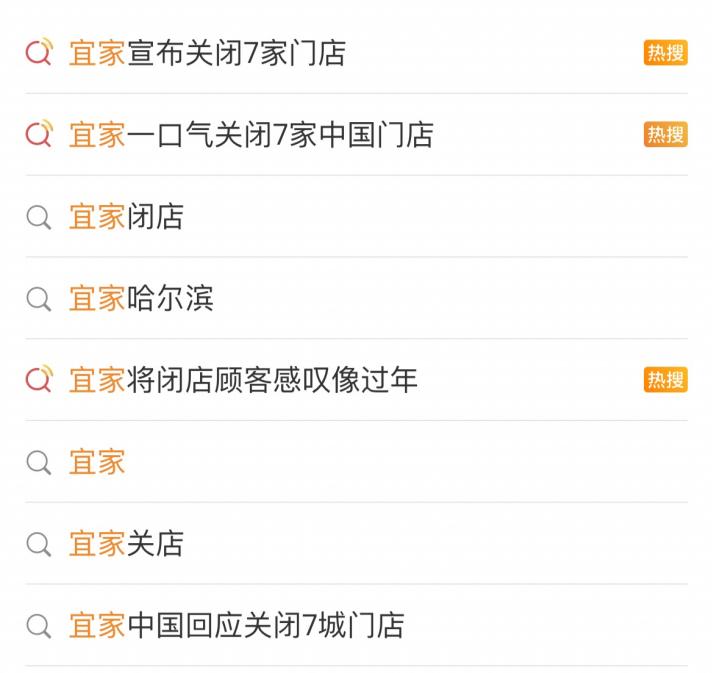
零售巨头宣布关店,清仓引发3小时排队抢购,“现场像过年”
3 6 Ke· 2026-01-27 01:00
Core Insights - IKEA is closing seven stores in China, marking its largest store reduction since entering the market 28 years ago, as it seeks to adapt to changing consumer preferences and market dynamics [3][9][21] - The closures have sparked significant consumer interest, with long lines and a rush to purchase discounted items, indicating a nostalgic farewell to the brand's iconic stores [1][10][17] Group 1: Store Closures and Market Impact - The seven stores being closed include locations in Shanghai, Guangzhou, Tianjin, Nantong, Xuzhou, Ningbo, and Harbin, with operations ceasing on February 2, 2026 [1][9] - This decision is part of a broader trend where IKEA has been closing stores since 2021, with a notable decline in sales growth from 17% to 6.5% between 2021 and 2023 [9][10][19] - The closures are seen as a strategic move to address declining revenues, with sales in the Chinese market dropping from 12.07 billion yuan in the previous fiscal year to 11.15 billion yuan, a decrease of nearly 1 billion yuan [9][10][21] Group 2: Changing Consumer Preferences - The shift in consumer behavior is attributed to a transition from new home purchases to renovations of existing homes, which has reduced the effectiveness of IKEA's large store model [13][14] - Local brands have gained market share by offering more tailored products and services, leveraging e-commerce and local supply chains to meet consumer demands more effectively [15][16] - The nostalgia surrounding IKEA's stores reflects a collective farewell to a shopping experience that is no longer aligned with current consumer needs [10][17] Group 3: Future Strategies - IKEA plans to invest in smaller store formats and digital channels, with a goal to open over ten small stores in the next two years, focusing on high-frequency items and closer proximity to urban consumers [21][22] - The company is also implementing a price subsidy policy for popular products, aiming to regain market interest and adapt to the evolving landscape [22] - The strategic shift indicates a move from a "destination shopping" model to a more integrated approach that combines large warehouses, small urban stores, and online platforms [21][22]

“雪王”半年狂赚27亿,河南首富兄弟“闷声发大财”
Sou Hu Cai Jing· 2025-08-29 13:42
Core Insights - The core viewpoint of the article highlights the impressive financial performance of Mixue Group in the first half of 2025, alongside the challenges posed by rapid expansion and reliance on a franchise model [2][3][11]. Financial Performance - In the first half of 2025, Mixue Group achieved a revenue of 14.875 billion yuan, a year-on-year increase of 39.3% [5]. - The profit for the same period was 2.718 billion yuan, reflecting a year-on-year growth of 44.1% [5]. - The gross profit reached 4.706 billion yuan, with a gross margin of 30.3%, slightly down by 0.2 percentage points compared to the previous year [8]. Store Expansion - As of the end of June 2025, Mixue Group had over 53,000 stores globally, with a net increase of nearly 10,000 stores compared to the same period last year [3][8]. - The company operates 48,281 stores in mainland China and 4,733 stores in overseas markets [9]. - The number of stores in third-tier and lower cities in mainland China reached 27,804, accounting for 57.6% of the total stores in the region [9]. Revenue Sources - The revenue growth was primarily driven by sales of goods and equipment, which amounted to 14.495 billion yuan, a year-on-year increase of 39.6% [7]. - Franchise and related service income was 380 million yuan, growing by 29.8% year-on-year, but only accounted for 2.6% of total revenue [11]. Challenges and Risks - Despite the strong performance, the company faces challenges such as a rising closure rate of franchise stores, which increased from 2.13% to 2.55% year-on-year [13]. - The competitive landscape in the ready-to-drink tea market is becoming more challenging, with growth rates expected to slow down significantly [14]. - Mixue Group's reliance on a low-price strategy has limited its product innovation, with fewer new products launched compared to competitors [14][15]. Leadership and Wealth - Founders Zhang Hongchao and Zhang Hongfu have seen their wealth double to 117.91 billion yuan, ranking them as the richest individuals in Henan province [17]. - The brothers hold a combined 81.99% of Mixue Group's shares, reflecting their significant control over the company [17].