
1L装啤酒

Search documents
进入存量市场竞争的啤酒业,取悦消费者变得更重要了
第一财经· 2026-03-12 08:43
Core Viewpoint - The Chinese beer industry is experiencing a decline in production, with a total output of 35.36 million kiloliters in 2025, marking a 1.1% year-on-year decrease, and the performance among companies is increasingly divergent [3][4]. Group 1: Company Performance - Among the top five beer companies in China, four have released their 2025 annual reports or performance forecasts, with two showing growth and two experiencing declines [4]. - Chongqing Beer reported a revenue of 14.722 billion yuan in 2025, a 0.53% increase year-on-year, and a net profit of 1.231 billion yuan, up 10.43% [4]. - Yanjing Beer expects a net profit growth of 50% to 65% for 2025 [5]. - Budweiser APAC's revenue in 2025 decreased by 6.1% year-on-year, with normalized EBITDA down by 9.8% due to challenges in the Chinese market [5]. - China Resources Beer anticipates a net profit of approximately 2.92 billion to 3.35 billion yuan, reflecting a year-on-year decrease of about 29.6% to 38.6%, primarily due to goodwill impairment from its acquisition of a liquor company [5]. Group 2: Industry Trends - Prior to 2010, growth in the domestic beer sector was largely driven by mergers and acquisitions, while post-2015 growth has shifted towards premiumization and structural upgrades in product offerings [6]. - The beer industry has undergone significant restructuring in both product and distribution channels, with innovations in flavors and a shift towards non-on-premise sales channels [6]. - The industry is now in a mature phase characterized by low overall growth and structural support, making it increasingly difficult for companies to achieve higher profit growth [6]. Group 3: Consumer Preferences and Innovation - Companies are focusing more on consumer satisfaction, with an emphasis on enhancing product experiences rather than merely increasing consumption [7]. - Chongqing Beer launched over 30 new products in 2025, including craft beers and flavored beverages, to cater to younger consumers' preferences [7][8]. - The company is also optimizing its production system to improve efficiency and product delivery capabilities [8]. Group 4: Future Outlook - Budweiser APAC aims to reignite growth trends in China and rebuild market share, viewing the Chinese market as a significant opportunity for long-term profit growth [9]. - The company plans to enhance its product mix and accelerate the development of non-on-premise marketing channels while leveraging digitalization to improve execution and consumer engagement [9].





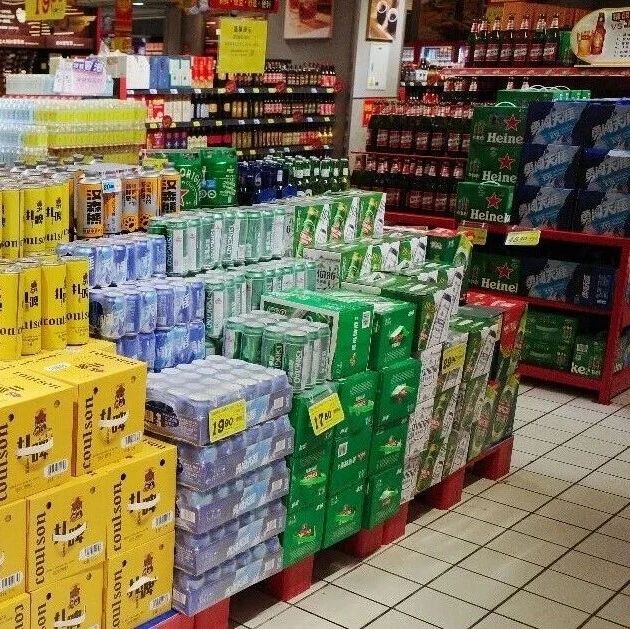
重庆啤酒:去年净利润增长10.43%至12.31亿元,全年30多款新品涵盖茶啤、1L装、果味汽水等多品类
Cai Jing Wang· 2026-02-05 08:27
Core Insights - The company reported a revenue of 14.722 billion yuan for 2025, representing a year-on-year growth of 0.53%, and a net profit attributable to shareholders of 1.231 billion yuan, which is a 10.43% increase from the previous year [1] Group 1: Financial Performance - In 2025, the company's sales volume increased by 0.68% year-on-year, outperforming the industry average, while total revenue maintained steady growth [1] - The gross profit margin improved due to a decrease in the cost of raw materials and savings from supply network optimization projects [1] - Marketing and advertising expenses increased compared to 2024 as the company aimed to consolidate and expand market share [1] Group 2: Strategic Initiatives - The company implemented the "Jia Su Yang Fan" strategy to adapt to external environmental changes, focusing on optimizing product structure and accelerating new product launches [1] - Over 30 new products were launched in 2025, including craft beer, tea beer, and 1L packaging, aligning with trends in the Chinese beer industry [1] - The product line was extended to include non-beer categories such as fruit-flavored sodas, energy drinks, and sparkling water, enhancing product offerings for various consumption scenarios [1] Group 3: Brand Engagement - The company is enhancing brand experience by integrating with local culture and high-frequency consumption scenarios, such as sports events, dining, music festivals, and popular variety shows [2] - Specific combinations like "Carlsberg + Football," "Lebao + Music," "Chongqing + Hotpot," and "Wusu + Barbecue" are being utilized to stimulate consumer engagement [2]