2纳米产品

Search documents
台积电日本熊本新工厂转向3纳米产品
日经中文网· 2026-02-05 07:55
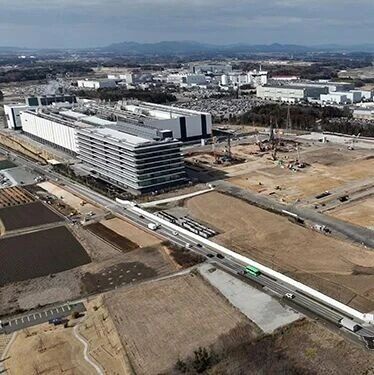
Core Viewpoint - TSMC has shifted its production plans for the Kumamoto second factory in Japan to focus on 3nm semiconductors aimed at the AI sector, responding to the growing demand for advanced AI chips [2][4]. Group 1: Production Plans - Initially, TSMC planned to produce 6nm products at the Kumamoto second factory, primarily for communication devices [4]. - Due to weak demand, construction was temporarily halted before the end of 2025, prompting a reassessment of production products and manufacturing equipment [4]. - The decision to produce 3nm products, which are second only to the upcoming 2nm products set to begin mass production in Taiwan in 2025, reflects TSMC's strategy to meet the increasing demand for AI semiconductors [4]. Group 2: Market Implications - The 3nm products will be integral to the next generation of AI semiconductors developed by companies like NVIDIA, indicating a significant market opportunity for TSMC in the AI sector [2][4]. - This move is expected to stabilize the supply of advanced semiconductors within Japan amidst fierce global competition in the AI semiconductor market [2].


台积电将在2纳米生产线排除大陆设备
日经中文网· 2025-08-27 08:00
Core Viewpoint - TSMC plans to exclude Chinese manufacturers' equipment from its advanced semiconductor production lines, particularly for the upcoming 2nm factory, due to concerns over potential U.S. restrictions and geopolitical risks [2][4][5] Group 1: Production Plans - TSMC will begin mass production of 2nm products at its factory in Hsinchu, northern Taiwan, followed by production in Kaohsiung and a facility under construction in Arizona, USA [4][5] - The company previously used equipment from Chinese manufacturers, including AMEC and Mattson Technology, but decided to eliminate these in the 2nm production process to mitigate risks [4][5] Group 2: Geopolitical Concerns - The decision to exclude Chinese equipment is influenced by fears of increased U.S. restrictions and geopolitical uncertainties [2][4] - A proposed U.S. bill aims to prohibit the use of foreign equipment from "unreliable" countries in semiconductor factories receiving U.S. government funding, which could include Chinese equipment [4][5] Group 3: Supply Chain Strategy - TSMC is investigating alternatives to reduce reliance on Chinese-made materials and chemicals for its production lines in Taiwan and the U.S., enhancing supply chain resilience [5] - The company plans to use more local suppliers in China to comply with localization policies and reduce carbon footprints [5] Group 4: Industry Implications - Chinese semiconductor manufacturers are increasingly adopting domestic equipment, presenting growth opportunities for local firms like North Huachuang, while foreign companies may face declining market shares in China [5]