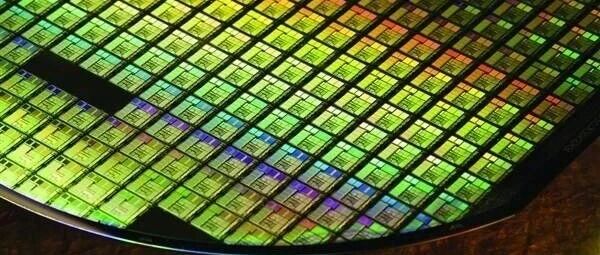
2nm(N2)制程晶圆

Search documents
台积电突破2万亿美元:AI算力时代,制造龙头的价值重估
Di Yi Cai Jing· 2026-02-25 03:08
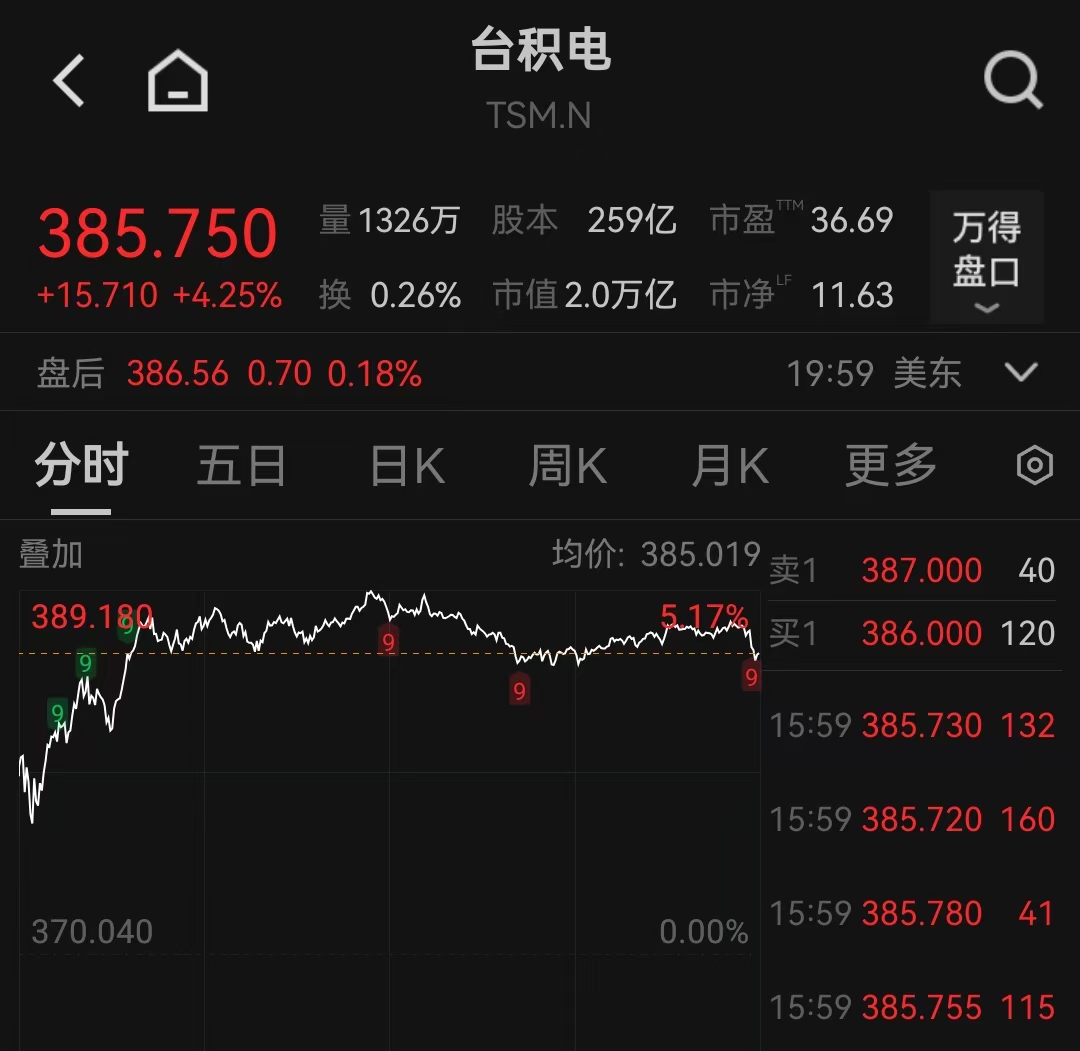
Core Viewpoint - TSMC's market capitalization has doubled in just over a year, reaching $2 trillion, driven by strong demand in the AI sector and significant partnerships with major tech companies [1][2][3] Group 1: Market Performance - TSMC's stock price increased by 4.25% to close at $385.75 per share, achieving a market capitalization of $2 trillion [2] - The company reached the $1 trillion market cap milestone in October 2024, becoming the seventh tech company in history to do so [2] Group 2: AI Demand and Partnerships - TSMC is experiencing strong demand signals from AI chip customers, with revenue projections for Q1 expected to be between $34.6 billion and $35.8 billion due to the booming AI industry [3] - Major clients like AMD and NVIDIA are expanding their business, with NVIDIA announcing a strategic partnership with Meta for the deployment of millions of chips [3] - Amazon plans to invest $12 billion in building new data centers in Louisiana to support AI and cloud computing infrastructure [3] Group 3: Industry Outlook - NVIDIA's CEO highlighted the importance of TSMC in the production of their Blackwell and Rubin chips, indicating a potential 100% increase in TSMC's capacity over the next decade [4] - TSMC is leading in advanced process technology, with plans to start mass production of 2nm chips by Q4 2025, while competitors like Intel are struggling with production yields [4] Group 4: Market Concerns - There are concerns about potential over-investment in AI by tech giants, with some industry leaders questioning the sustainability of current AI infrastructure plans [5] - A recent survey indicated that capital expenditures by AI cloud service providers are viewed as a significant credit risk [5] - NVIDIA's upcoming quarterly earnings report is anticipated to provide insights into the ongoing AI demand and market expectations [5]

技术主权与产能博弈:2025年全球晶圆厂格局重构(附国内产能清单)
材料汇· 2025-08-29 13:38
Core Viewpoint - The global semiconductor industry is undergoing unprecedented capacity restructuring, with a significant disparity between advanced and mature processes driven by geopolitical dynamics, technological divergence, and changing market demands [2][4]. Group 1: Advanced Process Competition - TSMC, Samsung, and Intel are fiercely competing in the advanced process segment, particularly in the 3nm and below category, with TSMC's 2nm process expected to start mass production in late 2025 [6][7]. - TSMC's 2nm process will have a monthly capacity of 50,000 wafers, primarily supplying Apple and Nvidia, with a projected ramp-up to 120,000 wafers per month by the end of 2026 [6]. - Samsung's 3nm GAA process has achieved an 80% yield and secured a $16.5 billion contract with Tesla, while its 2nm process is set for trial production in Q2 2025 [6][7]. - Intel's 18A process, utilizing Power Via technology, aims for a monthly capacity of 15,000 wafers by the end of 2025, targeting AI and autonomous driving applications [7]. Group 2: Mature Process Landscape - The global capacity for mature processes (8nm to 45nm) has surpassed 15 million wafers per month, with significant contributions from Chinese manufacturers [9][11]. - SMIC, as a leading Chinese foundry, has a monthly capacity of 50,000 wafers for 28nm and 30,000 wafers for 14nm processes, focusing on automotive electronics and IoT applications [9][11]. - UMC plans to reach a quarterly capacity of 128,000 12-inch equivalent wafers by Q4 2025, with strong demand for 22nm and 28nm processes [9][11]. - GlobalFoundries operates six fabs with a focus on 14nm, 12nm, and 22FDX processes, maintaining over 80% utilization in niche markets [10][11]. Group 3: Regional Capacity Dynamics - The construction of new fabs is increasingly regionalized, with 18 new fabs expected to start in 2025, reflecting a "chip sovereignty" strategy [38][39]. - The U.S. CHIPS Act incentivizes local production, while the EU's Chip Act supports expansion in Germany, and China continues to enhance its mature process capabilities [39]. - The trend towards "Local for Local" is evident, with Intel's Arizona fab prioritizing U.S. AI chip needs and TSMC's Kumamoto fab focusing on automotive chips for Japanese clients [39][40]. Group 4: Capacity and Process Overview in China - By 2025, China's wafer production capacity is projected to reach 4.49 million wafers per month, with a 14% year-on-year growth, particularly in the 28nm segment [11][17]. - Major Chinese foundries like SMIC and Hua Hong Semiconductor are expanding their capacities significantly, with SMIC's various fabs contributing to a diverse range of processes [18][19][20]. - The domestic semiconductor industry is forming a matrix centered around logic, memory, and specialty processes, with 12-inch lines accounting for 62% of the total capacity [17][41].