3Sheng Integration平台

Search documents
硅芯科技:以“EDA⁺新范式”重构Chiplet时代的系统级协同版图
势银芯链· 2025-12-10 05:05
Core Viewpoint - The article discusses the emergence of a new paradigm in advanced packaging design and EDA (Electronic Design Automation), emphasizing the need for a collaborative framework that integrates various processes and technologies to meet the increasing demands of applications like AI and high-bandwidth storage [4][5][9]. Group 1: Advanced Packaging and EDA Paradigm - The demand for computational power driven by applications such as AI and smart vehicles has shifted advanced packaging from backend testing to frontend system architecture design [4]. - The rapid industrialization of 2.5D/3D advanced packaging has revealed a gap in practical user implementation due to complex processes and design challenges [4][5]. - A new EDA paradigm is necessary to facilitate cross-process, cross-chiplet, and cross-physical field collaboration, enabling a unified data model for design and standardized interfaces for manufacturing processes [5][9]. Group 2: Collaboration and Integration - Silicon Core Technology has partnered with multiple advanced packaging manufacturers to create a standardized database that converts dispersed process parameters into models directly usable by design tools [7]. - This integration allows for early-stage cross-process interconnection planning and reliability assessments, significantly reducing rework and streamlining the design-to-verification process for multi-chiplet systems [7][9]. - The collaboration between process rules and design workflows enables a comprehensive approach to architecture planning, design, simulation, and verification for multi-chiplet systems [9]. Group 3: Future Directions and Industry Collaboration - The rise of multi-chip designs has created new intersections for technology, where traditional single-chip tools provide stable foundational capabilities while multi-chip design tools address system-level analyses [11][13]. - The article suggests that tool-level collaboration based on specific scenarios may be more aligned with the current pace of domestic EDA development than large-scale mergers [13][14]. - Looking ahead, Silicon Core Technology aims to enhance collaboration across the industry to strengthen the capabilities of domestic EDA tools and foster a more synergistic semiconductor ecosystem [16].


AI驱动、国产破局!CSPT 2025解码半导体封测突破路径
半导体芯闻· 2025-10-30 10:34
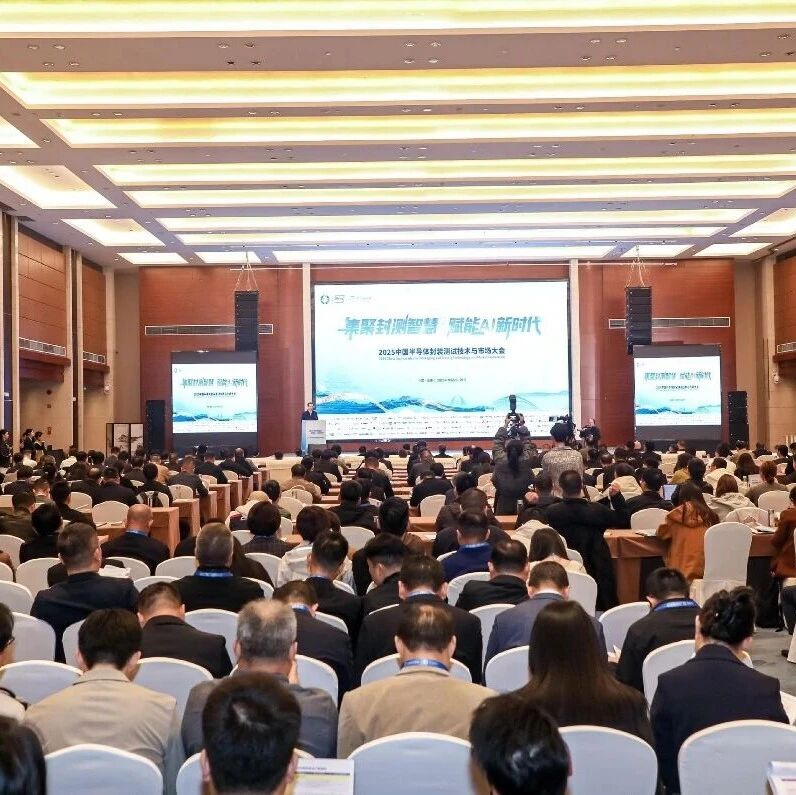
Core Viewpoint - The semiconductor packaging and testing industry is experiencing rapid growth driven by the demand for advanced packaging technologies, particularly in AI and high-performance computing (HPC) sectors. The global advanced packaging market is projected to reach $56.9 billion by 2025, with a compound annual growth rate (CAGR) of 9.6%, and is expected to grow to $78.6 billion by 2028 [1][10]. Group 1: Industry Trends and Developments - The 23rd China Semiconductor Packaging and Testing Exhibition (CSPT 2025) was held in Jiangsu, focusing on themes such as "3D IC technology iteration," "advanced packaging ecosystem collaboration," and "AI and packaging integration" [3][9]. - The advanced packaging market is anticipated to see significant growth, with the 2.5D/3D packaging market expected to grow at a CAGR of nearly 20% from 2024 to 2030, reaching $83 billion by 2030 [31][52]. - The demand for advanced packaging is driven by the need for higher performance and efficiency in AI applications, with the global advanced packaging market projected to surpass traditional packaging sales for the first time in 2025 [52][56]. Group 2: Regional Developments - Huai'an High-tech Zone is positioning itself as a new growth pole for the semiconductor industry in the Yangtze River Delta, with a comprehensive layout across the semiconductor design, manufacturing, packaging, and application sectors [4][7]. - In the first half of 2025, Huai'an's electronic information industry revenue reached 41.3 billion yuan, marking a 10.9% year-on-year increase, indicating robust industrial growth [7][8]. - The region has established a strong talent pool with 420,000 technical professionals and a favorable business environment, including financial support and incentives for semiconductor companies [8][9]. Group 3: Technological Innovations - Silicon Core Technology launched the "3Sheng Integration" platform, addressing challenges in advanced packaging EDA (Electronic Design Automation) for 2.5D/3D technologies, facilitating the integration of Chiplet and 3D IC designs [10][12]. - The platform supports a full-link toolchain from architecture design to testing and verification, enabling efficient design and integration of heterogeneous chips [12][13]. - Advanced packaging technologies such as CoWoS and hybrid bonding are becoming essential for AI chip performance, with significant advancements in interconnect technology [22][52]. Group 4: Key Players and Strategies - Rongxin Semiconductor is focusing on innovative strategies in the advanced packaging sector, leveraging its expertise in Chiplet technology and targeting AI-driven applications [20][23]. - Jiangsu Qisheng Microelectronics is emphasizing the integration of advanced packaging with display driver chips, aiming to enhance performance and reliability in high-density interconnect scenarios [24][27]. - North Huachuang is providing comprehensive equipment solutions for advanced packaging, addressing the growing demand for high-performance packaging technologies [29][31]. Group 5: Challenges and Solutions - The industry faces challenges such as thermal management and precision in advanced packaging processes, necessitating innovative solutions and collaboration across the supply chain [18][19][32]. - Companies like Aixin Semiconductor are developing advanced detection equipment to ensure quality control in packaging processes, addressing the need for high precision in defect detection [58][61]. - The focus on domestic equipment manufacturing is crucial for reducing reliance on imports and enhancing the competitiveness of the semiconductor industry in China [54][57].