
58智慧家政系统

Search documents
58同城发布2025生活服务业趋势洞察:AI催生近50类人机协作新岗位
Jing Ji Wang· 2025-12-25 08:29
Core Insights - The report from 58.com highlights that artificial intelligence (AI) is evolving from an efficiency tool to the "digital backbone" of the life services industry, driving a transition from labor-intensive to "intelligent collaborative" models [1] Group 1: New Job Roles - Nearly 50 new job roles that integrate AI capabilities have emerged across various sectors, including real estate, manufacturing, healthcare, education, home services, and design [3] - These new roles require a combination of traditional expertise and the ability to collaborate effectively with algorithms and smart devices, such as AI recruitment assistants and intelligent health management specialists [3] Group 2: AI in Real Estate - AI real estate agents exemplify high efficiency and professionalism, significantly reducing the time needed for tasks like client and property screening [4] - Approximately 50% of real estate agents are now using AI tools, with usage rates in major cities like Guangzhou at 55.9% and Hangzhou reaching 80.4% [4] Group 3: AI as a Digital Backbone - AI has transitioned from a supportive tool to a "second dispatcher," enhancing operational efficiency across various processes, including recruitment and service delivery [6] - For instance, the AI-driven smart home service system has improved merchant efficiency by 57% and increased worker order acceptance by 45% [6] Group 4: Intelligent Hardware - Smart hardware is becoming a "second labor force," with tools like exoskeletons and window-cleaning robots enhancing productivity and safety in various industries [7] Group 5: New Service Models - AI is fostering new service models, with nearly 40 types of intelligent services emerging, contributing to a new growth curve in the life services sector [8] - The rise of AI training systems and the rental of smart devices, such as window-cleaning robots and security patrol robots, are notable trends in urban areas [8][9]

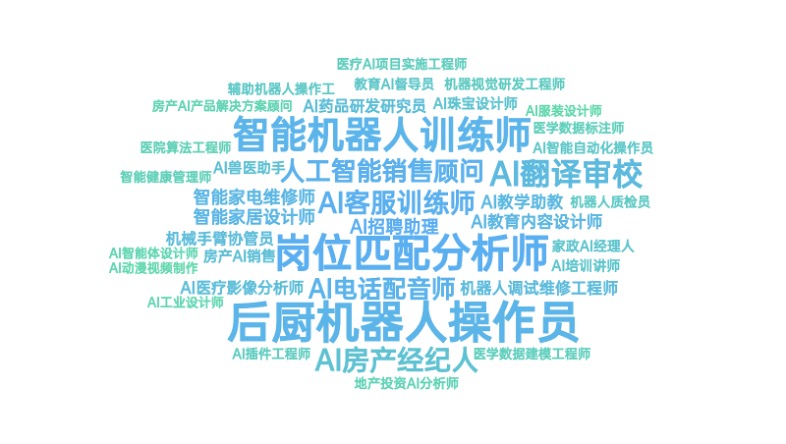
58同城发布2025生活服务业趋势洞察AI催生近50类人机协作新岗位
Feng Huang Wang Cai Jing· 2025-12-22 03:17
Core Insights - Artificial intelligence (AI) is evolving from an efficiency tool to the "digital backbone" of the service industry, driving a transition from labor-intensive to "intelligent collaborative" models [1][2] - The emergence of nearly 50 new AI-integrated job roles and 40 types of intelligent services indicates a significant transformation in the industry ecosystem and job landscape [1][2] Group 1: New Job Roles - The service industry is experiencing a systematic restructuring of job roles, with nearly 50 new AI-integrated positions emerging across various sectors including real estate, manufacturing, healthcare, education, and design [2][3] - New roles such as AI recruitment assistants, intelligent robot trainers, and AI medical imaging analysts require a blend of traditional expertise and the ability to collaborate effectively with algorithms and smart devices [2][3] Group 2: AI as a Core Infrastructure - AI is becoming a foundational infrastructure that enhances efficiency across the entire service chain, including recruitment, order dispatch, fulfillment, training, and customer service [4][5] - For instance, AI-driven scheduling systems have improved operational efficiency by 57% and increased worker order acceptance rates by 45% [4] Group 3: New Service Models - AI is generating new service models and markets, with nearly 30 types of AI service scenarios emerging, forming a clear second growth curve for the service industry [6][7] - The rental market for intelligent devices, such as window-cleaning robots and security patrol robots, is rapidly expanding, with over 500 companies entering the humanoid robot rental space [6][7] Group 4: Acceptance and Expectations of AI - A survey indicates that 90.8% of frontline workers believe AI is helpful, with a strong desire for AI to assist in professional skill development and reduce physical labor [8][9] - The integration of AI is making the service industry more attractive to young people, with over 80% of students perceiving AI as making the industry "easier, more professional, and friendlier" [8][9] Group 5: Competitive Landscape - The competitive focus in the industry is shifting from human scale advantages to the maturity of human-AI collaboration systems, with companies that can integrate "service, equipment, and AI" expertise likely to lead the future [9]
服务消费释放新动能 头部企业发力新增量
Zheng Quan Shi Bao· 2025-08-14 22:11
Core Insights - Service consumption is becoming an important direction for consumer upgrades as people's quality of life improves, shifting focus from "having" to "quality" [1] Group 1: Restaurant Industry Innovations - Haidilao has increased its nighttime dining services, transforming its Sanlitun location into a night snack-themed restaurant, resulting in a noticeable increase in nighttime customer flow, particularly among young people [2] - Major restaurant companies are actively innovating through product, scene, and model innovations to cultivate new service consumption growth, contributing to the industry's sustainable development [2] - McDonald's China aims to leverage its brand value to boost business growth while supporting consumption recovery, aligning with national policies to stimulate domestic demand [2][3] - Haidilao has opened over 50 night snack-themed restaurants in major cities, catering to diverse consumer needs [3] - The brand "CuoCuo" under the Xiaobai Group has collaborated with international IPs to enhance its market presence, leading to positive feedback and improved operational data [3] Group 2: Tourism Industry Upgrades - Travel and hospitality companies are innovating to meet diverse consumer demands, focusing on multi-faceted and refined services [4] - Hainan Airlines emphasizes service upgrades centered around passengers, utilizing digital empowerment to create new revenue streams and enhance domestic demand [4] - Huazhu Group is exploring new growth points in service consumption by offering tailored services for different consumer segments, including the elderly and marathon participants [4] Group 3: New Consumption Trends - The shift from product consumption to service consumption is accelerating as China's GDP per capita exceeds $13,000, indicating a rapid growth phase for service consumption [7] - National policies are increasingly supporting service consumption, with initiatives aimed at enhancing service quality in key areas such as dining, accommodation, and home services [7] - In the first half of the year, final consumption expenditure contributed 52.0% to economic growth, with a notable increase in service consumption driving economic vitality [7]

