AEBS自动紧急制动系统

Search documents
理工雷科:多场景雷达感知与智能系统落地,以军工技术赋能多领域安全高效发展
Jing Ji Guan Cha Wang· 2026-02-10 06:53
Core Insights - The article highlights the rise of radar perception and intelligent control technologies as essential support for industrial upgrades and public safety in the context of new productive forces and deep military-civilian integration [1][2]. Company Overview - Beijing Institute of Technology Leike Electronic Information Technology Co., Ltd. (referred to as "Leike") was established in 2009, co-founded by Beijing Institute of Technology and the innovation team of Academician Mao Erke, and is a core enterprise under Leike Defense (stock code 002413) with a registered capital of 377.9 million yuan [1]. - As a pilot enterprise for reform in Zhongguancun and a high-tech enterprise, Leike focuses on radar applications and satellite applications, leveraging advanced theories and technologies from military radar signal processing [1]. Industry Challenges - Various sectors such as mining, transportation, civil aviation, and elderly care face long-standing safety and efficiency challenges, including hidden risks of landslides in mining, blind spots in traffic perception, threats from foreign object debris (FOD) and birds in airports, and insufficient manpower in elderly care [2]. - Traditional methods are inadequate to meet the modern demands for all-weather and high-precision solutions [2]. Technological Solutions - Leike utilizes radar technology as its core, integrating artificial intelligence, multi-source perception fusion, 3D GIS, and edge computing to create a comprehensive intelligent solution system that enables the entire chain from "precise perception" to "intelligent decision-making" [2]. - The company has developed a diverse product matrix and solutions, including the "Tiger Eye" series of slope deformation monitoring radars for mining, achieving high precision of 0.1mm over large areas, and a collaborative unmanned transport paradigm for underground scenarios [2]. - In the transportation sector, Leike has built intelligent roadside systems using multi-source perception fusion, achieving a detection range of 1200 meters and positioning accuracy of 0.2 meters with its 92GHz millimeter-wave traffic radar [2]. Achievements and Impact - Leike's core products have achieved domestic substitution and received multiple patents, with applications across more than ten provinces and cities in China [3]. - The intelligent traffic solutions have resulted in a 70% reduction in green light empty release time and a 21.5% increase in traffic efficiency [3]. - The company has successfully warned of landslides multiple times, and its unmanned transport solutions have increased vehicle turnover rates by over 30% [3]. - Leike's technology architecture supports rapid adaptation across scenarios, providing a replicable model for smart mining and intelligent transportation [3]. Future Directions - The company aims to continue deepening research and development in radar perception and intelligent control technologies, expanding applications in more industries, and promoting the penetration of technological achievements in smart energy, intelligent networking, and public safety [3].

成都汇阳投资关于大模型重塑战局 智能驾驶商业化奇点已至
Quan Jing Wang· 2025-08-25 10:26
Group 1 - Intelligent driving has evolved from a technological highlight to a core differentiator for automakers and a key driver for the commercialization of mobility services [1] - The depth of technology, iteration speed, and scale of implementation will significantly impact the future competitive landscape and the construction of sustainable competitive advantages in the "software-defined vehicle" arena [1] - Understanding the real situation and evolution path of intelligent driving capabilities is crucial for predicting future competition and commercialization trends [1] Group 2 - The competition landscape is being reshaped by large models, with the cloud-vehicle collaborative computing race intensifying [2] - VLA models are achieving breakthroughs in decision-making interpretability and long-tail scenario generalization through multimodal integration and reasoning [2] - The deployment of large models is pushing the cloud-vehicle collaborative computing competition into a heated phase, requiring upgrades in vehicle-side chip computing power and millisecond-level data interaction between cloud and vehicle [2] Group 3 - Tesla maintains its leading position in the intelligent driving industry through a full-stack multimodal end-to-end architecture, efficient data loops, and Dojo supercomputing capabilities [3] - Domestic automakers are accelerating their technological catch-up, but there remains a generational gap in data loop capabilities, algorithm integration depth, and engineering efficiency [3] - Major Chinese automakers like Huawei, Xpeng, and NIO have established supercomputing centers with approximately 10 EFLOPS to support scenario data training and model upgrades [3] Group 4 - The commercialization process of L3 intelligent driving is accelerating, driven by regional pilot programs and favorable policies [4] - In 2024, only 5% of vehicles priced between 100,000 to 200,000 yuan will be equipped with high-speed NOA and urban NOA, indicating a significant opportunity for "intelligent driving democratization" [4] - The Robotaxi market is expected to reach several hundred billion yuan by 2030, with commercial operations potentially scaling up in 2026 [4] Group 5 - Desay SV is a leader in the intelligent cockpit domain with a market share of 38%, achieving over 8 billion yuan in revenue from intelligent driving business in 2023 [5] - Wanji Technology, a leader in the vehicle-mounted lidar sector, achieved a 300% year-on-year increase in shipment volume in Q1 2024 [6] - Lichuang Electronics, a core supplier for Tesla's pure vision solution, expects Tesla's business to account for over 30% of its revenue [7] - BYD sold over 1.5 million L2 vehicles in 2023 and plans to launch L3 models by 2025 [8]


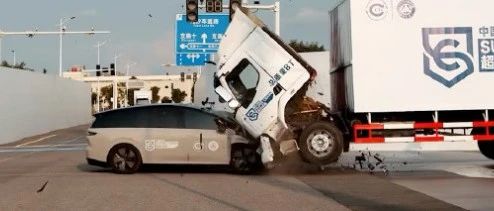
东风柳汽回应乘龙卡车对撞测试
财联社· 2025-07-31 12:51
Core Viewpoint - The company asserts that a certain automotive brand has engaged in serious infringement by publishing misleading collision videos, which misrepresent the safety and performance of its products, thereby damaging the company's brand reputation and violating various laws [1][2]. Group 1: Infringement Facts - The automotive brand published a collision video on July 29, 2025, which constitutes serious infringement and misleads the public, damaging the company's brand and commercial reputation [1]. - The testing conditions used by the automotive brand differ significantly from real-world scenarios, failing to disclose critical vehicle and environmental factors, which could mislead consumers and create safety hazards [2]. Group 2: Technical Explanation of the Brand - The company emphasizes its commitment to user safety, highlighting its innovative safety features, including a unique dragon bone frame cabin and a four-layer energy absorption structure designed to maximize passenger safety [3]. - The company implements a dual active safety system, combining an Automatic Emergency Braking System (AEBS) and a cabin relocation technology to effectively reduce accident-related injuries [3]. Group 3: Industry and User Commitment - The company advocates for fair competition and a healthy industry ecosystem, opposing practices that undermine industry integrity through negative comparisons and misleading marketing [4]. - The company calls for industry peers to prioritize safety, adhere to traffic regulations, and focus on technological innovation and quality improvement to foster sustainable industry growth [5]. Group 4: Follow-up Accountability - The company is closely monitoring the situation and has established a special team to further investigate the incident, reserving the right to pursue legal action for any damages incurred [6].
锐明技术(002970) - 002970锐明技术投资者关系管理信息20250521
2025-05-21 12:59
Financial Performance - Total liabilities increased by 48.1% at the end of 2024 compared to the beginning of the year, while total assets only grew by 30.6%, resulting in a record high asset-liability ratio of 44.5% since the company went public [2][3] - The growth in total liabilities was primarily driven by current liabilities, particularly accounts payable, due to the expansion of electronic processing business [2] - The company plans to divest inefficient electronic processing operations in 2025 to return the asset-liability ratio to historical normal levels [2] Liquidity and Debt Management - The company maintains a strong liquidity position with cash and cash equivalents accounting for 32% of total assets, significantly higher than industry peers [2] - Key liquidity ratios include a current ratio of 1.4 and a cash ratio of 0.76, both exceeding safety thresholds [2] - Operating cash flow to net profit ratio stands at 1.45, indicating robust profitability quality [2] Artificial Intelligence Applications - The company has invested in artificial intelligence (AI) research since 2016, with AI technologies now widely integrated into its products [4] - The SafeGPT model, developed by the company, analyzes vehicle data, driver behavior, and environmental data to predict risks, receiving positive feedback from clients [4] Market Diversification and Risk Management - As of Q1 2025, revenue from the U.S. market accounted for less than 15% of total revenue, with significant growth in emerging markets such as South America, Asia-Pacific, and the Middle East [5] - The establishment of a manufacturing center in Vietnam in 2023 helps mitigate potential impacts from U.S.-China tariff issues [5] Product Development and Strategic Partnerships - The company has developed Automatic Emergency Braking System (AEBS) products for both original equipment and aftermarket applications, with successful sales in commercial vehicle sectors [6] - Currently, there are no strategic partnerships with Huawei in the field of intelligent driving, although the company focuses on enhancing safety and efficiency in commercial vehicle operations through its proprietary technologies [7]