AI原生车载操作系统

Search documents
一个月50多家公司被投资,这个赛道已经火了丨投中嘉川
Xin Lang Cai Jing· 2026-02-09 03:22
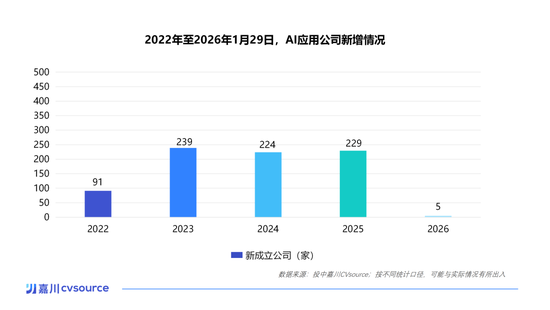
Core Insights - The focus of AI investment is shifting from large models to application-based companies, as evidenced by recent funding activities and the establishment of new firms in the sector [3][27][32]. Investment Trends - In the past month, notable investments have been made in AI application companies by various investors, including Hillhouse Capital and Xiaomi co-founder Wang Chuan [2][4][5]. - A total of 788 AI application companies were established in China since 2022, with nearly 60% located in Beijing, Shanghai, Shenzhen, and Hangzhou [3][20][27]. - The peak of AI application investment occurred in 2025, with 577 companies securing funding, indicating a significant increase in investment activity [3][37]. Company Highlights - ThetaWave AI, founded by two young entrepreneurs, has developed an AI education product that has attracted nearly one million users and achieved an annual recurring revenue (ARR) of one million USD [4][28]. - Other companies receiving investment include Clipto.AI, Trooly.AI, and ZAST.AI, which focus on various AI applications such as multi-modal operating systems and AI user research platforms [4][28]. - In the automotive sector, Yitu Technology, founded by a former executive from Zebra Smart Mobility, has received investments from ByteDance and Chery, highlighting the growing interest in AI applications in vehicles [6][31]. Regional Distribution - The majority of newly established AI application companies are concentrated in four major cities: Beijing, Shanghai, Shenzhen, and Hangzhou, with Beijing's Haidian District being the most prominent area for AI talent and innovation [20][23][45]. - Investment funds are also proliferating in these regions, with Beijing establishing a 10 billion RMB AI industry investment fund, and numerous other funds being set up in Shanghai, Shenzhen, and Hangzhou [25][49]. Future Outlook - The AI application market is expected to remain a hot investment area, with predictions indicating that AI will be a major focus for investment in the next 20 years as it permeates various industries [26][49].

关于未来的汽车,他认为很多人都想错了
虎嗅APP· 2025-09-27 03:15
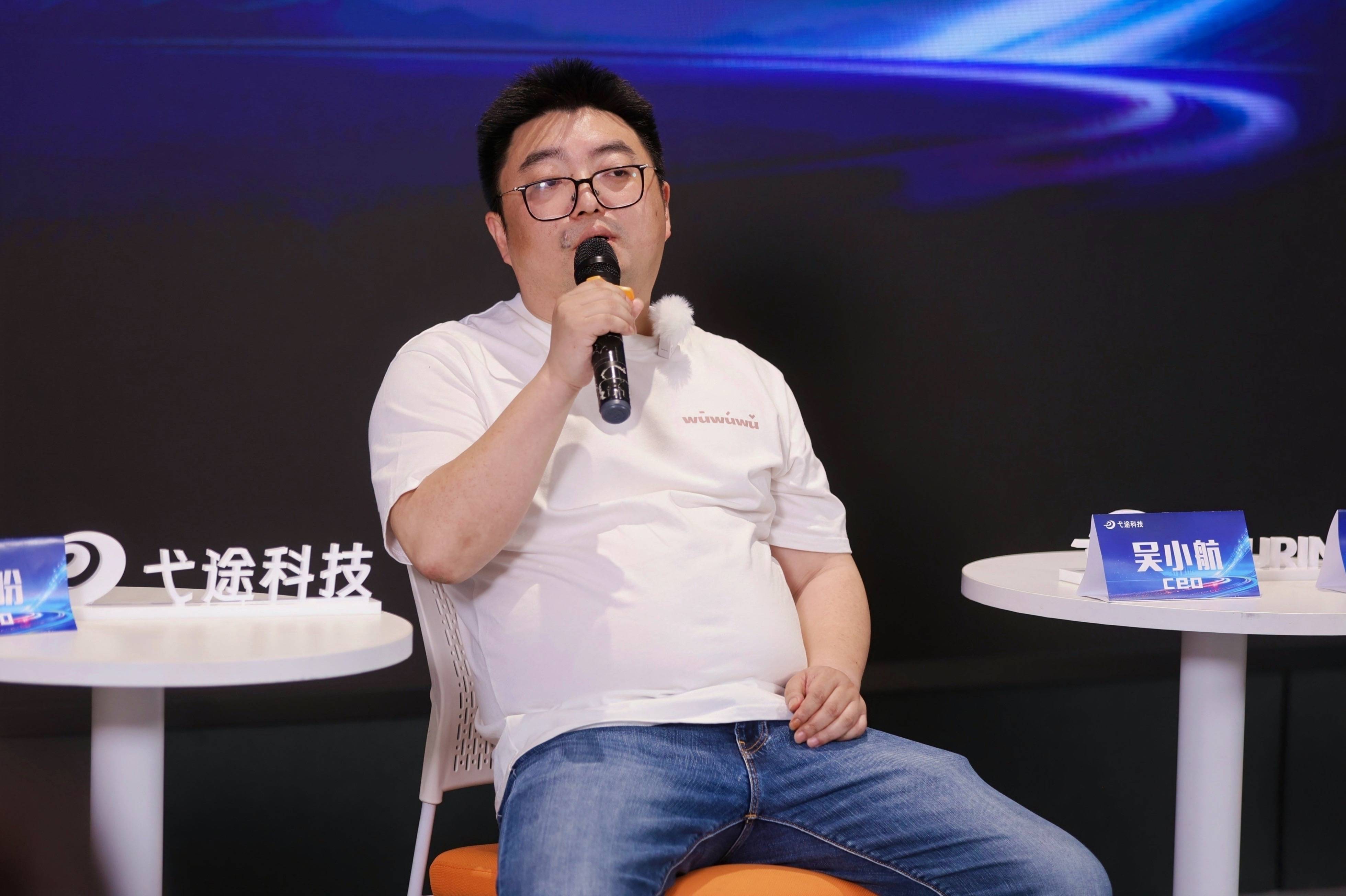
Core Viewpoint - The article discusses the innovative approach of Yitu Technology, led by CEO Wu Xiaohang, in developing an AI-native in-car operating system that emphasizes a "No Touch, No APP" interaction model, aiming to revolutionize the automotive industry through advanced AI integration [4][6][48]. Group 1: Company Background and Vision - Yitu Technology was founded in June 2023, focusing on the intersection of AI and automotive technology, particularly in creating an AI-native operating system for vehicles [9][10]. - Wu Xiaohang, with over a decade of experience in the automotive industry, previously worked at Zhibo Zhixing, a company known for its automotive software solutions [6][12]. - The company aims to address the challenges of traditional in-car interactions, which often rely on touch and app-based controls, by leveraging AI to create a more intuitive user experience [48]. Group 2: Market Context and Challenges - The automotive industry is experiencing a significant transformation driven by AI, with many companies entering the market, leading to increased competition [6][27]. - Wu Xiaohang emphasizes the importance of focusing on niche markets rather than competing in overcrowded sectors, believing that the future of automotive intelligence lies in specialized applications of AI [26][27]. - The article highlights the challenges faced by automotive software companies in China, particularly regarding user willingness to pay for software services [49]. Group 3: Product Development and Strategy - Yitu Technology's product development strategy involves iterative improvements every 2-3 years to stay aligned with technological advancements and user needs [10][63]. - The company prioritizes high-frequency needs in the automotive sector, with an initial focus on AI-enhanced mapping solutions as a core offering [9][55]. - The vision for the second-generation product is to create a truly automotive-centric interaction system that eliminates the need for touch and apps, allowing for a more seamless user experience [48]. Group 4: Financial Outlook and Growth Potential - Wu Xiaohang predicts that the company's revenue will see significant growth by the third quarter of the following year, with a major breakthrough expected in 2027 as the strategic layout and vertical market penetration yield results [75]. - The company has successfully secured initial funding, with investors recognizing the potential for long-term growth in the AI-driven automotive sector [23][24]. Group 5: Industry Trends and Future Directions - The emergence of large language models, such as GPT-3.5, has fundamentally changed the landscape of human-vehicle interaction, enabling more natural language processing capabilities [19][20]. - The article discusses the shift from traditional operating systems to AI-driven solutions, highlighting the need for continuous cloud support and model updates to maintain relevance in the market [49][50]. - Wu Xiaohang believes that the automotive industry will undergo significant changes, with AI becoming a central component of future vehicle interactions and functionalities [8][19].

关于未来的汽车,他认为很多人都想错了
Hu Xiu· 2025-09-26 23:05
Core Insights - The core idea of the articles revolves around the innovative approach of Yitu Technology, led by CEO Wu Xiaohang, in developing an AI-native in-car operating system that emphasizes a "No Touch, No APP" interaction model, aiming to redefine user experience in the automotive industry [1][47]. Company Overview - Yitu Technology was founded in June 2023, focusing on integrating large models with automotive applications, a niche that remains largely unexplored in the current market [6][20]. - The company aims to address the challenges of traditional in-car software by leveraging advancements in AI, particularly through the use of large language models [5][17]. Market Context - The automotive industry is experiencing a significant shift towards smart technologies, with many companies entering the market, but Yitu Technology is strategically choosing a less crowded path by focusing on AI-driven solutions [4][25]. - The emergence of Android in the automotive sector has transformed the landscape, leading to a chain reaction affecting various players in the industry, including chip manufacturers and application developers [11][12]. Product Development - Yitu Technology's product strategy involves a phased approach, with a focus on high-frequency needs such as AI-enhanced mapping solutions, which are seen as critical for connecting the physical and virtual worlds [7][59]. - The company emphasizes the importance of user and client pain points in product development, aiming to create solutions that are not only innovative but also practical and user-friendly [46][47]. Future Outlook - Wu Xiaohang predicts that 2027 will be a pivotal year for Yitu Technology, with expectations of significant growth and market impact as the company's strategic initiatives come to fruition [8][78]. - The company is preparing for a competitive landscape, with a focus on maintaining agility and responsiveness to industry changes, particularly in the areas of chips, applications, and software [80][81]. Investment and Funding - Yitu Technology secured its first investment shortly after its establishment, with investors recognizing the potential for significant advancements in the automotive industry's smart technology landscape through the company's unique approach [22][23]. - The company is not pursuing a broad product line but is instead concentrating on core offerings that address essential market needs, which is expected to facilitate sustainable growth [7][59].