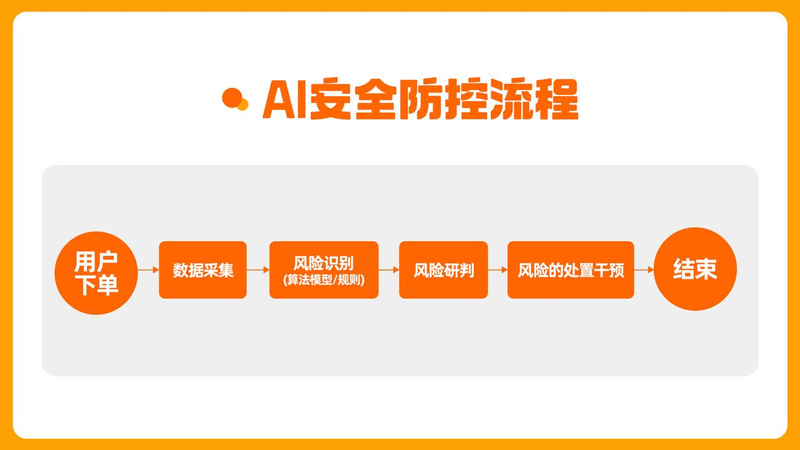
AI安全防控系统

Search documents
AI护航新春货运路 同城物流跑出“智慧年味”
Zhong Guo Neng Yuan Wang· 2026-02-13 05:51
Core Insights - The integration of AI technology in logistics during the Spring Festival enhances safety and efficiency for drivers, exemplified by the use of AI safety monitoring systems and AR tools for cargo measurement [2][5][10] Group 1: AI Safety Monitoring - The AI safety monitoring system developed by the company has significantly improved safety for drivers by providing real-time alerts for potential hazards, such as identifying dangerous goods, which has led to a 30% reduction in daily risk incidents [5][6] - The system can identify violations in just 100 milliseconds and has automated features that remind drivers to take breaks and alert them to unusual vehicle behavior, thereby enhancing overall safety during the busy Spring Festival period [5][6] Group 2: AR Measurement Technology - The AR identification feature allows for rapid measurement of cargo dimensions, reducing the time taken for manual measurements from over ten minutes to under two seconds, thus increasing efficiency by tenfold [7][9] - This technology addresses the challenges of matching various cargo types with appropriate vehicle sizes, ensuring better logistics management and reducing transportation costs [9][10] Group 3: AI Customer Service - The logistics industry has seen a surge in order volume, but the company’s AI customer service model has improved response times, achieving over 90% accuracy in answering logistics-related inquiries [10] - The AI model is designed to be lightweight and scenario-specific, addressing real-world challenges in the logistics sector, and aims to provide intelligent reminders to drivers about available loads, enhancing operational efficiency [10][11]

货拉拉CTO张浩:AI取胜在于“应用场”,非基础模型
Cai Jing Wang· 2025-12-01 06:05
Core Insights - The key point of the news is that the CTO of Huolala, Zhang Hao, emphasized the importance of applying AI capabilities to business scenarios rather than just building foundational large models. Huolala was recognized for its innovative AI applications in logistics at the "WISE2025 Business King" conference [1][2]. Group 1: AI Application and Impact - Huolala has developed an AI safety control system that monitors every step from order placement to transportation completion, achieving a 30% reduction in daily risk orders for hazardous goods transportation and a 100% identification rate for risk orders [2]. - The usage rate of Huolala's AI Coding exceeds 90%, with over 60% penetration of AI in the R&D process, significantly enhancing research and development efficiency [2]. - The "Photo Goods Selection" feature allows users to take a picture of their goods, enabling AI to recommend suitable vehicle types with a maximum error margin of less than 10% and an average error of less than 10 centimeters [2]. Group 2: Future Directions and Strategy - Zhang Hao stated that the rapid iteration of foundational large models means that many current issues may not be problems in the near future. The company aims to leverage end-to-end large model assistants for tasks like intelligent vehicle selection and internal operations [3]. - The focus for Huolala will continue to be on deepening application scenarios and building platform capabilities to convert technology into business value [3].
货拉拉CTO张浩:衡量AI价值的关键在于业务场景应用与平台化建设而非自建基础模型
Zhong Zheng Wang· 2025-12-01 05:47
Core Insights - The key point of the article is that the CTO of Huolala, Zhang Hao, emphasized the importance of applying AI in business scenarios rather than just building foundational large models, during his speech at the "WISE2025 Business King" conference [1][2]. Group 1: AI Application and Platform Development - Huolala has shifted its focus from creating vertical industry large models to building an enterprise-level AI infrastructure platform [1]. - The company has developed three internal platforms: Wukong for business personnel, Dolphin for algorithm developers, and a platform for model evaluation and annotation, aiming to transform enterprise data assets and industry experience into reusable capabilities [1][2]. Group 2: AI Impact on Business Operations - In the safety domain, Huolala's AI safety control system has reduced the daily risk volume of hazardous goods transportation and illegal passenger transport by 30%, with a 100% identification rate for risk orders [2]. - The AI Coding usage rate exceeds 90%, and the penetration rate of AI in the R&D process is over 60%, significantly enhancing R&D efficiency [2]. - The "Photo Goods Selection" feature allows users to take a picture of their goods, enabling AI to recommend suitable vehicle types with a maximum single-sided error of less than 10% and an average error of less than 10 centimeters [2]. Group 3: Future Directions and AI Role - Zhang Hao stated that companies should invest limited resources in deepening application scenarios and solidifying platforms, as mature foundational capabilities will yield greater efficiency returns [2]. - In service-oriented platform enterprises, AI currently plays a role in improving efficiency, risk prevention, and cost reduction rather than replacing the service itself [2]. - Future AI applications should advance towards multimodal directions to further enhance accuracy and optimize user experience, with Huolala focusing on deepening scenarios and building platform capabilities to convert technology into business value [2].
破解安全和判责难题,AI让货运加速跑
Xin Jing Bao· 2025-11-07 03:36
Core Viewpoint - The logistics industry is becoming a crucial support for the national economy, with freight volume expected to exceed 5.9 billion tons by 2025, but faces significant safety and accountability challenges that hinder high-quality development [1] Group 1: Industry Challenges - The logistics industry is experiencing rapid growth in freight demand, but long-standing issues such as cargo loading with personnel, hazardous materials transport, and fatigue driving pose safety risks [1] - Traditional safety control methods and manual accountability processes are inadequate for the high-frequency demands of the logistics sector [1] Group 2: AI Applications in Safety and Accountability - AI technology is being increasingly applied to address safety and accountability issues in the logistics sector, with a focus on enhancing driver safety and improving accountability experiences [2][4] - The AI safety prevention system developed by Huolala can intelligently identify risks such as "cargo loading with personnel," "hazardous materials transport," "fatigue driving," and "cargo overload," providing targeted interventions [4][12] Group 3: Efficiency and Data Analysis - Huolala's AI systems can analyze vast amounts of operational data, reducing the number of risk incidents by 30% and decreasing accountability resolution time from 72 hours to 48 hours [7][8] - The AI algorithms cover the entire process from order placement to delivery, ensuring compliance and safety throughout the logistics chain [7] Group 4: Impact of AI Implementation - After the full application of AI, daily risk incidents related to hazardous materials transport and illegal loading have decreased by 30%, with fatigue driving alerts triggered nearly 40,000 times daily [8][10] - The AI systems aim to clarify responsibilities fairly and efficiently, enhancing the overall service experience for users and drivers while ensuring the quality and trustworthiness of logistics services [12]