AI小惠

Search documents
再惠赴港IPO,帮餐饮品牌做线上营销,两年多亏损超7亿
Ge Long Hui· 2026-02-27 10:23
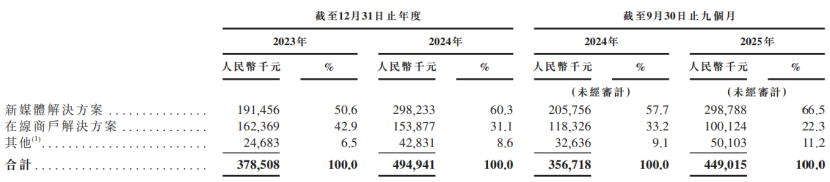
Core Viewpoint - The rise of urbanization and fast-paced lifestyles in China has led to an increase in dining out and food delivery, with nearly 750 million consumers expected to purchase dining services online by 2024, representing 53.4% of the population [1] Group 1: Company Overview - Zaihui Inc (referred to as "再惠") has submitted an IPO application to the Hong Kong Stock Exchange, aiming to raise funds for technology development, customer expansion, and service optimization [1][25] - The company reported a revenue of nearly 500 million RMB in 2024, positioning itself as the largest provider of online operation and marketing solutions for the restaurant industry in China, despite holding only a 0.7% market share [1][25] - As of September 2025, Zaihui has incurred losses exceeding 700 million RMB over two years, primarily due to significant investments in product development, technical support, and marketing [12][25] Group 2: Revenue Breakdown - Revenue from new media solutions has increased from 50.6% to 66.5% from 2023 to 2025, while revenue from online merchant solutions has decreased from 42.9% to 22.3% during the same period [5][6] - The total revenue for Zaihui in 2023, 2024, and the first nine months of 2025 was approximately 378.5 million RMB, 494.9 million RMB, and 356.7 million RMB respectively, with corresponding gross margins of 61%, 60.6%, and 53.6% [14] Group 3: Market Context - The local merchant service industry in China, which includes restaurants, hotels, and beauty services, is projected to exceed 13.7 trillion RMB by the end of 2024, with the restaurant sector alone generating 5.6 trillion RMB in revenue [15] - The online operation and marketing solutions market for restaurants is expected to grow from 242 billion RMB in 2024 to 510.4 billion RMB by 2029, driven by increasing competition and the importance of online marketing [18][21] Group 4: Competitive Landscape - The online operation and marketing solutions industry in China is highly fragmented, with the top five providers holding only 3% of the market share, indicating intense competition [21] - Zaihui's business heavily relies on third-party platforms such as Meituan, Douyin, and Xiaohongshu, making it vulnerable to changes in social media algorithms and platform policies [10][21]

再惠冲刺港股IPO:营收三年复合增长28%背后 毛利率骤降7%与累计亏损21.7亿隐忧
Xin Lang Cai Jing· 2026-02-15 13:29
Core Viewpoint - The company, positioned as an AI-driven online service provider for the restaurant industry in China, is experiencing significant revenue growth primarily driven by its new media services, despite ongoing financial losses and increasing operational risks [1][2][14]. Business Model and Operations - The company offers two main services: new media services (60.3% of revenue in 2024) and online merchant solutions (31.1%) [1]. - The business model is based on a "technology + service" dual approach, with new media services charging project fees (average of 63,000 yuan/year) and online merchant solutions operating on a subscription basis [1]. Revenue Growth - Revenue increased from 379 million yuan in 2023 to 495 million yuan in 2024, representing a compound annual growth rate of 30.8% [2]. - New media services revenue surged by 55.7% from 191 million yuan in 2023 to 298 million yuan in 2024, further increasing to 299 million yuan in the first three quarters of 2025 [2]. - Online merchant solutions revenue declined from 162 million yuan in 2023 to 100 million yuan in the first three quarters of 2025 [2]. Profitability and Losses - The company reported a net loss of 446 million yuan in 2023, narrowing to 235 million yuan in 2024, with a cumulative loss exceeding 2.17 billion yuan over three years [2][3]. - Adjusted operating losses showed improvement, decreasing from 249 million yuan in 2023 to 177 million yuan in 2024 [3]. Cost Structure and Margins - Gross margin dropped from 60.6% in 2024 to 53.6% in the first three quarters of 2025, primarily due to the rising costs associated with new media services [3][4]. - The cost of goods sold for influencer procurement surged by 92.8% to 126 million yuan in the first three quarters of 2025 [4]. Revenue Concentration and Risks - The revenue structure is highly concentrated, with new media services accounting for 66.5% of total revenue in 2025, while online merchant solutions' share declined [5]. - Customer concentration is increasing, with the top five clients contributing 19.7% of revenue in the first three quarters of 2025, raising dependency risks [6]. Supplier Dependence - Supplier concentration has risen, with the top five suppliers accounting for 31.2% of procurement in the first three quarters of 2025 [7]. - The proportion of influencer service fees in procurement costs increased from 39.4% in 2023 to 60.5% in 2025, indicating enhanced bargaining power of suppliers [7]. Shareholding Structure - The largest shareholder is SoftBank Vision Fund, holding 20.73%, followed by the founder and other institutional investors [8]. - The company has resolved its VIE structure but may still face regulatory risks due to historical contractual arrangements [8]. Management Team - The management team has significant experience in the internet sector, with the CEO and CFO having backgrounds in major platforms like Dianping [9]. - There is a notable disparity in executive compensation, with the CEO earning 2.87 million yuan in 2024 compared to an average of 850,000 yuan for other executives [9]. Financial Challenges - The company faces high marketing expenses, with a marketing expense ratio of 65.6%, significantly above the industry average [10]. - Cash flow remains under pressure, with a current ratio of only 0.2 and cash reserves declining from 655 million yuan in 2023 to 401 million yuan in 2025 [11]. Regulatory and Compliance Risks - The company is subject to increasing regulatory scrutiny regarding data transmission and AI-generated content compliance [12]. - The historical VIE structure has previously posed foreign exchange registration risks, which may still affect operations [12]. Conclusion - The company is positioned for growth within the restaurant SaaS sector, benefiting from digitalization trends, but faces significant challenges including declining margins, increasing customer and supplier concentration, and cash flow pressures [14].
Windows 10谢幕,AI PC登场,英特尔成关键推手
半导体芯闻· 2025-03-21 10:40
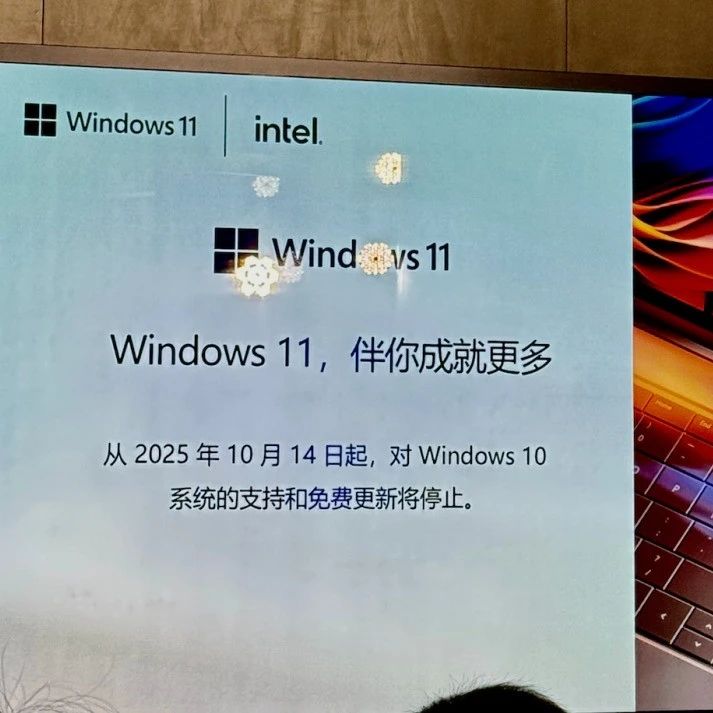
Core Insights - Microsoft announced that Windows 10 will end its service on October 14, 2025, marking a peak in global PC upgrades and providing an opportunity for users to transition to Windows 11 AI+PC [2] - The integration of advanced AI technologies into Windows, Microsoft 365, Azure, and Dynamics 365 aims to enhance productivity and creativity [3] - Intel's new Core Ultra processors, featuring a combination of CPU, NPU, and GPU, deliver significant performance improvements, including a 4x increase in NPU AI computing power [4][10] Windows 11 AI+PC Features - Windows 11 introduces three native AI features: "Recall," "Click to Execute," and "Live Captions" [5][7] - "Recall" allows users to retrieve previously viewed content based on memory cues while ensuring user privacy through Windows Hello verification [6] - "Click to Execute" enables users to extract text or images from the screen for editing or storage, enhancing efficiency in various scenarios [7] - "Live Captions" translates audio data in real-time into subtitles in over 20 languages, facilitating understanding in multilingual settings [7] AI PC Development - Intel emphasizes a hybrid AI computing architecture combining cloud, edge, and endpoint, positioning PCs as crucial platforms for AI [9] - The AI PC concept was introduced by Intel in September 2023, with the first AI PC processor, Core Ultra, launched in December 2023 [9] - Future Intel processors will continue to enhance AI capabilities, with plans for a full AI PC product line by the end of 2025 [10] Software Ecosystem and Partnerships - Intel is building a comprehensive software ecosystem for AI development, including tools like WindowsML and OpenVINO [11] - In China, Intel collaborates with over 40 local software companies to create AI applications tailored to local user needs [12] - More than 200 global partners are involved in the AI PC ecosystem, with notable OEMs launching flagship AI PCs [13][14] Conclusion - The convergence of AI capabilities in Windows 11, the rise of generative AI applications, and the launch of AI PCs signal a new era in computing [14]