英特尔酷睿Ultra处理器

Search documents
周观点:重视AgenticAI时代下CPU产业机遇-20260125
GOLDEN SUN SECURITIES· 2026-01-25 08:12
Investment Rating - The report maintains a "Buy" rating for the semiconductor industry, particularly focusing on CPU and memory sectors [6]. Core Insights - The emergence of Agentic AI is creating structural shortages in the CPU market, leading to price increases for server CPUs. The demand for AI servers is expected to grow significantly, with a projected annual increase of 28.3% in 2026 [1][12]. - The overall server shipment is anticipated to rise by 12.8% in 2026, driven by the need for both AI and general-purpose servers [12]. - Intel and AMD have sold out their server CPU capacities for 2026 and plan to raise prices by 10%-20% depending on the model, which will impact the entire supply chain [21]. - The memory market, particularly DRAM and NAND Flash, is expected to see substantial growth, with DRAM revenue projected to reach $404.3 billion in 2026, a 144% increase year-on-year [40][41]. Summary by Sections AI Agent Impact on CPU Demand - The demand for CPUs is being driven by AI inference, leading to a replacement cycle for general-purpose servers. Major cloud service providers (CSPs) are increasing their capital expenditures significantly [11]. - The introduction of DeepSeek's Engram architecture highlights the growing importance of CPUs, as it allows for efficient data storage and retrieval without relying solely on expensive GPU memory [15][19]. - Agentic AI's influence on CPUs is multiplicative, making them a critical performance bottleneck in AI systems [20]. Memory Market Growth - The memory market is expected to reach $5.516 trillion in 2026, with NAND Flash revenue projected to double to $1.473 trillion [40][41]. - The demand for DRAM is expected to grow significantly due to high data access needs, with a projected revenue of $1.657 trillion in 2025, increasing to $4.043 trillion in 2026 [40]. - The ongoing AI wave is driving the need for high-performance memory solutions, which are essential for supporting large-scale AI models and applications [42]. Intel's Performance and Outlook - Intel's Q4 2025 revenue was $13.7 billion, a 4% decline year-on-year, primarily due to supply constraints [22][28]. - The company is focusing on improving its production capacity and yield rates, with expectations of a gradual increase in supply starting in Q2 2026 [37]. - Intel's Data Center and AI (DCAI) business is expected to have a strong year, driven by the increasing demand for AI infrastructure [37].

从“AI猪食”到“大模型旅鼠”,2025年度热词背后的新商机
吴晓波频道· 2025-12-21 00:21
Core Viewpoint - The article discusses the duality of AI's impact on society, highlighting both the optimism surrounding AI advancements and the emerging concerns about "digital nihilism" and the proliferation of low-quality AI-generated content [5][31]. Group 1: AI Trust and Consumer Sentiment - Chinese consumers exhibit a higher trust in AI compared to their American and European counterparts, with significant trust levels in areas such as personalized shopping recommendations and educational applications [6][7]. - The article notes that the average trust levels in various AI applications range from 2.20 to 4.01 on a scale where higher numbers indicate greater trust [7]. Group 2: AI-generated Content and Its Implications - The term "AI Slop" refers to the low-quality, mass-produced content generated by AI, which is becoming increasingly prevalent across platforms like YouTube and Spotify [9][10]. - Research indicates that by 2026, high-quality text available online may be fully consumed by AI, leading to a cycle of "data feeding data" [9]. Group 3: The Rise of Authenticity in Business - As AI-generated content floods the market, there is a potential rise in demand for authentic, high-quality products and experiences, which could redefine value in various sectors [15][16]. - The article suggests that businesses focusing on originality and authenticity may find new opportunities, as consumers seek genuine experiences amidst the AI-generated noise [15]. Group 4: AI's Psychological Effects - The phenomenon of "AI Psychosis" describes emotional detachment and dependency on AI interactions, with studies showing a significant percentage of users exhibiting signs of mental health issues due to excessive reliance on AI [24][25]. - The article highlights that over 20% of minors are retreating from real-life social interactions in favor of AI conversations, indicating a concerning trend in social behavior [26]. Group 5: Future Business Opportunities - The article posits that as AI tools evolve to manage emotional interactions better, there will be a growing market for services that help users navigate their relationships with AI [29]. - Future business models may focus on providing high-touch services that emphasize human connection and emotional resonance, contrasting with the standardized interactions offered by AI [29][30].


行啊AI PC!现在都能隔空测血压、检测皮肤了
量子位· 2025-12-18 09:26
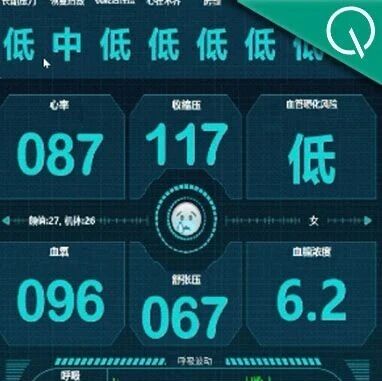
Core Insights - The article discusses the innovative capabilities of AI PCs, particularly in non-contact health monitoring and skin analysis, showcasing how technology can enhance personal health management and beauty care [1][17]. Group 1: Health Monitoring - The AI PC can perform non-contact health assessments, including measuring heart rate, blood oxygen levels, blood pressure, and even blood glucose concentration using a connected camera [5][24]. - The technology relies on remote photoplethysmography (rPPG), which detects subtle changes in skin color due to blood flow, allowing for accurate health metrics without physical sensors [20][24]. - The system can also evaluate vascular health risks and potential heart conditions, providing a comprehensive health overview [25][26]. Group 2: Skin Analysis - The AI PC offers a skin analysis feature that generates a detailed report on skin conditions, including hydration levels and sensitivity, based solely on visual input from the camera [10][30]. - The skin analysis utilizes optical imaging and spectral analysis to assess skin health, identifying issues like redness and pigmentation [29][30]. - Personalized skincare and beauty recommendations are provided based on the analysis, including specific product suggestions for targeted skin concerns [16][30]. Group 3: Technology and Performance - The AI PC's capabilities are powered by Intel's Core Ultra processor, which includes a neural processing unit (NPU) designed for efficient AI tasks, ensuring low power consumption and high performance [31][33]. - The integration of NPU allows for real-time processing of complex algorithms, enabling immediate health and beauty assessments without the need for internet connectivity [38][39]. - This local processing enhances user privacy and security, distinguishing AI PCs from traditional computing devices [39][44]. Group 4: Market Potential - The article highlights the growing ecosystem of AI applications tailored for AI PCs, driven by the unique capabilities of Intel's xPU+ architecture [41][43]. - As more developers create specialized applications for AI PCs, the technology is set to redefine user interaction across various domains, from health management to creative production [44].
Windows 10谢幕,AI PC登场,英特尔成关键推手
半导体芯闻· 2025-03-21 10:40
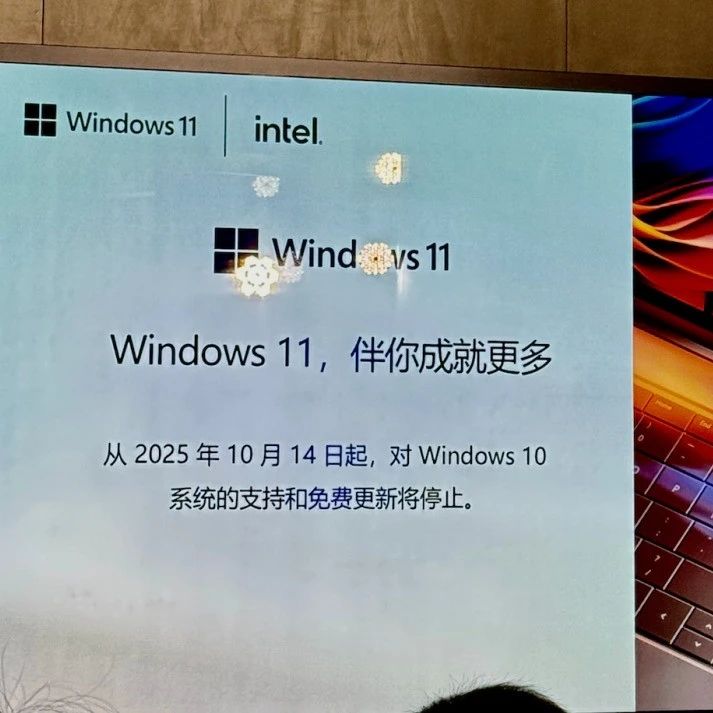
Core Insights - Microsoft announced that Windows 10 will end its service on October 14, 2025, marking a peak in global PC upgrades and providing an opportunity for users to transition to Windows 11 AI+PC [2] - The integration of advanced AI technologies into Windows, Microsoft 365, Azure, and Dynamics 365 aims to enhance productivity and creativity [3] - Intel's new Core Ultra processors, featuring a combination of CPU, NPU, and GPU, deliver significant performance improvements, including a 4x increase in NPU AI computing power [4][10] Windows 11 AI+PC Features - Windows 11 introduces three native AI features: "Recall," "Click to Execute," and "Live Captions" [5][7] - "Recall" allows users to retrieve previously viewed content based on memory cues while ensuring user privacy through Windows Hello verification [6] - "Click to Execute" enables users to extract text or images from the screen for editing or storage, enhancing efficiency in various scenarios [7] - "Live Captions" translates audio data in real-time into subtitles in over 20 languages, facilitating understanding in multilingual settings [7] AI PC Development - Intel emphasizes a hybrid AI computing architecture combining cloud, edge, and endpoint, positioning PCs as crucial platforms for AI [9] - The AI PC concept was introduced by Intel in September 2023, with the first AI PC processor, Core Ultra, launched in December 2023 [9] - Future Intel processors will continue to enhance AI capabilities, with plans for a full AI PC product line by the end of 2025 [10] Software Ecosystem and Partnerships - Intel is building a comprehensive software ecosystem for AI development, including tools like WindowsML and OpenVINO [11] - In China, Intel collaborates with over 40 local software companies to create AI applications tailored to local user needs [12] - More than 200 global partners are involved in the AI PC ecosystem, with notable OEMs launching flagship AI PCs [13][14] Conclusion - The convergence of AI capabilities in Windows 11, the rise of generative AI applications, and the launch of AI PCs signal a new era in computing [14]