AI工牌

Search documents
全域融合:SaaS分账如何打通O2O商业的“任督二脉”?
Sou Hu Cai Jing· 2025-11-28 21:16
Group 1 - The explosive growth of instant retail demands seamless integration of online stores, in-store pickup, and same-city delivery, with SaaS revenue-sharing services becoming key to addressing O2O business challenges [2] - In the first five months of 2025, China's online retail sales reached 6.04 trillion yuan, a year-on-year increase of 8.5%, driven by revenue-sharing services supporting complex transaction models [2] Group 2 - O2O revenue-sharing faces unique challenges, including fragmented channels, dynamic fulfillment, and diverse roles, with "three-in-one" (order, logistics, settlement) being a critical breakthrough [3] - The system used by Luckin Coffee requires simultaneous processing of product costs, delivery fees, and platform commissions, with potential fulfillment costs increasing by 8%-12% if not managed properly [3] - Xiaoguo Technology's O2O mall system supports real-time inventory synchronization, enabling Tongrentang to achieve 35% of its sales from O2O off-store sales [3] Group 3 - Private domain e-commerce revenue-sharing focuses on real-time incentives and flexible rules, with Xiaoguo Technology's virtual store model allowing zero-cost store openings and automatic profit distribution calculations [4] - Zhu Fei Workshop utilized this feature to achieve a 31% increase in distributors and a 28% rise in sales [4] - Integration of WeChat SCRM with revenue-sharing systems optimizes private domain conversion, with Xiaoguo Technology's design leading to over 300 new channels and a 39% increase in membership [4] Group 4 - Data-driven revenue-sharing decisions are enhanced by AIoT hardware, with Xiaoguo Technology's AI badge analyzing staff-customer interactions to optimize service commission ratios, resulting in a 90% increase in customer satisfaction [5] - The AI risk control module monitors abnormal transactions, triggering revenue-sharing suspension mechanisms to prevent financial losses [5] - In cross-border scenarios, AI supports multi-currency revenue-sharing, with the Creem platform's AI assistant facilitating automatic settlements across 80+ currencies and 100+ countries [5] Group 5 - Industry-specific solutions highlight significant differences in revenue-sharing needs across various sectors, requiring standardized foundations and customer-centric capabilities [7] - Rui Rong Tianxia's revenue-sharing cloud offers "batch revenue-sharing + automatic loss deduction" modules for fresh produce companies, while designing "price shielding" features for pharmaceutical retail to protect franchisee privacy [7] - Zhengda Group integrated AIoT store systems with electronic price tags and unified cash registers, achieving a 90% cost reduction and a 35% increase in customer retention [7] Group 6 - The essence of omnichannel integration is the collaboration of capital flow, information flow, and logistics, with SaaS revenue-sharing services transforming discrete transactions into structured fund allocation [8] - The rise of RaaS (Results as a Service) may evolve revenue-sharing systems into performance tools tied to business value [8]


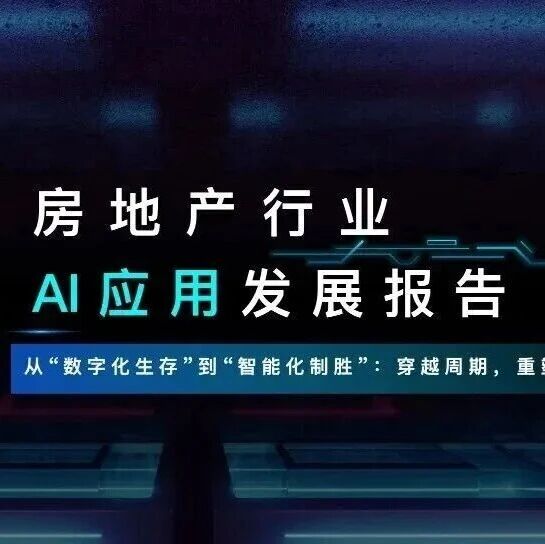
万字干货 | 克而瑞 CEO 张燕发布《 2025 房地产行业 AI 应用发展报告》
克而瑞地产研究· 2025-09-19 09:42
Core Viewpoint - The article emphasizes the critical role of artificial intelligence (AI) in driving innovation and transformation within the real estate industry, highlighting the need for collaboration and the establishment of industry standards to facilitate AI integration and application [2][4][5]. Group 1: AI Application Development - 2025 is identified as a pivotal year for the explosion of AI technology, with significant advancements in foundational models and various intelligent applications [3]. - The report by the CEO of Ke Rui Group outlines the current state, challenges, and future trends of AI applications in the real estate sector, based on extensive research of leading real estate companies [3]. Group 2: Policy and Strategic Focus - The current period is characterized as a golden age for AI policy benefits, with the government introducing a series of "AI+" and "urban renewal" policies aimed at deepening the integration of AI with traditional industries [4][5]. - The focus of these policies is on three core areas: deep integration of AI with traditional industries, building a new framework for digital China, and achieving high-quality urban development [5]. Group 3: Investment Trends in Real Estate - During the 14th Five-Year Plan, leading real estate companies saw a peak in digital investment at 150 million yuan in 2021, followed by a decline in subsequent years, indicating a cautious approach towards AI investment despite its anticipated importance [14]. - Over 90% of leading real estate companies expect AI to be operational within 1-2 years, but only about 40% anticipate an annual growth rate of 10-30% in AI investment [14]. Group 4: AI Application Characteristics - The real estate industry exhibits a dual characteristic in AI investment, with over one-third of enterprises (mainly state-owned enterprises) investing over 10 million yuan, while most remain at the million-yuan pilot stage [19]. - Domestic large models dominate the technology selection, with an average of 2.9 models adopted to meet diverse business needs, indicating a trend towards practical and adaptable technology architecture [19]. Group 5: AI in Real Estate Lifecycle - AI applications are identified in five core business scenarios within the real estate lifecycle: investment decision-making, design and construction, marketing services, property services, and real estate operations [29][30]. - AI is transforming investment decision-making from experience-based judgments to data-driven strategies, enhancing efficiency in construction processes, and revolutionizing marketing and customer engagement [30]. Group 6: Challenges in AI Implementation - The primary challenges in AI application include technology and talent shortages, with many enterprises still evaluating the reliability of AI technologies and facing difficulties in utilizing unstructured data [22][24]. - Data silos are a significant issue, with over 70% of companies experiencing moderate to severe data isolation, hindering effective data integration and AI training [26]. Group 7: Talent Shortage and Organizational Response - A shortage of composite AI talent, particularly those who understand both business and technology, is a critical bottleneck for enterprises [28]. - Companies are actively addressing this by providing systematic AI skills training and gradually replacing repetitive roles with AI, indicating a shift towards internal transformation and external talent acquisition [28]. Group 8: Future Directions and Collaboration - The article concludes that the release of AI application value is a long-term process, requiring strategic patience and systematic implementation across various paths, including high-quality data construction and talent cultivation [59]. - Ke Rui and the China Real Estate Association's AI Application Subcommittee are collaborating to launch an industry AI application development cooperation plan, aiming to summarize and promote intelligent practices in the real estate sector [61].