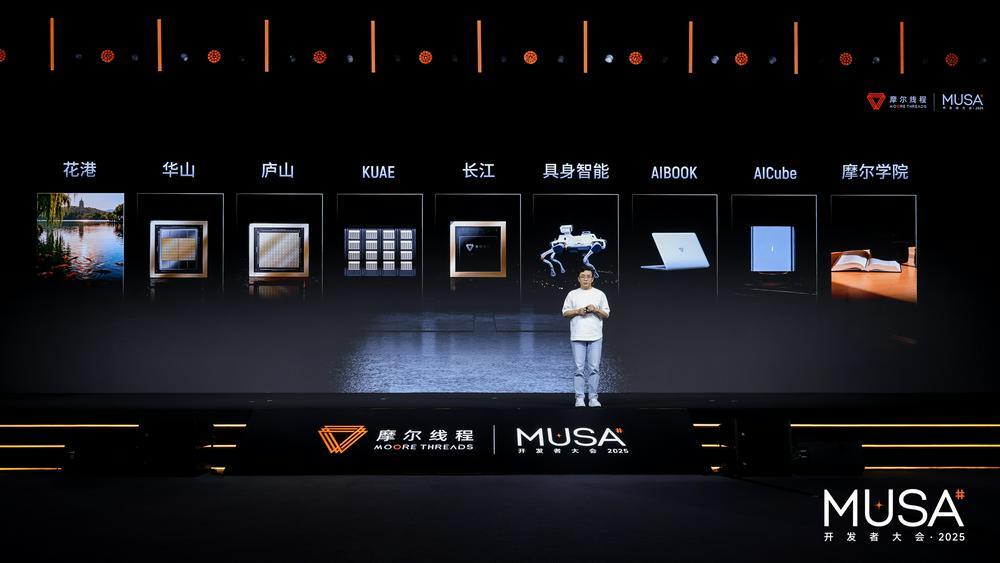
AI训推一体芯片“华山”

Search documents
H200春节前重返中国,黄仁勋有多少胜算?
Tai Mei Ti A P P· 2025-12-23 02:35
Core Viewpoint - Nvidia aims to export H200 chips to China before February 17, 2024, with an expected initial shipment of 40,000 to 80,000 units, primarily from inventory capacity [2][3] Group 1: Export Plans and Market Dynamics - Nvidia plans to increase production of H200 chips to supply the Chinese market in Q2 2024 [2] - The export of H200 chips to China is subject to significant uncertainty, as there is currently no approval from Chinese authorities for any related procurement [3] - Following the announcement by Trump allowing Nvidia to export H200 chips to China, the company must pay 25% of sales proceeds to the U.S. government [3][4] Group 2: Regulatory Environment and Challenges - The U.S. government has initiated a review process for the export of H200 chips, which may take up to 30 days, with Trump holding the final decision-making power [4] - There is opposition within the U.S. Congress regarding the export, with calls for more transparency on whether the chips could be used for military purposes [6] - Concerns about "backdoor" security risks have been raised, with previous incidents involving Nvidia's H20 chip [6][9] Group 3: Market Demand and Competition - Major Chinese tech companies like Alibaba, ByteDance, and Tencent are expected to be the first buyers of H200 chips, indicating strong demand in the AI infrastructure sector [7] - Despite the potential for Nvidia's return to the Chinese market, domestic chip manufacturers are rapidly improving their capabilities, posing a competitive threat [9] - AMD and Intel are also targeting the Chinese market, with AMD having already secured export licenses for its AI chips [10][11] Group 4: Financial Implications - The estimated sales revenue from the initial shipment of H200 chips could range from $1 billion to $4 billion, considering the market price and the required tax [8] - Nvidia's previous quarterly revenue from the Chinese market was significantly lower, indicating challenges in regaining market share [8]


摩尔线程新一代GPU架构“花港”发布,支持十万卡智算集群扩展
Feng Huang Wang· 2025-12-20 10:20
Core Insights - The first MUSA Developer Conference showcased the launch of the new GPU architecture "Huagang" by Moore Threads, along with AI training and inference chip "Huashan" and high-performance graphics rendering chip "Lushan" [1][4][5][7] - Moore Threads introduced the "Kua'e" supercomputing cluster, featuring the self-developed "Yangtze" intelligent SoC chip, aimed at enhancing AI computing capabilities [1][9] Group 1: New GPU Architecture and Chips - The "Huagang" GPU architecture features a 50% increase in computing density and supports full precision end-to-end calculations from FP4 to FP64, with new asynchronous programming models and MTLink high-speed interconnect technology for scaling over 100,000 cards [4][14] - The "Huashan" chip focuses on AI training and inference, integrating new asynchronous programming and full precision tensor computing units, supporting large-scale intelligent computing clusters [5] - The "Lushan" chip specializes in high-performance graphics rendering, achieving a 64x increase in AI computing performance, 16x in geometric processing, and 50x in ray tracing performance, catering to AAA games and high-end graphics creation [7] Group 2: Collaborations and Ecosystem Development - Several companies listed on the Sci-Tech Innovation Board, including Dahong Technology and Zhongwang Software, are collaborating with Moore Threads to leverage its GPU for high-performance needs such as ultra-high-definition live streaming and offline video enhancement [3] - The MUSA software architecture has been upgraded to version 5.0, enhancing compatibility with programming languages like TileLang and Triton, and achieving over 98% efficiency in core computing libraries [12] Group 3: Industry Challenges and Future Directions - The need for a unified or highly compatible interface standard for domestic GPU chips is emphasized to avoid fragmentation and inefficiencies in the software ecosystem [13] - The transition from "usable" to "willing to use" domestic GPU platforms hinges on improving developer experience and reducing migration costs [12] - The engineering challenges of building large-scale systems without proprietary interconnects are highlighted, with a focus on achieving reliable low-latency communication and operational efficiency [14]