
AI Token

Search documents
token,token,还是 token?以后你的工资账单可能就发 token 了~
菜鸟教程· 2026-03-26 03:30
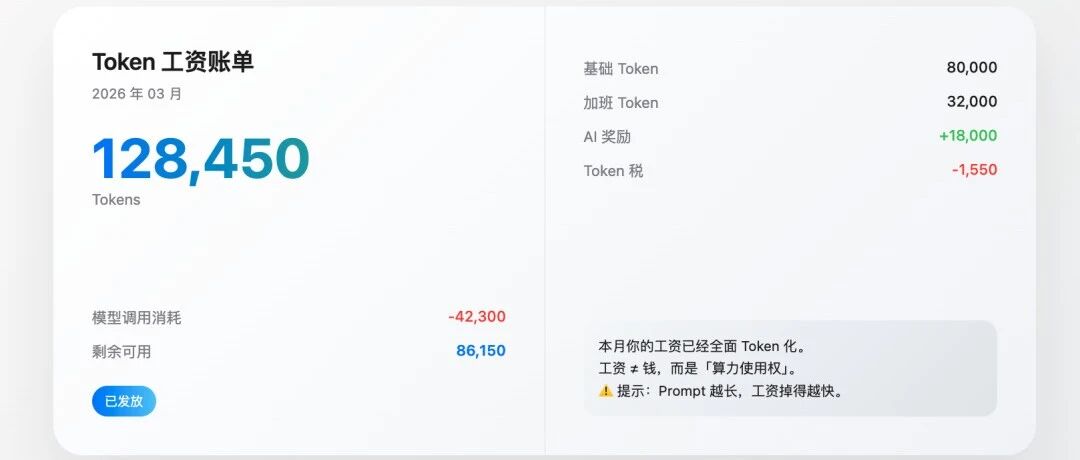
并且他还进一步强调: 核心逻辑只有一句话: 如果一年只用 5000 美元 Token ,他会气炸。 不用 AI,就像工程师芯片设计师不用 EDA 工具,用纸笔设计芯片。 Token 甚至可能成为薪酬的一部分(类似股票/期权)。 Token 就是新时代的算力燃料,过去衡量工程师看代码行数、项目交付,现在直接看你调度了多少 AI。 一个 50 万年薪的工程师,如果只烧 5000 刀 Token,相当于把 F1 赛车手扔进自行车赛道,还指望他拿冠军。 最近,英伟达 CEO 黄仁勋在《All-In Podcast》的观点: 如果一位年薪 50 万美元的工程师,一年消耗的 AI Token 还不到 25 万美元,我会非常担心。 AI Token = 新时代生产力燃料 所以以后你的账单可能就变成这样: 基本工资:$200,000股票期权:$150,000Token 配额:$250,000 | 收入结构 | | | --- | --- | | 基础工资 | $200,000 | | 股票期权 | $150,000 | | Token 配额 | $250,000 | | $187,320 | | | --- | --- | ...

英伟达 CEO 黄仁勋:如果工程师 AI Token 用的少,我会非常担心
Xin Lang Cai Jing· 2026-03-23 19:21
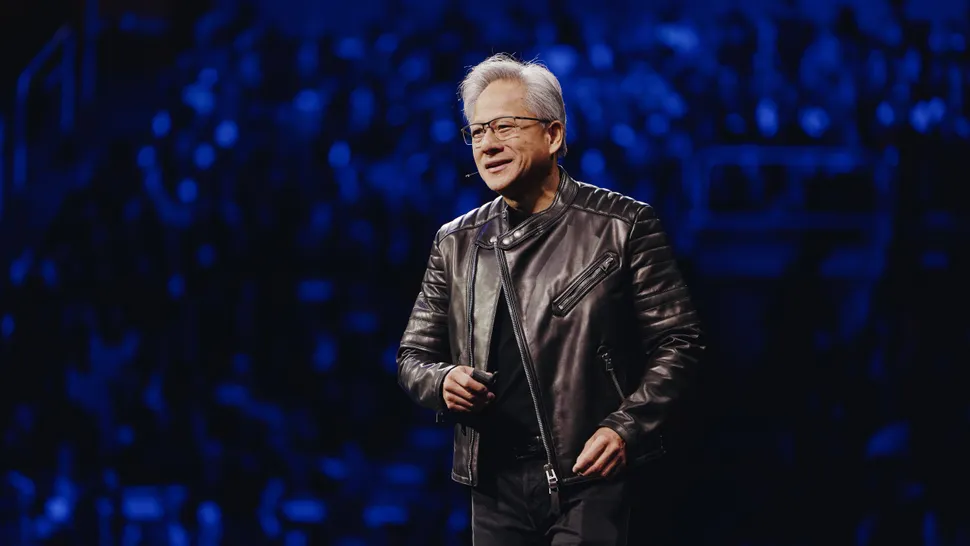
IT之家 3 月 23 日消息,英伟达 CEO 黄仁勋在上周四播出的一期《All-In 播客》中表示,如果这家芯片巨头的顶尖工程师在 AI 上的投入 过低,他会"深感担忧"。 "如果那位年薪 50 万美元(IT之家注:现汇率约合 345.4 万元人民币)的工程师,消耗的 Token 价值还不到 25 万美元,我会非常担 心。"黄仁勋说。 Token 是 AI 系统处理文本的基本单位。AI 读取或生成的文本越多,消耗的 Token 就越多,这也是企业通常按每千或每百万 Token 的使用 量来收费的原因。 并非只有黄仁勋认为,工程师需要充足的 AI 算力资源,且企业应该为此买单。 "到年底,我会问那位年薪 50 万美元的工程师:你这一年用了多少 Token?如果他说只用了 5000 美元,我会气炸。"他补充道。 当被问及英伟达是否会为工程师团队投入 20 亿美元用于 Token 时,黄仁勋回答:"我们正努力这么做。" 他把那些很少使用 AI Token 的顶尖工程师比作:"这就跟我们的芯片设计师说'你猜怎么着?我打算只用纸和笔工作'没什么两样。" 上周早些时候,黄仁勋在 GPU 技术大会上还表示,Token 可 ...

首超美国!中国AI调用量激增127%,电力成本占比高达70%,三大核心赛道成最大赢家!
Jin Rong Jie· 2026-02-27 10:27
Core Insights - The article highlights a significant shift in AI model usage, with Chinese models surpassing American models in token usage for the first time, indicating a growing dominance in the AI sector [1] - The increasing demand for electricity driven by AI data centers is creating a strain on power resources, particularly in North America, where a projected CAGR of 55% in electricity capacity demand is expected from 2025 to 2028 [1][2] Group 1: AI Model Usage - From February 9 to 15, Chinese AI models reached a calling volume of 41.2 trillion tokens, exceeding the 29.4 trillion tokens of American models for the first time [1] - The week of February 16 to 22 saw Chinese models further increase to 51.6 trillion tokens, marking a 127% increase over three weeks, while American models dropped to 27 trillion tokens [1] Group 2: Electricity Demand and Supply - The electricity cost constitutes 60-70% of the operational costs for AI models, indicating that the demand for tokens is intrinsically linked to electricity consumption [1] - North America is facing a severe electricity shortage exacerbated by the high energy demands of AI data centers, prompting tech giants to commit to covering their own energy costs [1] Group 3: Power Infrastructure and Growth - China’s power infrastructure is well-positioned to leverage low electricity costs for cross-border delivery, enhancing domestic power consumption and equipment demand [2] - The growth in electricity demand is expected to rebound to 5.04% by 2026, driven by AI data centers and industrial electrification [2] Group 4: Beneficiaries in Power Equipment - The demand for power grid equipment is surging due to the high requirements of data centers for stable and efficient power supply, leading to a shortage of high-performance transformers [3] - China's transformer industry, holding over 60% of global capacity, is experiencing high demand, with some orders extending to 2027 [3] Group 5: Green Energy and Storage - The high energy consumption of AI data centers is accelerating the shift towards green and low-carbon energy solutions, creating long-term growth opportunities for green energy and storage sectors [4] - Policies are being implemented to ensure that by the end of 2025, new data centers in China must achieve an 80% renewable energy utilization rate [4] Group 6: Traditional Power Sources - In the context of rising electricity demand from AI, traditional power sources like coal and nuclear are being revalued for their stability and reliability [5] - The profitability of coal power is shifting from solely electricity sales to a dual compensation model, enhancing operational stability [5]
中信证券:市场聚焦Token高增长持续性 关注后续市场商业化强度
智通财经网· 2025-10-29 06:33
Core Insights - The rapid growth of AI Token consumption since 2025 has led to overly optimistic expectations regarding AI computing power investments and monetization prospects, particularly for companies like Google [1][2] - Despite the significant increase in Token consumption, the conversion into effective commercial returns remains insufficient, indicating that high growth in AI Tokens does not guarantee continued investment without breakthroughs in application scenarios and commercialization models [1][4] AI Token Consumption - Since 2025, Google's AI model capabilities and product penetration have significantly increased, with monthly Token consumption rising from 9.7 trillion in April 2024 to 1.3 quadrillion in September 2025, leading to widespread discussions about computing power demand [1] - In September, global Token consumption is estimated to reach 64 trillion, with Google accounting for approximately 20%, primarily driven by AI search (47%), API calls (26%), Gemini (24%), and Workspace (3%) [1] - By December 2026, Google's AI Token consumption is projected to reach 340 trillion [1] Computing Power Demand - The demand for AI inference computing power is closely linked to Token volume and model parameters, with predictions indicating a sevenfold increase in Google's monthly Token consumption by the end of 2026 compared to early 2025 [3] - Supply-side improvements in chip and system performance, along with software optimizations, could significantly reduce unit computing costs, as evidenced by NVIDIA's reported 1000-fold increase in computing power over eight years [3] Commercialization Challenges - The current level of Token monetization remains low, with a significant portion of Token consumption stemming from free or inefficient conversion scenarios, limiting actual commercial potential [4] - Key issues include limited direct monetization from AI search, a nascent subscription model with low conversion rates, and limited commercial value from API sales [4] - It is estimated that less than one-third of Token consumption translates into incremental commercial value, with most usage aimed at enhancing user engagement and competitive advantage [4]

