AXON推荐引擎

Search documents
AI应用龙头,又被空头整了
Sou Hu Cai Jing· 2026-01-25 08:40
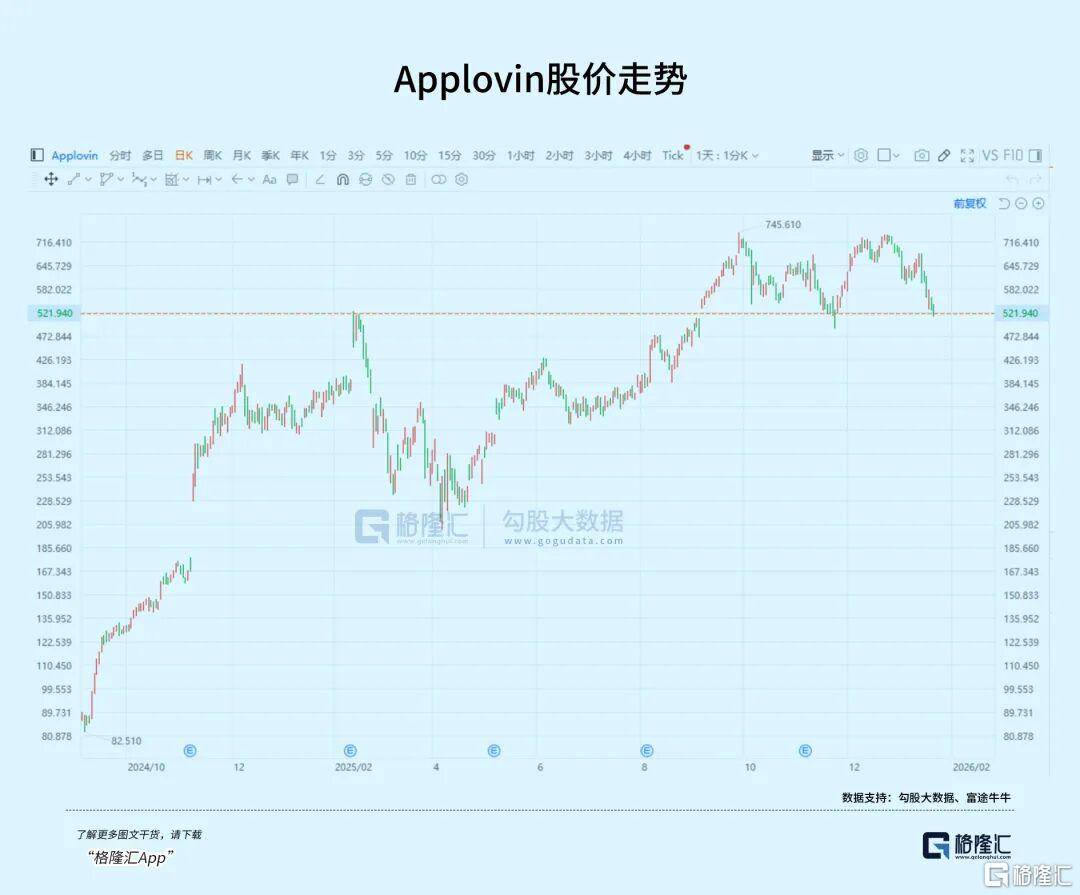
Core Viewpoint - Applovin, a leading player in the AI application sector, has faced significant scrutiny following allegations of being involved in a large-scale money laundering operation, which has led to a sharp decline in its stock price from a peak of $745 to around $520 [1][3][21] Group 1: Company Performance and Growth - Applovin's stock price surged over 700% within a year, reaching a market capitalization of over $200 billion, establishing itself as a leader in the AI application space [1] - The company reported a remarkable 68% year-over-year revenue growth in Q3 2025, with an adjusted EBITDA margin of 82%, significantly higher than industry peers [1][13] - The transition from a game publisher to a pure advertising technology platform has proven successful, with software platform revenue reaching $3.22 billion in 2024, a 75% increase year-over-year [11] Group 2: Allegations and Investigations - A report by CapitalWatch accused Applovin of being a key player in a multinational money laundering network, implicating major shareholder Hao Tang in illegal financial activities linked to the Chinese P2P platform Tuandai.com [3][5] - The report detailed a sophisticated money laundering scheme involving fictitious high-end service trades and underground banking networks, suggesting that funds were transferred under the guise of legitimate business expenses [7][8] - The investigation also highlighted connections to the Prince Group in Cambodia, which allegedly provided ongoing cash flow through fraudulent activities, further complicating Applovin's financial legitimacy [8][9] Group 3: Market Dynamics and Future Challenges - Despite the impressive financial metrics, the company faces existential threats from the rise of AI agents that could disrupt traditional advertising models, potentially diminishing the need for intermediaries like Applovin [18][20] - Gartner predicts that by 2028, 60% of brands will utilize AI agents for direct interactions, signaling a potential end to conventional marketing channels [19] - The dual nature of Applovin as both a market darling and a target for short-sellers raises questions about its long-term sustainability amidst ongoing legal and ethical challenges [20][21]

AI应用龙头,又被空头整了
格隆汇APP· 2026-01-25 08:29AI Processing
Core Viewpoint - Applovin has emerged as a leading player in the AI application sector, experiencing a stock price surge of over 700% within a year, reaching a market capitalization of over $200 billion, but recent allegations of being involved in a money laundering network have raised significant concerns about its business practices [2][4][20]. Financial Performance - In Q3 2025, Applovin reported a revenue growth of 68% year-over-year, with an adjusted EBITDA margin of 82%, showcasing exceptional profitability compared to industry peers [3][23]. - The company's transition to a pure advertising technology platform has resulted in a software platform revenue of $3.22 billion in 2024, a 75% increase year-over-year [21][22]. Allegations and Controversies - A report by CapitalWatch accused Applovin of being a key player in a large-scale international money laundering network, implicating major shareholders in illegal financial activities [7][10]. - The report detailed a sophisticated money laundering strategy involving fictitious high-end service trades and the use of underground banking networks to transfer funds [12][13]. - Applovin has faced scrutiny from short-sellers, with previous allegations of commercial fraud regarding its AXON2.0 algorithm, which is claimed to infringe on user privacy [16][17][20]. Market Position and Future Challenges - Despite its impressive growth and profitability, Applovin's reliance on advertising as a middleman may be threatened by the rise of AI agents that could disrupt traditional advertising models [30][32]. - The company is positioned at a crossroads, balancing its status as a market darling with serious allegations of financial misconduct and the looming threat of technological disruption in the advertising space [34].