Agent小美

Search documents
外卖大战一周年:硝烟和补贴都没了,只剩不够AI的美团
3 6 Ke· 2026-03-13 03:57
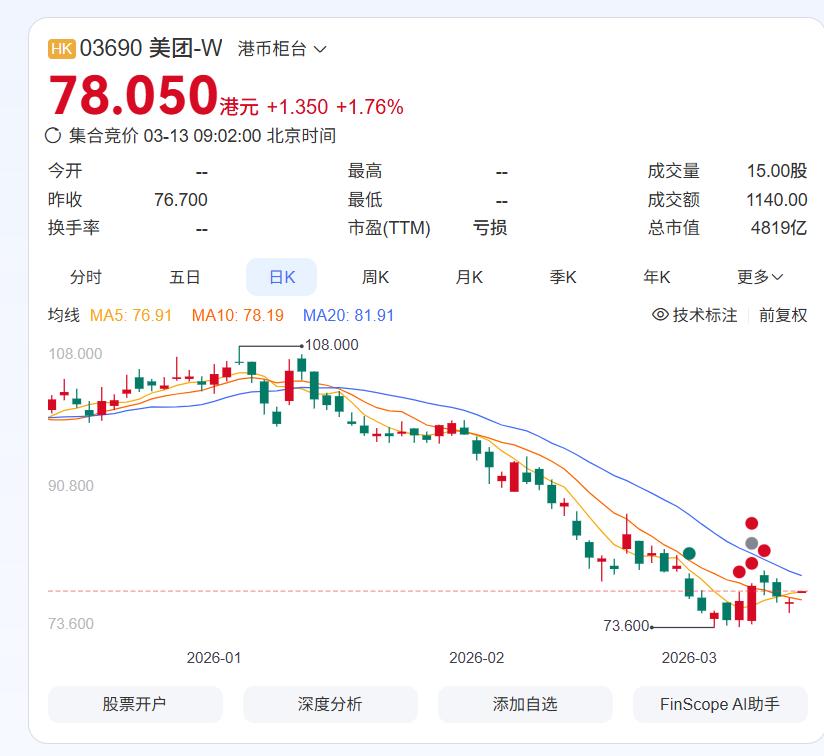
Core Insights - The article discusses the significant changes in the food delivery market in China, particularly the decline in subsidies from major platforms like Meituan and Alibaba, leading to increased prices for consumers [2][3][4] - The competitive landscape has not changed substantially despite the massive subsidies, with Meituan remaining the leader and Alibaba in second place, although the gap has narrowed [3][4] - Both companies have faced substantial financial losses, with Meituan's market value dropping over 600 billion HKD and experiencing a shift from profit to significant losses in its core local business [4][6] Group 1: Market Dynamics - The reduction in subsidies has led to higher prices for consumers, making previously affordable items like coffee and lunch more expensive [1][2] - The intense competition between Meituan and Alibaba, characterized as a "last battle of the internet," has resulted in no clear winner, with both companies suffering financially [3][4] - Meituan's stock price has been on a downward trend since the beginning of the year, reflecting investor concerns over its profitability and market position [6] Group 2: Financial Performance - Meituan's losses for 2025 are projected to be between 25.6 billion to 26.7 billion HKD, a stark contrast to its previous profitability [4][6] - Alibaba's aggressive marketing strategies have led to increased operational costs and a significant drop in operating profits, despite its large scale [6][10] - The financial struggles of both companies highlight the challenges in the food delivery sector, where profitability remains elusive [4][16] Group 3: Strategic Shifts - Alibaba is shifting its focus towards AI and cloud services, indicating a strategic pivot away from the food delivery market [8][10] - Meituan is expanding its instant retail business and investing in AI technologies to enhance operational efficiency and customer service [11][24] - The competition in the food delivery market may evolve into a new phase centered around AI, with both companies needing to adapt to changing consumer behaviors and technological advancements [21][27] Group 4: Future Outlook - The article suggests that the food delivery battle may not resume as expected, with a consensus emerging around more pragmatic approaches to competition [27] - Meituan's future strategies will likely focus on expanding its product offerings and improving AI capabilities to remain competitive [23][24] - The potential for AI to redefine business models in the industry is significant, with implications for how companies engage with consumers and manage operations [21][22]



谷歌DeepMind:AI独立创造价值的经济层正在形成
量子位· 2025-09-16 05:58
Core Viewpoint - The emergence of AI Agents is leading to the formation of a new economic layer, referred to as the "Sandbox Economy," where these agents can operate at scales and speeds beyond human oversight [1][2]. Group 1: Characteristics of the New Economy - The new economic system can be characterized by two dimensions: its origin (spontaneous emergence vs. human design) and its degree of separation from the existing human economy (permeable vs. impermeable) [3]. - The rapid proliferation of AI Agents indicates the formation of an independent economic layer that creates value autonomously [2][4]. Group 2: Applications of AI Agents - AI Agents are being applied in various fields, including: - **Scientific Research**: For instance, the AI named Gauss successfully tackled a mathematical challenge in three weeks under the guidance of a professor [9]. - **Robotics**: Robots are assisting in household chores and can also work in factories for tasks like sorting packages [10]. - **Personal Assistants**: New AI agents, such as Meituan's Agent Xiaomei, allow users to place food orders using voice commands [12]. Additionally, office assistants help organize materials and generate reports, enhancing work efficiency [13]. Group 3: Resource Management and Fairness - Conflicts may arise when multiple AI Agents represent different users and compete for the same resources. Researchers suggest using market mechanisms and fair distribution rules to manage resources effectively [14]. - A virtual market concept is proposed where each AI Agent has an equal amount of "virtual currency" to bid for shared resources, ensuring fairness and preventing disparities in resource allocation [16][18]. Group 4: Regulatory Considerations - To ensure a practical and safe virtual agent economy, targeted measures in legal, technical, and policy domains are necessary [19]. - **Legal Responsibility**: A shift from traditional single-entity accountability to a collective responsibility model for AI collaborations is recommended [21]. - **Technical Standards**: Promoting interoperability standards like A2A and MCP protocols to prevent fragmentation in the AI ecosystem is essential [23]. - **Supervisory Framework**: A three-tiered supervision system is proposed, where AI monitors AI, with human oversight as a safety net [24]. - **Regulatory Sandbox Trials**: Small-scale tests in specific scenarios are suggested to observe AI interactions and assess fairness mechanisms [26]. Group 5: Societal Impact and Human Collaboration - Emphasizing the need to reform education to enhance human strengths in critical thinking and problem-solving, rather than allowing AI to completely replace human decision-making [27]. - Strengthening social safety nets to address potential job displacement caused by AI, ensuring that the wealth generated by AI benefits a broad population rather than a select few [28]. Group 6: Market Development - The launch of MuleRun, the world's first AI Agent marketplace, marks a significant step in the AI economy, providing a unified platform for users to access various agents and services [29][30]. - MuleRun also introduces a support program for AI Agent creators, offering financial, marketing, and technical assistance to foster sustainable income growth for creators [32].