AlphaGo Zero

Search documents
还把“历史数据”当护城河?靠牛顿的笔记算不出相对论
混沌学园· 2026-03-25 12:04
2016年,围棋天才李世石惜败AlphaGo,但他使出"神之一手",被誉为人类智慧最后的荣光。仅仅一年后,AlphaGo Zero以100:0的绝对碾压,将曾战 胜李世石的"前辈"彻底击溃。更令人震惊的是,它达到这个水平只用了3天,没学习任何一盘人类棋谱。 "工业时代的赢家是'控制者',"张帆说,"而今天的赢家,是那些掌握大模型思维、懂得概率管理的人。"你企业 的 核心竞争力,不再是你拥有多少数据, 而在于你能消耗多少智能、转化多少智能。这将是未来十年最残酷也最公平的竞争。 上周六,张帆老师在混沌 APP的深度大课《大模型时代的第一性原理:智能涌现的底层逻辑与商业范式重塑》中,从三场人机对弈出发,剖析智能进化的 底层逻辑,最终聚焦于每个企业与个人最迫切的课题:如何重塑思维,抓住未来。 本文为课程内容精编,仅占全部内容十分之一,完整版在混沌APP。 人机 对弈,智能进化 回顾过去两三年,技能迭代速度极为迅速, 也 因此 引发了 各类焦虑情绪。我认为在高速变化的时代,更为重要的是找到其中不变的核心要素, 那 就是 大模型思维。什么是 大模型 思维?我们可以在智能领域找一个合适的研究样本。 机器诞生以来,人类就一直 ...


聂卫平的时代和时代的聂卫平
吴晓波频道· 2026-01-16 01:01
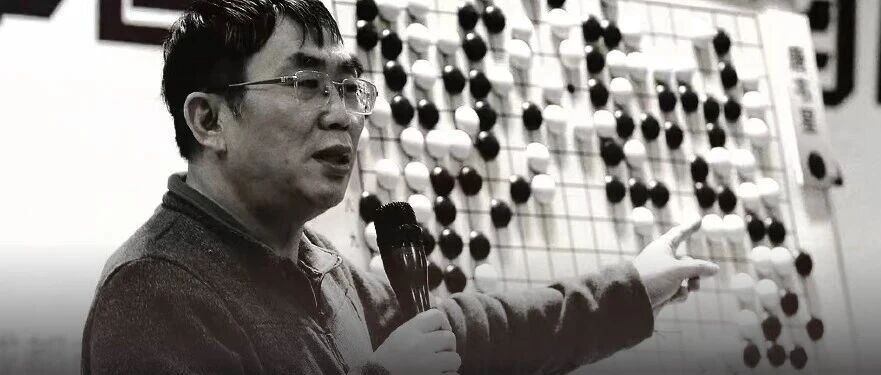
Group 1 - The article commemorates Nie Weiping, a pivotal figure in the revival of Chinese Go, who passed away on January 14, 2026, at the age of 74 [2] - Nie Weiping's era marked a significant transformation in Chinese Go, particularly through his participation in the Sino-Japanese Go matches, which helped elevate the status of Chinese players [6][9] - The first Sino-Japanese Go match in 1985 saw Nie Weiping defeat three top Japanese players, leading to China's victory and breaking Japan's dominance in the game [9][10] Group 2 - The article highlights the cultural significance of Nie Weiping's achievements during the 1980s, which coincided with China's reform and opening-up period, symbolizing a national spirit of overcoming challenges [10][29] - Nie Weiping's influence extended beyond the Go board; he inspired a generation of entrepreneurs and was seen as a role model for strategic thinking in business [13][15] - The narrative also touches on the evolution of Go in the context of artificial intelligence, particularly with the rise of AlphaGo, which transformed the landscape of the game and provided new training methods for young players [25][27]
我们即将经历下一个技术奇点,超智能时代人类会更加不平等吗?
Guan Cha Zhe Wang· 2025-11-14 01:09
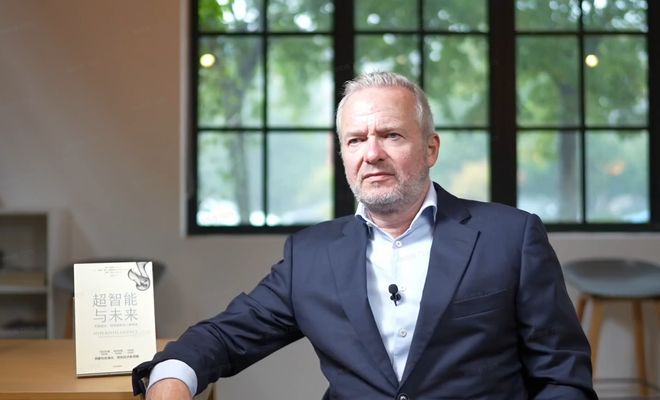
Core Insights - The development of artificial intelligence (AI) is viewed as a significant economic growth point globally, with some considering it the start of the "Fourth Industrial Revolution" and a pathway to general AI [1] - There are growing concerns regarding the limitations of large models, including diminishing marginal returns and the impact on traditional employment markets [1] - The conversation emphasizes the need for humanity to adapt and coexist with AI, exploring the philosophical implications of intelligence evolution in the universe [1][8] Group 1: AI Development and Economic Impact - AI is seen as a transformative force in the economy, with the potential to create new knowledge and understanding [11] - The timeline for AI achieving continuous operation and self-definition of tasks is projected around 2028, marking a significant milestone in AI capabilities [18][20] - The potential for AI to drive economic changes is highlighted, with predictions of AI robots becoming widely accepted by 2028 [20] Group 2: Philosophical and Evolutionary Perspectives - The concept of "critical density" is introduced, suggesting that as systems reach a certain complexity, they trigger cascading reactions that lead to higher levels of intelligence [10][15] - The universe's evolution is posited as inherently designed to create intelligence, with humanity playing a role in this broader narrative [8][11] - The idea that AI could lead to a form of universal consciousness is explored, suggesting that humanity may be a stepping stone in this evolution [11] Group 3: China's Position in AI Development - China is recognized for its rapid advancements in power infrastructure, which is crucial for AI development, having invested more in smart grids than the rest of the world combined [33] - The country benefits from a large pool of technically educated individuals, with a significant portion of STEM graduates globally coming from China [34] - Challenges include a lag in chip technology compared to leading companies like NVIDIA, which may impact the pace of AI development [37] Group 4: Future Trends and Innovations - The discussion highlights the importance of distinguishing between genuine trends and hype in technology, emphasizing the need for real market demand [26] - Innovations in energy sources, such as nuclear fusion, are anticipated to provide abundant resources, further driving technological advancements [22][25] - The potential for AI to enhance efficiency in existing processes while also creating new opportunities is emphasized, suggesting a dual approach for businesses [28][29]
全球首个「百万引用」学者诞生,Bengio封神,辛顿、何恺明紧跟
3 6 Ke· 2025-10-26 01:49
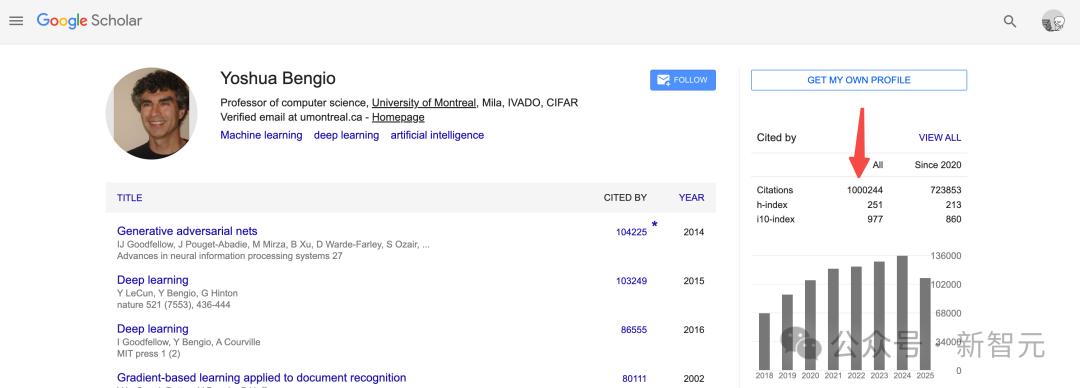
Core Insights - Yoshua Bengio is recognized as the most cited computer scientist globally, with a total citation count of 987,920, and has seen a significant increase in citations since winning the Turing Award in 2018 [5][6][29] - Geoffrey Hinton, another prominent figure in AI, is approaching 1 million citations, currently at 972,944, and is expected to become the second individual to surpass this milestone [2][5] - The rise in citations for these AI pioneers reflects the explosive growth of AI research and its integration into various fields, particularly since the introduction of deep learning techniques [14][17][26] Group 1 - Yoshua Bengio's citation metrics include an h-index of 251 and a 110-index of 977, indicating his significant impact in the field of machine learning and deep learning [1][5] - The citation growth for Bengio and Hinton aligns with the overall increase in AI-related publications, which have tripled from 2010 to 2022, highlighting the growing importance of AI in computer science [26][14] - The deep learning community is dominated by a few key figures, with Bengio, Hinton, and Yann LeCun being recognized as the "three giants" of deep learning, all of whom received the Turing Award in 2018 [3][29] Group 2 - The AI research landscape has seen a dramatic increase in the number of papers published, with AI papers constituting 41.8% of all computer science papers by 2023, up from 21.6% in 2013 [26][14] - The introduction of the Transformer model in 2017 and subsequent advancements in generative AI have further accelerated the citation rates of foundational papers in the field [21][23] - The citation counts of leading researchers like Ilya Sutskever and Kaiming He also reflect the growing influence of deep learning, with Sutskever exceeding 700,000 citations and He surpassing 750,000 [34][31]