Atlas超节点产品

Search documents
公布技术参数“颗粒度” 大厂接连“秀肌肉” 自研AI芯片为何不再“闷声干”?
Nan Fang Du Shi Bao· 2025-11-25 23:09
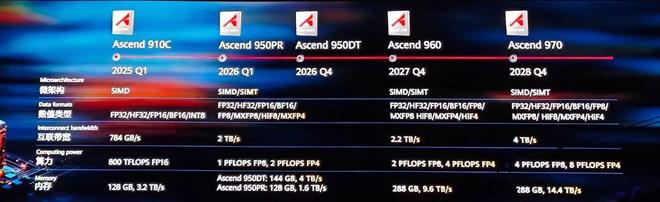
Core Viewpoint - The recent announcements from major Chinese tech companies like Huawei and Baidu regarding their AI chip development signify a shift in the domestic semiconductor landscape, aiming to fill the gap left by Nvidia and enhance the competitiveness of Chinese AI chips [3][4][5]. Group 1: AI Chip Development - Major Chinese companies are increasingly revealing their AI chip roadmaps, with Huawei planning to release four Ascend AI chips over the next three years, while Baidu is set to launch two Kunlun AI chips in the next two years [2][3]. - Huawei's detailed disclosure of technical parameters for its chips, including bandwidth, computing power, and memory, marks a significant change in the traditionally low-profile approach of Chinese chipmakers [2][7]. - The introduction of supernodes and clusters is seen as a critical strategy for overcoming the limitations of China's semiconductor manufacturing processes, which are currently capped at the 7nm node [10][12]. Group 2: Competitive Landscape - The competition in the global AI chip market is characterized as asymmetric, with Chinese chips lagging behind North American counterparts like Nvidia in various technical specifications, yet capable of leveraging networking capabilities to surpass them in performance [5][6]. - Huawei's Ascend series has been recognized as a formidable competitor, with its first chip released in 2018 and subsequent iterations showing significant performance improvements despite challenges posed by U.S. sanctions [6][8]. - Baidu's Kunlun chip, while still behind in performance compared to Nvidia's offerings, is focusing on cost-effectiveness and specific use cases, indicating a strategic approach to market entry [8][9]. Group 3: Market Dynamics - The domestic AI chip market is witnessing a shift towards inference tasks, with inference scenarios accounting for 42% of the GenAI IaaS service market, while training scenarios have decreased to 58% [14][15]. - The challenges of using domestic AI chips for large model training are acknowledged, with companies like Huawei and Baidu working to adapt their technologies to meet these demands [14][15]. - The push for self-developed chips by major cloud providers is seen as a way to reduce costs and improve performance, with companies like Kunlun seeking to penetrate external markets [16][17].


华为百度接连“秀肌肉”,大厂自研AI芯片为何不再闷声?
Nan Fang Du Shi Bao· 2025-11-24 10:30
Core Insights - Domestic AI chip companies are becoming more vocal about their product roadmaps, with major players like Huawei and Baidu announcing upcoming AI chip releases, breaking a period of silence in the industry [1][2][4] - The shift towards showcasing product capabilities is seen as a response to market opportunities left by Nvidia, with analysts suggesting that a clear product roadmap is essential for capturing market share [2][3] - Despite advancements, domestic AI chips still lag behind their international counterparts in performance, necessitating innovative solutions like "super nodes" and clusters to meet AI computing demands [3][4][11] Huawei's Developments - Huawei plans to release three new Ascend AI chip series (950, 960, and 970) between 2026 and 2028, marking a significant shift from its previous strategy of limited product announcements [4][5][8] - The Ascend 950 series will include two models, focusing on different stages of AI inference, with specifications indicating substantial improvements in memory bandwidth and processing power [6][7] - Huawei's super node strategy aims to enhance computing power by interconnecting multiple chips, allowing for greater efficiency in large-scale AI model training [12][14] Baidu's Strategy - Baidu has announced its Kunlun chip roadmap, with the M100 and M300 chips set for release in 2026 and 2027, respectively, targeting large-scale inference and multimodal model training [9][10] - The Kunlun chip is designed to support high-performance computing tasks, with plans for super nodes that can accommodate multiple chips for enhanced processing capabilities [10][22] - Baidu's recent disclosures may be influenced by competitive pressures and potential IPO considerations for its chip division [10][22] Industry Trends - The domestic semiconductor supply chain has made significant strides, filling gaps left by U.S. sanctions and enhancing the predictability of future product iterations [2][3] - The focus on "super nodes" and clusters is seen as a critical strategy for overcoming limitations in individual chip performance, particularly in the context of large AI model training [11][12] - The competition in the AI chip market is intensifying, with various companies exploring specialized designs to meet specific application needs, particularly in inference tasks [20][21] Market Dynamics - The demand for AI inference capabilities is rising, with a notable shift in the market towards optimizing chips for specific tasks rather than general-purpose applications [18][20] - Companies are leveraging their cloud services to validate and promote their self-developed chips, creating a direct internal demand that supports their market positioning [22] - The landscape is characterized by fragmentation, with both integrated and specialized chip manufacturers vying for market share in the rapidly evolving AI sector [20][21]