
昆仑芯AI芯片

Search documents
BIDU(BIDU) - 2025 Q4 - Earnings Call Transcript
2026-02-26 13:32
Financial Data and Key Metrics Changes - Baidu's total revenue for Q4 was CNY 32.7 billion, a 5% increase quarter-over-quarter, while total revenue for the full year 2025 was CNY 129.1 billion, a 3% decrease year-over-year [24][25] - Non-GAAP operating profits expanded 28% sequentially to CNY 2.8 billion in Q4, with non-GAAP operating income for the full year reaching CNY 15.0 billion [23][27] - Net income attributable to Baidu for Q4 was CNY 1.8 billion, with a net margin of 5%, while for the full year, net income was CNY 5.6 billion, with a net margin of 4% [28][29] Business Line Data and Key Metrics Changes - Revenue from Baidu's core AI-powered business exceeded CNY 11 billion in Q4, accounting for 43% of total revenue, indicating strong growth momentum [4][23] - AI Cloud infrastructure revenue grew 34% year-over-year, with subscription-based revenue from AI accelerator infrastructure increasing 143% year-over-year in Q4 [6][39] - Apollo Go delivered 3.4 million fully driverless operational rides in Q4, with total rides increasing by over 200% year-over-year, and cumulative rides surpassing 20 million [18][20] Market Data and Key Metrics Changes - Baidu's AI Cloud revenue reached CNY 30 billion for the full year 2025, driven by strong enterprise adoption and demand for AI computing [23][39] - The company expanded its global footprint for Apollo Go to 26 cities, reinforcing its leadership in autonomous ride-hailing services [20][56] Company Strategy and Development Direction - Baidu is focusing on scaling AI across its businesses, enhancing AI Cloud growth, and expanding robotaxi operations with improved unit economics [5][21] - The proposed spin-off and separate listing of Kunlunxin, Baidu's self-developed AI chips, is aimed at unlocking new opportunities for value creation [8][22] - The establishment of the Personal Super Intelligence Business Group (PSIG) aims to unify Baidu's consumer-facing AI applications, enhancing collaboration and innovation [17][22] Management's Comments on Operating Environment and Future Outlook - Management expressed confidence in sustaining strong growth momentum in AI Cloud and AI applications, driven by accelerating enterprise AI adoption [39][41] - The competitive landscape for AI models is intense, but Baidu believes that applications matter more than models, focusing on delivering value through practical use cases [33][36] - Management highlighted the importance of safety in autonomous driving, stating that Baidu's autonomous ride-hailing service is the safest globally [20][21] Other Important Information - Baidu announced a new $5 billion share repurchase program and adopted a dividend policy for the first time, reflecting a commitment to shareholder value [22][50] - The company reported a positive operating cash flow for two consecutive quarters, generating CNY 3.9 billion across Q3 and Q4 [23][29] Q&A Session Summary Question: How does management view the current competitive landscape for AI models? - Management noted that the market is highly competitive, emphasizing that applications are more important than models, and they are focused on an application-driven approach [33][36] Question: What are the key growth drivers behind Baidu AI Cloud's robust revenue growth? - Management highlighted that AI Cloud revenue reached CNY 30 billion, with strong growth driven by enterprise AI adoption and subscription-based revenue from AI accelerator infrastructure [39][41] Question: When should we expect AI-powered business to exceed 50% of Baidu's general business? - Management indicated that AI-powered business is rapidly increasing and is expected to become the majority of Baidu's general business in the foreseeable future [46] Question: Can management elaborate on the capital allocation framework? - Management discussed recent initiatives including a share repurchase program and the proposed spin-off of Kunlunxin, reflecting a coherent execution framework aimed at creating shareholder value [48][51] Question: What is the strategy for Apollo Go's international expansion? - Management outlined plans to leverage strategic partnerships and emphasized the importance of operational efficiency and safety in scaling Apollo Go's operations globally [56][59]

传字节跳动与三星洽谈晶圆代工合作,最快3月底取得样品
Sou Hu Cai Jing· 2026-02-12 01:36
Group 1 - ByteDance is negotiating with Samsung Electronics to outsource the manufacturing of its AI chips, with plans to produce at least 100,000 chips designed for AI inference tasks this year, aiming to eventually increase production to 350,000 chips [2] - The collaboration with Samsung includes not only wafer foundry services but also securing memory chips that are in short supply globally, making the deal particularly attractive [2] - ByteDance's AI chip project, codenamed "SeedChip," is part of a broader initiative to invest in AI technology development, spanning from chip design to large language models, with expectations that this technology will transform its business portfolio [2] Group 2 - ByteDance plans to invest over 160 billion RMB (approximately 22 billion USD) in AI-related procurement this year, primarily for purchasing external AI chips and advancing its own chip development [3] - Despite not having launched its own AI chips yet, ByteDance's competitors, Alibaba and Baidu, are already ahead in self-developed AI chips, with Alibaba's Tsinghua Unigroup recently releasing a chip for cloud AI inference workloads and Baidu's Kunlun chip being sold to external clients [3]

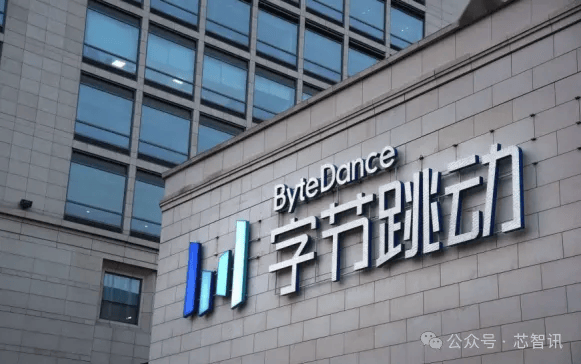
港股异动 | 百度集团-SW(09888)现涨超4% 昆仑芯赴港独立上市 百度持股价值或达220亿美元
智通财经网· 2026-01-12 03:15
Core Viewpoint - Baidu Group-SW (09888) announced the spin-off of its AI chip subsidiary Kunlun Chip, submitting a listing application to the Hong Kong Stock Exchange, which is expected to unlock significant value for the company [1] Group 1: Company Developments - As of the report, Baidu's stock rose by 4.22% to HKD 143.2, with a trading volume of HKD 866 million [1] - The spin-off of Kunlun Chip is part of Baidu's strategy to evaluate its AI cloud infrastructure as an independent business segment, with an implied value exceeding USD 50 billion [1] Group 2: Market Valuation and Projections - Goldman Sachs estimates that if Kunlun Chip receives a valuation multiple similar to Cambricon (40 times sales), Baidu's 59% stake could be valued at USD 22 billion, representing 45% of Baidu's current total market capitalization [1] - Sales projections for Kunlun Chip indicate expected revenues of RMB 3.5 billion in 2025, increasing to RMB 6.5 billion in 2026, with JPMorgan's more aggressive forecast suggesting revenues could reach RMB 8.3 billion in 2026 [1]
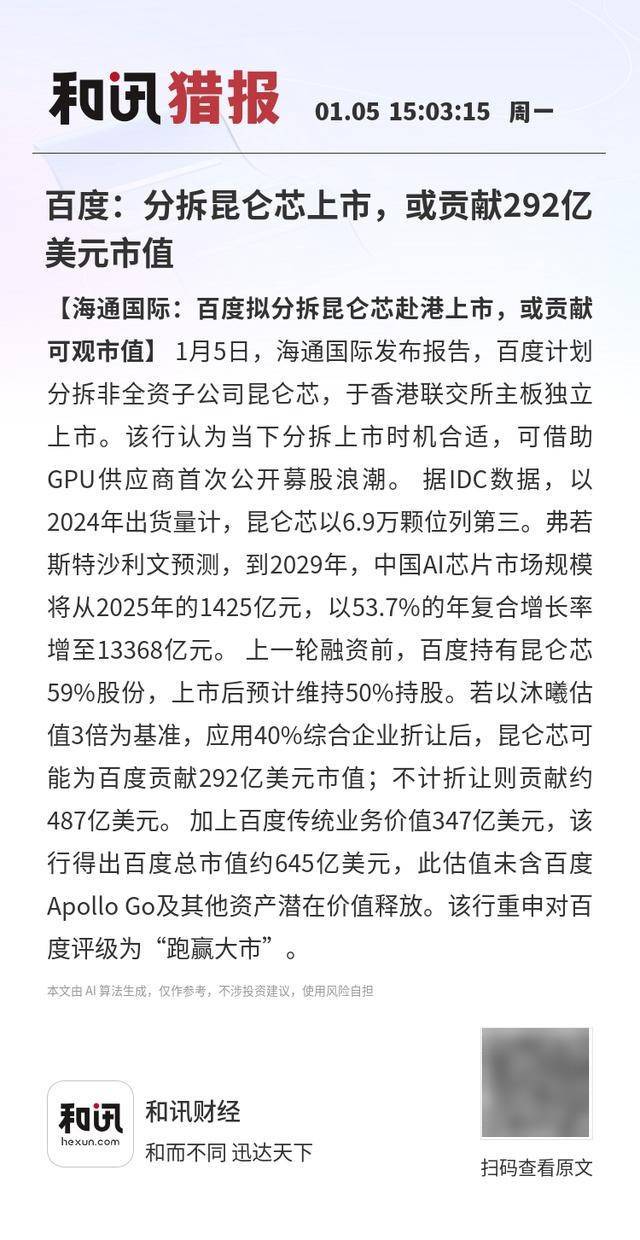
百度:分拆昆仑芯上市,或贡献292亿美元市值
Sou Hu Cai Jing· 2026-01-05 07:28
Group 1 - The core viewpoint of the article is that Baidu plans to spin off its subsidiary Kunlun Chip for an independent listing on the Hong Kong Stock Exchange, which is seen as a timely move to capitalize on the IPO wave among GPU suppliers [1] - According to IDC data, Kunlun Chip ranks third in terms of shipment volume with 69,000 units projected for 2024 [1] - Frost & Sullivan predicts that the AI chip market in China will grow from 142.5 billion yuan in 2025 to 1.3368 trillion yuan by 2029, representing a compound annual growth rate of 53.7% [1] Group 2 - Prior to the latest financing round, Baidu held a 59% stake in Kunlun Chip, and it is expected to maintain a 50% stake post-listing [1] - Based on a valuation of Kunlun Chip at three times its estimated value, and applying a 40% overall enterprise discount, it could contribute approximately 29.2 billion USD to Baidu's market value; without the discount, the contribution could be around 48.7 billion USD [1] - In addition to the value from Kunlun Chip, Baidu's traditional business is valued at approximately 34.7 billion USD, leading to a total estimated market value of about 64.5 billion USD for Baidu, excluding potential value releases from Baidu Apollo Go and other assets [1]
2026投资主线浮现!中概股狂涨4%百度飙15%,黄金跳水藏玄机?
Sou Hu Cai Jing· 2026-01-04 04:00
Group 1 - The core point of the article highlights the contrasting market movements, with Chinese concept stocks surging by 4% and Baidu soaring by 15%, while gold prices experienced a significant drop of over 4.5% [1][2] - The surge in Chinese concept stocks is attributed to the successful implementation of US-China audit cooperation, which has alleviated delisting risks and encouraged foreign investment [2][3] - Baidu's 15% increase is driven by the announcement of its AI chip company Kunlun's application for independent listing, which is expected to unlock significant value due to its strong market position and order volume [2][3] Group 2 - The drop in gold prices is explained by three main factors: profit-taking after a 70% increase in 2025, a rebound in the US dollar, and increased trading costs due to higher margin requirements [3][4] - The article suggests that the investment theme for 2026 is clear, focusing on following policy directions and investing in hard technology sectors such as AI, high-end manufacturing, and consumer recovery [4][5] - The market logic indicates that sectors with policy support and performance certainty will thrive, emphasizing the importance of focusing on companies with solid technology and real orders rather than engaging in speculative trading [6]

刚刚,直线猛拉!IPO突爆大消息!
券商中国· 2026-01-02 07:02
Core Viewpoint - Baidu's stock price surged over 9% following the announcement of its subsidiary Kunlun Chip's application for an IPO on the Hong Kong Stock Exchange, with estimated valuation of Baidu's 59% stake in Kunlun Chip ranging from $3 billion to $11 billion [1][3]. Group 1: Baidu and Kunlun Chip - Baidu announced that Kunlun Chip submitted a listing application to the Hong Kong Stock Exchange, confirming that Baidu can proceed with the proposed spin-off [3]. - The spin-off aims to enhance Kunlun Chip's operational and financial transparency, attract investors focused on AI computing chips, and improve its market position [3]. - Kunlun Chip, established in June 2011, has undergone multiple financing rounds, with a valuation of approximately 13 billion RMB in its last round [4]. Group 2: Financial Projections and Valuation - Morgan Stanley predicts Kunlun Chip's revenue will increase from approximately 1.3 billion RMB in 2025 to 8.3 billion RMB in 2026, representing a sixfold growth [4]. - Goldman Sachs estimates the value of Baidu's stake in Kunlun Chip to be between $3 billion and $11 billion, while Macquarie Securities values it at around $16.5 billion, accounting for 30% of Baidu's target valuation [4]. Group 3: Industry Context - The AI chip sector is experiencing a wave of IPOs, with domestic GPU companies like Suiruan Technology also progressing towards their IPOs [1][5]. - Suiruan Technology, part of the "domestic GPU four dragons," focuses on AI cloud computing products and has developed multiple generations of AI chips [5][6].

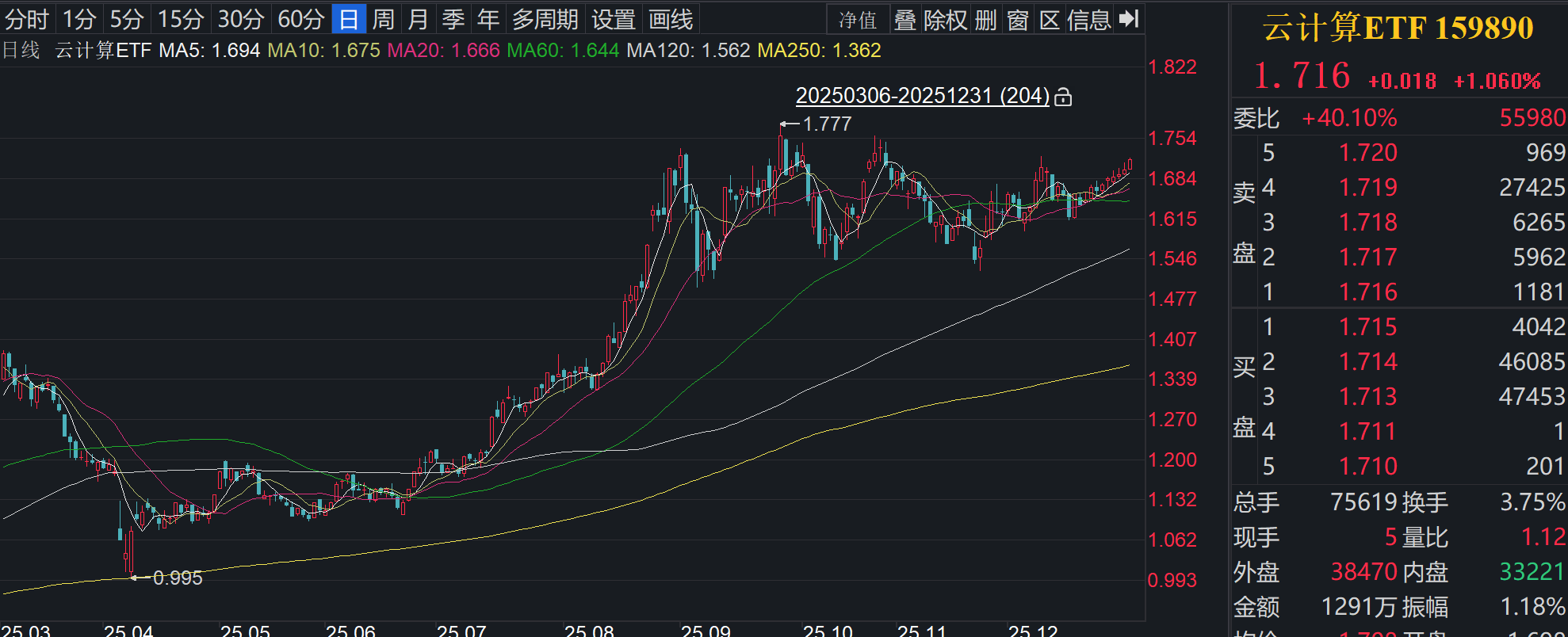
AI算力方向强势收官2025!云计算ETF(159890)午后上攻强势冲击6连阳
Sou Hu Cai Jing· 2025-12-31 06:27
Core Viewpoint - The AI computing power sector is experiencing significant growth, driven by government initiatives and increasing demand for domestic AI chips, particularly the H200 chip, which is set to be delivered to Chinese customers soon [3][4][5]. Group 1: Market Performance - On the last trading day of 2025, AI computing stocks saw a strong afternoon rally, with the cloud computing ETF (159890) rising over 1% and achieving a six-day winning streak [1]. - Notable stock performances included a rise of 11.46% for Yidian Tianxia, over 8% for Hand Information, and more than 4% for companies like Zhongke Xingtai and Wanxing Technology [1]. Group 2: Policy and Industry Developments - A key government official announced the implementation of the "AI+" initiative, which aims to create extensive application scenarios for AI computing power chips, leading to rapid growth in demand and innovation within the sector [3]. - The conditional opening of the H200 chip to China is seen as a positive development, with major tech companies like Alibaba and ByteDance planning significant purchases to enhance their AI capabilities [4]. Group 3: Domestic Chip Strategy - Domestic companies are adopting varied strategies in response to the H200 chip's availability, with Alibaba and ByteDance pursuing large-scale purchases, while Baidu focuses on self-developed Kunlun AI chips to reduce reliance on external suppliers [4]. - Tencent is exploring indirect methods to acquire advanced computing power, aiming to secure over $1.2 billion in usage rights for the latest B200/B300 chips [4]. Group 4: Growth Projections - According to IDC and Inspur, China's intelligent computing power is projected to reach 1,037.3 EFLOPS by 2025, with a compound annual growth rate of 46.2% from 2023 to 2028 [6]. - The general computing power in China is expected to grow to 85.8 EFLOPS by 2025, with a compound annual growth rate of 18.8% during the same period [6]. Group 5: Investment Opportunities - The current landscape of the AI computing market presents numerous opportunities for investment, with a focus on domestic chip development and technological innovation [5][6]. - The cloud computing ETF (159890) tracks a diverse range of companies involved in AI infrastructure and applications, indicating a comprehensive approach to the AI computing era [6].


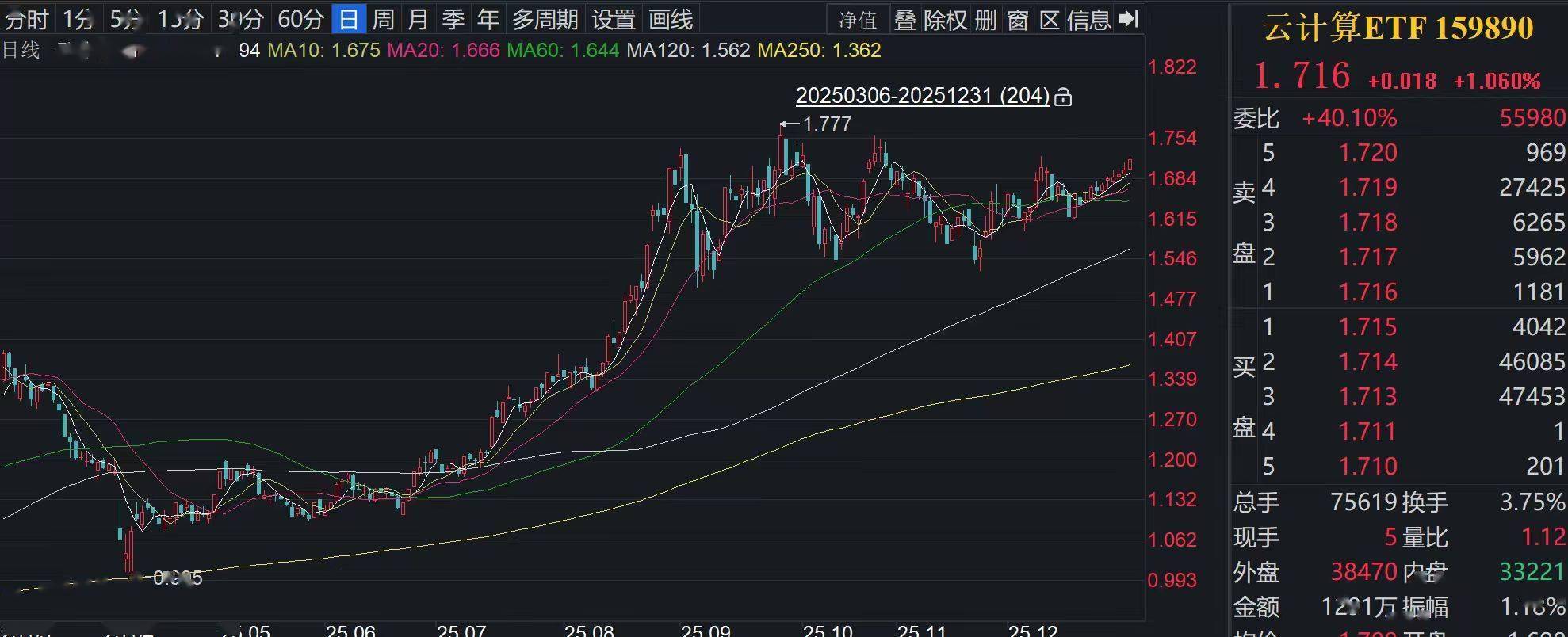
“人工智能+”行动定调算力基建,云计算ETF(159890)午后上攻冲击6连阳!
Sou Hu Cai Jing· 2025-12-31 06:23
Core Viewpoint - The AI computing power sector is experiencing significant growth, driven by government initiatives and increasing demand for domestic AI chips, particularly the H200 chip, which is expected to enhance the capabilities of major tech companies in China [3][5]. Group 1: Market Performance - On the last trading day of 2025, AI computing stocks showed strong performance, with the cloud computing ETF (159890) rising over 1% and achieving a six-day winning streak [1]. - Notable stock performances included a rise of 11.46% for Yidian Tianxia, over 8% for Hand Information, and more than 4% for companies like Zhongke Xingtai and Wanxing Technology [1]. Group 2: Policy and Industry Developments - A key government official announced the implementation of the "Artificial Intelligence +" initiative, which is expected to create extensive application scenarios for AI computing power chips, leading to rapid growth in demand and innovation within the sector [3]. - The conditional opening of the H200 chip to China is seen as a positive development, with major tech firms like Alibaba and ByteDance planning significant purchases to enhance their AI capabilities [3][4]. Group 3: Domestic Chip Strategy - Domestic companies are adopting varied strategies in response to the H200 chip availability; Baidu is focusing on its self-developed Kunlun AI chip to reduce reliance on external suppliers, while Tencent is exploring indirect methods to access more powerful chips [4]. - The release of the H200 chip is viewed as a catalyst for strengthening the long-term strategy of achieving self-sufficiency in domestic computing power [5]. Group 4: Growth Projections - According to IDC and Inspur, China's intelligent computing power is projected to reach 1,037.3 EFLOPS by 2025 and 2,781.9 EFLOPS by 2028, with a compound annual growth rate of 46.2% from 2023 to 2028 [6]. - The general computing power in China is expected to grow to 85.8 EFLOPS by 2025 and 140.1 EFLOPS by 2028, with a compound annual growth rate of 18.8% during the same period [6]. Group 5: Investment Opportunities - The domestic computing power market is seen as having significant potential for growth, with opportunities arising from capital expenditure and technological innovation [6]. - The cloud computing ETF (159890) tracks a diverse range of companies involved in AI infrastructure and applications, indicating a comprehensive approach to the AI computing power era [6].
——计算机事件点评:H200有条件对华开放,长期依然看好国产算力
Guohai Securities· 2025-12-29 07:06
Investment Rating - The industry investment rating is "Recommended" (maintained) [1] Core Insights - The conditional opening of H200 to China is seen as a short-term supplement to AI computing power supply, while reinforcing the necessity for long-term self-sufficiency in technology [11] - The release of H200 chips is primarily aimed at inventory clearance and regaining market share lost due to previous restrictions [5] - Domestic tech giants are seizing the opportunity to procure H200 chips, with significant orders planned by companies like Alibaba and ByteDance [6] Summary by Sections Recent Performance - The computer industry has shown a performance of -1.4% over 1 month, -6.5% over 3 months, and 11.6% over 12 months, compared to the CSI 300 index which has performed at 3.1%, 2.4%, and 16.8% respectively [3] Market Reactions - Following the conditional opening of H200 exports, major Chinese tech firms are rapidly increasing their procurement of high-end computing power, with Alibaba planning to purchase 40,000 to 50,000 H200 chips [6] - Other companies like Tencent are exploring alternative high-performance computing options, indicating a diverse strategy among domestic firms [6] Procurement Analysis - The initial shipment of 40,000 to 80,000 H200 chips is estimated to generate potential sales of several hundred billion RMB, highlighting the significant market demand for these chips [7][8] - The attractiveness of H200 compared to less powerful alternatives is expected to drive continued demand in the Chinese market [8] Long-term Implications - The conditional release of H200 may delay the progress of domestic chip alternatives, as companies may postpone their plans for self-sufficiency in favor of immediate access to high-performance chips [9] - However, there is a growing consensus on the need for self-sufficiency, with discussions around a "matching procurement" mechanism to ensure that large imports of H200 are accompanied by purchases of domestic chips [9][10] Industry Outlook - The demand for AI computing power is expected to remain high, driven by substantial investments in AI and the potential of the AI inference market [11] - The industry is likely to benefit from ongoing developments in domestic chip technology, with companies like Baidu and Huawei making strides in self-developed chips [10]
百度盘初涨超6%,昆仑芯据报计划赴港IPO
Ge Long Hui A P P· 2025-12-05 14:46
Core Viewpoint - Baidu's AI chip business, Kunlun, has completed a new funding round with a valuation nearing $3 billion and is preparing for an IPO in Hong Kong by early 2027 [1] Group 1: Company Developments - Baidu's stock rose over 6% to $126.42 following the news of Kunlun's funding and IPO plans [1] - Kunlun aims to submit its IPO application to the Hong Kong Stock Exchange in the first quarter of 2026 [1] Group 2: Financial Highlights - The recent funding round has valued Kunlun at approximately $3 billion [1]