BlueKernel

Search documents
以开源破局,以赛事聚能,vivo蓝河掀起「Rust风暴」
3 6 Ke· 2025-12-26 13:32
Core Viewpoint - Vivo is establishing a "full-stack self-research + open-source kernel + industry-academia-research competition" strategy to innovate in the operating system sector, particularly focusing on the transition to Rust for enhanced security in the AI era [2][5][19]. Group 1: Technological Innovation - The third Vivo Blue River Operating System Innovation Competition showcased the industry's shift towards Rust language, addressing foundational software security challenges [2][4]. - The winning team, Blue Lotus, achieved a significant breakthrough in the "C2Rust project-level translation tool," successfully translating 11,000 lines of code with a 100% test pass rate and over 97.8% syntax safety [4][12]. - Vivo's strategy aims to bridge the gap between academia and industry, transforming innovative ideas into practical engineering capabilities for the advancement of domestic operating systems [5][19]. Group 2: Industry Context and Challenges - The AI wave has heightened the urgency for operating system security, as traditional C/C++ systems show vulnerabilities in handling complex data [6][8]. - Over 70% of severe security issues stem from memory safety, prompting a shift towards Rust, which offers a systematic solution with strict ownership and lifecycle management [8][9]. - Major tech companies, including Google and Microsoft, are increasingly adopting Rust, indicating a broader industry trend towards safer programming practices [9]. Group 3: Competition and Talent Development - The Vivo Blue River Operating System Innovation Competition has attracted over 150 teams from more than 50 top universities, reflecting its growing influence in the industry [21]. - The competition serves as a platform for addressing real industry challenges, accelerating the verification and accumulation of cutting-edge technologies while cultivating talent skilled in Rust system development [21]. - Vivo's approach of integrating competition with research fosters a continuous innovation loop, reinforcing its leadership in the Rust technology domain [19][21]. Group 4: Open Source and Ecosystem Development - Vivo has initiated the open-sourcing of the Blue River Operating System kernel, named "BlueKernel," which emphasizes security, lightweight design, and compatibility with various chip architectures [17][18]. - The open-source initiative aims to lower the barriers for industry-wide adoption of Rust, providing a sustainable technical foundation for system-level innovation [18]. - By promoting open-source collaboration and hosting competitions, Vivo is positioning itself as a key player in the evolution of domestic foundational software ecosystems [19][21].


以开源破局,以赛事聚能,vivo蓝河掀起「Rust风暴」
36氪· 2025-12-26 13:08
Core Viewpoint - vivo is establishing a "full-stack self-research + open-source kernel + industry-academia-research competition" three-in-one technology layout to enhance the security and performance of operating systems in the AI era [2][6][28]. Group 1: AI and Operating System Transformation - The rise of AI is transforming operating systems from mere resource managers to intelligent service gatekeepers, necessitating a shift towards more secure foundational systems [3][8]. - Traditional C/C++ based systems are facing significant memory safety challenges, prompting a shift towards Rust, which offers a systematic solution to these issues [10][11]. Group 2: Rust Language and Security - Over 70% of severe security issues are linked to memory safety, highlighting the urgent need for more secure operating systems as AI technologies become more prevalent [10]. - Rust's strict ownership and lifecycle management mechanisms provide a proactive approach to memory safety, significantly reducing risks associated with traditional programming languages [11][12]. Group 3: C2Rust Project and Innovation Competition - The C2Rust project aims to automate the translation of C code to Rust, addressing the challenge of migrating legacy code to a more secure language [13][15]. - The recent competition showcased significant advancements, with the winning team successfully translating 54 files and approximately 11,000 lines of code, achieving a 100% test pass rate and over 97.8% syntax safety [6][16]. Group 4: BlueKernel and Open Source Strategy - vivo has initiated the BlueKernel project, which is a lightweight, secure, and general-purpose kernel developed in Rust, aimed at reducing the technical barriers for industry-wide adoption of Rust [24][25]. - The open-sourcing of BlueKernel is intended to foster collaboration and innovation in the Rust ecosystem, providing a sustainable platform for developers [23][24]. Group 5: Industry Impact and Talent Development - The Blue River Operating System Innovation Competition has attracted over 150 teams from more than 50 top universities, enhancing the industry's influence and fostering talent in Rust system development [27]. - By linking real industry challenges to academic research, vivo accelerates the validation and accumulation of cutting-edge technologies, contributing to the cultivation of skilled professionals in the field [27][28]. Group 6: Strategic Positioning - vivo's comprehensive strategy of self-research, open-source collaboration, and competitive innovation positions it as a leader in the Rust technology domain, enhancing the technological barriers of the Blue River Operating System [28][29]. - This strategic approach not only strengthens vivo's market position but also supports the broader development of China's foundational software industry in the global landscape [28][29].

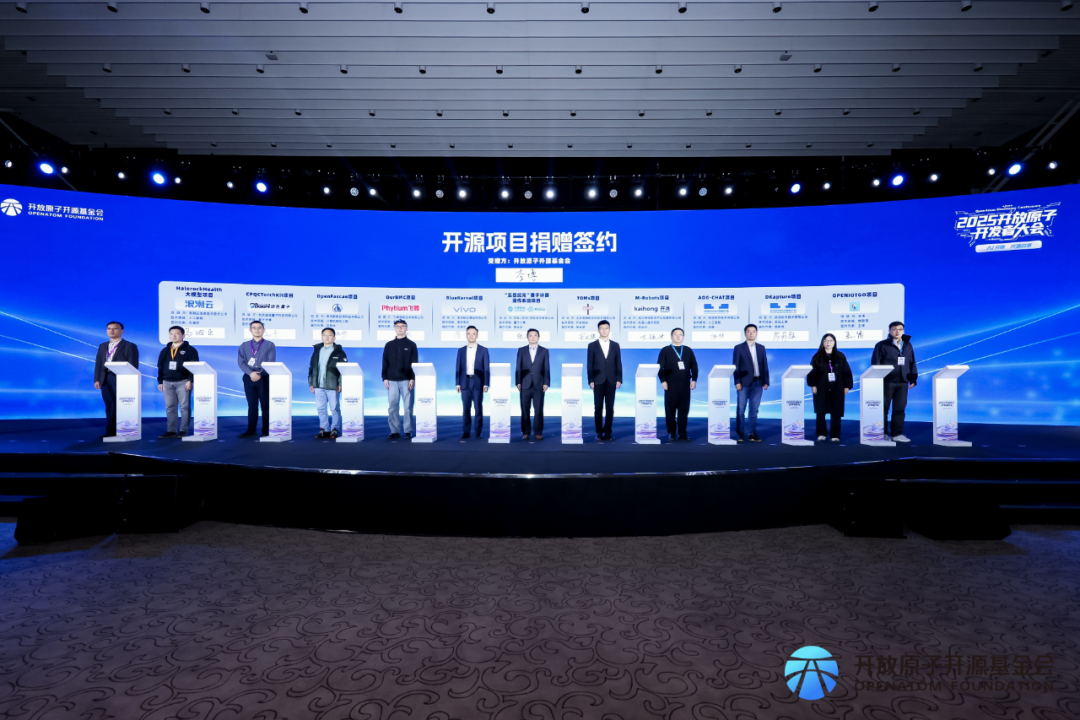
捐赠自研OS内核背后:Rust 先行者 vivo 的「担当」
Xin Lang Cai Jing· 2025-11-29 05:23
Core Viewpoint - The rise of open-source models in the AI era is challenging closed-source companies, leading to increased competition and innovation in AI model development [2][4]. Group 1: Open-Source Models - Meta's Llama has initiated a shift towards open-source models, allowing companies like OpenAI and Anthropic to face competition [2]. - Chinese companies Qwen and DeepSeek have also contributed to the open-source model landscape, achieving download volumes in the tens of millions [2]. - Open-source models reduce the cost burden of expensive token usage for users and developers, facilitating rapid project development and iteration [2]. Group 2: Vivo's BlueKernel - Vivo has developed the BlueKernel, an operating system kernel designed for AI-native hardware, which will be open-sourced in 2025 [4][12]. - The BlueKernel is built entirely using Rust language, enhancing security, performance, and stability [4][7]. - The kernel's design addresses the specific needs of AI hardware, focusing on high security, low resource consumption, and compatibility with various hardware architectures [9][11]. Group 3: Security and Efficiency - BlueKernel ensures memory safety through Rust's ownership system, significantly reducing the risk of memory-related vulnerabilities [11][8]. - The kernel's minimal memory footprint is only 13KB, allowing AI models to run efficiently on resource-constrained devices [11][12]. - BlueKernel supports multiple chip architectures, including RISC-V and ARM, making it versatile for various hardware platforms [12][11]. Group 4: Ecosystem Opportunities - Vivo's decision to open-source BlueKernel is expected to foster innovation among hardware manufacturers, system developers, and the open-source community [13][15]. - The gradual migration strategy allows developers to use both Rust and existing C language drivers, lowering the entry barrier for hardware adaptation [15][17]. - Vivo is actively promoting the Rust ecosystem through initiatives like the "Blue River Operating System Innovation Competition," enhancing industry engagement and development [17][13].