Rust语言

Search documents
“AI 写的 C++ 代码,客观上比人类更烂”,吴咏炜对话 Adobe 首席科学家 David Sankel|近匠
AI科技大本营· 2026-02-16 07:43
Core Viewpoint - C++ remains an irreplaceable language for achieving extreme performance through absolute control over low-level operations, despite facing challenges from emerging languages like Rust and the impact of AI programming paradigms [1]. Group 1: Memory Safety and Code Vulnerabilities - Most memory safety vulnerabilities originate from newly written code rather than legacy systems, primarily due to the "code hardening" process that occurs over time in older codebases [10][11]. - C++ has not fundamentally eliminated memory-related vulnerabilities, as developers can still easily write code that leads to out-of-bounds access, similar to issues seen in C [12][13]. - The adoption of advanced dynamic analysis tools in C++ is limited due to high configuration costs and a lack of awareness among developers [13][14]. - Even with the use of sanitizers, C++ code continues to exhibit a significantly higher number of memory safety vulnerabilities compared to Rust, with Google reporting C++ vulnerabilities being nearly 1000 times more frequent than those in Rust [15][16]. Group 2: C++'s Unique Value Proposition - C++ offers a unique niche by allowing developers to trade off the risks of "undefined behavior" for maximum performance, which is difficult to replicate in languages like Rust [17][18]. - The historical inertia of C++ is significant, as many established libraries and codebases have been optimized over decades, making it impractical to rewrite them in newer languages [20]. - The productivity paradox arises where Rust's safety features may lead to increased code complexity and reduced productivity compared to C++, despite reports of higher productivity for Rust developers in certain domains [21][22]. Group 3: Tooling and Ecosystem Challenges - C++ suffers from a fragmented compiler ecosystem, making it challenging to distribute precompiled libraries and manage dependencies effectively [27][28]. - The lack of a unified package management system in C++ contrasts sharply with Rust's modern package management ecosystem, which significantly enhances developer productivity [27][29]. - The C++ standardization process has focused primarily on language specifications, neglecting the development of a cohesive tooling ecosystem, which has hindered its evolution [29][32]. Group 4: AI in Programming - AI-generated code has been found to be less secure in C++, with developers often overestimating its reliability compared to their own code [39][40]. - In contrast, Rust's strict syntax and features make it more challenging for AI to generate unsafe code, as incorrect code will not compile [41][42]. - The integration of AI tools in programming workflows has shifted the focus from writing code to reviewing AI-generated code, which can be frustrating for developers [38][39]. Group 5: Undefined Behavior and Future Proposals - Ongoing proposals aim to address undefined behavior in C++, with the introduction of the concept of "erroneous behavior" in C++26 being a notable development [44][45]. - There is a concern that some proposals related to undefined behavior may lack practical implementation strategies, potentially diverting attention from more effective solutions [45][46].


以开源破局,以赛事聚能,vivo蓝河掀起「Rust风暴」
3 6 Ke· 2025-12-26 13:32
Core Viewpoint - Vivo is establishing a "full-stack self-research + open-source kernel + industry-academia-research competition" strategy to innovate in the operating system sector, particularly focusing on the transition to Rust for enhanced security in the AI era [2][5][19]. Group 1: Technological Innovation - The third Vivo Blue River Operating System Innovation Competition showcased the industry's shift towards Rust language, addressing foundational software security challenges [2][4]. - The winning team, Blue Lotus, achieved a significant breakthrough in the "C2Rust project-level translation tool," successfully translating 11,000 lines of code with a 100% test pass rate and over 97.8% syntax safety [4][12]. - Vivo's strategy aims to bridge the gap between academia and industry, transforming innovative ideas into practical engineering capabilities for the advancement of domestic operating systems [5][19]. Group 2: Industry Context and Challenges - The AI wave has heightened the urgency for operating system security, as traditional C/C++ systems show vulnerabilities in handling complex data [6][8]. - Over 70% of severe security issues stem from memory safety, prompting a shift towards Rust, which offers a systematic solution with strict ownership and lifecycle management [8][9]. - Major tech companies, including Google and Microsoft, are increasingly adopting Rust, indicating a broader industry trend towards safer programming practices [9]. Group 3: Competition and Talent Development - The Vivo Blue River Operating System Innovation Competition has attracted over 150 teams from more than 50 top universities, reflecting its growing influence in the industry [21]. - The competition serves as a platform for addressing real industry challenges, accelerating the verification and accumulation of cutting-edge technologies while cultivating talent skilled in Rust system development [21]. - Vivo's approach of integrating competition with research fosters a continuous innovation loop, reinforcing its leadership in the Rust technology domain [19][21]. Group 4: Open Source and Ecosystem Development - Vivo has initiated the open-sourcing of the Blue River Operating System kernel, named "BlueKernel," which emphasizes security, lightweight design, and compatibility with various chip architectures [17][18]. - The open-source initiative aims to lower the barriers for industry-wide adoption of Rust, providing a sustainable technical foundation for system-level innovation [18]. - By promoting open-source collaboration and hosting competitions, Vivo is positioning itself as a key player in the evolution of domestic foundational software ecosystems [19][21].

以开源破局,以赛事聚能,vivo蓝河掀起「Rust风暴」
36氪· 2025-12-26 13:08
Core Viewpoint - vivo is establishing a "full-stack self-research + open-source kernel + industry-academia-research competition" three-in-one technology layout to enhance the security and performance of operating systems in the AI era [2][6][28]. Group 1: AI and Operating System Transformation - The rise of AI is transforming operating systems from mere resource managers to intelligent service gatekeepers, necessitating a shift towards more secure foundational systems [3][8]. - Traditional C/C++ based systems are facing significant memory safety challenges, prompting a shift towards Rust, which offers a systematic solution to these issues [10][11]. Group 2: Rust Language and Security - Over 70% of severe security issues are linked to memory safety, highlighting the urgent need for more secure operating systems as AI technologies become more prevalent [10]. - Rust's strict ownership and lifecycle management mechanisms provide a proactive approach to memory safety, significantly reducing risks associated with traditional programming languages [11][12]. Group 3: C2Rust Project and Innovation Competition - The C2Rust project aims to automate the translation of C code to Rust, addressing the challenge of migrating legacy code to a more secure language [13][15]. - The recent competition showcased significant advancements, with the winning team successfully translating 54 files and approximately 11,000 lines of code, achieving a 100% test pass rate and over 97.8% syntax safety [6][16]. Group 4: BlueKernel and Open Source Strategy - vivo has initiated the BlueKernel project, which is a lightweight, secure, and general-purpose kernel developed in Rust, aimed at reducing the technical barriers for industry-wide adoption of Rust [24][25]. - The open-sourcing of BlueKernel is intended to foster collaboration and innovation in the Rust ecosystem, providing a sustainable platform for developers [23][24]. Group 5: Industry Impact and Talent Development - The Blue River Operating System Innovation Competition has attracted over 150 teams from more than 50 top universities, enhancing the industry's influence and fostering talent in Rust system development [27]. - By linking real industry challenges to academic research, vivo accelerates the validation and accumulation of cutting-edge technologies, contributing to the cultivation of skilled professionals in the field [27][28]. Group 6: Strategic Positioning - vivo's comprehensive strategy of self-research, open-source collaboration, and competitive innovation positions it as a leader in the Rust technology domain, enhancing the technological barriers of the Blue River Operating System [28][29]. - This strategic approach not only strengthens vivo's market position but also supports the broader development of China's foundational software industry in the global landscape [28][29].

“2030年消灭所有C/C++”?微软紧急否认AI+Rust重写Windows 11,但“一人一月一百万行代码”已让技术圈炸锅
AI前线· 2025-12-26 10:26
Core Viewpoint - Microsoft clarified that it has no intention to rewrite Windows 11 using Rust language in conjunction with AI technology, despite a senior engineer's bold claim about eliminating all C/C++ code by 2030 and rewriting major codebases with AI [3][10][11]. Group 1: Engineer's Statement and Public Reaction - A senior engineer at Microsoft, Galen Hunt, initially stated the goal of eliminating all C/C++ code by 2030, aiming for a target of "one person, one month, one million lines of code" [3][12]. - The statement sparked significant public debate, leading Microsoft to issue a clarification that no such plans exist [10][11]. - The use of "we" in the original post suggested a representation of the company's stance, raising concerns about the seriousness of the claim [8][9]. Group 2: AI and Code Generation - Microsoft CEO Satya Nadella previously claimed that 30% of the company's code is generated by AI, with predictions that this could rise to 95% by 2030 [14]. - The emphasis on AI's role in code generation has been a recurring theme within Microsoft, indicating a strategic direction towards increased automation in software development [13][14]. Group 3: Memory Usage Issues - Reports indicate that several mainstream applications on the Windows platform, such as Discord, have significant memory usage issues, with some instances reaching up to 4 GB [15][17]. - Microsoft Teams, built on WebView2, also exhibits high memory consumption, prompting the company to separate its calling features into independent processes to reduce crashes [17][19]. - The introduction of WebView2 for certain Windows 11 features has raised concerns about memory efficiency, as seen with the new "schedule view" function [19][20].


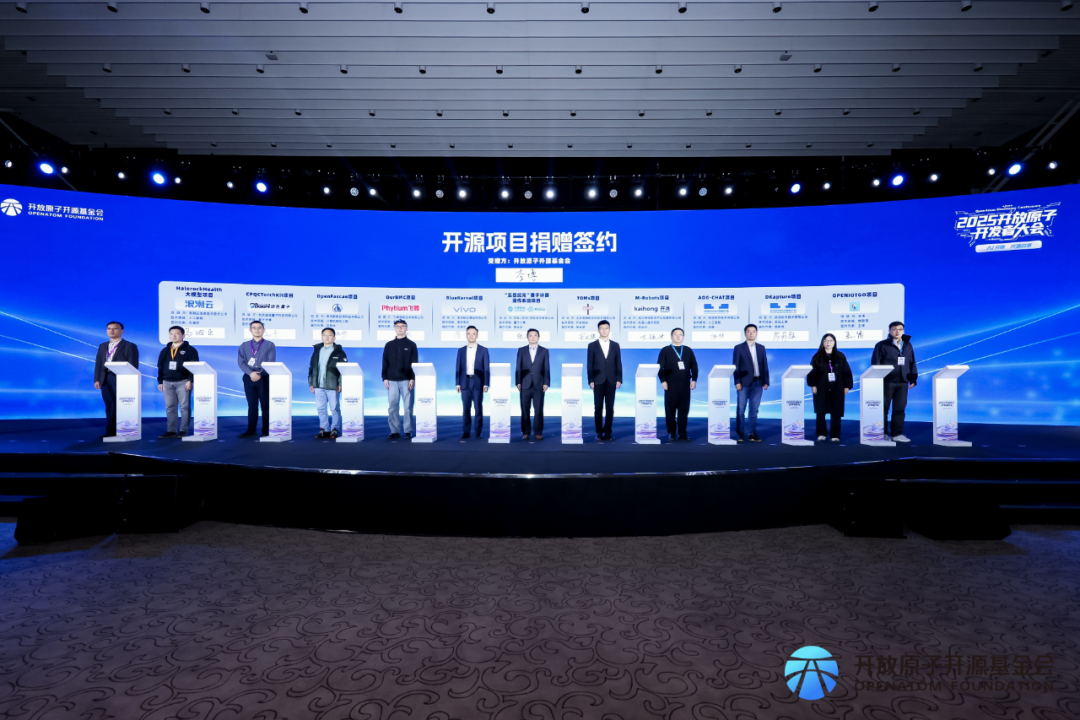
捐赠自研OS内核背后:Rust 先行者 vivo 的「担当」
Xin Lang Cai Jing· 2025-11-29 05:23
Core Viewpoint - The rise of open-source models in the AI era is challenging closed-source companies, leading to increased competition and innovation in AI model development [2][4]. Group 1: Open-Source Models - Meta's Llama has initiated a shift towards open-source models, allowing companies like OpenAI and Anthropic to face competition [2]. - Chinese companies Qwen and DeepSeek have also contributed to the open-source model landscape, achieving download volumes in the tens of millions [2]. - Open-source models reduce the cost burden of expensive token usage for users and developers, facilitating rapid project development and iteration [2]. Group 2: Vivo's BlueKernel - Vivo has developed the BlueKernel, an operating system kernel designed for AI-native hardware, which will be open-sourced in 2025 [4][12]. - The BlueKernel is built entirely using Rust language, enhancing security, performance, and stability [4][7]. - The kernel's design addresses the specific needs of AI hardware, focusing on high security, low resource consumption, and compatibility with various hardware architectures [9][11]. Group 3: Security and Efficiency - BlueKernel ensures memory safety through Rust's ownership system, significantly reducing the risk of memory-related vulnerabilities [11][8]. - The kernel's minimal memory footprint is only 13KB, allowing AI models to run efficiently on resource-constrained devices [11][12]. - BlueKernel supports multiple chip architectures, including RISC-V and ARM, making it versatile for various hardware platforms [12][11]. Group 4: Ecosystem Opportunities - Vivo's decision to open-source BlueKernel is expected to foster innovation among hardware manufacturers, system developers, and the open-source community [13][15]. - The gradual migration strategy allows developers to use both Rust and existing C language drivers, lowering the entry barrier for hardware adaptation [15][17]. - Vivo is actively promoting the Rust ecosystem through initiatives like the "Blue River Operating System Innovation Competition," enhancing industry engagement and development [17][13].
一行 Rust 代码,全球一半流量瘫痪!Cloudflare 用六年最惨宕机,给所有技术人上了一课
程序员的那些事· 2025-11-19 11:30
Core Viewpoint - Cloudflare experienced a significant outage on November 18, 2025, lasting approximately five and a half hours, affecting numerous popular websites and AI services, including OpenAI's ChatGPT and Shopify [2][3]. Group 1: Incident Overview - The outage began around 5:20 AM ET, triggered by a mysterious spike in traffic, which Cloudflare identified about an hour and a half later [2][4]. - The incident not only impacted CDN services but also affected Cloudflare's application services, including its zero trust network access tools [3][4]. - By 8:09 AM ET, Cloudflare acknowledged the issue and began implementing fixes, with full service restoration completed by 11:44 AM ET [4][10]. Group 2: Root Cause Analysis - Experts indicated that the outage was not due to a single point of failure but rather a combination of low-probability events, including a database user permission change that led to duplicate data in SQL queries [5][10]. - A significant factor was a malfunction in the bot management system, which was exacerbated by a configuration change that caused a spike in the size of a feature file, leading to software failures across multiple services [10][11]. - The underlying issue was traced back to a change in ClickHouse query behavior, which resulted in the generation of a feature file with excessive entries, ultimately causing HTTP 5xx errors for dependent services [11][12]. Group 3: Impact and Response - The outage was described as Cloudflare's most severe incident since 2019, with the company's stock price dropping approximately 3% during the event [13][14]. - Cloudflare acknowledged the gravity of the situation, emphasizing the need for improved internal checks and emergency shutdown mechanisms to prevent future occurrences [14]. - The incident raised concerns about the internet's reliance on single service providers, highlighting vulnerabilities in the infrastructure [15].
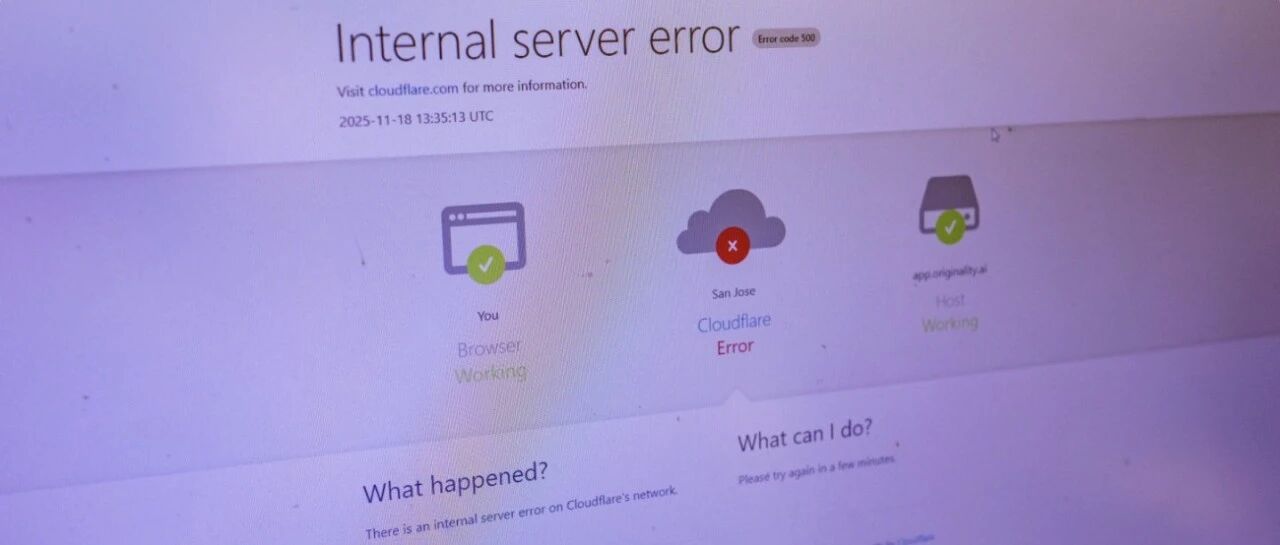
Rust 闯大祸了!重写 53 天后 Cloudflare 搞出六年来最大失误,ChatGPT、Claude 集体失联
AI前线· 2025-11-19 07:00
Core Points - Cloudflare experienced a significant outage lasting approximately five and a half hours, affecting numerous popular websites and AI services, including OpenAI's ChatGPT and Shopify [2][3] - The outage was triggered by a mysterious spike in traffic, which led to errors and increased latency across Cloudflare's services [2][3] - The root cause of the outage was identified as a malfunction in Cloudflare's bot management system, which was exacerbated by a configuration change that resulted in an unexpected increase in the size of a feature file [11][12] Summary by Sections Outage Details - The outage began around 5:20 AM ET on November 18, with Cloudflare first detecting abnormal traffic [2] - By 8:09 AM ET, Cloudflare acknowledged the issue and began implementing fixes, but the recovery process faced challenges [4] - The service disruption was fully resolved by 11:44 AM ET [4] Impact on Services - The outage affected a wide range of services, including X, Spotify, and Truth Social, with DownDetector reporting issues on its own platform [3] - Cloudflare's WARP VPN service and Cloudflare Access tools were also impacted during the incident [3] Technical Insights - The outage was linked to a specific line of Rust code that failed, leading to a significant portion of global internet traffic being disrupted [6][8] - A change in the database system's permissions led to the generation of a feature file that exceeded expected limits, causing the bot management module to fail [11][12] Company Response - Cloudflare admitted that this was its most severe outage since 2019, acknowledging the critical nature of its services [15] - The company outlined steps to strengthen its systems to prevent similar incidents in the future, including enhanced validation of internal configuration files and the addition of global emergency shut-off switches [16] Market Reaction - Following the outage, Cloudflare's stock price dropped by approximately 3% [14]


中国自研操作系统获全球顶会最佳论文 Rust浪潮中实现“架构卡位”
Huan Qiu Wang· 2025-10-31 09:32
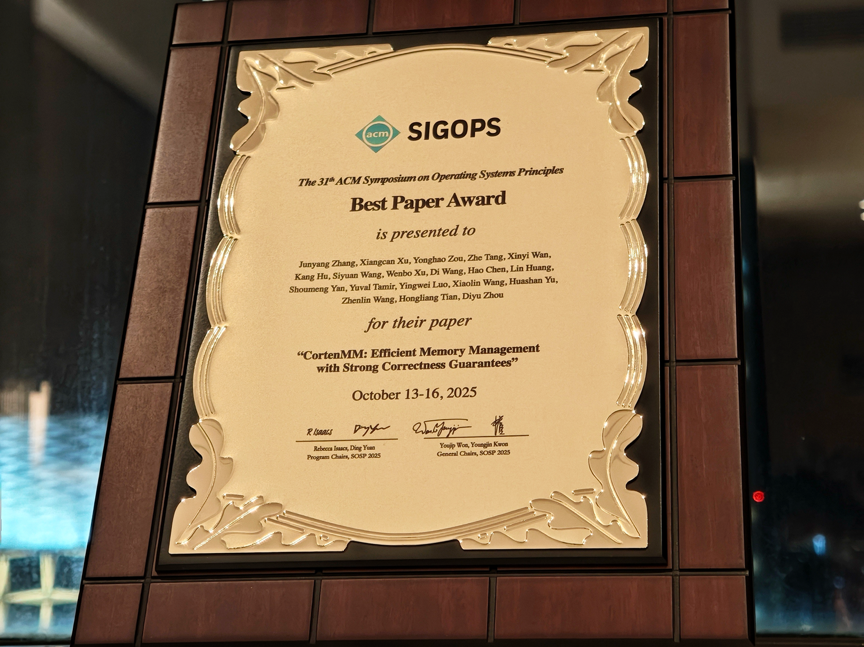
Core Insights - The Chinese team behind the open-source operating system "Asterinas" won the Best Paper Award at the prestigious SOSP conference, marking a significant achievement in the history of Chinese contributions to the field [1][3] - The award-winning paper focuses on memory management, a critical challenge in operating systems, and proposes a novel architecture called "CortenMM" that significantly improves performance and security [4][5] - The "Frame-kernel" architecture introduced by Asterinas aims to reconcile the long-standing trade-off between performance and security in operating systems [6][8] Technical Innovations - CortenMM eliminates redundant software layers, resulting in performance improvements of up to 26 times compared to Linux in real-world applications [5] - The "Frame-kernel" architecture divides the operating system into a privileged "OS framework" and unprivileged "OS services," leveraging Rust for enhanced memory safety [8][10] - This architecture reduces the amount of critical code, enhancing overall system security, with only about 30% of the code being critical compared to traditional operating systems [8][10] Market Position and Future Goals - Asterinas aims to position itself as a superior alternative to Linux, with a fully open-source approach and a vision to create a better operating system for both domestic and international markets [10][11] - The team has set a roadmap with two main phases: the first phase focuses on cloud deployment by 2027, targeting a "million-core" computing capacity, while the second phase aims to expand to edge devices by 2030, covering "million devices" [12][13] - The project benefits from collaboration with academic institutions and support from Ant Group, fostering a unique "industry-academia-research" model [11][13]
vivo自研蓝河操作系统内核开源!Rust开发新机遇来了
量子位· 2025-07-24 07:28
Core Viewpoint - Vivo has announced the open-source release of its self-developed Blue River operating system kernel, which is the first open-source Rust kernel suitable for embedded and mobile devices, addressing long-standing issues of memory safety and maintenance costs associated with traditional C language [1][2][3]. Group 1: Features of Blue River Operating System - The Blue River operating system is entirely written in Rust, providing inherent advantages in memory safety, efficiency, and cross-platform compatibility [2][3][9]. - The kernel is lightweight, requiring minimal hardware resources, with a minimum kernel heap memory usage of only 13KB, making it suitable for devices with limited memory [22][24]. - It supports multiple architectures, including ARM and RISC-V, facilitating easier porting for developers [26][28][30]. Group 2: Security Advantages - Rust's ownership and borrowing mechanisms ensure memory safety by preventing common vulnerabilities such as buffer overflows and null pointer dereferences [16][18]. - The kernel's design incorporates various security strategies, including privilege separation and module isolation, to provide comprehensive protection [18][20]. Group 3: Industry Impact and Ecosystem Development - The open-sourcing of the Blue River kernel aims to promote the Rust ecosystem in China, addressing the need for a robust development community around Rust [45][47]. - Vivo plans to collaborate with industry partners and educational institutions to host the Blue River operating system innovation competition, fostering learning and innovation [4][46]. - The move is seen as a significant step towards achieving autonomy in operating system development, reducing reliance on existing Linux kernels [42][45]. Group 4: Future Opportunities - The open-source nature of the Blue River kernel allows for broader community involvement, enabling developers to innovate based on the kernel [46][50]. - The kernel is positioned to meet the increasing demands of AI applications, providing a reliable foundation for future developments in AI-native terminals [47][51].