CDS(信用违约掉期)

Search documents
金融史最疯豪赌!握1.2万亿AIG差点毁全球经济,美联储850亿救市
Sou Hu Cai Jing· 2025-10-10 09:58
Core Viewpoint - The collapse of AIG in 2008 was a significant event that triggered global financial panic, highlighting the interconnectedness of major financial institutions and the potential systemic risks they pose [1][3][10]. Group 1: AIG's Background and Significance - AIG was once considered a "healthy benchmark" in the financial industry, with operations in 140 countries and total assets of $1.2 trillion, making it one of the largest insurance companies globally [3][5][16]. - The company had a 3A credit rating, which allowed it to secure favorable lending terms and attract business without actively seeking it [23][25]. - AIG's involvement in the insurance of over 80 million life insurance policies, with a total face value of $1.9 trillion, positioned it as a critical player in the financial system [23][31]. Group 2: The Crisis Trigger - The financial crisis began on September 15, 2008, when Lehman Brothers declared bankruptcy, leading to a 60% drop in AIG's stock price and a downgrade in its financial rating [10][12]. - AIG faced a liquidity crisis, prompting it to seek a $30 billion emergency loan from the New York Federal Reserve [12][16]. - The U.S. government, under President Bush, initially resisted the idea of bailing out Wall Street firms, reflecting public sentiment against using taxpayer money to rescue failing corporations [12][14]. Group 3: The Decision to Rescue AIG - Timothy Geithner, then President of the New York Federal Reserve, argued for a government bailout, emphasizing AIG's systemic importance due to its extensive connections with global financial institutions [20][21]. - AIG's risk exposure was estimated at $3 trillion, significantly higher than that of Lehman Brothers, indicating the potential for widespread financial fallout if AIG failed [21][31]. - Ultimately, the Federal Reserve approved an $85 billion bailout, which included a significant restructuring of AIG's management and a substantial equity stake for the government [39][42]. Group 4: Aftermath and Lessons Learned - The bailout successfully prevented a broader financial collapse, reinforcing the idea that the government must sometimes intervene to maintain market confidence [46][51]. - The U.S. government later profited from the bailout, recouping $22.7 billion four years after the initial investment [53]. - The AIG crisis serves as a cautionary tale about the risks of financial products like credit default swaps (CDS) and the importance of understanding systemic risk in the financial sector [55][57].

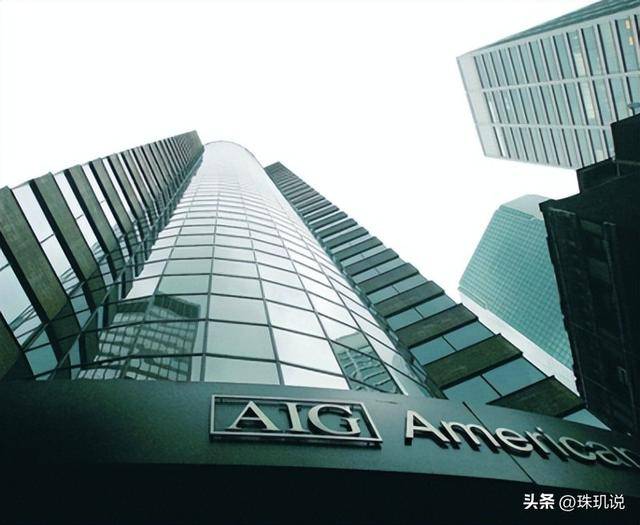
产业链大逃亡?6.6 万亿豪赌引爆美金融,世界经济差点被拖垮
Sou Hu Cai Jing· 2025-09-30 10:34
Core Viewpoint - The article discusses the rapid collapse of American International Group (AIG), once considered one of the safest companies globally, highlighting its critical role in the financial system and the challenges faced by the Federal Reserve in deciding whether to rescue it during the 2008 financial crisis [1][3][5]. Group 1: AIG's Historical Context - AIG was recognized as the largest insurance company in the U.S., with total assets of $1.2 trillion, surpassing 60% of China's foreign exchange reserves at the time [1]. - Before the crisis, AIG was a symbol of financial stability, even sponsoring Manchester United during its peak [1]. Group 2: The Crisis Unfolds - The crisis began on September 15, 2008, when Lehman Brothers filed for bankruptcy, marking the start of the financial tsunami, with AIG's risks brewing beneath the surface [3]. - On the same day, AIG's stock plummeted by 60%, leading to a liquidity crisis and a request for a $30 billion emergency loan from the New York Federal Reserve [3][5]. Group 3: AIG's Systemic Importance - AIG employed 115,000 people and served as a guarantor for 401K social security plans, affecting the pensions of over 106 million Americans [5]. - The potential bankruptcy of AIG posed a catastrophic threat to the entire financial system due to its extensive interconnections with global financial institutions, with risk exposure nearing $3 trillion [5]. Group 4: Management Decisions and Failures - AIG's management expanded into unfamiliar derivative markets through its financial products subsidiary, AIGFP, which led to significant losses during the subprime mortgage crisis [6][9]. - The company had underwritten over 80 million life insurance policies with a face value of $1.9 trillion, but mismanagement and overconfidence in risk led to its downfall [7][9]. Group 5: Government Response - Timothy Geithner, then President of the New York Federal Reserve, played a crucial role in coordinating the rescue efforts for AIG, advocating for a government bailout due to its systemic importance [5][9]. - After assessing the situation, Geithner proposed a loan of $85 billion to AIG, which was initially met with skepticism but ultimately agreed upon by key government officials [9].