CDO(担保债务凭证)

Search documents
人才竞争:金融范式变革主旋律
Xin Lang Cai Jing· 2025-12-31 16:58
Core Insights - The global financial landscape is characterized by a complex interplay of anxiety and relaxation, with ongoing debates surrounding digital assets and concerns over AI investment bubbles as the world approaches 2026 [1] - Talent competition is identified as the central theme in the evolving global dynamics, driven by the emergence of a multipolar world and the need for adaptive talent strategies [2][3] Talent Competition - The concept of a "multipolar era" signifies a transformation in global financial paradigms, necessitating a reconfiguration of talent competition strategies to address intertwined crises and economic shifts [3] - The success of talent competition directly influences a nation's voice in global financial negotiations, emphasizing the importance of core talent teams in driving national competitiveness [4][5] Financial Philosophies - The debate between "planting" versus "harvesting" philosophies in finance highlights differing value systems, with a focus on nurturing long-term growth rather than short-term gains [6][8] - Historical examples of financial figures embodying the "planting" philosophy illustrate a commitment to societal welfare over personal gain, contrasting sharply with the "harvesting" mentality that has led to financial crises [6][8] Financial Talent Development - The need for a diverse and adaptable financial talent matrix is critical as the industry faces increasing competition and evolving challenges [10] - The "Hamburger structure" model proposes a multi-layered approach to developing high-end financial talent, addressing the integration of traditional and emerging financial paradigms [11] Core Competencies - Five categories of financial talent are identified, each with specific knowledge requirements and current challenges, including traditional finance, internet finance, blockchain finance, AI finance, and quantum finance [11][12] - The integration of these competencies is essential for fostering a resilient financial ecosystem capable of navigating future challenges [13] Governance and Risk Management - The development of a comprehensive governance framework is necessary to address new types of financial risks emerging from the integration of online and offline financial systems [15][16] - The cultivation of talent capable of implementing effective risk management strategies is crucial for maintaining stability in the evolving financial landscape [16]
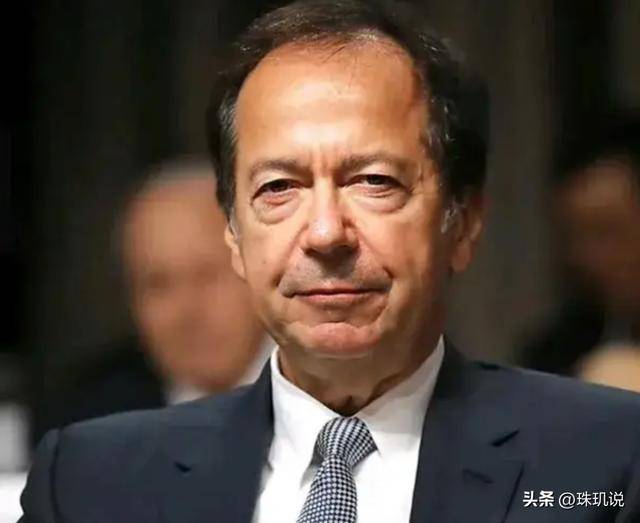
拒当美财长、1亿变150亿!被称华尔街空神,如今又押注黄金?
Sou Hu Cai Jing· 2025-11-08 06:14
Core Viewpoint - John Paulson, a legendary figure on Wall Street, is known for his investment strategies, particularly his recent focus on gold, predicting that gold prices could reach $5,000 per ounce by 2028 due to economic downturns and geopolitical conflicts [5][7]. Group 1: Investment Philosophy - Paulson's investment approach emphasizes independent thinking and thorough research, avoiding the herd mentality prevalent in the financial industry [23]. - His past success during the 2008 financial crisis was attributed to his ability to identify market bubbles and act decisively based on extensive analysis rather than speculation [21][23]. Group 2: Recent Developments - After declining an offer to become U.S. Treasury Secretary under Trump, Paulson shifted his focus back to the gold market, aggressively purchasing shares in gold mining companies starting in 2023 [4][5]. - His prediction of a significant rise in gold prices is based on observable trends in the global economy, including signs of recession and ongoing geopolitical tensions [7][8]. Group 3: Historical Context - Paulson gained fame during the 2008 subprime mortgage crisis by shorting the housing market, which he identified as being in a bubble after a personal experience with real estate [8][10]. - His strategy involved extensive research, including analyzing subprime mortgage data and understanding the risks associated with various mortgage-backed securities [12][19]. Group 4: Market Reactions - Despite skepticism from others regarding his gold investment strategy, Paulson's track record suggests that his insights are often grounded in solid analysis, making him a figure to watch in uncertain markets [23].

产业链大逃亡?6.6 万亿豪赌引爆美金融,世界经济差点被拖垮
Sou Hu Cai Jing· 2025-09-30 10:34
Core Viewpoint - The article discusses the rapid collapse of American International Group (AIG), once considered one of the safest companies globally, highlighting its critical role in the financial system and the challenges faced by the Federal Reserve in deciding whether to rescue it during the 2008 financial crisis [1][3][5]. Group 1: AIG's Historical Context - AIG was recognized as the largest insurance company in the U.S., with total assets of $1.2 trillion, surpassing 60% of China's foreign exchange reserves at the time [1]. - Before the crisis, AIG was a symbol of financial stability, even sponsoring Manchester United during its peak [1]. Group 2: The Crisis Unfolds - The crisis began on September 15, 2008, when Lehman Brothers filed for bankruptcy, marking the start of the financial tsunami, with AIG's risks brewing beneath the surface [3]. - On the same day, AIG's stock plummeted by 60%, leading to a liquidity crisis and a request for a $30 billion emergency loan from the New York Federal Reserve [3][5]. Group 3: AIG's Systemic Importance - AIG employed 115,000 people and served as a guarantor for 401K social security plans, affecting the pensions of over 106 million Americans [5]. - The potential bankruptcy of AIG posed a catastrophic threat to the entire financial system due to its extensive interconnections with global financial institutions, with risk exposure nearing $3 trillion [5]. Group 4: Management Decisions and Failures - AIG's management expanded into unfamiliar derivative markets through its financial products subsidiary, AIGFP, which led to significant losses during the subprime mortgage crisis [6][9]. - The company had underwritten over 80 million life insurance policies with a face value of $1.9 trillion, but mismanagement and overconfidence in risk led to its downfall [7][9]. Group 5: Government Response - Timothy Geithner, then President of the New York Federal Reserve, played a crucial role in coordinating the rescue efforts for AIG, advocating for a government bailout due to its systemic importance [5][9]. - After assessing the situation, Geithner proposed a loan of $85 billion to AIG, which was initially met with skepticism but ultimately agreed upon by key government officials [9].