Coowa WAM 2.0通用世界模型

Search documents
AI下一个超级风口?世界模型融资盛宴正酣,资本押注万亿级物理AI赛道
证券时报· 2026-04-01 00:17
Core Viewpoint - The rise of "world models" is seen as a key to overcoming the limitations of current AI, enabling a deeper understanding of the physical world and paving the way for Artificial General Intelligence (AGI) [1][3][6]. Group 1: World Models and AGI - World models allow AI to understand the laws of the physical world, facilitating reasoning and interaction, which is essential for achieving AGI [1][3]. - The development of world models is still in its early stages, and the first company to leverage physical interaction data effectively will gain a competitive edge [1][3][6]. Group 2: Industry Trends and Investments - OpenAI's recent shift to focus on world model research indicates a strategic pivot in the industry towards understanding reality rather than generating it [3][6]. - Significant investments have been made in world model companies, with over $10 billion raised by notable firms this year alone, reflecting a growing consensus that the next battleground for AI lies in the physical world [6][7]. Group 3: Challenges and Opportunities - The current challenge for world models is the scarcity of high-quality physical world data, which limits their widespread adoption [11][13]. - Companies are exploring the integration of world models with existing AI frameworks to enhance capabilities, particularly in complex environments [12][13]. Group 4: Future Outlook - The year 2026 is anticipated to be pivotal for world models, potentially establishing a foundation for AGI and physical AI [11][12]. - The evolution of world models is expected to complement existing models, with a focus on physical intuition and decision-making, while other models handle semantic understanding [13].


全球50城实战 酷哇科技抢跑Physical AI下半场
Xin Lang Cai Jing· 2026-02-15 02:48
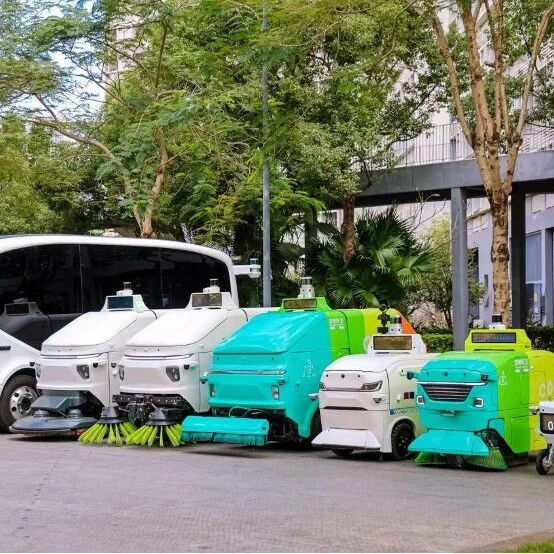
Core Insights - The article highlights the emergence of Physical AI as a new investment trend, with significant capital inflow into related startups, particularly in the U.S. where venture capital investment exceeded $16 billion in the first three quarters of 2025, marking a nearly 280% year-on-year increase [2] - Coowa Technology has established itself as a leader in the Physical AI sector, achieving operational profitability and securing over 5 billion yuan in orders, while focusing on practical applications in urban environments [4][6] - The company aims to expand its market presence both domestically and internationally, utilizing a "city-opening" strategy to penetrate developed regions such as Singapore and the Middle East [14] Company Overview - Coowa Technology was founded in 2015 with a vision to create "general AI robots," leveraging advancements in AI technology and the digital transformation of cities to enter the Physical AI market [4] - The leadership team comprises experts in AI research, business operations, and smart manufacturing, which strengthens the company's ability to deploy its technology in complex urban scenarios [4] Market Strategy - Coowa's robots are primarily targeted at three high-frequency application areas: smart city management, smart property services, and smart mobility, with smart city management being the largest segment [6] - The company prioritizes domestic demand, with over 90% of its orders currently from the Chinese market, while gradually expanding overseas [6][14] Business Model - Coowa employs a Mobility as a Service (MaaS) model, allowing clients to pay for results rather than hardware, which has led to a 20% reduction in costs and increased efficiency in projects lasting over a year [7][8] - The company has built a diverse B2B ecosystem, serving major clients including publicly listed companies and state-owned enterprises, while maintaining a lean sales team that has achieved a 17-fold growth in operational scale [8] Technological Advancements - The core technology of Coowa is the Coowa WAM 2.0 general world model, which enhances the robots' capabilities in real-world applications by utilizing vast amounts of real data for training [10] - Coowa focuses on both mobility and operational capabilities, aiming to develop robots that can navigate complex urban environments and perform intricate tasks [11] Safety and Adaptability - Coowa addresses safety challenges in urban settings by employing a combination of extensive data and fallback measures to ensure reliable operation [13] - The company designs its products with high adaptability to different global markets, considering local conditions such as traffic systems and climate [14]
手握50亿订单,2026年冲刺批量化交付!这家企业跑通具身智能落地“最后一公里”
机器人大讲堂· 2026-02-06 09:07
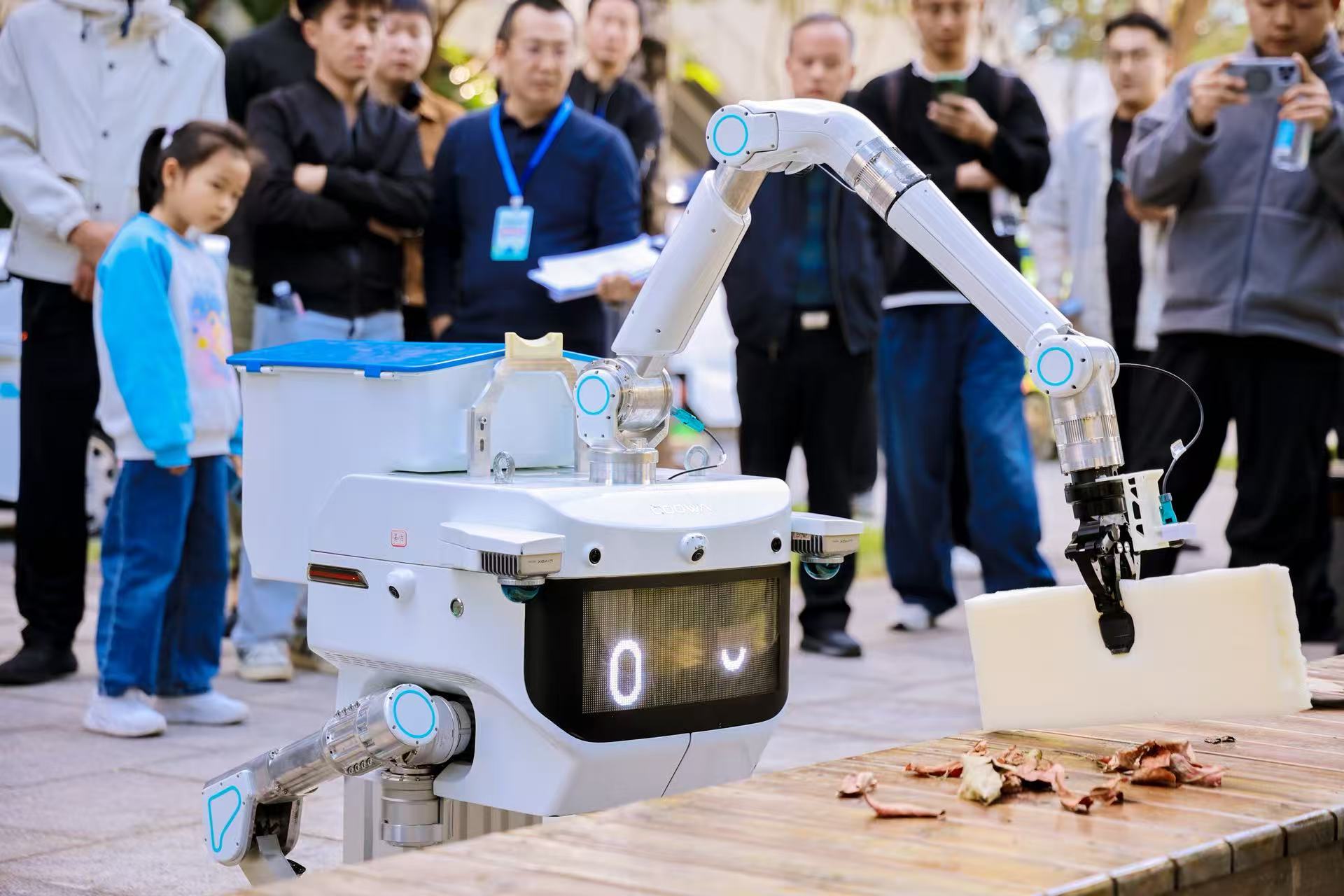
Core Insights - The article emphasizes that 2026 is seen as the "commercialization year" for embodied intelligence, with the industry at a critical stage of "verification and climbing" [1] - Coowa Technology has successfully transitioned from a "technical model" to "scale profitability," establishing a complete closed loop in the field of L4 autonomous driving and general robotics [1][3] Group 1: Business Goals and Market Position - Coowa Technology aims for a significant growth target of maintaining double-digit high-quality growth, supported by over 5 billion in orders [4] - The company focuses on three core business pillars: smart city management, smart property services, and smart mobility, with "smart city management" being the cornerstone of its operations [4][5] - Coowa's confidence in its global ambitions is bolstered by its substantial order reserve and the strong push from policies favoring intelligent devices [4][5] Group 2: Production and Supply Chain Strategy - To meet the large order demand, Coowa has adopted a "self-built factory + full-stack self-research" approach, ensuring control over assembly and key components [6] - The modular production design allows for rapid replication and expansion, enabling Coowa to respond to market demands effectively [6] - Coowa's strategy includes self-research for critical components while outsourcing mature parts, optimizing cost and time efficiency [6] Group 3: Competitive Edge and Technology - The core of competition in urban general AI robotics lies in the "brain" or AI capabilities rather than hardware, as hardware differences can be leveled quickly [8] - Coowa's proprietary Coowa WAM 2.0 general world model enhances robots' environmental understanding and decision-making capabilities [10] - The company aims to reduce reliance on traditional laser radar, focusing on visual-based decision-making to overcome limitations in complex environments [12] Group 4: Practical Robotics Development - Coowa's pragmatic approach prioritizes mastering mobility before advancing to complex operations, focusing on navigating unstructured environments [13] - The company is developing "R0" and "D0" series products that incorporate mechanical arms and legs, emphasizing practical applications over humanoid designs [14] - Coowa's operational efficiency is demonstrated by a 17-fold increase in operational scale over five years, while maintaining a core sales team of around 20 people [17] Group 5: Future Strategy and Global Expansion - Coowa's strategy for the next three years includes deepening its "city management" business and expanding its global presence [18] - The company aims to establish the Greater Bay Area as a "lighthouse market" for demonstrating "unmanned city governance," targeting a market size of 4,000-5,000 billion [19] - Coowa plans to leverage its supply chain advantages to penetrate Asian and Middle Eastern markets, addressing urgent labor shortages and high operational costs [20] Group 6: Intelligent Network Development - Coowa is building a vast embodied intelligence data network that integrates various urban services, redefining the concept of "new labor force" in cities [21] - The goal is to create a system that perceives, deduces, and reshapes physical world data, enhancing urban life through AI [22]