DGX SuperPOD超级计算机

Search documents
黄仁勋的朋友圈,多了医药界巨头
Sou Hu Cai Jing· 2025-11-12 08:05
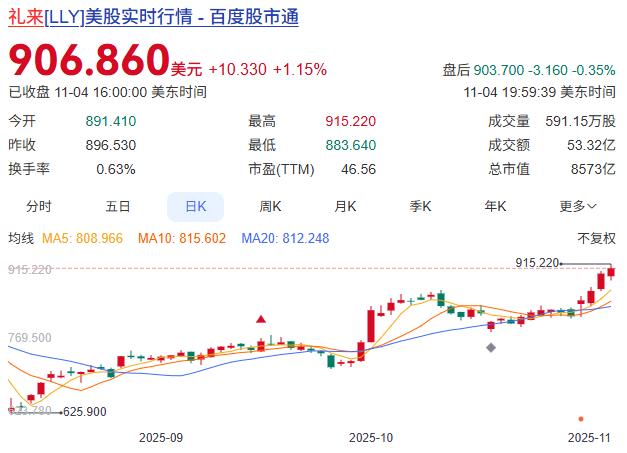
Core Insights - Eli Lilly, the world's highest-valued pharmaceutical company, is making significant strides in AI-driven drug development, partnering with Nvidia and other tech firms to enhance its capabilities in this area [3][5][12] - The global pharmaceutical industry is facing a patent cliff, with approximately $236 billion worth of drugs set to lose patent protection in the next five years, prompting a need for accelerated drug discovery [3][5] Group 1: AI and Computational Power in Pharmaceuticals - Eli Lilly has announced a partnership with Insilico Medicine for AI-driven drug development, with a total investment exceeding $100 million [3] - Nvidia's latest supercomputer, built with over 1,000 B300 GPUs, significantly enhances computational power, reducing drug model training time from weeks to hours [3][6] - The integration of AI and high-performance computing is seen as a potential solution to improve the efficiency of drug development, which traditionally takes 9 to 15 years and costs around $2.6 billion [7][11] Group 2: Industry Dynamics and Challenges - Traditional Chinese pharmaceutical companies primarily focus on generic drugs, limiting their ability to invest in AI and custom chip collaborations [4] - Nvidia's founder, Jensen Huang, emphasizes that digital biology will be a transformative force in life sciences, indicating a shift in the industry landscape [5][11] - Despite the potential for AI to enhance efficiency, the true transformative impact on the pharmaceutical industry remains to be seen, as it may lead to significant market structure changes [11] Group 3: Nvidia's Strategic Positioning - Nvidia has established partnerships with major pharmaceutical companies like Bayer, Roche, and Novartis, reinforcing its position in the industry [12] - The company aims to be a foundational player in the AI era, controlling power scheduling, pricing, and even rule-making within the industry [13] - Nvidia's CUDA programming model serves as a crucial bridge, simplifying the use of GPU technology for developers and enhancing user retention [15][17] Group 4: Market Growth and Future Prospects - The global market for AI solutions in healthcare is projected to grow from $13.7 billion in 2022 to $155.3 billion by 2030 [20] - Nvidia's acquisition of VinBrain, a Vietnamese healthcare startup, highlights its commitment to expanding its influence in the medical AI space [20] - Over 4,000 healthcare companies have joined Nvidia's startup acceleration program, indicating a growing ecosystem around its technology [20]



英伟达进军制药领域,联手礼来以千亿算力打造AI药物研发工厂,制药行业步入AI军备竞赛
3 6 Ke· 2025-11-05 10:52
Core Insights - The collaboration between Nvidia and Eli Lilly aims to establish the world's first dedicated "AI super factory" for the pharmaceutical industry, leveraging advanced computing power to revolutionize drug development throughout its lifecycle [1][4][30] Group 1: Nvidia's Technological Advancements - Nvidia has announced the creation of the DGX SuperPOD supercomputer, built with 1000 B300 GPUs, which enhances computational density by three times compared to traditional supercomputers, significantly reducing model training time from weeks to hours [4] - This supercomputer will be operated by Eli Lilly, providing the necessary computational power for their AI factory to develop, train, and deploy AI models for drug discovery [4][30] Group 2: Eli Lilly's Financial Performance - Eli Lilly reported a third-quarter revenue of $17.6 billion for 2025, a 54% increase year-over-year, with a net profit of $5.58 billion, marking a staggering 475.34% growth [12] - The company’s total revenue for the first nine months of 2025 reached $45.89 billion, a 46% increase compared to the previous year, prompting an upward revision of its full-year revenue forecast to between $63 billion and $63.5 billion [1][12] Group 3: AI Integration in Drug Development - Eli Lilly's AI platform, TuneLab, which includes 18 AI models, will be deployed in the AI factory, enhancing drug discovery efficiency [5] - The AI factory is expected to reduce the early drug discovery cycle by 40% and lower preclinical development costs by 30%, while also enabling the design of novel molecular structures [20][30] Group 4: Industry Context and Competitive Landscape - The collaboration reflects a broader trend in the pharmaceutical industry, where companies are increasingly investing in AI, with many raising their AI R&D budget to over 20% of total R&D expenses [27] - The partnership signifies a shift from traditional drug development methods to a data-driven, intelligent assembly line approach, which may require substantial capital investment [30] Group 5: Long-term Strategic Considerations - Eli Lilly's focus on AI drug development is a strategic response to short-term growth pressures and long-term survival challenges, particularly in light of the impending patent cliff for its key products [13][14] - The company is racing against time to develop new blockbuster drugs before the expiration of key patents, which could significantly impact its revenue base [16][17]