
DHA蛋

Search documents
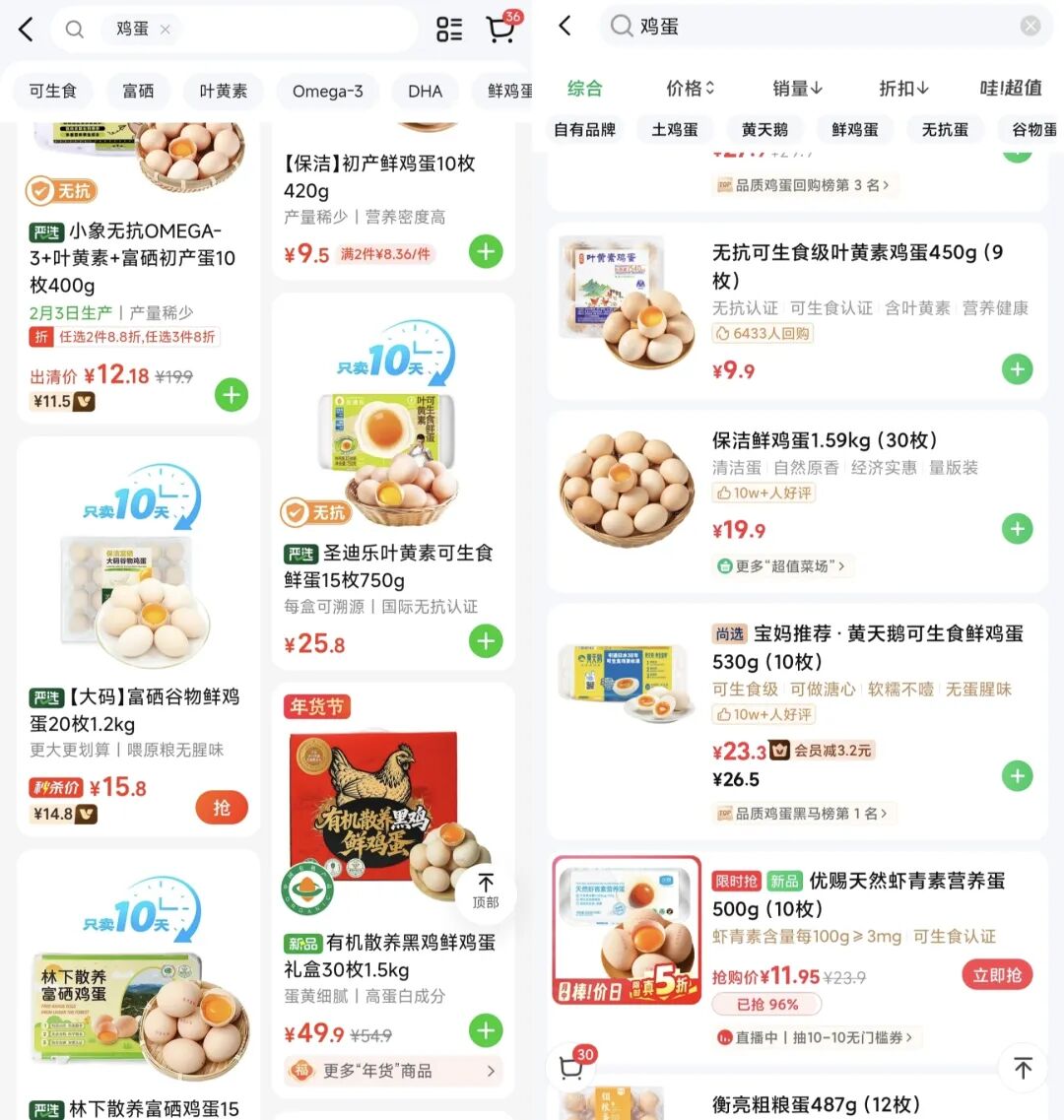
鸡蛋刺客?富硒、无抗……多几个字就贵几倍
3 6 Ke· 2026-02-12 02:50
Core Insights - The article discusses the increasing premiumization of eggs in a cautious consumer environment, where eggs are no longer just categorized by size or origin but are now labeled with various functional tags that significantly affect their pricing [1][2]. Group 1: Functional Origins - The differences in functional eggs primarily stem from what the chickens are fed and how they are raised, rather than changes in the chicken breeds themselves [3][4]. - Popular functions focus on nutritional enhancement, such as selenium-enriched, DHA, and lutein eggs, which are achieved through specific feed ingredients [4][6]. - The production of functional eggs involves complex supply chains, with varying levels of cost and technical barriers associated with each function [8][12]. Group 2: Cost Implications - The cost of functional eggs begins with feed formulation, which is a significant determinant of pricing, especially for enriched eggs [9][11]. - For selenium-enriched eggs, the additional cost ranges from a few cents to a dime per egg, while DHA-enriched eggs can add up to several dimes or close to a yuan [11]. - The production of antibiotic-free and ready-to-eat eggs requires higher standards in farming and processing, leading to increased operational costs throughout the production cycle [12][14]. Group 3: Consumer Behavior - The rise of functional eggs is linked to a growing health narrative among consumers, who prioritize safety and traceability in their food choices [15][16]. - Eggs are positioned as a staple food with low substitution costs, making it easier for consumers to accept slight price increases for perceived health benefits [18][19]. - The demand for functional eggs does not necessarily stem from increased purchase frequency but rather from consumers opting for higher-priced options within existing purchasing habits [19][21]. Group 4: Industry Dynamics - Leading poultry companies view functional eggs not merely as a response to market demand but as an extension of their existing production capabilities [21][23]. - In the restaurant sector, the use of eggs differs significantly from household consumption, with a focus on stability and risk management rather than long-term health benefits [24]. - The regulatory landscape surrounding functional eggs is evolving, with a need for clearer standards to differentiate between various claims and ensure consumer safety [26][29].

每周质量报告丨高价“功能蛋”蛋白质含量不如普通蛋?专家:按需选择
Yang Shi Xin Wen· 2025-12-07 08:33
Core Viewpoint - The Shanghai Consumer Protection Committee conducted a comparative study on 30 types of eggs, revealing that there is no significant nutritional difference among eggs of varying price points, despite the marketing claims of enhanced nutritional value for higher-priced eggs [4][8][65]. Group 1: Price Comparison - The price of the sampled eggs ranged from 3.7 yuan to 50.2 yuan per jin, with a price difference exceeding 13.5 times [6]. - The samples were categorized into three price groups: low (3.7-10 yuan per jin), medium (10-25 yuan per jin), and high (25-50.2 yuan per jin) [6]. Group 2: Nutritional Analysis - The comparative study found no significant differences in key nutritional indicators (protein, fat, and energy) across the three price groups [8]. - The average protein content for the high-priced group was 13.0 grams per 100 grams, while the low-priced group had an average of 13.1 grams per 100 grams, indicating that lower-priced eggs may have slightly higher protein content [10]. Group 3: Marketing and Consumer Perception - Many eggs on the market are marketed with terms like "nutritionally enhanced," leading to consumer confusion and potentially misleading perceptions about their nutritional value [17][29]. - The study highlighted that some eggs marketed as having specific nutritional benefits, such as DHA and Omega-3, often did not meet their claimed nutritional content, with some samples showing only 29.4% to 66.6% of the claimed values [39][41]. Group 4: Safety and Consumption Guidelines - The concept of "raw consumption" eggs is based on pasteurization, but there is no national standard for such eggs in China, and they may still carry safety risks [54][60]. - The Shanghai Consumer Protection Committee emphasized that eggs are primary agricultural products and should not be viewed as substitutes for nutritional supplements or health products [31][51].

营养定制鸡蛋成鸡蛋界新宠 是大补丸还是智商税?
Bei Jing Qing Nian Bao· 2025-05-13 00:02
Core Viewpoint - The article discusses the rise of specialized eggs enriched with various nutrients such as folic acid, DHA, selenium, and astaxanthin, questioning whether these products are genuine health benefits or merely marketing gimmicks. Group 1: Nutritional Customization of Eggs - Eggs are ideal carriers of nutrients, and their quality is influenced by the health and nutrition of the hens. Customizing eggs through specific feed can significantly enhance or reduce certain nutritional components compared to regular eggs [1] - The development of branded eggs that provide functional nutrients to improve health has become a new trend in the industry [1] Group 2: Folic Acid-Enriched Eggs - Folic acid, essential for preventing various health issues, is significantly higher in folic acid-enriched eggs, with levels reaching 120 micrograms per 100 grams, which is 4 to 6 times that of regular eggs [2] - Despite the higher folic acid content, natural food sources are abundant, and cooking can lead to a loss of folic acid, making the purchase of specialized eggs unnecessary [2] Group 3: Omega-3 Fatty Acid-Enriched Eggs - Omega-3 fatty acids, including ALA, EPA, and DHA, are crucial for health, with enriched eggs containing at least 300 milligrams of omega-3 fatty acids per 100 grams [3] - A balanced diet with sufficient plant oils and seafood can meet omega-3 needs without relying solely on enriched eggs [3] Group 4: Selenium-Enriched Eggs - Selenium is vital for health, and selenium-enriched eggs should contain 20% more selenium than regular eggs, with recommended levels between 20 to 50 micrograms per 100 grams [4][5] - Diverse food sources, including seafood and organ meats, can provide adequate selenium, reducing the need for specialized eggs [5] Group 5: Astaxanthin-Enriched Eggs - Astaxanthin, a powerful antioxidant found in marine life, can enhance immune function and protect against UV damage. Eggs can be enriched with astaxanthin through specific feed [6] - Research indicates that astaxanthin content in enriched eggs is 58.34 micrograms per gram, but consuming natural sources like shrimp may be more beneficial [6] Group 6: General Nutritional Value of Eggs - Eggs contain over 40 essential nutrients, providing a cost-effective source of high-quality protein and various vitamins and minerals [7] - A balanced diet with diverse food sources is emphasized as the key to health, rather than solely focusing on "functional eggs" [7] - Research shows that the average daily egg consumption among adults in China is 38.6 grams, with some consuming up to 86.9 grams [7]