
禽畜养殖

Search documents
鸡蛋月报:补栏回暖,鸡蛋仍将磨底-20260302
Jian Xin Qi Huo· 2026-03-02 10:32
1. Report Industry Investment Rating - There is no information provided regarding the report's industry investment rating. 2. Core Viewpoints of the Report - Supply side: The current inventory of laying hens has declined from last year's high but has recently shown fluctuations. As of the end of February, the monthly inventory of laying hens in the country was approximately 1.35 billion, with a month - on - month increase of 0.6%, ending four consecutive months of decline and a year - on - year increase of 3.4%. In general, before the second quarter of this year, the inventory is expected to decline slowly [6][20][36]. - Demand side: In February, egg sales showed a seasonal decline and were weaker year - on - year. The overall market demand is currently weak. Vegetable and pig prices are at low levels, which have a substitution effect on egg demand. After the Spring Festival, the focus is on inventory digestion, and overall demand is not optimistic [6][31][36]. - Outlook: Spot prices are expected to continue to fluctuate narrowly at low levels. If inventory is digested quickly, a small rebound may occur in mid - March. For futures, the near - month contracts' performance depends on the spot price rebound. The 06 contract during the rainy season is recommended to be shorted on rallies. The far - month peak - season contracts are suitable for range trading and low - buying in general [6][9][36]. 3. Summary by Relevant Catalogs 3.1 Market Price - Spot: In January, spot prices were strong. In February, they entered a seasonal decline after the Spring Festival stocking ended. As of February 27, the average price in production areas was 2.88 yuan/jin, and in main sales areas was 3.14 yuan/jin. Spot prices are expected to fluctuate narrowly at low levels and may rebound in mid - March if inventory is digested quickly [8]. - Futures: The main contract switched to 04. Near - month contracts showed a trend of first weakening and then strengthening. The far - month contracts had a weaker rebound. Near - month contracts' performance is closely related to the spot price rebound. The 06 contract is recommended to be shorted on rallies, and far - month peak - season contracts are for range trading and low - buying [9]. 3.2 Supply Side 3.2.1淘汰鸡 - Price: The daily average price of Hailan Brown culling chickens in February was 4.76 yuan/jin. The price rebounded in January - February due to reduced culling willingness and Spring Festival stocking demand. After the festival, the price rebound may be limited [10][15]. - Quantity: As of February 26, the culling volume in February showed a seasonal decline, and the culling age averaged 501 days, indicating a tendency for farmers to delay culling. In March, culling willingness may remain stable if egg prices do not decline further [15][19]. 3.2.2存栏补栏 - Inventory: As of the end of February, the inventory of laying hens was approximately 1.35 billion, ending a four - month decline. Before the second quarter of this year, the inventory is expected to decline slowly [20]. - Replenishment: In February, the monthly output of laying hen chicks in sample enterprises was about 43.3 million. The replenishment volume in January - February was significantly higher than that in the second half of last year. The inventory of laying hens in March is likely to continue to decline steadily [21]. - Laying rate: In late February, the laying rate was about 92.71%, following the seasonal pattern [23]. 3.2.3养殖利润 - In February, the breeding profit was in a seasonal decline. As of February 26, the average weekly profit per jin of fresh eggs was about - 0.35 yuan/jin, at a relatively low level in the past seven years. The negative profit era of egg chicken breeding is expected to continue for some time [29]. 3.3 Demand Side - Sales volume: As of February 26, the weekly egg sales volume in representative sales areas in the previous four weeks was about 4707 tons. Sales in February showed a seasonal decline and were weaker year - on - year, indicating weak overall market demand [31]. - Inventory: As of February 26, the inventory in the fresh egg circulation link was about 1.26 days, and in the production link was about 1.36 days. After the Spring Festival, inventory needs to be digested, and it is expected to return to normal levels in early March [31]. - Substitute prices: Pig prices have fallen to a very low historical level, having an obvious drag effect. Vegetable prices are at a medium - low level compared with the same period in previous years and are unlikely to have a positive impact on egg prices [31][35]. 3.4后期展望及策略 - Supply and demand: The supply side inventory may decline slowly before the second quarter, and the demand side is not optimistic in the short term [36]. - Strategy: - For farmers and spot traders: Spot prices will stabilize in March, with a small rebound opportunity later [38]. - For futures speculators: Near - month contracts follow spot price movements. The 06 contract should be shorted on rallies, and far - month peak - season contracts are for range trading and low - buying [38]. - Important variables: Replenishment enthusiasm, egg price rebound strength in March, and feed costs [39].
商务预报:2月16日至22日禽产品零售价格稳中有降
Shang Wu Bu Wang Zhan· 2026-02-27 07:58
Group 1 - The core viewpoint of the article indicates that during the Spring Festival holiday, the inventory of eggs in circulation is high, and the supply and demand in the poultry market remain stable [1] Group 2 - From February 16 to 22, the retail price of eggs in 36 major cities across the country decreased by 0.3% compared to the previous period, while the retail price of dressed chicken remained basically stable [1] - In the western region, the price of eggs saw a significant decline, with Guiyang, Chongqing, and Hohhot experiencing decreases of 8.5%, 0.7%, and 0.2% respectively [1] - In the central region, the price of dressed chicken also saw notable declines, with Zhengzhou and Hefei reporting decreases of 2.9% and 1.3% respectively [1]
印尼启动6个自然资源加工项目
Zhong Guo Hua Gong Bao· 2026-02-27 02:39
Core Insights - Indonesia's sovereign wealth fund, Danareksa, announced the launch of six natural resource processing projects with a total investment of $7 billion [1] - These projects include a green energy refinery by Pertamina, an alumina and aluminum smelting plant, an ethanol plant, a palm oil blending aviation fuel facility, and integrated poultry farming facilities [1] - The projects are part of Indonesia's government plan for 18 priority natural resource processing projects, with a total investment of 618 trillion Indonesian Rupiah [1] Company Developments - Pertamina's refinery in Cilacap, Central Java, currently produces 3,000 barrels of aviation fuel daily from waste cooking oil, with plans to increase production to 6,000 barrels [1] - Pertamina is collaborating with state-owned plantation companies to build a bioethanol plant in East Java, with an annual production capacity of 30 million liters [1] Industry Trends - The Indonesian government emphasizes accelerating downstream industry projects that directly benefit people's livelihoods [1]
鸡蛋日报-20260224
Yin He Qi Huo· 2026-02-24 11:15
1. Report Industry Investment Rating - Not provided in the content. 2. Core View of the Report - Due to the good profit performance, the market enthusiasm for culling has decreased, slowing down the overall capacity reduction. Considering the post - Spring Festival egg consumption off - season and the recent good egg prices weakening the overall capacity reduction, it is advisable to short the June contract on rallies [6]. 3. Summary by Relevant Catalog 3.1 Futures Market - **Futures Prices**: JD01 closed at 3778, down 12 from the previous day; JD05 closed at 3429, down 41; JD09 closed at 3819, down 40 [2]. - **Cross - Month Spreads**: The 01 - 05 spread closed at 349, up 29; the 05 - 09 spread closed at - 390, down 1; the 09 - 01 spread closed at 41, down 28 [2]. - **Ratio of Egg to Feed**: The 01 egg/corn ratio was 1.64, down 0.01; the 01 egg/bean meal ratio was 1.28, unchanged; the 05 egg/corn ratio was 1.47, down 0.03; the 05 egg/bean meal ratio was 1.23, down 0.01; the 09 egg/corn ratio was 1.62, down 0.03; the 09 egg/bean meal ratio was 1.32, down 0.01 [2]. 3.2 Spot Market - **Egg Prices**: The average price in the main production areas was 2.86 yuan/jin, down 0.42 yuan/jin from the previous day; the average price in the main sales areas was 3.02 yuan/jin, down 0.52 yuan/jin. The national mainstream price remained stable, with prices in most regions showing little change [2][4]. - **Culled Chicken Prices**: The average price in the main production areas was 4.43 yuan/jin, up 0.05 yuan/jin from the previous day. Most regional prices were stable, with only a few areas showing price changes [2][4][5]. 3.3 Profit Calculation - **Cost and Price Changes**: The average price of culled chickens was 4.43 yuan/jin, up 0.05 yuan/jin; the average price of chicks was 3.21 yuan/feather, up 0.04 yuan; the price of egg - chicken vaccines remained stable at 3 yuan. The average price of corn was 2375 yuan/ton, up 3 yuan; the average price of bean meal was 3164 yuan/ton, unchanged; the price of egg - chicken compound feed was 2.61 yuan/jin, unchanged [2]. - **Profit Changes**: The profit per feather was - 4.51 yuan, down 16.73 yuan from the previous day [2]. 3.4 Fundamental Information - **Egg Price and Market Conditions**: The average price in the main production areas was 2.86 yuan/jin, down 0.42 yuan/jin, and in the main sales areas was 3.02 yuan/jin, down 0.52 yuan/jin. The national mainstream price was stable, and the egg price continued to fluctuate and consolidate with average sales [4]. - **Laying Hen Inventory**: In January, the national inventory of laying hens was 1.344 billion, a decrease of 80 million from the previous month, a year - on - year increase of 5%, and lower than expected [4]. - **Chick Hatch Volume**: In January, the monthly hatch volume of chicks in the sample enterprises monitored by Zhuo Chuang Information (accounting for about 50% of the country) was 43.22 million, a month - on - month increase of 9%, with little year - on - year change [4]. - **Culled Chicken Data**: In the week of February 12, the number of culled chickens in the main production areas was 13.17 million, a decrease of 20% from the previous week. The average culling age of culled chickens in the week of February 6 was 497 days, an increase of 2 days from the previous week [5]. - **Egg Sales Volume**: As of the week of February 12, the egg sales volume in the representative sales areas was 6390 tons, a decrease of 12% from the previous week, at a low level in the same period over the years [5]. - **Profit and Inventory**: As of February 12, the weekly average profit per jin of eggs was 0.12 yuan/jin, a decrease of 0.4 yuan/jin from the previous week; on February 12, the expected profit of egg - chicken farming was - 13.12 yuan/feather, the same as the previous week. The weekly average inventory in the production link was 1.24 days, a decrease of 0.02 days from the previous week; the weekly average inventory in the circulation link was 1.26 days, the same as the previous week [5]. 3.5 Trading Logic - Due to good previous profit performance, the market enthusiasm for culling has decreased, slowing down the overall capacity reduction. Considering the post - Spring Festival egg consumption off - season and the recent good egg prices weakening the overall capacity reduction, it is advisable to short the June contract on rallies [6]. 3.6 Trading Strategy - **Single - Side Strategy**: Consider shorting the June contract on rallies [7]. - **Arbitrage Strategy**: It is recommended to wait and see [7]. - **Option Strategy**: It is recommended to wait and see [7].
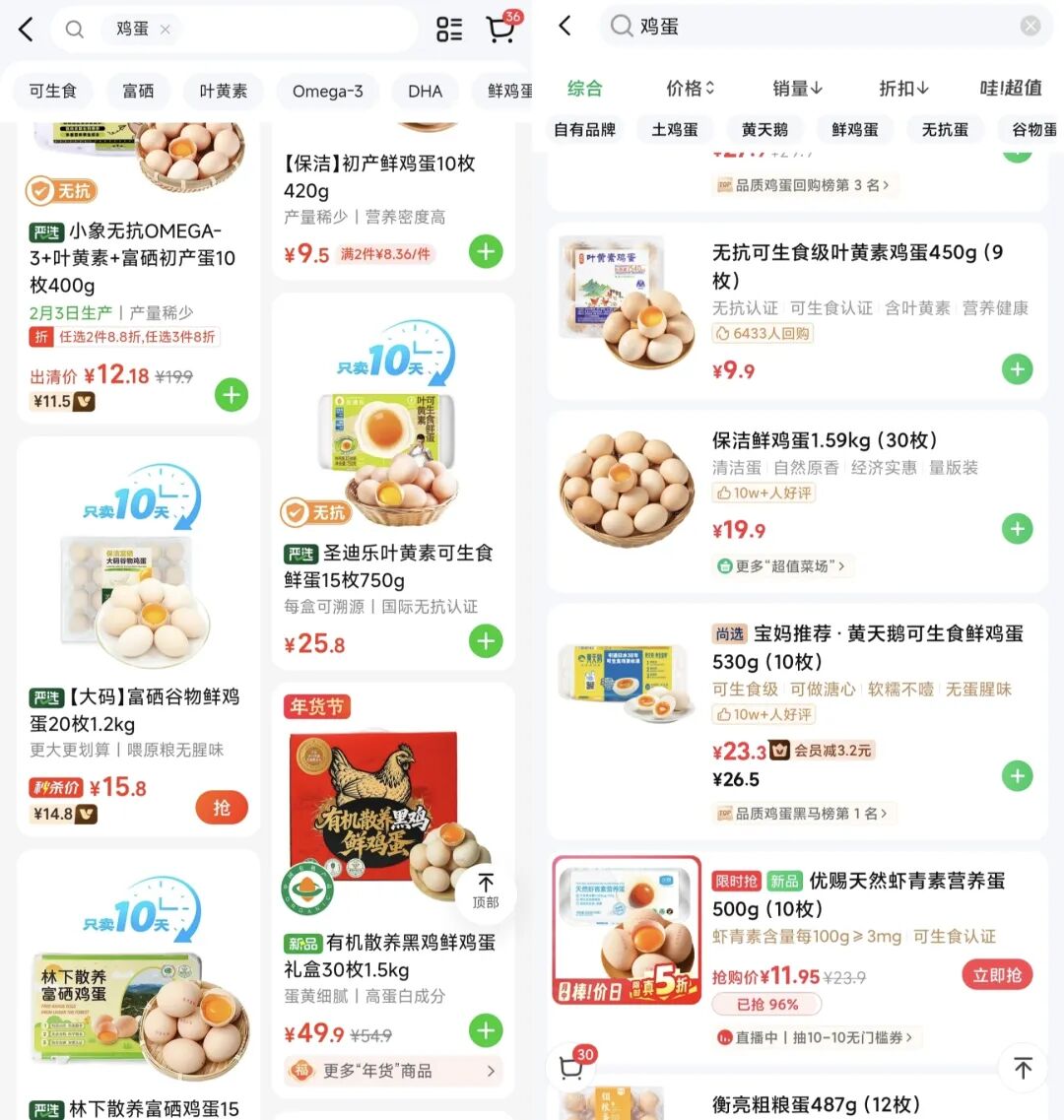
鸡蛋刺客?富硒、无抗……多几个字就贵几倍
3 6 Ke· 2026-02-12 02:50
Core Insights - The article discusses the increasing premiumization of eggs in a cautious consumer environment, where eggs are no longer just categorized by size or origin but are now labeled with various functional tags that significantly affect their pricing [1][2]. Group 1: Functional Origins - The differences in functional eggs primarily stem from what the chickens are fed and how they are raised, rather than changes in the chicken breeds themselves [3][4]. - Popular functions focus on nutritional enhancement, such as selenium-enriched, DHA, and lutein eggs, which are achieved through specific feed ingredients [4][6]. - The production of functional eggs involves complex supply chains, with varying levels of cost and technical barriers associated with each function [8][12]. Group 2: Cost Implications - The cost of functional eggs begins with feed formulation, which is a significant determinant of pricing, especially for enriched eggs [9][11]. - For selenium-enriched eggs, the additional cost ranges from a few cents to a dime per egg, while DHA-enriched eggs can add up to several dimes or close to a yuan [11]. - The production of antibiotic-free and ready-to-eat eggs requires higher standards in farming and processing, leading to increased operational costs throughout the production cycle [12][14]. Group 3: Consumer Behavior - The rise of functional eggs is linked to a growing health narrative among consumers, who prioritize safety and traceability in their food choices [15][16]. - Eggs are positioned as a staple food with low substitution costs, making it easier for consumers to accept slight price increases for perceived health benefits [18][19]. - The demand for functional eggs does not necessarily stem from increased purchase frequency but rather from consumers opting for higher-priced options within existing purchasing habits [19][21]. Group 4: Industry Dynamics - Leading poultry companies view functional eggs not merely as a response to market demand but as an extension of their existing production capabilities [21][23]. - In the restaurant sector, the use of eggs differs significantly from household consumption, with a focus on stability and risk management rather than long-term health benefits [24]. - The regulatory landscape surrounding functional eggs is evolving, with a need for clearer standards to differentiate between various claims and ensure consumer safety [26][29].

益客食品:公司建立以养殖为中心,禽苗、饲料、动保、加工、技术与服务“六位一体”的支撑系统
Zheng Quan Ri Bao Wang· 2026-02-10 14:13
Core Viewpoint - Yike Food (301116) is focused on establishing a comprehensive support system centered around breeding, which includes six components: breeding, chick supply, feed, animal health, processing, and technology and services, to meet customer needs and ensure stable quality, optimal costs, and food safety in raw material delivery [1] Group 1 - The company aims to reduce intermediate trading links through "chain supplementation and strengthening," thereby enhancing structural efficiency and creating greater value within the industry chain [1]

河南华英农业发展股份有限公司 2025年度业绩预告
Zheng Quan Ri Bao· 2026-01-30 22:42
Group 1 - The company expects a negative net profit for the fiscal year 2025, which spans from January 1, 2025, to December 31, 2025 [1] - The performance forecast has not been audited by a registered accounting firm, but preliminary discussions indicate no significant discrepancies between the company and the accounting firm regarding this forecast [1][2] Group 2 - The decline in gross profit margin is attributed to multiple factors, including market price fluctuations and asset impairment, which led to the recognition of corresponding asset impairment provisions [2] - The company's associate, Heze Yihua Poultry Co., Ltd., experienced a significant drop in investment income due to a substantial decrease in chick prices compared to the previous year [2]

春雪食品集团股份有限公司2025年年度业绩预增公告
Shang Hai Zheng Quan Bao· 2026-01-29 20:33
Core Viewpoint - The company, Chunxue Food Group Co., Ltd., anticipates a significant increase in its annual performance for 2025, projecting a net profit increase of over 340% compared to the previous year [2][3]. Group 1: Performance Forecast - The company expects a net profit attributable to shareholders of the parent company to be between 36 million to 43 million yuan for the year 2025, representing an increase of 27.83 million to 34.83 million yuan compared to the previous year, which is a year-on-year increase of 340.90% to 426.63% [2][3]. - The forecasted net profit, excluding non-recurring gains and losses, is expected to be between 32 million to 38.4 million yuan, an increase of 28.83 million to 35.22 million yuan compared to the previous year, reflecting a year-on-year increase of 909.40% to 1,111.28% [2][3]. Group 2: Previous Year’s Performance - In the previous year, the total profit was 20.72 million yuan, with a net profit attributable to shareholders of the parent company of 8.1652 million yuan, and a net profit excluding non-recurring gains and losses of 3.1702 million yuan [4]. - The earnings per share for the previous year were 0.04 yuan [5]. Group 3: Reasons for Performance Increase - The company has intensified market development efforts, resulting in a year-on-year increase in sales of its conditioning products, with significant growth in export sales due to further expansion in overseas markets [6]. - Cost reduction and efficiency improvement measures have shown significant results, with lower breeding costs achieved through procurement savings and enhanced breeding effectiveness, alongside a notable decrease in the procurement prices of key raw materials (chickens and soybean meal) compared to the previous year [6].

鸡蛋:情绪抬头,压力后移
Wu Kuang Qi Huo· 2026-01-27 00:59
Report Summary 1. Report Industry Investment Rating No relevant content provided. 2. Core Viewpoint of the Report - Pre - holiday inventory accumulation falling short of expectations, the late Spring Festival and other supply - demand mismatch factors led to an unexpected increase in egg spot prices during the pre - holiday stocking period. The near - term contracts on the futures market followed the increase rationally. However, after the egg - farming industry returned to profitability, the market's inventory accumulation sentiment has clearly emerged. It is highly likely that the supply - side pressure will be postponed, which may keep the egg prices under pressure in the first half of the year after the Spring Festival. Considering the limited decline in the current inventory and the uncertainty of future capacity reduction, under the assumption of low and relatively stable cost, the post - holiday near - term contracts are more likely to be anchored to the cost. For the far - end contracts, due to the expectation of recovery in chicken replenishment, it is difficult to achieve excess profits. Currently, the premiums of each futures contract are still relatively high. The recommended strategy is to short on rebounds [2][17]. 3. Summary by Sections 3.1 Pre - holiday Stocking Period: Spot Prices Rose More than Expected - Since New Year's Day, stimulated by pre - holiday stocking sentiment, egg spot prices have been rising continuously, with the increase approaching that of the peak season in the first half of September. As of late January, the price in Hebei Guantao, an external - sales production area, was above 3.6 yuan per catty, a nearly 30% increase from the low point at the beginning of the month. In Henan, an internal - sales production area, the spot price has exceeded 4 yuan per catty. As a result, the egg - farming industry returned to profitability after 3 months [4]. - The abnormal rise in egg prices was driven by several factors: a. The production capacity decreased month - on - month. The inventory scale peaked and declined in September last year. The number of newly - hatched chickens since July last year decreased year - on - year and month - on - month. The number of slaughtered laying hens increased significantly, and the average age of hens dropped below 490 days. The proportion of small eggs dropped to 13.81%, significantly lower than the peak of 18.86% last year, while the proportion of large eggs rose to 42.81% [5]. b. The late Spring Festival led to a delay in demand, and the hoarding sentiment boosted the price increase. Due to the late Spring Festival and insufficient early - stage inventory accumulation, there was an unexpected price increase, and local hoarding speculation further amplified the short - term increase. c. The continuously strong prices of substitutes such as vegetables and pork also supported the rise in egg prices. Since January, short - sellers in the futures market have covered their positions to repair the basis, and the near - term contracts have been particularly strong, but still more restrained compared to the spot market [5]. 3.2 Market Inventory Accumulation Sentiment Emerged - The unexpected price increase brought the egg - farming industry back to the profit range. The current high spot valuation and high premium of the far - end futures contracts on the market reflect the market sentiment. However, the inventory is still high and the age structure of hens is young, and there is still uncertainty in the supply - side rhythm. If the market's optimistic expectations are over - advanced, the expected capacity reduction may slow down or even stop. Currently, signs of inventory accumulation sentiment have emerged [10]. - a. The age of slaughtered hens has risen counter - seasonally from 484 days to 490 days, and the number of slaughtered hens has decreased, indicating an increase in the sentiment of delaying hen slaughter. Considering the young age structure of hens, molting during the festival and a new peak in egg - laying after the festival are common practices, which will increase the post - festival supply pressure [10]. b. The sentiment of replenishing chicken chicks and young hens has emerged. The prices of chicken chicks and egg - laying chicks have risen for 4 consecutive weeks. In December, the number of replenished chickens stopped falling and increased. Xiaoming Co., Ltd.'s chicken chick sales and prices increased by 8.3% and 19.6% respectively in December, and the utilization rate of breeding eggs at sample points has risen from 57% at the beginning of the year to 68% currently, indicating that the market's replenishment sentiment is on the rise [13]. 3.3 Post - festival and Longer - term Egg Prices will be Anchored to the Cost - The market is closely watching the changes in inventory. However, inventory changes are uncertain and will be dynamically adjusted based on current and future expected profits. As long as there is an expectation of profit, the reduced production capacity can be quickly replenished through increased replenishment or delayed hen slaughter. The key factor is the change in the cost. As long as the cost remains at the current low level and there is a profit in expectation or reality, it is difficult to achieve future capacity reduction [16]. - In the short - term, although the spot price increased more than expected during the pre - holiday stocking period, during the festival, demand will disappear while supply remains the same, so inventory accumulation is inevitable. Except in extremely short - supply years, egg prices will almost always fall below the cost line. In the long - term, with the upcoming spring chick - replenishing season, considering the low cost, high expectations, and a 4 - 5 - month egg - laying period after hatching, it is not necessary or inevitable for the production capacity to continue to decline. Under the condition of low cost, it is difficult to achieve excess profits in the far - end contracts [16].
鸡蛋周报:需求表现较好,蛋价稳中有涨-20260126
Yin He Qi Huo· 2026-01-26 11:18
Report Title - Egg Weekly Report: Good Demand Performance, Egg Prices Stable with a Slight Increase [1] Report Industry Investment Rating - Not mentioned in the provided text Core Viewpoints - The egg market is influenced by multiple factors including supply, demand, cost, and price trends. The current price increase is mainly due to pre - Spring Festival stocking demand, but the price increase of the 03 futures contract is expected to be limited. It is recommended to consider building long positions in the far - month 5 - contract on dips, and to remain on the sidelines for arbitrage and options trading [17] Summary by Directory Part 1: Logical Analysis and Trading Strategies 1. Spot Analysis - This week, the average price of eggs in the main producing areas was 3.7 yuan/jin, up 0.5 yuan/jin from last Friday, and the average price in the main selling areas was 3.95 yuan/jin, up 0.55 yuan/jin from last Friday. The national egg market continued to rise driven by Spring Festival stocking. The price increase strengthened farmers' reluctance to sell and pressure on inventory, but weak downstream demand limited the price increase space. After reaching a high, the price in the producing areas stabilized with narrow - range adjustments [5] 2. Supply Analysis - Affected by pre - Spring Festival stocking demand, the egg price rose rapidly, and the market's bullish expectation increased. The shipment volume in the producing areas increased significantly. According to Zhuochuang data, the slaughter volume of laying hens in the main producing areas in the week of January 23 was 16.27 million, a 5% decrease from the previous week, and the average slaughter age was 490 days, 5 days more than the previous week. In December, the national inventory of laying hens in production was 1.344 billion, a decrease of 80 million from the previous month, a 5% year - on - year increase, and lower than expected. The monthly hatching volume of laying hen chicks in the sample enterprises monitored by Zhuochuang Information in December was about 39.59 million, with little change month - on - month and a 13.9% year - on - year decrease [10] 3. Cost Analysis - The feed cost changed little during the week. As of January 22, the corn price was around 2370 yuan/ton, the soybean meal price dropped to 3180 yuan/ton, and the comprehensive feed cost was about 2613 yuan/ton, equivalent to about 2.87 yuan/jin for eggs. The futures price increase at the beginning of the week drove up the corn price in the northern port and Northeast producing areas. The corn price in North China continued to fluctuate, and the price in the selling areas rose slightly. As of January 15, the average weekly profit per jin of eggs was 0.44 yuan/jin, up 0.31 yuan/jin from the previous week. On January 16, the expected profit of laying hen farming was - 13.63 yuan/feather, a decrease of 0.51 yuan/jin from the previous week [13] 4. Demand Analysis - At the beginning of the week, the Spring Festival stocking led to a concentrated release of demand, and the sales volume in the selling areas increased steadily. In the middle and late weeks, the sales growth slowed down. The overall demand was good during the week, and the sales volume in the selling areas increased month - on - month. As of the week of January 23, the sales volume of eggs in the national representative selling areas was 7210 tons, a 2.3% decrease from the previous week, and it was at a relatively high level in the same period over the years. Due to the continuous increase in egg prices, farmers' losses decreased, and they mostly sold their goods to lock in profits. With the approach of the Spring Festival, the demand from multiple channels increased, and the inventory in the production and circulation links decreased significantly and was currently at a low level. As of the week of January 23, the average weekly inventory in the production link was 1.02 days, an increase of 0.05 days from the previous week, and the average weekly inventory in the circulation link was 1.07 days, an increase of 0.02 days from the previous week. The vegetable price index and pork price rebounded slightly [16] 5. Trading Strategies - Trading logic: Considering the approaching Spring Festival, the overall sales are fast, and the spot price has risen significantly. The current egg production is starting to reduce capacity, and it is expected that the capacity will continue to decline in the next few months. However, the 03 contract is a post - Spring Festival contract, and the upward space is expected to be limited. - Unilateral trading: Consider building long positions in the far - month 5 - contract on dips. - Arbitrage: It is recommended to remain on the sidelines. - Options: It is recommended to remain on the sidelines [17] Part 2: Weekly Data Tracking 1. Laying Hen Farming Situation - Not elaborated in detail in the provided text, only mentions the slaughter age of laying hens and the average price of laying hen chicks in the main producing areas [21] 2. Spread and Basis - The text provides data on the basis and spreads of different contracts such as the 1 - month, 5 - month, and 9 - month contracts in different years, but no specific analysis is given [24][25][28]