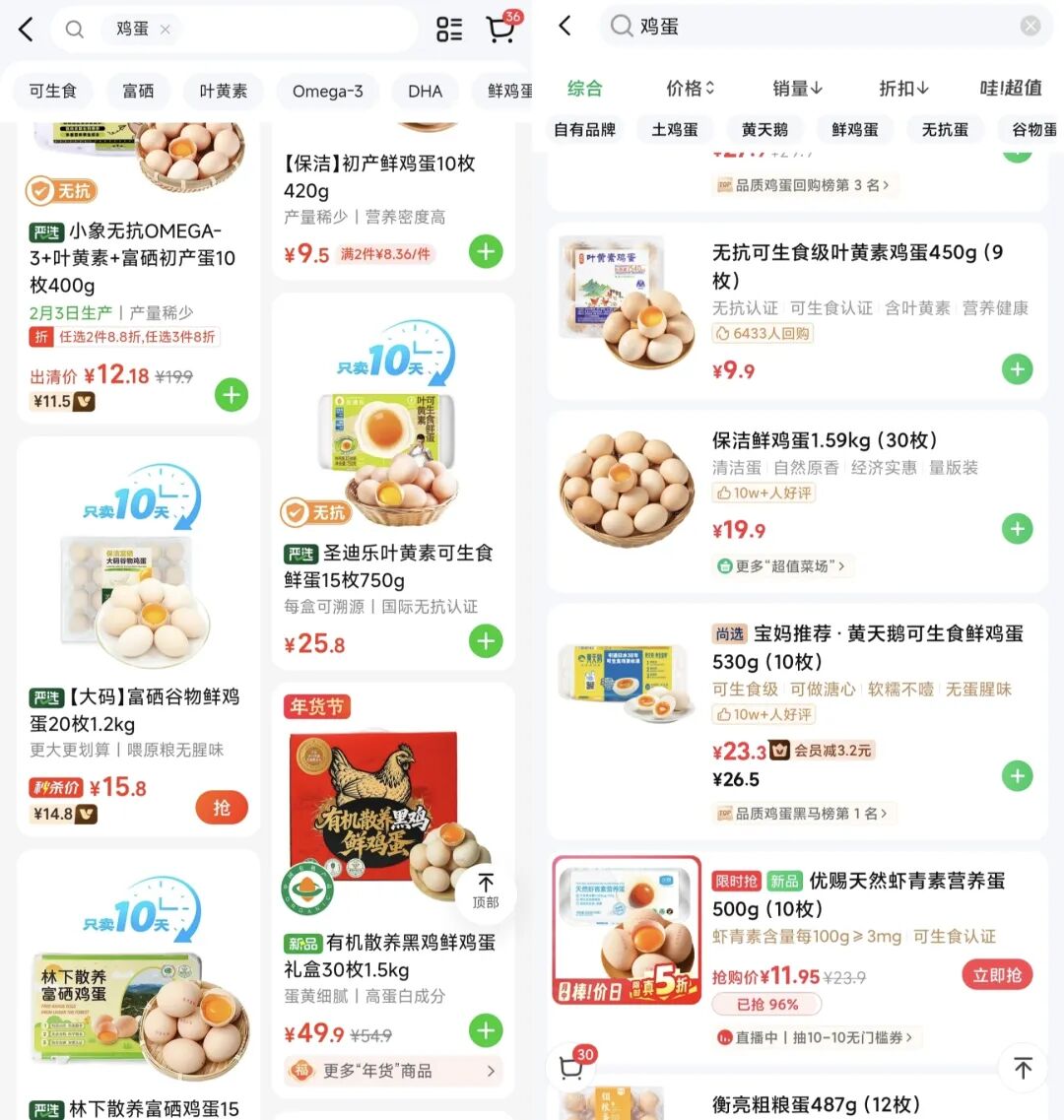
可生食蛋

Search documents
鸡蛋刺客?富硒、无抗……多几个字就贵几倍
3 6 Ke· 2026-02-12 02:50
Core Insights - The article discusses the increasing premiumization of eggs in a cautious consumer environment, where eggs are no longer just categorized by size or origin but are now labeled with various functional tags that significantly affect their pricing [1][2]. Group 1: Functional Origins - The differences in functional eggs primarily stem from what the chickens are fed and how they are raised, rather than changes in the chicken breeds themselves [3][4]. - Popular functions focus on nutritional enhancement, such as selenium-enriched, DHA, and lutein eggs, which are achieved through specific feed ingredients [4][6]. - The production of functional eggs involves complex supply chains, with varying levels of cost and technical barriers associated with each function [8][12]. Group 2: Cost Implications - The cost of functional eggs begins with feed formulation, which is a significant determinant of pricing, especially for enriched eggs [9][11]. - For selenium-enriched eggs, the additional cost ranges from a few cents to a dime per egg, while DHA-enriched eggs can add up to several dimes or close to a yuan [11]. - The production of antibiotic-free and ready-to-eat eggs requires higher standards in farming and processing, leading to increased operational costs throughout the production cycle [12][14]. Group 3: Consumer Behavior - The rise of functional eggs is linked to a growing health narrative among consumers, who prioritize safety and traceability in their food choices [15][16]. - Eggs are positioned as a staple food with low substitution costs, making it easier for consumers to accept slight price increases for perceived health benefits [18][19]. - The demand for functional eggs does not necessarily stem from increased purchase frequency but rather from consumers opting for higher-priced options within existing purchasing habits [19][21]. Group 4: Industry Dynamics - Leading poultry companies view functional eggs not merely as a response to market demand but as an extension of their existing production capabilities [21][23]. - In the restaurant sector, the use of eggs differs significantly from household consumption, with a focus on stability and risk management rather than long-term health benefits [24]. - The regulatory landscape surrounding functional eggs is evolving, with a need for clearer standards to differentiate between various claims and ensure consumer safety [26][29].

直播预告 || 2025中国鸡蛋产业年终回顾
Xin Lang Cai Jing· 2025-12-24 09:40
Core Insights - In 2025, China's egg industry is at a dual juncture of cyclical adjustment and high-quality transformation, facing market pressure from supply-demand imbalance while also experiencing structural changes driven by policy guidance, technological innovation, and consumption upgrades [2][4] Supply Side - The average annual stock of laying hens in the national commodity layer reached 1.22 billion, a year-on-year increase of 1.3%, with a peak of over 1.27 billion in September, marking a recent high [2][4] - The profitability trend in 2024 encouraged farmers to actively replenish stocks at the beginning of 2025, alongside large enterprises expanding capacity, with plans for projects of over one million hens aiming for a total production capacity of 200 million [2][4] - However, continuous industry losses led to a significant decline in replenishment willingness in the second half of the year, with the number of young hens replenished decreasing for five consecutive months year-on-year, and the utilization rate of breeding eggs dropping to a near five-year low [2][4] Demand Side - Overall consumption exhibited characteristics of "stable total volume, differentiated structure," with the fresh egg market scale surpassing 420 billion yuan [2][4] - Demand for ordinary fresh eggs was weak due to declining prices of substitutes like pork, while sales of high-end egg products (such as raw-eating eggs, organic eggs, and selenium-enriched eggs) increased by 23% year-on-year, accounting for 18% of the total retail sales of fresh eggs, indicating a significant rise in consumer willingness to pay for quality and functional attributes [2][4] Price Trends - Egg prices showed a downward trend throughout the year, hitting a low of 5.06 yuan per kilogram mid-year, mostly operating below the industry breakeven point of 4.8-5.0 yuan per jin, with an average loss of approximately 0.93 yuan per kilogram, a substantial year-on-year decline of 289% [3][5] Technological Advancements - Breakthroughs in functional egg product technology have led to a 3-5 times increase in the content of nutrients like DHA and selenium, meeting national standards for "high-selenium foods," with the market size for functional egg products reaching 18.6 billion yuan and a compound annual growth rate of 12.7% [3][5] Industry Trends - The promotion of non-cage farming models is accelerating, with the industry awarding the "Non-Cage Farming Model Enterprise Award" for the first time, and companies like Sichuan Sandile and Dalian Lvxue Egg Products establishing standardized non-cage farming systems, achieving a product qualification rate of 99.8% [3][5] - The acceleration of brand building is evident as companies enhance recognition through "ecological farming positioning + storytelling marketing + customized packaging," with the repurchase rate of high-end egg products reaching 76%, significantly enhancing brand premium capabilities and driving the industry transition from "bulk commodities" to "value-added products" [3][5] Conclusion - In 2025, the Chinese egg industry faced deep adjustments and severe tests under the dual pressure of high supply and weak demand, entering a "micro-profit era" with significantly compressed breeding profit margins [5]
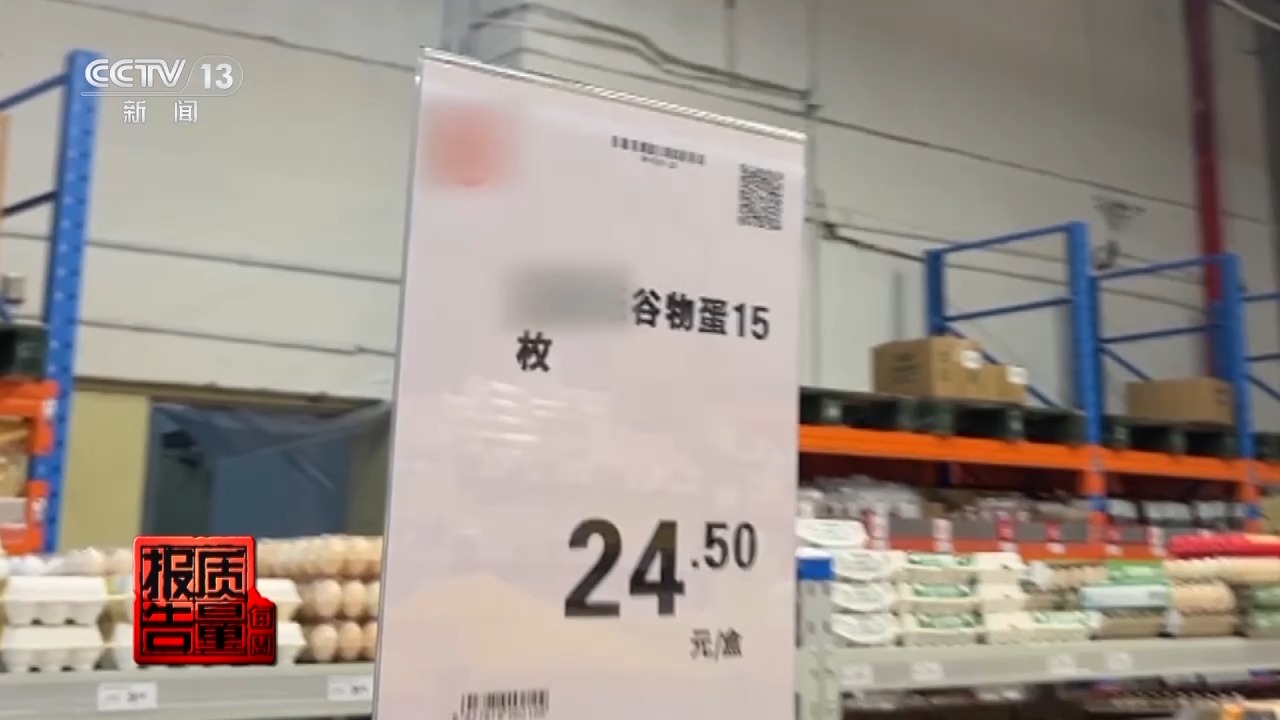
每周质量报告丨高价“功能蛋”蛋白质含量不如普通蛋?专家:按需选择
Yang Shi Xin Wen· 2025-12-07 08:33
Core Viewpoint - The Shanghai Consumer Protection Committee conducted a comparative study on 30 types of eggs, revealing that there is no significant nutritional difference among eggs of varying price points, despite the marketing claims of enhanced nutritional value for higher-priced eggs [4][8][65]. Group 1: Price Comparison - The price of the sampled eggs ranged from 3.7 yuan to 50.2 yuan per jin, with a price difference exceeding 13.5 times [6]. - The samples were categorized into three price groups: low (3.7-10 yuan per jin), medium (10-25 yuan per jin), and high (25-50.2 yuan per jin) [6]. Group 2: Nutritional Analysis - The comparative study found no significant differences in key nutritional indicators (protein, fat, and energy) across the three price groups [8]. - The average protein content for the high-priced group was 13.0 grams per 100 grams, while the low-priced group had an average of 13.1 grams per 100 grams, indicating that lower-priced eggs may have slightly higher protein content [10]. Group 3: Marketing and Consumer Perception - Many eggs on the market are marketed with terms like "nutritionally enhanced," leading to consumer confusion and potentially misleading perceptions about their nutritional value [17][29]. - The study highlighted that some eggs marketed as having specific nutritional benefits, such as DHA and Omega-3, often did not meet their claimed nutritional content, with some samples showing only 29.4% to 66.6% of the claimed values [39][41]. Group 4: Safety and Consumption Guidelines - The concept of "raw consumption" eggs is based on pasteurization, but there is no national standard for such eggs in China, and they may still carry safety risks [54][60]. - The Shanghai Consumer Protection Committee emphasized that eggs are primary agricultural products and should not be viewed as substitutes for nutritional supplements or health products [31][51].