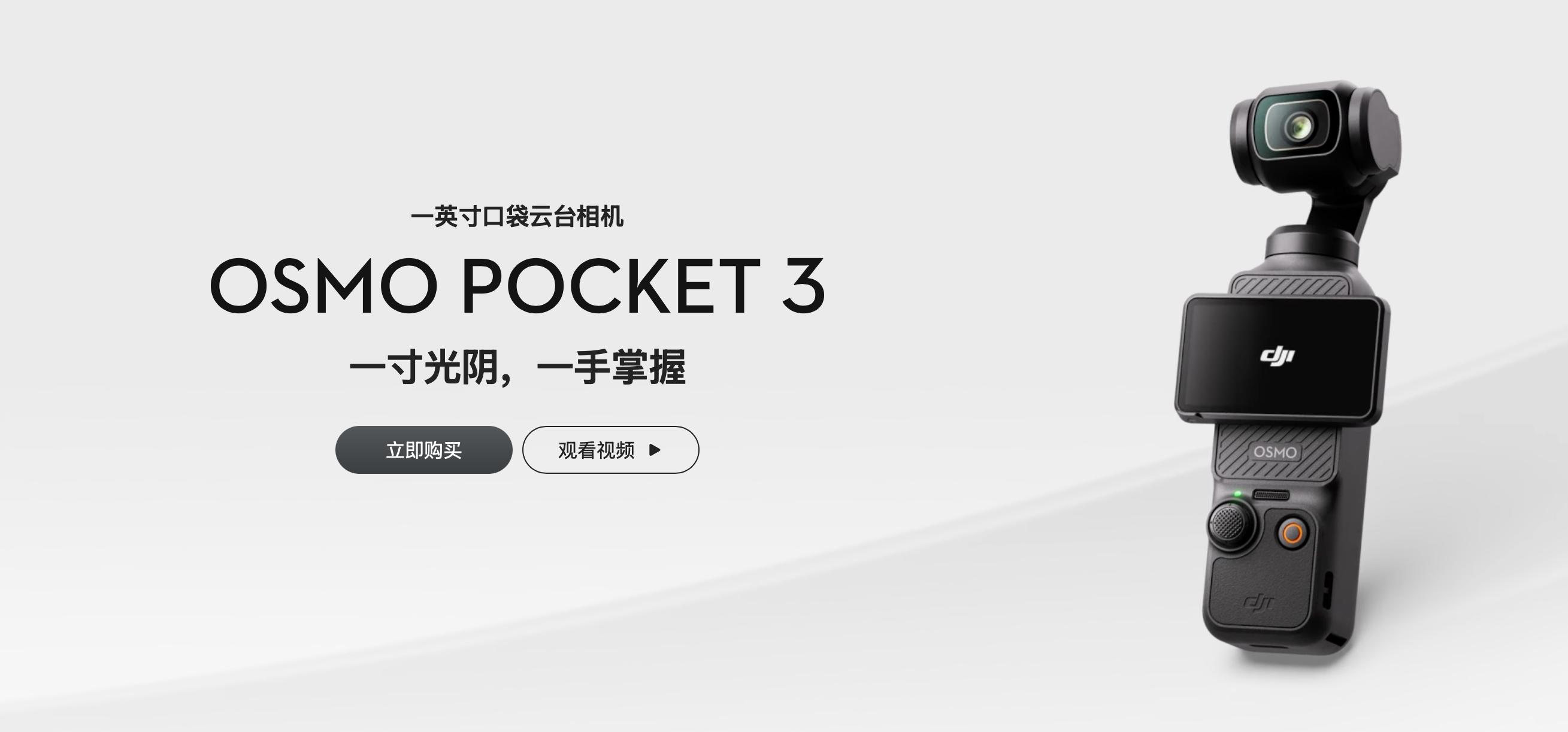
DJI Pocket 3

Search documents
多家Pocket蓄势待发:大疆、影石、手机厂商相继上场,谁会是最终赢家?
3 6 Ke· 2026-01-29 02:44
Core Viewpoint - The hand-held gimbal camera market is becoming increasingly competitive with multiple manufacturers entering the space, but DJI is expected to maintain its lead due to its high product completion and user experience focus [12][17]. Group 1: Market Dynamics - Several manufacturers, including Insta360, OPPO, vivo, and Honor, are preparing to launch their own Pocket products, indicating a growing interest in the hand-held gimbal camera market [3][6]. - The entry of smartphone manufacturers into the hand-held gimbal camera market is seen as a move to enhance mobile imaging capabilities, as they seek new avenues for growth [6][9]. Group 2: Competitive Landscape - Insta360 is likely to be one of the first to release a Pocket product, leveraging its experience in the outdoor camera market [3]. - Smartphone manufacturers possess advantages such as advanced color algorithms, ecosystem integration, and extensive distribution networks, which could help them succeed in this new segment [9][10]. Group 3: Product Development and Strategy - DJI has not yet announced the Pocket 4, possibly waiting for the right moment to launch a product that surpasses competitors in terms of system capabilities and user experience [17][20]. - The future of the Pocket category may see a shift from a single standard to diverse offerings, as companies explore different approaches to meet consumer needs [16][18]. Group 4: Consumer Trends and Expectations - The demand for hand-held gimbal cameras is expected to grow as content creation becomes more complex, with users seeking devices that simplify the filming process [13][16]. - The success of new entrants will depend on their ability to innovate and differentiate their products from DJI's established offerings [12][16].

DJI Mic 3 Is The Best Wireless Mic For Anyone Who Makes Videos
Forbes· 2025-10-06 09:56
Core Insights - The DJI Mic 3 represents a significant advancement in wireless microphone technology, offering enhanced features while maintaining a compact design [2][3] - The product is positioned to continue DJI's dominance in the market for video creators, particularly among YouTubers and TikTokers [3][4] Product Features - The DJI Mic 3 includes longer battery life, superior noise canceling, increased storage, and a longer transmission range, along with new features like timecode support and lossless recording [2][6] - Each microphone weighs only 16g, making it lightweight and portable [2] - The system supports group recording with up to eight microphones and four receivers, simplifying audio synchronization [7] Market Position - Priced at $329 for a set of two microphones, one receiver, and a charging case, the DJI Mic 3 is considered a fair investment for video creators due to its comprehensive feature set and audio quality [8] - DJI's market presence is notable, with approximately 70% of video creators at major tech events using DJI microphones [3]


影石的三大追问
雷峰网· 2025-06-19 12:08
Core Viewpoint - The article discusses the competitive landscape between Insta360 and DJI, highlighting the challenges Insta360 faces post-IPO and the strategies it employs to maintain its market position against DJI's aggressive tactics [2][3][14]. Group 1: Company Overview and Market Position - Insta360's market capitalization surged to nearly 80 billion yuan after its IPO, reflecting investor optimism despite the competitive pressures from DJI and other rivals [2]. - The company has undergone significant organizational restructuring to adapt to its growth and the competitive landscape, particularly in the panoramic camera segment [2][3]. - Insta360's current market share in the panoramic camera segment is projected to be 81.7% in 2024, with DJI expected to capture around 20% [16]. Group 2: Competitive Strategies - Insta360 has adopted a proactive approach by launching the Insta360 X5 ahead of schedule, reducing the product cycle from two years to one year [5]. - The company has significantly increased its marketing budget for the X5, utilizing various channels and KOLs to enhance brand recognition and consumer awareness [6][11]. - In contrast, DJI has historically been hesitant to invest heavily in marketing but has recently ramped up its efforts in response to the competitive threat posed by Insta360 [10][12]. Group 3: Product Development and Innovation - The Insta360 X5 features an upgraded 1/1.28-inch CMOS sensor, improving low-light performance and addressing issues seen in previous models [11][12]. - DJI's upcoming Osmo 360 is expected to face challenges in matching the performance of the X5 due to its current sensor specifications [12][13]. - Insta360's strategy focuses on continuous product innovation rather than engaging in price wars, which is seen as a more sustainable approach in the long term [26][27]. Group 4: Financial Valuation and Market Expectations - The current price-to-earnings (PE) ratio of 70 for Insta360 is considered excessive by some investors, with a more reasonable range suggested to be between 20-30 [15]. - Despite the high PE ratio, it reflects market confidence in Insta360's potential to navigate the competitive landscape effectively [15]. - The financial disparity between DJI and Insta360 is significant, with DJI's annual profits exceeding 10 billion yuan compared to Insta360's approximately 1 billion yuan [17][25]. Group 5: Management Perspective and Future Outlook - Insta360's management emphasizes the importance of product quality and innovation over price competition, aiming to avoid the pitfalls of a price war [26][27]. - The company is focused on expanding its product lines and enhancing its organizational structure to better compete in a rapidly evolving market [28]. - The entry of DJI into the panoramic camera market is viewed as a double-edged sword, potentially expanding the overall market while also intensifying competition [22].