Digital Twin Composer

Search documents
怎么才能让工厂放心用AI?
虎嗅APP· 2026-03-27 10:12
Core Viewpoint - The article discusses the challenges and complexities of integrating AI into industrial settings, highlighting that a significant percentage of AI projects fail to transition from laboratory settings to scalable deployment and business value [2][6]. Group 1: Challenges in AI Implementation - A staggering 85% of AI projects do not achieve scalable deployment and business value, indicating a significant gap between AI capabilities and real-world applications [2]. - AI's probabilistic nature conflicts with the deterministic requirements of industrial processes, making it difficult for AI to effectively manage complex production environments [3][7]. - The integration of AI into physical systems is not a natural progression and requires deliberate efforts to overcome existing barriers [5][6]. Group 2: Data as a Critical Factor - Industrial AI's success hinges on high-quality data, which is often difficult to obtain due to the complex and heterogeneous nature of industrial environments [13][19]. - Companies must transform raw industrial data into usable formats, akin to refining crude oil, to leverage AI effectively [16][23]. - The lack of understanding and accessibility of data within industrial processes presents a significant hurdle for AI adoption [20][28]. Group 3: Siemens' Role and Strategy - Siemens has established a comprehensive technology stack that integrates hardware, software, and data to facilitate AI's entry into the physical world [15][23]. - The company has accumulated a vast amount of industrial data, reaching 150PB, which serves as a competitive advantage in developing AI models [23]. - Siemens is transitioning from being a technology provider to becoming a key player in industrial AI, focusing on enabling digital transformation across various sectors [28][30]. Group 4: Future Outlook - The article suggests that the breakthrough in industrial AI will not merely be a technological upgrade but a complete redefinition of industrial systems [30]. - As more factories successfully implement AI in core business scenarios, a new wave of productivity revolution is anticipated [30].

RXD大会首发北京:当硅谷还在谈论物理AI,西门子已重写工业规则
机器之心· 2026-03-24 09:17
Core Viewpoint - The article emphasizes the transformative potential of AI in the physical world, particularly in industrial applications, highlighting Siemens' role in integrating AI into manufacturing processes and systems [2][3][40]. Group 1: AI Integration in Industry - Physical AI is not just a technological spectacle but is being implemented in real-world applications, such as the UTree robots in Siemens' factories [3][5]. - Siemens' CEO, Roland Busch, asserts that AI is a general-purpose technology, comparable to electricity in its impact on the industrial era, fundamentally changing work and production systems [7][18]. - The integration of AI into physical systems requires a robust technology stack that combines hardware, software, and data, which Siemens possesses [7][9]. Group 2: Digital Twin and AI Applications - Siemens introduced a new Digital Twin Composer that allows companies to create real-time digital twin systems, enabling extensive pre-implementation testing and optimization [12][15]. - AI has been shown to identify up to 90% of potential issues before physical modifications, leading to a 20% increase in throughput and reduced design cycles [13][14]. - The shift from traditional simulation tools to a comprehensive system that spans the entire lifecycle of design, manufacturing, and operation is highlighted as a significant advancement [15][16]. Group 3: Data as a Key Asset - Siemens emphasizes that industrial AI relies heavily on high-quality, long-term industrial data, which is essential for effective model training and application [18][22]. - The company has developed specialized AI models trained on proprietary industrial data, significantly improving problem-solving accuracy from 60-70% to nearly 95% [19][20]. - The challenge of data acquisition and standardization in industrial settings is noted, with a focus on the necessity of integrating high-value scenarios to unlock AI's potential [22][23]. Group 4: Industry Knowledge and Expertise - Siemens' competitive advantage lies in its deep understanding of industry-specific processes, accumulated over 170 years, which is crucial for the effective application of AI [25][27]. - The company has a vast pool of AI experts and engineers, enabling it to tailor solutions to various industrial contexts [27][29]. - The integration of AI into existing systems requires not just technological capability but also a profound understanding of the underlying industrial mechanics [26][30]. Group 5: Ecosystem and Collaboration - The fragmented nature of industrial AI necessitates collaboration across various sectors, with over 60% of Siemens' partners bringing AI-related products to the table [31][34]. - Siemens' Xcelerator platform allows companies to build their solutions on a unified foundation, promoting ecosystem development [32][38]. - Strategic partnerships, such as with NVIDIA and Alibaba Cloud, enhance Siemens' capabilities in simulation and deployment of AI solutions in complex environments [35][36][41].
NVIDIA and Global Industrial Software Giants Bring Design, Engineering and Manufacturing Into the AI Era
Globenewswire· 2026-03-16 20:40
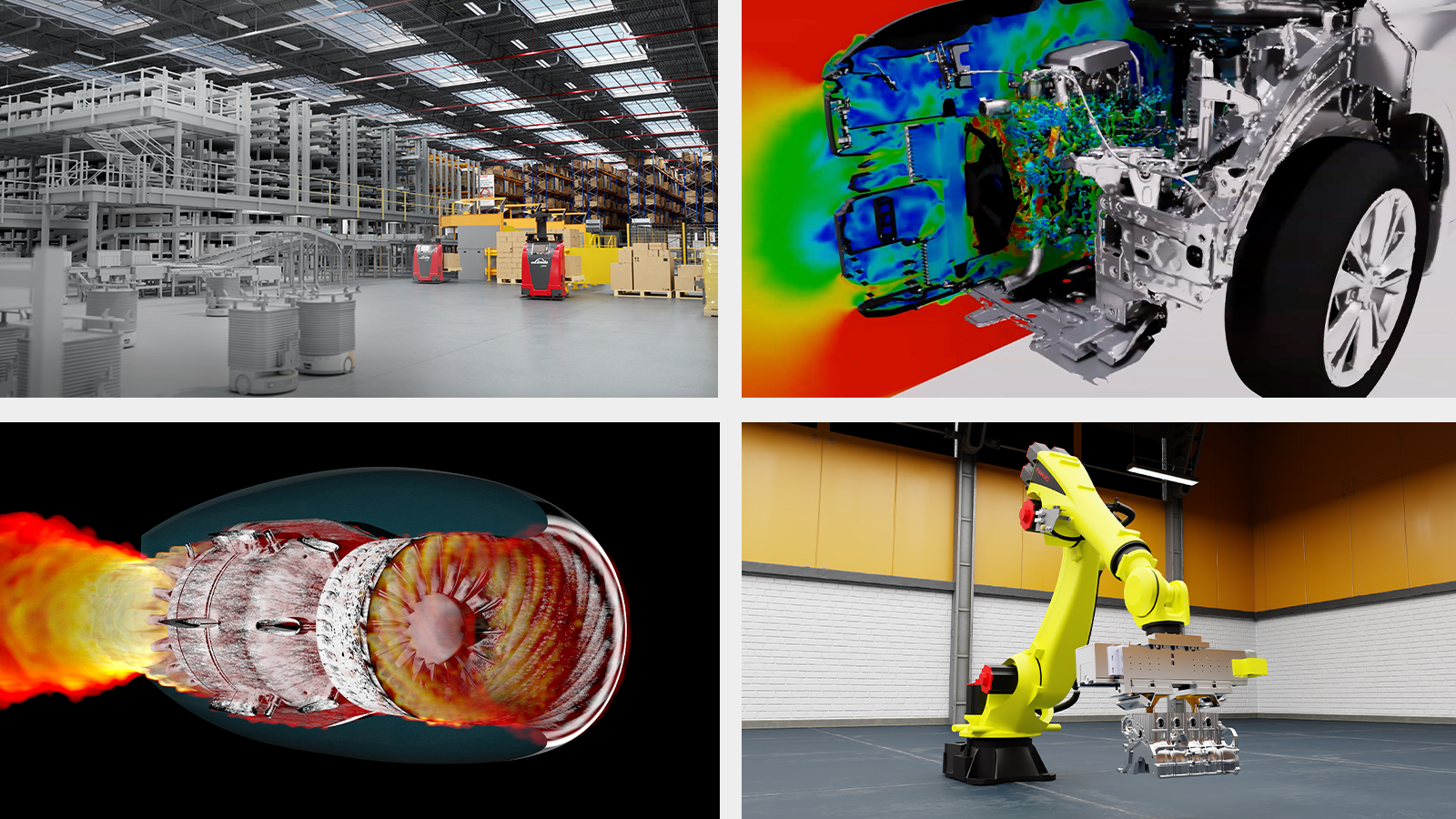
Core Viewpoint - NVIDIA is collaborating with leading industrial software companies to integrate its GPU-accelerated tools and platforms into various industries, aiming to revolutionize design, engineering, and manufacturing processes through AI and digital twins [2][4][19]. Group 1: Partnerships and Collaborations - NVIDIA is partnering with Cadence, Dassault Systèmes, PTC, Siemens, and Synopsys to deliver NVIDIA CUDA-X and Omniverse technologies to major companies like FANUC, Honda, and TSMC, enhancing their design and manufacturing capabilities [2][19]. - The collaboration aims to prepare customers for the next phase of the AI era by introducing NVIDIA-powered agentic solutions [2][4]. Group 2: AI and Accelerated Computing - The integration of agentic AI into industrial workflows is expected to streamline complex design and manufacturing processes, marking a significant shift in industrial engineering [5][6]. - NVIDIA's NeMo platform and CUDA-X libraries are being utilized to develop autonomous design agents that enhance efficiency in chip and system workflows [6][21]. Group 3: Industry Applications - In the automotive sector, NVIDIA is working with Siemens and Synopsys to provide GPU-accelerated tools that significantly reduce simulation times, enabling faster vehicle design iterations [6][7]. - Aerospace engineering is benefiting from NVIDIA-accelerated solvers, allowing for high-fidelity simulations that were previously impractical, thus unlocking new design possibilities [9][10]. Group 4: Energy and Semiconductor Innovations - Energy companies are adopting NVIDIA's GPU-accelerated workflows to enhance simulation turnaround times, contributing to cleaner energy solutions [11][12]. - In semiconductor design, industry leaders like Samsung and SK hynix are leveraging NVIDIA tools to streamline production processes, achieving significant improvements in efficiency [13][14][22]. Group 5: Digital Twins and Manufacturing - NVIDIA and its partners are advancing the digitalization of manufacturing through high-fidelity digital twins, which connect virtual planning with real-world execution [23][24]. - Companies like Krones and KION are utilizing NVIDIA technologies to create AI-driven digital twins that enhance operational efficiency in manufacturing and logistics [25][27].


Manufacturing And Automotive Giants Continue Their Shift From Grease To Code At CES 2026
Forrester· 2026-01-09 10:22
Core Insights - The Consumer Electronics Show (CES) has evolved beyond its original focus, showcasing a wide range of technologies including smart manufacturing, AI, and digital tools [1] Siemens - Siemens CEO Roland Busch delivered a keynote at CES, emphasizing the company's advancements in industrial AI and its partnership with NVIDIA [3][4] - The introduction of Siemens' Digital Twin Composer aims to enhance the integration of software and IoT capabilities with NVIDIA's Omniverse platform, facilitating the creation and maintenance of digital twins [5] - Siemens announced a collaboration with Sony to combine industrial design software with high-resolution extended reality headsets, and also introduced Meta's Ray-Ban AI Glasses for routine maintenance tasks on the shop floor [6] - The launch of Siemens' Industrial Copilot, in partnership with Microsoft, includes nine new AI copilots designed to address specific industrial challenges [7] Bosch - Bosch announced a $2.9 billion investment in AI research and development over the next two years, focusing on embodied AI and enhancing existing technologies for the automotive sector [8][9] NVIDIA - NVIDIA's CEO Jensen Huang highlighted the company's advancements in AI models for training robots and autonomous vehicles, emphasizing the open-source nature of their tools [10] Industry Trends - Other manufacturers, such as Hyundai and Hexagon, are also investing in AI and robotics, with Hyundai planning to deploy humanoid robots in its factories by 2028 [11] - Microsoft has emerged as a key strategic partner for many companies in the AI and cloud space, overshadowing competitors like AWS and Google [12] - The shift from traditional manufacturing to digital tools and AI is essential for industrial firms to remain competitive in a rapidly changing market [13]

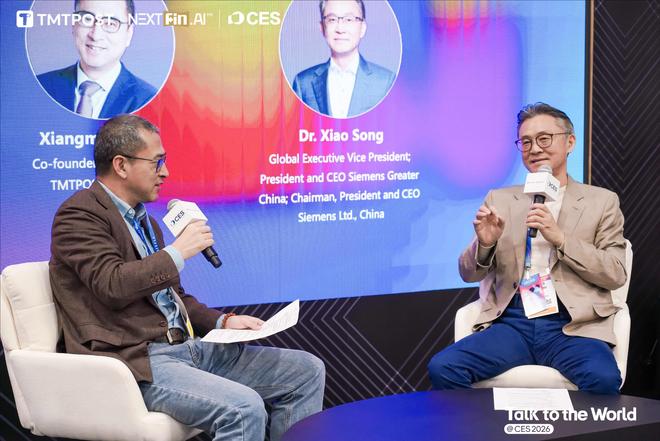
对话西门子中国董事长肖松:重塑产业新范式,AI的真正价值将在工业端充分释放|CES 2026
Tai Mei Ti A P P· 2026-01-08 05:24
Core Insights - The role of AI is evolving from mere model competition to practical applications in various industries, focusing on "last mile" implementations, with consumer AI targeting individual users and industrial AI emphasizing reliability and foundational skills [1][3] - Industrial AI is seen as a significant value driver, but it is still in its early stages, with increasing customer acceptance and potential for China to lead in application [3][4] - Siemens is recognized as a key partner in the industrial AI space, leveraging its extensive industry knowledge and data to drive transformation [6][11] Group 1: AI Evolution and Industrial Applications - AI is transitioning to become a true collaborative entity, focusing on practical applications rather than just model performance [1] - The true value of AI is expected to be realized in the industrial sector, with current applications still in the early stages of development [3][4] - Siemens emphasizes the importance of digital twin technology, which allows for the creation of virtual models that can enhance production efficiency and quality [5][9] Group 2: Siemens' Strategic Positioning - Siemens plans to invest €1 billion over the next three years to expand its industrial AI ecosystem, focusing on creating foundational models and collaborating with partners [6][14] - The company aims to leverage its historical expertise and high-quality data to lead the industrial AI revolution, addressing complex industry needs [6][11] - Siemens' digital twin composer is a significant innovation that integrates real-time data with virtual models, enhancing operational efficiency [5][9] Group 3: Market Trends and Future Outlook - The industrial AI market is characterized by its complexity and the need for tailored applications across different sectors, with Siemens advocating for a focus on application rather than just model parameters [14][15] - The company believes that AI will not replace human expertise but will enhance it, allowing experienced workers to define and make decisions rather than just operate [4][23] - The future of AI in industrial applications is expected to see incremental breakthroughs rather than radical changes, with a focus on quality improvement and cost reduction [24][27]
CES 2026:西门子宣布与英伟达共同打造工业 AI 操作系统
Huan Qiu Wang· 2026-01-08 03:47
Group 1 - Siemens and NVIDIA are expanding their long-term collaboration to develop an industrial AI operating system aimed at transforming the design, engineering, and operational methods of physical systems [1] - The partnership will focus on creating AI-accelerated industrial solutions throughout the entire product and production lifecycle, enabling faster innovation, continuous optimization, and more resilient and sustainable manufacturing models [1] - The first fully AI-driven adaptive manufacturing facility will be launched in 2026 at Siemens' factory in Erlangen, Germany, supported by NVIDIA's AI infrastructure and Siemens' industrial AI experts [1] Group 2 - Siemens will integrate NVIDIA's NIM and Nemotron open-source AI models into its EDA software portfolio, enhancing design accuracy in the semiconductor and PCB design sectors while significantly reducing operational costs [2] - The CEO of Siemens emphasized that industrial AI is a key force reshaping the future of industrial forms, enabling end-to-end intelligent integration into design, engineering, and operations [2] - The company aims to leverage digital twins and AI-enabled hardware to help clients anticipate issues, accelerate innovation, and lower costs, thus transforming technological advancements into measurable outcomes [2] Group 3 - NVIDIA's CEO highlighted that generative AI and accelerated computing are driving a new industrial revolution, bridging the gap between creative concepts and real-world applications [4] - Siemens introduced the Digital Twin Composer at CES 2026, which integrates comprehensive digital twin capabilities with real-time engineering data, set to launch on the Siemens Xcelerator Marketplace in mid-2026 [4] - The company also showcased an autonomous driving experience project featuring the PAVE360 automotive technology, demonstrating the application value of system-level digital twins in automotive development [4]
Siemens (OTCPK:SIEG.Y) 2026 Conference Transcript
2026-01-06 18:00
Siemens 2026 Conference Summary Company Overview - **Company**: Siemens (OTCPK:SIEG.Y) - **Event**: CES 2026 Conference - **Date**: January 06, 2026 Key Industry Insights - **AI Transformation**: Siemens positions itself as a leader in integrating AI into industrial applications, claiming that AI will be as transformative in this century as electricity was in the last century [5][6][8] - **Industrial AI Revolution**: The industrial AI revolution is already underway, with expectations that AI will be embedded in everyday systems within seven years or less [5][6] - **Digital Twins**: Siemens emphasizes the importance of digital twins in simulating and optimizing industrial processes, allowing for real-time adjustments and improvements [8][9][10] Core Company Strategies - **AI Integration**: Siemens is focused on scaling AI technologies across various industries, enhancing operational efficiency and resilience in supply chains [2][3][4] - **Partnerships**: Collaborations with companies like NVIDIA and Microsoft are crucial for developing AI-native technologies and infrastructure [10][11][12] - **Xcelerator Marketplace**: Siemens is launching the Siemens Xcelerator Marketplace to provide a platform for AI-powered technologies and industrial data integration [6][7][10] Technological Developments - **AI-Driven Manufacturing**: Siemens plans to implement AI-driven adaptive manufacturing processes, starting with a fully AI-driven site in Germany in 2026 [71][74] - **Digital Twin Composer**: The Digital Twin Composer will allow for the creation of virtual 3D models of products and processes, enabling real-time data integration and operational optimization [109][110] - **AI Factories**: Siemens is developing AI factories that will require significant investment and advanced simulation technologies to ensure operational success [87][90] Performance Metrics - **Efficiency Gains**: PepsiCo reported a 20% increase in efficiency within three months of using Siemens' Digital Twin Composer, with projected CapEx reductions of 10%-15% across operations [121][122] Future Outlook - **Industrial Metaverse**: Siemens envisions a future where the Industrial Metaverse enhances real-world operations through advanced simulations and AI integration [109] - **Sustainability and Energy**: Siemens is exploring clean energy solutions, including fusion power, to meet the growing energy demands of AI factories and data centers [153] Additional Insights - **Cultural Change**: The integration of AI in industries requires a cultural shift within organizations, focusing on collaboration and adaptation to new technologies [144][145] - **Real-World Applications**: The partnership with PepsiCo and other companies demonstrates the practical applications of Siemens' technologies in improving operational efficiency and customer service [118][127] This summary encapsulates the key points discussed during the Siemens 2026 Conference, highlighting the company's strategic focus on AI integration, partnerships, and technological advancements in the industrial sector.
Siemens brings the industrial metaverse to life with Digital Twin Composer
Prnewswire· 2026-01-06 16:35
Core Insights - Siemens has launched Digital Twin Composer, a software solution designed to create Industrial Metaverse environments, enabling organizations to leverage industrial AI, simulation, and real-time data for decision-making at scale [1][2][8] Group 1: Product Features and Capabilities - Digital Twin Composer allows industrial companies to integrate 2D and 3D digital twin data with real-time physical information, creating a secure, high-fidelity 3D experience throughout the lifecycle of products and facilities [2][3] - The software provides contextualized, real-time insights, enabling visualization and interaction with products and processes in their real-world context before physical implementation [3][6] - It unifies design, simulation, and operations into a single model, allowing engineers to test and validate automation long before hardware exists [6][9] Group 2: Case Study - PepsiCo - PepsiCo is utilizing Digital Twin Composer to transform select U.S. manufacturing and warehouse facilities into high-fidelity 3D digital twins, optimizing plant operations and supply chain performance [4][8] - The implementation has resulted in a 20% increase in throughput and a reduction in capital expenditure (Capex) by 10-15% through the identification of hidden capacity and validation of investments in a virtual environment [5][8] Group 3: Strategic Partnerships and Vision - Siemens is collaborating with NVIDIA to enhance the capabilities of Digital Twin Composer, integrating NVIDIA Omniverse libraries for physically accurate simulations across workflows [9] - The initiative aims to help manufacturers overcome challenges related to complexity, production acceleration, cost reduction, and profitability enhancement [7][9] Group 4: Company Overview and Financials - Siemens AG generated revenue of €78.9 billion and net income of €10.4 billion in fiscal 2025, employing around 318,000 people globally [13]

PepsiCo Announces Industry-First AI and Digital Twin Collaboration with Siemens and NVIDIA
Prnewswire· 2026-01-06 16:30
Core Insights - PepsiCo has announced a multi-year collaboration with Siemens and NVIDIA to implement advanced digital twin technology and AI in its plant and supply chain operations, marking a first for a global consumer packaged goods (CPG) company [1][10] - The initiative aims to enhance production and distribution capacity, optimize existing facilities, and drive innovation through digital approaches [2][3] Group 1: Collaboration and Technology - The partnership leverages Siemens' Digital Twin Composer and NVIDIA's Omniverse libraries to create high-fidelity 3D digital twins of manufacturing and warehouse facilities [3][4] - This collaboration is expected to set a new standard for the industry by combining industrial AI expertise with advanced digital twin technology [10] Group 2: Operational Improvements - PepsiCo's use of digital twins allows for the simulation, validation, and optimization of facility layouts before physical modifications, enhancing operational agility [3][6] - Initial deployments have resulted in a 20% increase in throughput and reductions in capital expenditure (Capex) by 10 to 15% through the identification of hidden capacity [7][8] Group 3: Future Vision - The company envisions a future where its facilities operate as part of a unified, intelligent ecosystem that anticipates and adapts to consumer demand [9] - This digital-first strategy is part of PepsiCo's broader commitment to sustainability and resilience in its business operations [12]