工业AI

Search documents
计算机行业2026年Q2策略报告:推理需求爆发下的机会-20260331
ZHESHANG SECURITIES· 2026-03-31 06:54
Core Insights - The strength of domestic large models has increased, showcasing competitive barriers in "local capability SOTA" and cost-effective computing power utilization [3] - The rapid iteration of models enhances reasoning capabilities, significantly benefiting upstream infrastructure, with cloud services and core computing components being the main beneficiaries [3] - The industrial software sector possesses a deep moat, as it requires a collaborative computing network across cloud, edge, and terminal, with higher security demands [3] - The synergy between computing power and electricity policies is driving the growth of intelligent power scheduling and trading services, while also promoting the export of tokens and energy [3] - Investment recommendations focus on midstream domestic large models, upstream cloud service providers, and downstream industrial AI solution providers [3] Section Summaries 01 Strengthening of Domestic Large Models - Domestic large models have entered a dual-driven phase of "agent engineering" and "native multimodal" [12] - Major companies like Alibaba and ByteDance have released flagship models that enhance agent capabilities, indicating a shift from mere conversational tools to execution agents [14] - Domestic large models have shown significant improvements in long context, multimodal, and collaborative capabilities, with many models achieving context window lengths of 256K and supporting native multimodal understanding [19] 02 Explosion of Token Demand - The daily average token usage in China is projected to increase from 100 billion in early 2024 to 100 trillion by the end of 2025, with a significant surge to 140 trillion in March 2026 [26] - The transition to Agentic AI has led to a paradigm shift in token consumption, with active agents expected to grow from approximately 28.6 million in 2025 to 2.216 billion by 2030, reflecting a compound annual growth rate of 139% [26] - The demand for reasoning computing power is structurally exploding, with significant capital expenditures from overseas firms projected to continue rising [27] 03 Industrial AI and Computing Power Synergy - The integration of computing power and electricity is expected to optimize energy consumption and stabilize power systems, with a strong growth outlook under the "East Data West Computing" initiative [3] - The domestic computing power landscape is shifting towards increased localization, with significant percentages of domestic chip usage in various AI computing centers [34] - The demand for optical communication components is expected to rise sharply, driven by the need for high-speed interconnects in AI computing clusters [50]





计算机行业2026年Q2策略报告:推理需求爆发下的机会
ZHESHANG SECURITIES· 2026-03-31 05:24
Investment Rating - The report rates the computer industry as "Positive" [1] Core Insights - Domestic large model capabilities are strengthening, with Chinese manufacturers demonstrating competitive barriers in "local capability SOTA" and cost-effective computing power utilization [3] - The rapid iteration of large models enhances reasoning capabilities, significantly benefiting upstream infrastructure, with cloud services and core computing components being the main beneficiaries [3] - The industrial software sector possesses a deep moat, as it requires a collaborative computing network across cloud, edge, and terminal, with higher security demands that general large models cannot meet [3] - The synergy between computing and electricity policies is accelerating the growth of intelligent power scheduling and trading services, while also promoting the export of tokens and energy [3] - Investment recommendations focus on midstream domestic large models, upstream cloud service providers, and hardware companies capable of domestic substitution, as well as downstream industrial AI solution providers [3] Summary by Sections 01 Strengthening of Domestic Large Models - Domestic large models have entered a dual-driven phase of "intelligent agent engineering" and "native multimodal" [12] - Major companies like Alibaba and ByteDance have released flagship models that enhance agent capabilities, marking a shift from mere conversational tools to execution agents [14] - Domestic large models have shown significant improvements in long context, multimodal, and collaborative capabilities [19] 02 Explosion of Token Demand - The daily average token usage in China is projected to increase from 100 billion in early 2024 to 100 trillion by the end of 2025, with a current surge to 140 trillion [26] - The transition to Agentic AI has led to a structural explosion in reasoning power demand, with active agents expected to grow from approximately 28.6 million in 2025 to 2.216 billion by 2030 [26][36] - The demand for reasoning power is expected to drive significant increases in cloud computing prices, with major cloud providers already implementing price hikes [51] 03 Industrial AI and Computing-Electricity Synergy - The integration of computing and electricity is expected to optimize energy consumption and stabilize power systems, with a focus on achieving carbon neutrality [3] - The report highlights the importance of industrial AI solutions that can provide intelligent scheduling and trading services in the context of computing-electricity synergy [3]
第12届全国几何质量和尺寸工程技术高峰论坛成功召开
仪器信息网· 2026-03-30 09:03
Core Viewpoint - The 12th National Geometric Quality and Dimensional Engineering Technology Summit Forum was successfully held in Xiamen, marking a significant milestone in the development of dimensional engineering in China, emphasizing innovation and stability for high-quality manufacturing [1][5][30]. Group 1: Event Overview - The forum took place on March 26-27, 2026, organized by the China Dimensional Engineering Alliance, attracting over 150 technical personnel from major automotive companies, software and equipment manufacturers, and academic institutions [2][5]. - The theme of the forum was "Odd and Even," focusing on the balance between innovation and tradition, aiming to contribute to the high-quality development of Chinese manufacturing [5]. Group 2: Key Presentations - Professor Li Ming from Shanghai University highlighted the importance of data relevance and engineering logic in the practical application of industrial AI, stressing the need for a solid standardization foundation to enable AI in engineering practices [13]. - Zhang Huibo, General Manager of Dituo (Shanghai) Technology Development Co., emphasized the shift in dimensional engineering from post-verification to pre-prediction and real-time feedback, aiming to connect AI with various industries [14]. - Xu Haijun from Dituo introduced the application of DTAS 3D+AI in dimensional engineering, showcasing automated tolerance analysis and design practices [18]. Group 3: Industry Challenges and Innovations - Cao Zhaofeng from Wuhan Weijing 3D Technology discussed optical measurement solutions for the challenges posed by new manufacturing processes in the automotive industry, particularly in electric vehicles [19]. - Liu Zhihui from Li Auto presented on the exploration of automotive dimensional big data in the context of AI, focusing on digital planning and data application [25]. - The need for a systemic engineering transformation was emphasized, advocating for a shift from passive quality inspection to proactive quality architecture planning [26]. Group 4: Future Directions - The forum concluded with a call for collaboration and integration across the entire manufacturing process, aiming to break down barriers and enhance the depth of professional expertise in dimensional engineering [33]. - A proposal was made to establish national standardization guidelines for dimensional engineering terminology and definitions, marking a new phase for the China Dimensional Engineering Alliance [30].


怎么才能让工厂放心用AI?
虎嗅APP· 2026-03-27 10:12
Core Viewpoint - The article discusses the challenges and complexities of integrating AI into industrial settings, highlighting that a significant percentage of AI projects fail to transition from laboratory settings to scalable deployment and business value [2][6]. Group 1: Challenges in AI Implementation - A staggering 85% of AI projects do not achieve scalable deployment and business value, indicating a significant gap between AI capabilities and real-world applications [2]. - AI's probabilistic nature conflicts with the deterministic requirements of industrial processes, making it difficult for AI to effectively manage complex production environments [3][7]. - The integration of AI into physical systems is not a natural progression and requires deliberate efforts to overcome existing barriers [5][6]. Group 2: Data as a Critical Factor - Industrial AI's success hinges on high-quality data, which is often difficult to obtain due to the complex and heterogeneous nature of industrial environments [13][19]. - Companies must transform raw industrial data into usable formats, akin to refining crude oil, to leverage AI effectively [16][23]. - The lack of understanding and accessibility of data within industrial processes presents a significant hurdle for AI adoption [20][28]. Group 3: Siemens' Role and Strategy - Siemens has established a comprehensive technology stack that integrates hardware, software, and data to facilitate AI's entry into the physical world [15][23]. - The company has accumulated a vast amount of industrial data, reaching 150PB, which serves as a competitive advantage in developing AI models [23]. - Siemens is transitioning from being a technology provider to becoming a key player in industrial AI, focusing on enabling digital transformation across various sectors [28][30]. Group 4: Future Outlook - The article suggests that the breakthrough in industrial AI will not merely be a technological upgrade but a complete redefinition of industrial systems [30]. - As more factories successfully implement AI in core business scenarios, a new wave of productivity revolution is anticipated [30].
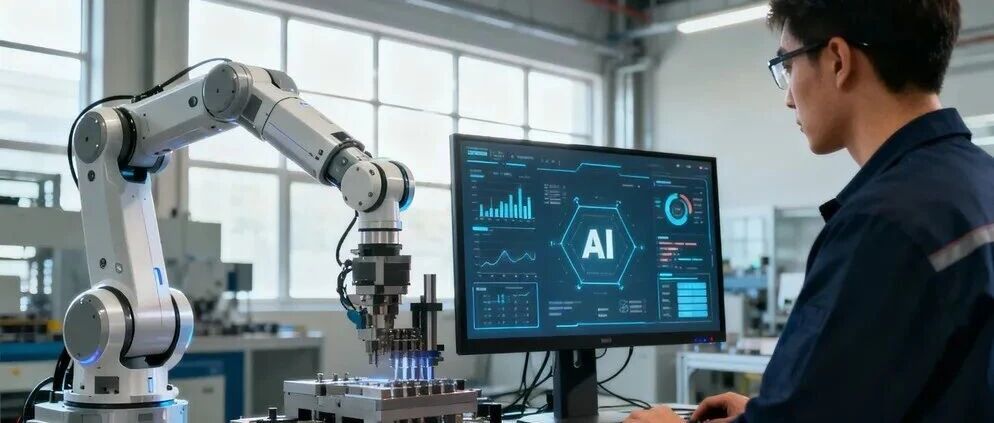
西门子 + 阿里云 + 宇树:工业 AI 的“新三角”正在成型
美股研究社· 2026-03-25 11:50
Core Viewpoint - The collaboration between industrial giants, cloud computing platforms, and robotics signifies a shift of AI from the internet realm to the industrial era, marking the beginning of a new phase in AI development focused on physical world applications rather than just virtual ones [1][3][16]. Group 1: Collaboration and Integration - The partnership between Siemens, Alibaba Cloud, and Yuzhu Technology represents a significant step towards achieving a "closed-loop" system in industrial AI, integrating software, cloud computing, and robotics [5][6]. - Siemens provides industrial software and automation systems, serving as the "operating system" for manufacturing, while Alibaba Cloud offers scalable computing power and infrastructure, addressing concerns about data security and deployment costs [6][9]. - Yuzhu Technology introduces humanoid robots that enhance the execution layer of AI, enabling adaptability in unstructured environments and solving the challenge of transitioning from simulation to real-world application [7][9]. Group 2: Advantages of the Chinese Market - China is identified as the optimal environment for the implementation of industrial AI due to its comprehensive manufacturing ecosystem and the willingness of local factories to adopt new technologies for efficiency gains [9][10]. - Local cloud providers like Alibaba have developed mature capabilities in data processing and service responsiveness, which are crucial for addressing the specific needs of Chinese enterprises [10][11]. - The rapid advancement in robotics within China, exemplified by Yuzhu Technology, is narrowing the gap with international competitors, making the commercialization of "robot + AI" more feasible [10][11]. Group 3: Investment Implications - The collaboration indicates a paradigm shift in the industrial landscape, where the value chain is transitioning from traditional manufacturing to a focus on data, models, and execution capabilities [13][14]. - The importance of ecosystem collaboration is emphasized, as no single company can cover the entire industrial AI chain, necessitating a focus on connectivity and integration among cloud, models, and hardware [13][14]. - The efficiency gains from AI in manufacturing are expected to be exponential, with robots capable of managing multiple processes and continuously learning, which will significantly impact profit margins [15][16].
RXD大会首发北京:当硅谷还在谈论物理AI,西门子已重写工业规则
机器之心· 2026-03-24 09:17
Core Viewpoint - The article emphasizes the transformative potential of AI in the physical world, particularly in industrial applications, highlighting Siemens' role in integrating AI into manufacturing processes and systems [2][3][40]. Group 1: AI Integration in Industry - Physical AI is not just a technological spectacle but is being implemented in real-world applications, such as the UTree robots in Siemens' factories [3][5]. - Siemens' CEO, Roland Busch, asserts that AI is a general-purpose technology, comparable to electricity in its impact on the industrial era, fundamentally changing work and production systems [7][18]. - The integration of AI into physical systems requires a robust technology stack that combines hardware, software, and data, which Siemens possesses [7][9]. Group 2: Digital Twin and AI Applications - Siemens introduced a new Digital Twin Composer that allows companies to create real-time digital twin systems, enabling extensive pre-implementation testing and optimization [12][15]. - AI has been shown to identify up to 90% of potential issues before physical modifications, leading to a 20% increase in throughput and reduced design cycles [13][14]. - The shift from traditional simulation tools to a comprehensive system that spans the entire lifecycle of design, manufacturing, and operation is highlighted as a significant advancement [15][16]. Group 3: Data as a Key Asset - Siemens emphasizes that industrial AI relies heavily on high-quality, long-term industrial data, which is essential for effective model training and application [18][22]. - The company has developed specialized AI models trained on proprietary industrial data, significantly improving problem-solving accuracy from 60-70% to nearly 95% [19][20]. - The challenge of data acquisition and standardization in industrial settings is noted, with a focus on the necessity of integrating high-value scenarios to unlock AI's potential [22][23]. Group 4: Industry Knowledge and Expertise - Siemens' competitive advantage lies in its deep understanding of industry-specific processes, accumulated over 170 years, which is crucial for the effective application of AI [25][27]. - The company has a vast pool of AI experts and engineers, enabling it to tailor solutions to various industrial contexts [27][29]. - The integration of AI into existing systems requires not just technological capability but also a profound understanding of the underlying industrial mechanics [26][30]. Group 5: Ecosystem and Collaboration - The fragmented nature of industrial AI necessitates collaboration across various sectors, with over 60% of Siemens' partners bringing AI-related products to the table [31][34]. - Siemens' Xcelerator platform allows companies to build their solutions on a unified foundation, promoting ecosystem development [32][38]. - Strategic partnerships, such as with NVIDIA and Alibaba Cloud, enhance Siemens' capabilities in simulation and deployment of AI solutions in complex environments [35][36][41].

制造业与其养“龙虾”,不如造一把“AK47”
虎嗅APP· 2026-03-23 10:24
Core Insights - The article discusses the rise of industrial AI, particularly focusing on the company Melody, which aims to transform manufacturing processes through AI solutions. The founder emphasizes the need for simplicity and usability in AI applications, likening it to the AK47 for its ease of use and reliability [6][34]. Group 1: Company Overview - Melody is a startup focused on AI transformation for manufacturing, specifically targeting procurement and process optimization [6][10]. - The company has established a valuation of 300 million yuan during its angel round and is currently seeking further investment [9]. - The founder, Xu Zhongren, emphasizes the importance of understanding client needs and addressing the root causes of issues within manufacturing processes [21][22]. Group 2: Industry Context - The industrial AI sector is experiencing a dichotomy where advanced AI applications are rapidly being adopted in various verticals, while many traditional manufacturing practices remain outdated [7][10]. - There is a significant gap between the promises of AI in manufacturing and the actual implementation results, with many companies still relying on manual processes and lacking proper data management [10][11]. - The article highlights the challenges faced by large enterprises in adopting AI solutions, often due to their reliance on generic models that do not cater to specific operational needs [15][41]. Group 3: Challenges and Solutions - Many manufacturing companies have previously invested in digital solutions that failed to deliver, leading to skepticism about new AI initiatives [25][28]. - Melody's approach involves conducting a thorough "health check" of a company's data processes before implementing AI solutions, which is a departure from previous information technology initiatives that created isolated data silos [12][20]. - The company aims to simplify the data collection and analysis process, ensuring that AI applications are user-friendly and can be operated by individuals with minimal technical expertise [34][36]. Group 4: Market Position and Strategy - Melody's strategy involves focusing on specific pain points within manufacturing, such as procurement and process efficiency, rather than offering broad, generic solutions [18][33]. - The company has a competitive advantage due to its ability to deliver tailored solutions quickly, contrasting with larger firms that may take significantly longer to implement similar projects [41]. - The founder believes that addressing complex scenarios in manufacturing will yield higher value and create more significant opportunities for growth [37][38].

中控技术(688777):2026CAIMRS榜单发布,公司凭工业AI实力斩获四项大奖
GOLDEN SUN SECURITIES· 2026-03-22 09:04
Investment Rating - The report maintains an "Accumulate" rating for the company [4][6] Core Insights - The company has been recognized as one of the "Top 50 Brands in Automation and Digitalization in China," ranking 8th, showcasing its leadership in industrial AI [2] - The company has successfully deployed the world's first Autonomous Operating Plant (AOP) at Xingfa Group, significantly reducing workforce from 260 to 80 and saving over 40 million yuan in construction costs, while improving overall efficiency by 1%-3% [3] - The company has made substantial advancements in its industrial AI strategy, including the release of an upgraded time series model (TPT) and the development of a SaaS platform, enhancing factory autonomy [2] Financial Performance - The projected revenue for 2025-2027 is estimated at 8.056 billion, 9.125 billion, and 10.817 billion yuan respectively, with net profits expected to be 474 million, 831 million, and 1.259 billion yuan [4][5] - The company's revenue growth rates are projected to be -11.8% in 2025, followed by 13.3% in 2026 and 18.5% in 2027 [5] - The latest diluted EPS is projected to be 0.60 yuan in 2025, increasing to 1.05 yuan in 2026 and 1.59 yuan in 2027 [5]

中控技术:2026 CAIMRS榜单发布,公司凭工业AI实力斩获四项大奖-20260322
GOLDEN SUN SECURITIES· 2026-03-22 03:24
Investment Rating - The report maintains an "Accumulate" rating for the company [4][6] Core Insights - The company has been recognized as one of the "Top 50 Brands in Automation and Digitalization in China," ranking 8th, showcasing its leadership in industrial AI [2] - The company has successfully deployed the world's first Autonomous Operating Plant (AOP) at Xingfa Group, significantly reducing workforce from 260 to 80 and saving over 40 million yuan in construction costs, while improving overall efficiency by 1%-3% [3] - The company has made substantial advancements in its industrial AI strategy, including the release of an upgraded time series model (TPT) and the development of a SaaS platform, enhancing factory autonomy [2] Financial Performance - The projected revenue for 2025-2027 is estimated at 8.056 billion, 9.125 billion, and 10.817 billion yuan respectively, with net profits expected to be 474 million, 831 million, and 1.259 billion yuan [4][5] - The company reported a revenue growth rate of 30.1% in 2023, followed by a projected decline of 11.8% in 2025, and a recovery with growth rates of 13.3% and 18.5% in 2026 and 2027 respectively [5][10] - The latest diluted EPS is projected to be 0.60 yuan in 2025, increasing to 1.05 yuan in 2026 and 1.59 yuan in 2027 [5][10]
吉利和英伟达将开展深度合作
新华网财经· 2026-03-18 04:33
Core Viewpoint - Geely and NVIDIA are set to collaborate on smart driving, smart cockpit, and smart manufacturing and research, focusing on three dimensions: physical AI, enterprise AI, and industrial AI [1] Group 1: Collaboration Focus - The collaboration will explore the continuous evolution of core capabilities in smart vehicles, leveraging NVIDIA's high-performance computing platform and Geely's deep expertise in vehicle-level scene understanding and multi-modal decision-making [1] - The partnership aims to advance physical AI technology architecture represented by the World Action Model (WAM), enhancing vehicles' environmental perception, behavior prediction, and collaborative execution capabilities [1]