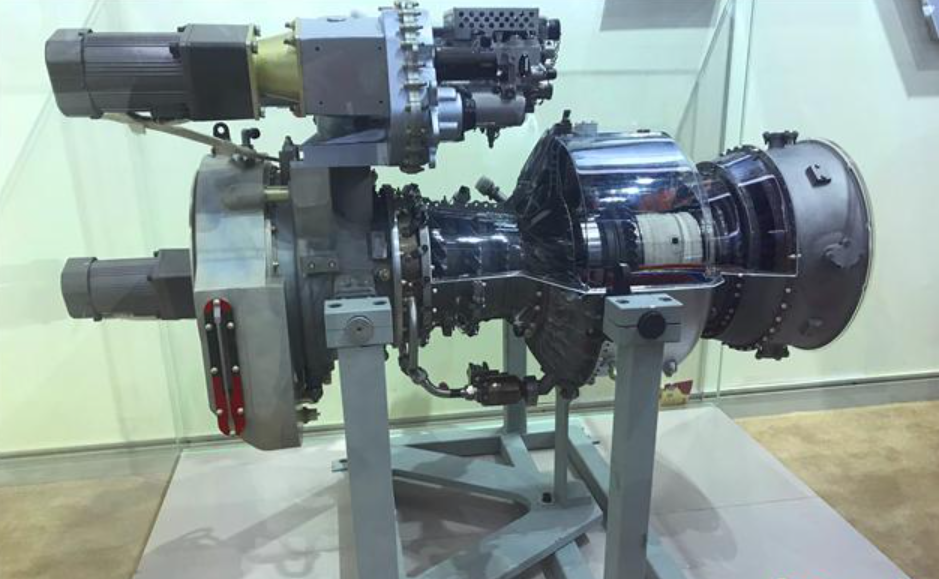
F135发动机

Search documents
新造的F-35没雷达?美媒尴尬承认……
Xin Lang Cai Jing· 2026-02-12 05:06
Group 1 - The U.S. Air Force has received some F-35A fighter jets without radar installations since June 2025, attributed to delays and cost overruns in the AN/APG-85 radar development [1][3] - The F-35 Joint Program Office (JPO) has not confirmed or denied the situation but stated that the integration of the APG-85 radar is planned to begin with the 17th batch of aircraft, continuing until September 2026 [3][4] - The installation of the APG-85 radar requires physical modifications to the F-35's airframe, and there is currently no universal mounting structure compatible with both the existing APG-81 and the new APG-85 radar [3][4] Group 2 - Lockheed Martin has proposed redesigning the F-35's airframe to accommodate either radar type, with the new configuration expected to be implemented in the 20th batch around 2027-2028 [4] - F-35s without radar are limited to flying only with radar-equipped aircraft for training, which significantly restricts tactical flexibility and increases detection risks [4][5] - The F-35 program has faced ongoing issues with "concurrent production," leading to complex retrofitting and high maintenance costs, which continue to affect the project [4][5] Group 3 - The F-35's capabilities are notably diminished without radar, as it cannot independently perform missions in high-threat environments and lacks essential electronic warfare functionalities [5] - The overall progress of the F-35 Block 4 upgrade is concerning, with a reported $6 billion cost overrun and a delay of at least five years [5] - Additional challenges include issues with the F135 engine's power and cooling capabilities, further hindering the upgrade process [5]


RTX Beats on Q3 Earnings & Revenues, Raises '25 EPS View
ZACKS· 2025-10-21 14:01
Core Insights - RTX Corporation's third-quarter 2025 adjusted earnings per share (EPS) of $1.70 exceeded the Zacks Consensus Estimate of $1.42 by 19.7% and improved 17.2% from the previous year's $1.45 [1] - Total revenues for the third quarter reached $22.48 billion, surpassing the Zacks Consensus Estimate of $21.48 billion by 4.6% and reflecting an 11.9% increase from $20.09 billion in the same quarter of 2024 [2][8] - The company raised its 2025 EPS and sales outlook, projecting adjusted EPS between $6.10-$6.20 and annual revenues of $86.5-$87 billion [10] Financial Performance - RTX's total costs and expenses rose nearly 10% year over year to $20.02 billion, while adjusted operating profit increased to $2.97 billion from $2.48 billion in the prior-year quarter [3] - Net cash flow from operating activities for the first nine months of 2025 was $6.4 billion, up from $5.6 billion a year ago, with free cash flow totaling $4.03 billion compared to $1.97 billion in the previous year [9] Segment Performance - Collins Aerospace reported sales of $7.62 billion, an 8% year-over-year increase, driven by a 16% rise in commercial OE, a 13% increase in commercial aftermarket, and a 6% gain in defense [4] - Pratt & Whitney's sales reached $8.42 billion, reflecting a 16% improvement, supported by a 5% rise in commercial OE, a 23% increase in commercial aftermarket, and a 15% gain in military sales [5] - Raytheon recorded sales of $7.05 billion, up 10% year over year, driven by higher volumes in land and air defense systems and naval programs [6] Financial Position - As of September 30, 2025, RTX had cash and cash equivalents of $5.97 billion, an increase from $5.58 billion as of December 31, 2024, while long-term debt decreased to $38.26 billion from $38.73 billion [7]


Raytheon Technologies(RTX) - 2025 Q3 - Earnings Call Transcript
2025-10-21 13:32
Financial Data and Key Metrics Changes - Adjusted sales for Q3 were $22.5 billion, up 12% on an adjusted basis and 13% organically year over year [14] - Adjusted segment operating profit increased to $2.8 billion, up 19% year over year, with a consolidated segment margin expansion of 70 basis points [14] - Free cash flow was robust at $4 billion for the quarter, contributing to a full-year outlook of $7 to $7.5 billion [15][18] Business Line Data and Key Metrics Changes - Collins Aerospace reported sales of $7.6 billion, up 8% adjusted and 11% organically, with commercial OE sales up 16% and commercial aftermarket sales up 13% [20] - Pratt & Whitney's sales reached $8.4 billion, up 16% on both an adjusted and organic basis, driven by a 5% increase in commercial OE sales and a 23% increase in commercial aftermarket sales [22][24] - Raytheon reported sales of $7 billion, up 10% on both an adjusted and organic basis, with adjusted operating profit of $859 million, up $198 million year over year [25] Market Data and Key Metrics Changes - The book-to-bill ratio for the quarter was 1.63, resulting in a backlog of $251 billion, up 13% year over year [7][28] - New awards in the quarter totaled $37 billion, with $23 billion in defense and $14 billion in commercial orders [7] Company Strategy and Development Direction - The company is focused on executing commitments and driving performance improvements through its core operating system, achieving 10% organic sales growth while keeping headcount flat [8] - Investments of over $600 million in capacity expansion projects are planned to support growth, including a $300 million investment at Raytheon [10] - The company is leveraging data analytics and AI tools to improve productivity and decision-making across its operations [12] Management's Comments on Operating Environment and Future Outlook - Management expressed confidence in the strength of global demand for products and services, particularly in commercial aerospace, with passenger air travel expected to grow approximately 5% this year [4] - The full-year adjusted sales outlook has been raised to a range of $86.5 billion to $87 billion, reflecting strong operational performance and end-market strength [16] - Management anticipates continued top-line growth, margin expansion, and solid free cash flow conversion beyond the current year [19] Other Important Information - The company completed the sale of the actuation business and the Collins Simmons Precision Products business for $765 million [15] - The company is on track to achieve a free cash flow outlook of $7 billion to $7.5 billion for the year, driven by segment operating profit growth and working capital improvement [18] Q&A Session Summary Question: Confidence in delivering LEAP engines to Airbus - Management indicated strong execution and support for production ramps, with a focus on balancing material allocation to meet delivery targets [32][38] Question: Limitations to Raytheon segment growth - Management highlighted strong demand with a book-to-bill of 2.27, but emphasized the need for a healthy supply chain to meet production increases [44][45] Question: Collins margins and tariff impacts - Management acknowledged a $90 million headwind from tariffs affecting Collins margins, but noted ongoing efforts to mitigate these impacts [85] Question: Expectations for GTF compensation payments - Management confirmed that the financial outlook for GTF compensation payments remains consistent, with no changes to the timing of expected reductions in AOG levels [80] Question: Incremental margins in Collins - Management attributed weaker incremental margins to tariff impacts, with ongoing efforts to improve productivity and efficiency [85] Question: Top line and bottom line moving pieces for Pratt - Management clarified that the uptick in revenue outlook for Pratt is driven by a mix of spare engines and increased defense contracts, with expectations for continued MRO output growth [90]
Raytheon Technologies(RTX) - 2025 Q3 - Earnings Call Transcript
2025-10-21 13:30
Financial Data and Key Metrics Changes - Sales increased by 13% organically year over year, with adjusted segment operating profit up 19% and free cash flow at $4 billion for the quarter [3][4][14] - Adjusted earnings per share (EPS) rose 17% to $1.70, driven by segment operating profit growth [14][16] Business Line Data and Key Metrics Changes - Commercial aftermarket sales grew 18%, while commercial OE and defense sales both increased by 10% [13][14] - Collins sales were $7.6 billion, up 8% adjusted and 11% organically, with commercial OE sales up 16% and defense sales up 6% [20][21] - Pratt and Whitney sales reached $8.4 billion, up 16% on both adjusted and organic bases, with commercial aftermarket sales up 23% [22][24] - Raytheon sales were $7 billion, up 10% on both adjusted and organic bases, driven by higher volume in Land and Air Defense Systems [25][26] Market Data and Key Metrics Changes - Global demand for products and services remains strong, with commercial aerospace passenger air travel expected to grow by approximately 5% this year [4][5] - The book-to-bill ratio was 1.63, resulting in a backlog of $251 billion, up 13% year over year [5][28] Company Strategy and Development Direction - The company is focused on executing commitments and driving performance improvements through its core operating system, achieving 10% organic sales growth while keeping headcount flat [8][10] - Investments of over $600 million in capacity expansion projects are underway to support growth [10][12] - The company is innovating for future growth, including developing hybrid electric propulsion systems and next-generation braking systems [11][12] Management's Comments on Operating Environment and Future Outlook - Management raised the full-year outlook for adjusted sales to a range of $86.5 billion to $87 billion, reflecting strong operational performance and end-market strength [16][18] - Free cash flow outlook remains at $7 billion to $7.5 billion for the year, with expectations for continued top-line growth and margin expansion [18][28] Other Important Information - The company completed the sale of the actuation business and the Collins Simmons Precision Products business for $765 million [15] - The company is experiencing a headwind from tariffs, impacting margins across segments [89] Q&A Session Summary Question: Confidence in delivering LEAP engines to Airbus - Management expressed confidence in supporting production ramps for Airbus and balancing material allocation to meet delivery targets [34][40] Question: Limitations to Raytheon segment growth - Management noted strong demand but emphasized the need for a healthy supply chain to meet production increases [44][50] Question: Margins in Collins and tariff impacts - Tariffs were identified as a key driver affecting margins, with ongoing efforts to mitigate these impacts [88][90] Question: Expectations for GTF compensation payments - The financial outlook for GTF compensation payments remains consistent, with planned payments for the fourth quarter [83][84] Question: Incremental margins and future growth in Raytheon - Management highlighted the potential for margin expansion driven by a favorable backlog mix and increased production efficiency [120][122]
航空发动机赛道,中国位居第几?
Hu Xiu· 2025-09-15 07:19
Core Insights - The development of aircraft engines is a complex and lengthy process, requiring high precision in materials, manufacturing, system integration, and certification [1] - China has made significant advancements in aircraft engine technology, becoming the fourth country capable of independently developing large bypass turbofan engines [8] - Despite progress, China still lags behind Western countries in certain performance metrics and certification processes for civil aviation engines [9][12] Group 1: Aircraft Engine Development - Aircraft engines are critical components that must operate reliably under extreme conditions, necessitating interdisciplinary technology integration [1] - The F135 engine for the F35 fighter jet took 13 years from project initiation to the first production delivery, highlighting the lengthy development cycle [1] - The successful development of the "涡扇20" engine marks a significant milestone for China, allowing it to produce all major categories of advanced aircraft engines [8] Group 2: Current Capabilities and Achievements - China has developed several advanced engines, including the "涡轴9" and "涡扇10," which are used in various military helicopters and fighter jets [2][3][4] - The "涡扇20" engine's debut at the 2025 military parade signifies China's entry into the elite group of countries capable of producing large bypass turbofan engines [8] - The establishment of a complete aircraft engine industry system in China is a foundational step towards enhancing its global standing in aviation manufacturing [13] Group 3: Challenges and Market Position - China’s military engines are approaching Western standards in thrust and thrust-to-weight ratios, but still face challenges in maintenance and longevity [9] - In the civil aviation sector, China’s products are still in testing phases, while Western engines dominate the market with over 80% share [9] - The certification process for civil engines remains a hurdle, as it relies heavily on Western standards, necessitating the development of indigenous certification frameworks [12]